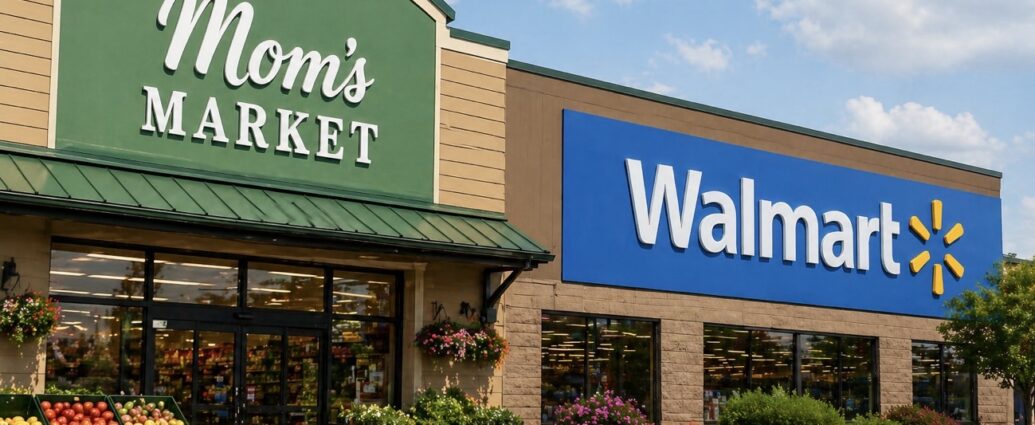
Deal Overview
Walmart announced Friday that it will acquire the remaining 85% of Mom’s Market, a family‑owned regional grocery chain with 42 stores across the Midwest, for an estimated $2.3 billion in cash. The move expands Walmart’s footprint in smaller communities where Mom’s Market has deep local ties and a loyal customer base.
Why It Matters to Main Street
The acquisition goes beyond a simple expansion of a retail giant; it directly impacts the daily operations of independent suppliers, local farmers, and the employees who run the stores.
– Supplier Diversity: Mom’s Market sources 30% of its fresh produce from area farms. Walmart has pledged to keep those contracts intact for at least three years.
– Employment: The chain employs roughly 3,200 workers. Walmart says no immediate layoffs are planned, but a restructuring of back‑office functions could affect up to 150 positions.
– Pricing: Walmart’s economies of scale could drive down shelf prices, offering relief to families still coping with inflationary pressure on groceries.
Analyst Perspectives
Diane Swonk of KPMG notes, “Walmart is leveraging Mom’s Market as a conduit to re‑enter the “small‑town” grocery niche, a segment that has been eroding as national chains consolidate.”
Heather Long of Navy Federal Credit Union adds, “For local farmers, this could mean a steadier cash flow, provided Walmart honors existing purchase agreements and invests in cold‑chain logistics.”
Operational Shifts
– Supply‑Chain Integration: Walmart will introduce its “Retail Link” inventory platform to Mom’s Market stores, promising real‑time inventory data and reduced stockouts.
– Technology Upgrade: Stores will receive new point‑of‑sale (POS) hardware, enabling contactless payments and loyalty‑program integration.
– Real Estate: Walmart plans to remodel 12 locations to include “express” formats that focus on ready‑to‑eat meals, a growing trend among time‑pressed consumers.
Community Reactions
Local chambers of commerce have expressed cautious optimism. “We welcome the investment, but we’ll be watching closely to ensure Mom’s Market’s community‑first ethos isn’t lost,” said Marcus Alvarez, president of the Springfield Chamber of Commerce.
Customers surveyed in a quick poll by the Midwest Business Journal reported:
– 68% anticipate lower prices.
– 42% worry about the loss of the “personal touch” that Mom’s Market is known for.
Regulatory Landscape
The Federal Trade Commission (FTC) opened a review of the deal, focusing on potential antitrust concerns in markets where Walmart already operates a Supercenter within a 10‑mile radius of a Mom’s Market location. The FTC’s preliminary statement, released Monday, indicated no immediate objections but promised a thorough analysis.
Link to Prior Coverage
Building on yesterday’s JBizNews report on rising grocery‑price inflation, this acquisition illustrates how large retailers are positioning themselves to capture price‑sensitive shoppers while offering a lifeline to local supply chains.
Outlook
The integration is slated to be completed by Q4 2026. If Walmart successfully balances scale‑driven efficiencies with Mom’s Market’s community orientation, the model could become a blueprint for other big‑box players eyeing regional partners. However, the ultimate impact will hinge on how swiftly Walmart can modernize operations without alienating the loyal customer base that values Mom’s Market’s hometown feel.
By JBizNews Desk — April 30, 2026
JBizNews Desk
© http://JBizNews.com. All rights reserved. This article is original reporting by JBizNews Desk. Unauthorized reproduction or redistribution is strictly prohibited.