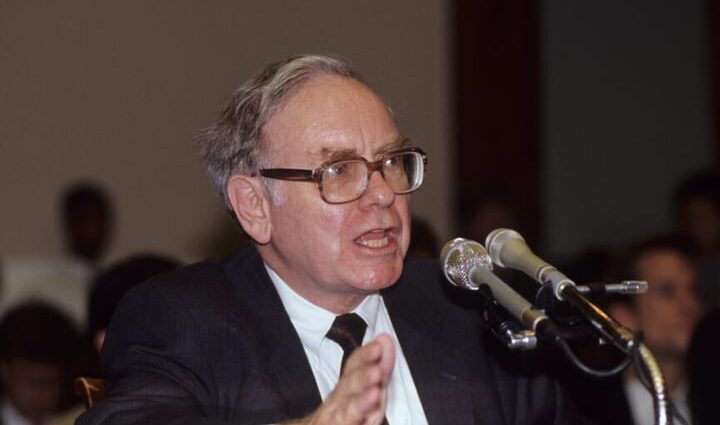
Berkshire Hathaway Chair Warren Buffett has spent years arguing that raising hourly pay alone will not magically fix poverty. More than a decade later, with lawmakers pushing a new plan to raise the federal minimum wage to $25 an hour, his old comments are suddenly back in the middle of the conversation.
The federal minimum wage has remained stuck at $7.25 an hour since 2009. During that same stretch, rent prices climbed, grocery bills ballooned, and even fast-food meals started feeling like minor financial decisions.
Don’t Miss:
- Small differences in withdrawal and tax strategy can significantly impact long-term retirement income — see where you stand today.
- More Than Half of Americans Aren’t Prepared for Retirement — Including 62% of Gen Y
Last month, three House members introduced the Living Wage for All Act, which would gradually raise the federal minimum wage to $25 an hour. Larger employers would need to hit that mark by 2031, while smaller businesses would have until 2038. The proposal would also eliminate lower wage tiers for tipped workers and some younger workers.
Supporters say the bill is long overdue after years of rising costs. Critics argue that forcing businesses to pay dramatically higher wages could lead to layoffs, reduced hiring, fewer hours, and higher prices.
Buffett Saw A Problem Bigger Than Hourly Pay
Buffett raised those same concerns year ago.
“I may wish to have all jobs pay at least $15 an hour,” Buffett wrote in a Wall Street Journal opinion piece titled “Better Than Raising the Minimum Wage” from 2015. “But that minimum would almost certainly reduce employment in a major way, crushing many workers possessing only basic skills.”
Trending: Find out if you qualify to reduce your monthly debt payments — see how much you could save with a quick, free consultation.
He also argued that smaller increases would still leave many workers struggling financially.
“The better answer is a major and carefully crafted expansion of the Earned Income Tax Credit, which currently goes to millions of low-income workers,” Buffett wrote. “The EITC rewards work and provides an incentive for workers to improve their skills. Equally important, it does not distort market forces, thereby maximizing employment.”
Buffett’s Long-Standing Proposal
Buffett returned to the same theme during a CNN interview in 2018, saying, “People don’t need a minimum wage, they need a maximum amount of cash in their pocket. And the earned income tax credit rewards those who work, but they also help the person whose skills don’t fit a market economy.”
Congress still has not raised the federal minimum wage, and Buffett’s preferred EITC expansion never arrived either. Instead, states and cities largely handled wage increases on their own, creating a patchwork where some workers earn the federal minimum while others live in places with wage floors above $15 an hour.
See Also: Discover How AI Can Turn Your Investment Ideas Into Tradable Assets — See How
Now, with a proposed $25 federal minimum wage back on the table, Buffett’s argument is getting another look. His position was never that workers should earn less. It was that forcing employers to carry the entire burden could create another set of …





This post was originally published here