Investors enter the week watching oil prices, Middle East developments and a major round of corporate earnings after technology shares led Friday’s market decline.
Wall Street will reopen Monday, July 20, 2026, with investors confronting two competing forces: a widening earnings season that could restore confidence in corporate growth and renewed geopolitical pressure that threatens to keep oil prices, inflation concerns and market volatility elevated.
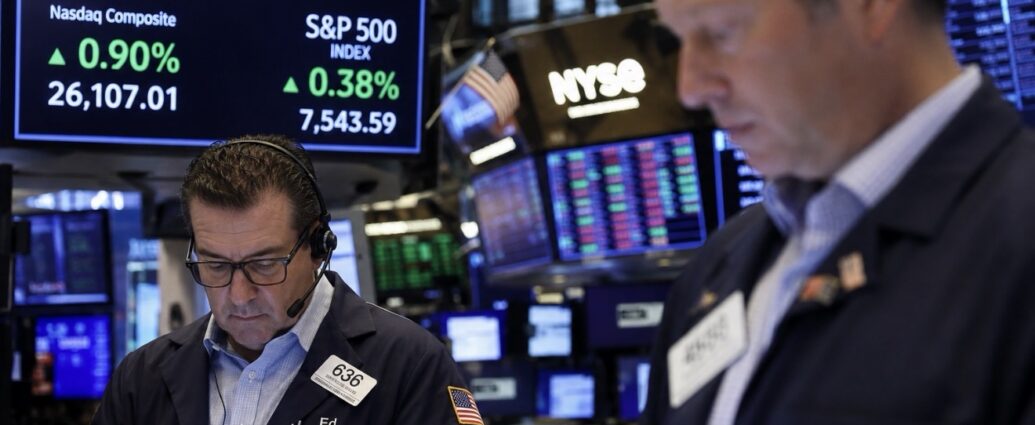
The immediate starting point is Friday’s selloff. The S&P 500 closed down 1% at 7,475.69, the Dow Jones Industrial Average fell 406.55 points to 52,146.42, and the Nasdaq Composite dropped 1.4% to 25,520.24. For the full week, the S&P 500 lost 1.6%, the Dow declined 0.9% and the Nasdaq fell 2.9%, with technology and artificial-intelligence-related shares absorbing the heaviest pressure.
Monday’s opening direction will first be shaped by trading in stock-index, oil, gold and Treasury futures before the opening bell. Futures markets reopen Sunday evening, giving investors their first opportunity to react to developments that occurred after Friday’s close.
The most immediate uncertainty remains the conflict involving the United States and Iran, particularly its effect on energy infrastructure, shipping routes and the broader oil market. Any additional attack affecting production facilities, export terminals or transportation through the Middle East could push crude prices higher and pressure equities before regular trading begins.
A calmer geopolitical weekend could produce the opposite reaction, particularly among technology and consumer stocks that were sold heavily last week. Still, the market is unlikely to treat the conflict as resolved simply because no major escalation occurs before Monday morning. Investors are now placing a higher risk premium on energy supplies, transportation costs and the possibility that expensive fuel could slow progress against inflation.
That creates a difficult backdrop for the Federal Reserve, which is scheduled to hold its next policy meeting on July 28 and July 29. The central bank will not announce a rate decision this week, but investors will continue adjusting expectations for that meeting as they evaluate energy prices, corporate earnings and the latest labor and housing figures.
The market will also be assessing whether Friday’s decline was a temporary pullback or the beginning of a broader shift away from high-valued technology stocks. The Nasdaq suffered the steepest weekly loss among the three major indexes, reflecting concern that expectations surrounding artificial intelligence, semiconductor demand and future corporate spending may have moved faster than near-term profits.
This week’s earnings schedule will provide an important test.
Alphabet and Tesla are both scheduled to report second-quarter results after the market closes Wednesday, July 22. Alphabet’s conference call is set for 4:30 p.m. Eastern, while Tesla plans to begin its question-and-answer webcast at 5:30 p.m. Eastern.
Those two reports could influence the direction of the broader market because they touch several of the most closely followed investment themes: artificial intelligence, digital advertising, cloud computing, electric vehicles, energy storage and corporate capital spending.
For Alphabet, investors will be watching whether spending on data centers and artificial-intelligence infrastructure is translating into stronger cloud revenue and durable earnings growth. The company’s capital requirements are also becoming increasingly important as technology groups compete for computing capacity, electricity and advanced chips.
Tesla enters its report after announcing that it delivered more than 480,000 vehicles during the second quarter and deployed 13.5 gigawatt-hours of energy-storage products. The market will be looking beyond deliveries to vehicle pricing, profit margins, manufacturing costs and management’s outlook.
IBM will also report Wednesday, with its earnings announcement scheduled for 5 p.m. Eastern. Intel follows Thursday, July 23, after the closing bell. Intel’s results will be closely examined for evidence about demand for personal computers, data-center processors, manufacturing progress and the company’s effort to rebuild its position in advanced semiconductor production.
The setup suggests Monday may be less about a single economic report and more about positioning for what comes later in the week. Portfolio managers may reduce exposure to companies reporting earnings, move toward energy and defensive sectors, or use any rebound to adjust positions after Friday’s technology selloff.
Financial, energy, healthcare and industrial shares could attract buyers seeking alternatives to expensive technology names. At the same time, a sharp decline in oil or an easing of geopolitical tensions could quickly restore interest in growth stocks.
Investors should not assume that Monday’s opening move will hold throughout the session. Markets facing both geopolitical headlines and major earnings reports can reverse rapidly as traders move between risk reduction and bargain hunting.
The week begins with Wall Street under pressure but not without potential support. Corporate earnings remain strong enough to keep buyers engaged, while the approaching Federal Reserve meeting gives every new economic signal added importance. Monday’s opening will show whether investors are prepared to buy last week’s decline or whether war risks and concerns over technology valuations have started a more defensive phase.
JBizNews Desk | New York
© JBizNews.com All Rights Reserved. Reproduction or distribution without written permission is prohibited.