
The fifth season of Fauda has just been released on Netflix around the world, after it was shown in Israel on Yes, and it ends in a cemetery at the funeral of one of the main characters, who was killed trying to take revenge on Hamas terrorists.
It’s a fitting end to a season, and perhaps to an entire series, that was about the real, day-to-day cost of the Israel-Palestinian conflict.
It also underscores that despite the fast-paced, suspenseful action sequences in every episode, the real reason we kept watching was that we came to care about the characters, both Jews and Arabs.
More than any previous season, however, the fifth season is told from the point of view of the core members of the counterterrorism unit we have been following all these years: Doron (Lior Raz), Eli (Ya’akov Zada-Daniel), Steve (Doron Ben-David), and Gabi “Captain” Ayoub (Itzik Cohen), and not from Arab characters.
Perhaps it couldn’t be any other way, because, as has been widely reported, Fauda creators Raz and Avi Issacharoff, and the series writers, had season five written.
It was ready to shoot, but they scrapped their scripts following the Hamas massacre on October 7, 2023, which was far more deadly than anything they had imagined.
For those who want to watch the latest season without knowing more about it, stop reading here, because some spoilers follow.
The word “Fauda” means chaos in Arabic, and the new season starts out with a title showcasing a different Arabic word, “tha’r,” which, we’re told, means “Blood Revenge, restoring violated honor or avenging injustice.”
After that, it opens two years after October 7, with Salem (Byan Anteer), a Bedouin tracker who works with the unit, praying at the grave of his son, Yusef, who was killed in the massacre, and promising revenge for his death.
He goes to see Eli, who is living quietly in a nearby settlement, grieving the death of his wife, Hagit (Dafi Shoshana-Alpern), who was the widow of another unit member, Avichay (Boaz Konforty), and his two stepchildren on October 7.
Salem says he has received some new information: a video from inside Eli and Hagit’s house that shows who killed Eli’s family and Yusef, who was at their kibbutz to build a gazebo and took refuge in their safe room.
The killer fled and started a new life in Marseille.
At first, Eli does not want to hear about it. But Salem insists that they must take “tha’r,” saying, “If we don’t do this, that day will haunt us for the rest of our lives.”
Eli does not need much coaxing, and soon they are on the way to France to find this murderer, Maher (Amjad Bader), who is hiding in plain sight. Not long after, Steve and Doron join them.
Much of the season is their pursuit of this killer and his associates, who are planning a new attack in Israel, and they meet Maher’s widow, Anne (Melanie Laurent of Inglourious Basterds), a Frenchwoman who has embraced the Palestinian cause.
Eli and Doron fall back on their usual MO, going undercover, and end up with Anne in a terror training camp in Syria.
Flashbacks to October 7, 2023
BUT A LITTLE after the midpoint of the season come episodes seven and eight, which are a flashback to October 7.
Both on Yes in Israel and on Netflix, they were released with a disclaimer warning viewers that they contain graphic violence and, in a most unusual step, informing audiences that they can skip them and still follow the last three episodes of the 11-episode season.
These episodes, particularly episode eight, are extremely disturbing, although the truth is that they show nothing that will be new to any Israeli who watched the news regularly three years ago.
They are constructed and filmed to resemble news clips, dashcam videos, and especially the videos that the terrorists themselves filmed and broadcast to the world.
Doron and Steve are just the kind of men who would take off as soon as they heard of the attack to fight the terrorists, and they do.
Eli is called out of the kibbutz in the middle of the night to keep watch on the border, but nothing happens until the missiles start being fired at 6:29 a.m., and by the time he realizes that no one is more vulnerable than the civilians on the kibbutzim, it is too late for him to make it back to save his family.
Doron and Steve also try their hardest to get to Hagit and the children, and on the way fight terrorists along the roads and at the Nova Festival.
As they see how many terrorists have invaded the area, and how few soldiers and police officers are fighting them, who are no match for them, Doron says, “Everything’s falling apart.”
These scenes bring back all the horror and chaos of that day, and unlike virtually every other episode of the series when the commandos fight like superheroes, you know there isn’t very much they can do, and it’s sobering.
They have never been more needed, but they have never felt more disillusioned or helpless. Yes, they save a few people, but there are many more who die in front of them.
The rest of the season takes us back to the terrorists and their new plot, but, like Eli, many of us will find our minds are stuck on that kibbutz, trying and failing to make sense of the deaths of his family.
The funeral in the last scene brings back Idan Amedi, previously a Fauda regular, who sat out the rest of the season because he needed time to recover from the injuries he suffered fighting in Gaza.
His presence, and the fact that the season was dedicated to Matan Meir, a crew member who was killed fighting in Gaza in November 2023, remind us that this war touched all of our lives.
For Doron, Steve, and especially Eli, at the end there is little comfort in the revenge, only chaos, loss, and a sense of abandonment, a feeling so many have experienced over the past three years.
The season is one of Fauda’s best, and it’s hard to know how people around the world will respond, but one thing is certain: millions will watch it. Fauda’s creators have said this is the final season, and it’s hard to imagine how they could follow this up.
New documentary for Israeli music lovers
ISRAELI MUSIC lovers will want to watch the new documentary The Sixteenth Sheep: The Reunion, which premieres on Hot 8 and Yes Docu on the evening of September 10 and is available on Yes VOD, Hot VOD, and Next TV.
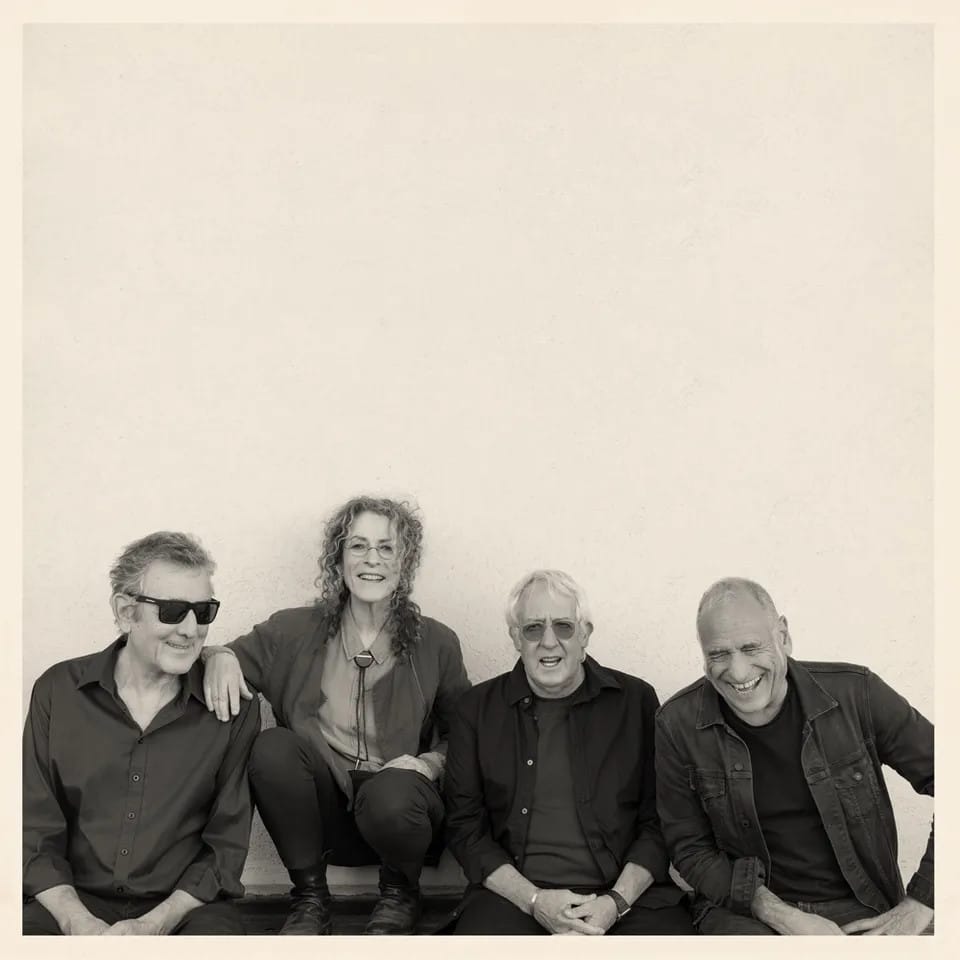
Directed by acclaimed documentary filmmaker Ran Tal, the movie tells the behind-the-scenes story of the reunion of the Sixteenth Sheep group – David Broza, Gidi Gov, Yehudit Ravitz, and Yoni Rechter, each of them among the greatest Israeli musicians of all time on their own, but together, a true supergroup.
They came together to perform songs by Yehonatan Geffen, which were set to music by Rechter and, in one case, Broza, and released in the late 70s on The Sixteenth Sheep album.
There are few Israelis of any age who cannot sing at least a couple of these songs, and the reunion tour of the artists over the last few years was wildly popular and provided magical moments during the war.
Several new documentaries about the September 11 attacks
NOW THAT it has been 25 years since the 9/11 Al-Qaeda terror attacks on the US, there are several new documentaries out.
Windows on the World: 9/11’s Forgotten Story, on Hot VOD and Next TV, examines the tragedy through the staff and guests of the restaurant that was on the 106th and 107th floors of the North Tower.
Everyone present when the plane hit was killed, and their stories have not been told in detail before.
Netflix features a new documentary, Turning Point: Generation 9/11, that looks at people who were young children at the time of the attacks.
The first part of the movie focuses on young people whose parents were killed in the attacks and is very moving. The second part of the film focuses on US policy in the wake of the attacks, and it makes points we have heard many times before.
While the US made many mistakes, to suggest, as many interviewees in this documentary do, that the response to 9/11 in America, such as heightened airport security, is somehow evidence of the US becoming a police state, rather than rational safeguards after the murder of nearly 3,000 people, defies common sense.
A documentary about how entertainers and athletes helped New Yorkers recover from the attacks, 9/11-United We Stand, 25 Years Later, now streaming on Disney+, is a far more enjoyable look at the resilience of New Yorkers.
Two feature films about 9/11 are available on Apple TV+: Oliver Stone’s World Trade Center, with Nicolas Cage as a Port Authority cop trapped in the rubble, and Paul Greengrass’s United 93, which is a documentary-style look at that doomed flight in real time, from the point of view of the passengers, crew, and air-traffic controllers.




