By JBizNews Desk
CHICAGO — June 1, 2026
Wheat prices have climbed to their highest levels in nearly two years as severe drought conditions across key U.S. growing regions threaten what could become the nation’s smallest wheat harvest in more than five decades.
The rally follows a closely watched report from the U.S. Department of Agriculture (USDA) that delivered a stark warning about the state of America’s wheat crop.
In its May World Agricultural Supply and Demand Estimates (WASDE) report, the USDA projected total U.S. wheat production at just 1.561 billion bushels, approximately 186 million bushels below analysts’ expectations. If realized, the harvest would be the smallest since 1972, underscoring the growing impact of drought across major wheat-producing states.
The report immediately grabbed the attention of commodity traders.
Chicago Board of Trade wheat futures surged to nearly $6.90 per bushel in mid-May, their highest level in almost two years. While prices have since retreated modestly, wheat remains significantly above levels seen just months ago.
Since hitting a low of approximately $4.92 per bushel in October 2025, wheat prices have rallied nearly 40%, making the grain one of the strongest-performing agricultural commodities of the past year.
The primary driver is simple: there is growing concern that farmers will harvest far fewer bushels than expected.
The drought has been particularly severe across parts of the Great Plains, the heart of America’s wheat belt.
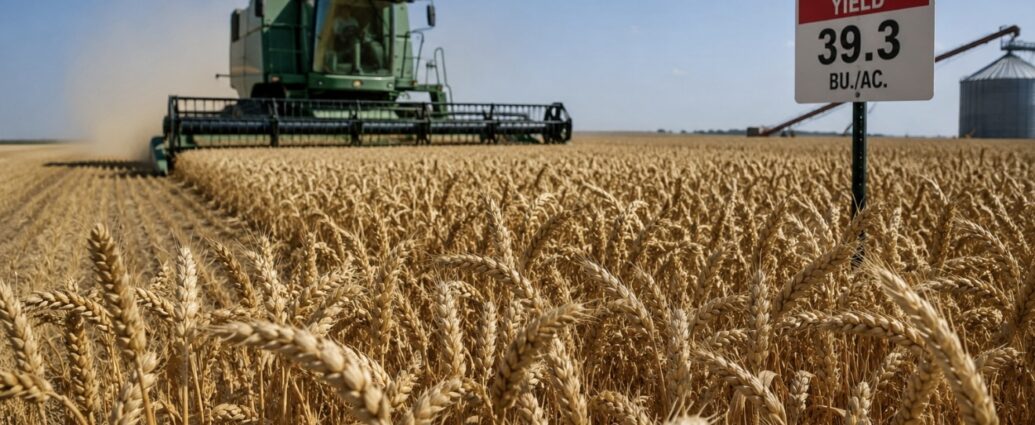
Crop scouts surveying fields in Kansas, the nation’s leading wheat-producing state, reported average yields of just 39.3 bushels per acre, compared with 53.3 bushels per acre a year earlier. The sharp decline highlights how damaging prolonged dry conditions have become.
Conditions have also deteriorated in portions of Nebraska and Oklahoma, where winter wheat crops have struggled to receive sufficient moisture during critical stages of development.
For farmers, once yield potential is lost during key growth periods, it often cannot be fully recovered—even if rains arrive later.
But weather is only part of the story.
Farmers are also confronting a renewed surge in fertilizer costs linked to geopolitical tensions in the Middle East.
Global fertilizer markets have been disrupted by concerns surrounding shipping routes and energy supplies, helping push fertilizer prices sharply higher. Nitrogen-based fertilizers such as urea and ammonia, which are heavily used in wheat production, have experienced significant price increases in recent months.
Industry estimates show some international urea prices climbing to roughly $700 per metric ton, compared with approximately $400 to $490 per metric ton before the latest geopolitical disruptions began.
For growers already operating on thin margins, higher fertilizer costs create difficult choices.
Some farmers may reduce fertilizer applications, while others may shift acreage toward crops requiring fewer expensive inputs. Both outcomes can ultimately reduce wheat production.
The financial strain is becoming increasingly visible throughout rural America.
According to a recent survey conducted by the American Farm Bureau Foundation, nearly 60% of farmers reported worsening financial conditions due to rising fuel and input costs, while roughly 70% said fertilizer prices were limiting their ability to apply all the nutrients their crops require.
Adding another layer of uncertainty is the global weather outlook.
Forecasters at the National Oceanic and Atmospheric Administration (NOAA) have warned that conditions could shift toward an El Niño pattern later this year. Such climate shifts often alter rainfall patterns across major agricultural regions worldwide and can create additional volatility in crop markets.
Meanwhile, global demand remains another wildcard.
Traders continue monitoring developments in U.S.-China agricultural trade discussions. China remains one of the world’s largest agricultural importers, and any significant increase in Chinese purchases of U.S. grain could further tighten supplies and support higher prices.
For consumers, the impact may eventually reach grocery-store shelves.
Wheat is a key ingredient in bread, pasta, cereals, baked goods, and countless other food products. While commodity prices do not immediately translate into retail prices, sustained increases often work their way through the food supply chain over time.
Whether wheat prices continue rising will depend largely on weather conditions over the coming months.
But for now, traders, farmers, and food manufacturers are all focused on the same reality: fewer bushels in the field, higher costs on the farm, and increasing uncertainty about what the next harvest will bring.
Chicago — JBizNews Desk
© JBizNews.com All Rights Reserved. Reproduction or distribution without written permission is prohibited.