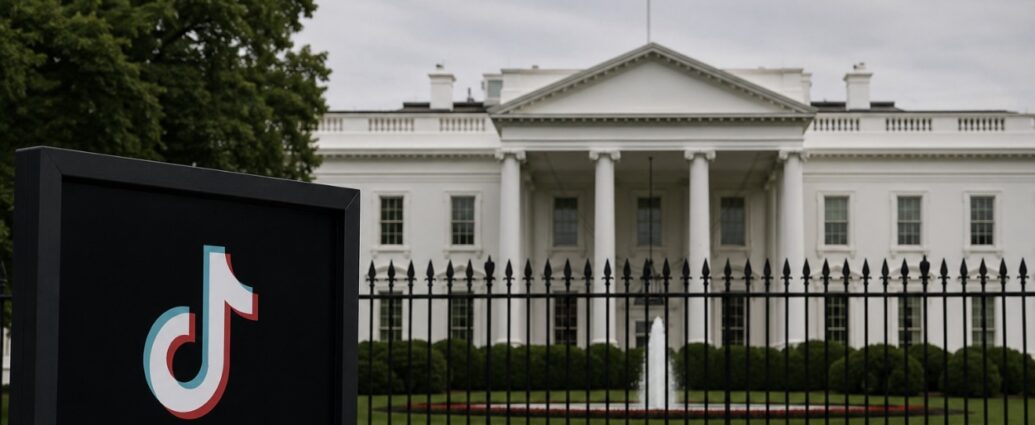
Federal employees can now put TikTok back on their government-issued phones. The Office of Management and Budget issued a memorandum to the heads of executive departments and agencies on Monday, Aug. 10, stating plainly that “TikTok may be used on government devices.”
The memo, signed by OMB Director Russell Vought, rests on a single legal finding: the app sitting in American app stores today is not the app Congress banned in 2022. “TikTok is no longer a ‘covered application’” for purposes of the No TikTok on Government Devices Act, Vought wrote in the short memo.
That conclusion traces back to a change in who owns the business. The divestiture was completed in January 2026, creating the TikTok USDS Joint Venture — the entity that now runs the U.S. version of the platform. Silver Lake, Oracle and MGX serve as its managing investors, each holding a 15 percent stake, while ByteDance retains 19.9 percent. Other backers include an investment firm connected to Dell founder Michael Dell, along with affiliates of Susquehanna International Group and General Atlantic. The joint venture operates independently of ByteDance and has rebuilt the recommendation algorithm and the cybersecurity controls it inherited from the Chinese parent.
The Justice Department reached the legal conclusion first. In a written opinion released in mid-July, its Office of Legal Counsel found that the statutory ban applies to TikTok as operated by ByteDance, and that the version now distributed in the United States falls outside that category. The opinion also noted that the joint venture uses outside cybersecurity firms to monitor and certify its privacy protections and to hunt for vulnerabilities, and concluded the arrangement leaves the app as secure as any comparable social platform. Executive branch employees, the department said, may install it on official devices at their agency’s discretion and within normal workplace rules.
Monday’s memo turns that legal opinion into government-wide policy. Agencies are not required to allow the app; each one can still keep it off its own devices for its own reasons, including productivity. What has changed is that the statutory prohibition no longer supplies the answer.
In practice, much of the executive branch had already moved. Following the Justice Department memo, the Treasury, Transportation, and Health and Human Services departments opened TikTok accounts, and the White House set one up last year. Most of the president’s Cabinet joined the platform late last month and appeared in “welcome back” videos on agency accounts.
For TikTok, the commercial value of the reversal is less about the number of federal employees scrolling and more about the seal it places on the ownership deal. The 2022 device ban was the first of the U.S. restrictions on the company and the piece that framed it in Washington as a security liability. Having the executive branch declare the American-owned version outside the statute gives the joint venture something it can carry into advertiser conversations, agency partnerships and its dealings with state governments — a federal finding that the security objection has been answered.
Federal contractors have a narrower question to work through. The acquisition regulation that bars the app from contractor devices was written against the same statutory definition the Justice Department has now reinterpreted, which means the prohibition’s reach turns on a term the executive branch has redefined rather than on language Congress rewrote. Contractors carrying that clause in active contracts will want to confirm with their contracting officers before treating the restriction as lifted, since the underlying regulation and its implementing guidance remain on the books.
The reversal also does not reach beyond the executive branch. TikTok remains banned on House and Senate devices, and states including Texas and Virginia continue to prohibit it on state-issued equipment. Those bans rest on separate authority and would each have to be revisited on their own terms.
The broader statute is a different matter still. The 2024 divest-or-ban law, which required ByteDance to sell or see the app cut off from U.S. networks and app stores, passed with wide bipartisan support and was upheld by the Supreme Court days before it was to take effect. That law remains in force. The joint venture structure exists precisely to satisfy it, and the ownership arrangement now doubles as the basis for lifting the device ban — the same corporate reorganization answering both requirements at once.
JBizNews Desk | Washington
© JBizNews.com All Rights Reserved. Reproduction or distribution without written permission is prohibited.