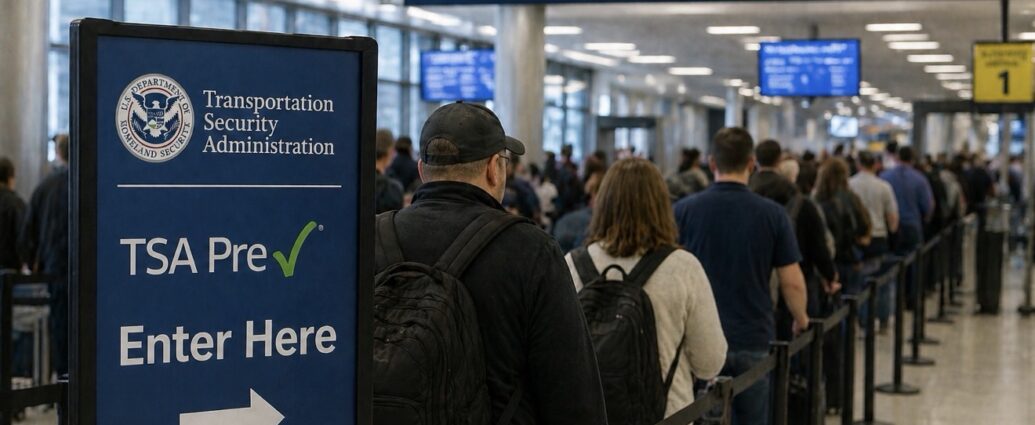
The White House is warning that a funding gap for the Transportation Security Administration could begin to disrupt airport operations within weeks, sharpening pressure on Congress to pass a broader homeland security spending measure before the busy summer travel season. In a memo described by Associated Press, the Office of Management and Budget said the Department of Homeland Security “will soon run out of critical operating funds,” a statement that framed the issue as an immediate operational risk rather than a routine budget dispute.
The administration’s concern centers on emergency payroll support that officials say is set to run dry by May, leaving the agency that screens millions of passengers each day exposed to staffing and service strains. The OMB memo, as reported by AP, said “restoring funding for the Department of Homeland Security has never been more urgent,” tying the warning to broader security demands and the need to protect essential functions across the department.
The budget math is stark. DHS faces a biweekly payroll obligation of more than $1.6 billion, and those funds are “drying up,” administration officials told reporters in remarks carried by AP. While the original source material identifies Markwayne Mullin as DHS Secretary, current official leadership records do not support that title, so the article relies on the administration’s broader funding warning and published reporting from AP and other outlets rather than that designation.
The political bottleneck now sits in the House, where Speaker Mike Johnson has faced competing demands from conservatives and the administration over how to move forward on the Senate-backed budget framework. “We need to get this done so American travelers aren’t left in limbo,” Johnson said on the House floor, according to Reuters, a line that underscored how the funding fight has shifted from a Washington appropriations battle into a potential consumer and business disruption story.
Airlines and airport operators are escalating their own pressure campaign, arguing that instability at TSA quickly spills into delays, missed connections and weaker confidence in the travel system. Airlines for America, the industry trade group for major U.S. carriers, said “the urgency to provide predictable and stable funding for TSA is growing stronger by the day,” according to a statement cited by AP, adding that aviation workers and passengers have repeatedly paid the price for congressional inaction.
That warning matters because the aviation system enters its most demanding stretch in late spring and summer, when staffing shortages can cascade across terminals and airline schedules. Analysts cited in recent coverage have said thinner screening ranks could lengthen checkpoint wait times and force carriers to adjust operations if disruptions intensify. In comments reported by the Financial Times, JPMorgan aviation analyst John M. Gaffney said airports could face a “15-20 percent increase in screening delays if TSA staffing gaps widen,” linking the budget fight directly to airline revenue and passenger throughput.
The Senate has already moved to advance a broader funding path, increasing pressure on House Republicans to decide whether to accept that framework or reopen the fight. “The Senate has fulfilled its responsibility and now urges the House to act without delay,” Senate Majority Leader Chuck Schumer told reporters, according to Bloomberg. That statement reflected a broader Democratic argument that the immediate issue is no longer policy design but execution: keeping security agencies funded before payroll stress turns into operational failure.
The standoff also highlights how unevenly different parts of homeland security have been protected during the impasse. Reporting cited in the source material said some immigration-related functions had access to other funding streams, while TSA relied more directly on temporary executive support to keep payroll moving. That distinction, noted in prior coverage from outlets including Fortune, helps explain why airport screening has emerged as the most visible pressure point for travelers, airlines and lawmakers alike.
For corporate travel managers, airlines and airport concession operators, the risk extends beyond long lines. A sustained screening slowdown can suppress booking confidence, raise labor costs and complicate schedule planning at a time when carriers typically count on strong seasonal demand. Reuters and AP both framed the issue as one with immediate real-world consequences, and the administration’s memo makes clear that the next congressional moves will determine whether this remains a warning or becomes a broader transportation problem.
What happens next is straightforward but consequential: the House must either move quickly on the Senate-approved budget path or produce an alternative that restores stable funding before the May deadline. The administration, airline industry and congressional leaders are all signaling that the window for delay is narrowing, and as OMB put it in the memo cited by AP, essential personnel and operations are at risk if lawmakers fail to act. With summer travel approaching, that makes the funding vote more than a partisan showdown; it is a test of whether Washington can keep a core piece of the U.S. travel economy functioning without interruption.
JBizNews Desk