
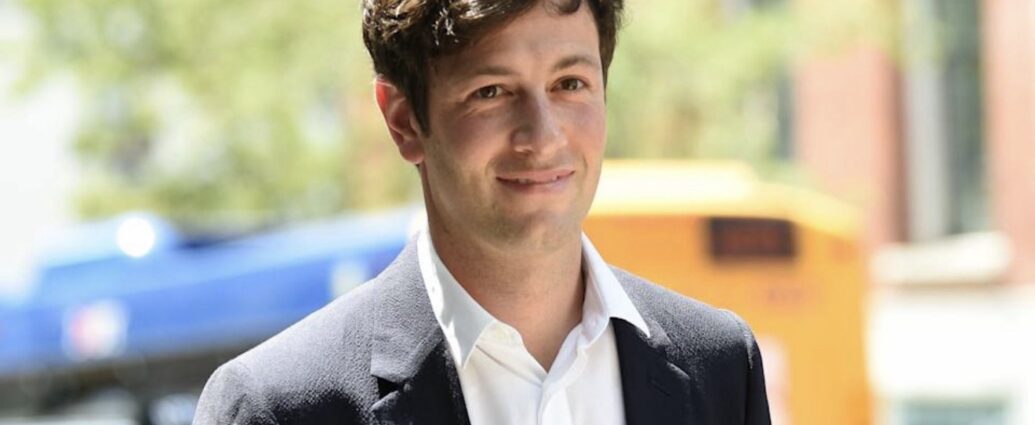
Josh Kushner runs a New York venture capital firm that made early bets on Instagram, Stripe, Spotify and OpenAI. On Wednesday he agreed, alongside former Disney chief executive Bob Iger, to buy the Los Angeles Lakers for $12.5 billion — the highest price ever paid for an American sports franchise. The 41-year-old is not a household name, which is largely by design, and that changed this morning.
The pair had been pursuing the NBA’s Las Vegas expansion team before pivoting to bid for the Lakers instead, buying from Mark Walter, who had taken control of the franchise from the Buss family only last year at a then-record valuation near $10 billion. In a joint statement, Iger and Kushner said they were honored to become stewards of the franchise and pledged to build on the Buss family’s foundation. Iger said the group would honor an existing arrangement keeping Jeanie Buss as team governor.
The valuation math is the part worth pausing on. The Lakers changed hands 14 months ago at $10 billion. They are changing hands again at $12.5 billion. That is a 25% markup on the largest sports asset in the country inside a single season, and it comes after a Bill Chisholm–led group paid $6.1 billion for the Boston Celtics in 2025. Franchise values are compounding faster than almost any asset class Kushner touches in technology.
Kushner founded Thrive Capital, which raised more than $10 billion in its most recent round. The firm manages roughly $25 billion and counts Iger himself among its investors, along with Henry Kravis, Mukesh Ambani, Jorge Paulo Lemann and Xavier Niel. Iger’s involvement is not new — he served as a venture partner at Thrive before Disney recalled him as chief executive in 2022.
Thrive’s portfolio runs from OpenAI and SpaceX to Spotify, Kim Kardashian’s SKIMS and the film studio A24. An offshoot, Thrive Holdings, buys into traditional industries with the aim of modernizing them using artificial intelligence. Kushner remains one of OpenAI’s most important backers, putting another $1 billion into the company in December. “I feel like we’re just getting started,” he said of Thrive on a February podcast.
Sports has become a separate track. Thrive Eternal, the vehicle handling those investments, took a stake in the San Francisco Giants earlier this year. Kushner already holds minority positions in the Miami Heat and the Memphis Grizzlies, both of which he would have to sell to take over the Lakers. That is a league requirement, not a preference: no owner may hold interests in competing franchises.
The Lakers deal also lands three weeks after a public setback. Thrive Eternal was part of a plan to sell private stakes in future World Cup tournaments, an arrangement FIFA scrapped after criticism from soccer’s confederations and member associations. Mark Conrad, a professor of law and ethics at Fordham’s Gabelli School of Business, told CNN that the Lakers purchase lets Kushner put that episode behind him and start fresh in sports.
Before venture capital, Kushner built an insurer. He founded Oscar Health in 2012 around the marketplaces created by the Affordable Care Act; the company recently posted record profits. Forbes puts his personal fortune around $5 billion.
He is also, unavoidably, a Kushner. His father is real estate developer Charles Kushner, and his older brother Jared is President Donald Trump’s son-in-law. Josh has kept his distance from that side of the family’s politics, saying in 2017 that liberal values had guided his life and that he had backed candidates who shared them. He has been married to model and entrepreneur Karlie Kloss since 2018, and they have three children.
None of it is finished yet. The sale requires approval from the NBA’s board of governors, a process that can take several weeks, and the transaction remains subject to Thrive’s due diligence. The seller, Walter, is chief executive of Guggenheim Partners and majority owner of the Dodgers; he and the firm are under investigation by federal prosecutors in Manhattan and the Securities and Exchange Commission over potential insurance fraud, which they deny. That inquiry has not been cited as a reason for the sale.
For Kushner, the through-line is the same one running through his technology bets: buy the scarce asset, hold it a long time, and let everyone else argue about the price.
JBizNews Desk | New York
© JBizNews.com All Rights Reserved. Reproduction or distribution without written permission is prohibited.




