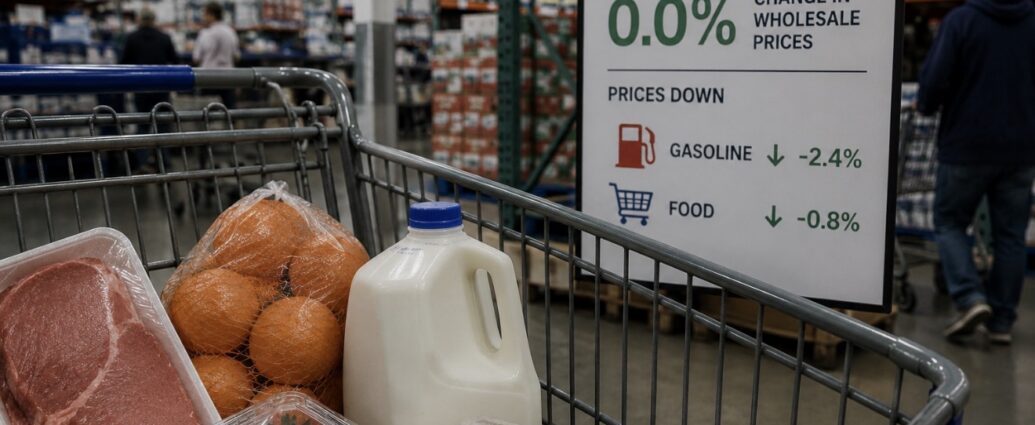
The prices businesses pay for their goods stopped rising last month. That is the number that eventually decides what you pay, and for the first time in a while it moved in the right direction.
The Labor Department’s producer price index — which measures inflation before it reaches consumers — rose 4.7% in July from a year earlier, down from a much larger 5.5% increase in June. Month to month, wholesale prices were unchanged, after ticking down 0.1% in June. Stripping out food and energy, the core measure rose 4.2% over the year, easing from 4.7%, with a monthly increase of 0.2%, down from 0.4%.
Put it in dollars. A year ago, the goods a store bought for $100 were costing about $105.50 twelve months later. Now that same $100 of goods costs about $104.70. Still going up — but a bit less steeply, and the gap between those two numbers is what eventually shows up as a smaller price sticker.
The main reason for the improvement was gasoline, which gave back some of the spike it took during the Iran war, along with cooling in other costs.
The wholesale number matters because it runs ahead of the one people actually feel. A grocer, a restaurant or a hardware store pays a wholesale price first, then sets the shelf price weeks or months later. When wholesale costs cool, shelf prices usually follow — not immediately, and not evenly, but they follow.
Some of that has already started. Consumer prices rose 3.4% in July from a year earlier, down from 3.5% in June, and just 0.1% from June to July. That is the second straight decline after higher gas prices pushed inflation to 4.2% in May, a three-year high. It is still well above the 2.4% rate that prevailed before the war.
Now the part that explains why none of this feels like good news at the register. Consumer prices have been rising faster than wages for four straight months. That is the whole problem in one line. Inflation slowing down does not mean prices are falling — it means they are climbing more slowly than before. If your paycheck is climbing slower still, you lose ground every month even as the headlines improve. When that gap persists, households cut back on everything that isn’t rent, utilities and groceries, which is how a squeeze on families turns into a slowdown for the whole economy.
Two things are worth watching from here.
The first is gasoline, which is the wild card. Fuel prices fell earlier in July, then turned higher late in the month and into early August. That could complicate the August inflation report when it lands next month — a reminder that energy can reverse a good trend in a matter of weeks.
The second is that relief is arriving unevenly, depending on who sets the price. Where retailers compete head to head, prices are coming down fast: Walmart cut a 24-pack of Coca-Cola to $9.97 from $14.97 and a pound of ground beef to $5.94 from $6.74. Target lowered prices on some foods in March. But where the cost comes from a policy or a supply problem, prices keep climbing regardless of what the wholesale index says. Tomatoes are up about a fifth from a year ago behind a 17% import duty, and lettuce is up 32%. Sherwin-Williams is raising paint prices 8% on Sept. 1.
For the Federal Reserve, the softer wholesale figures buy some breathing room — the central bank has been weighing whether it needs to raise interest rates to force inflation down further, and a cooler reading makes that less urgent. For anyone with a mortgage application in progress, that matters. The average 30-year mortgage rate slipped to 6.67% this week from 6.69%, its first drop in six weeks.
The honest summary: costs are easing at the front of the pipeline, they will take months to reach the checkout line, and until paychecks start outrunning prices again, most families won’t feel it.
JBizNews Desk | Washington, D.C.
© JBizNews.com All Rights Reserved. Reproduction or distribution without written permission is prohibited.