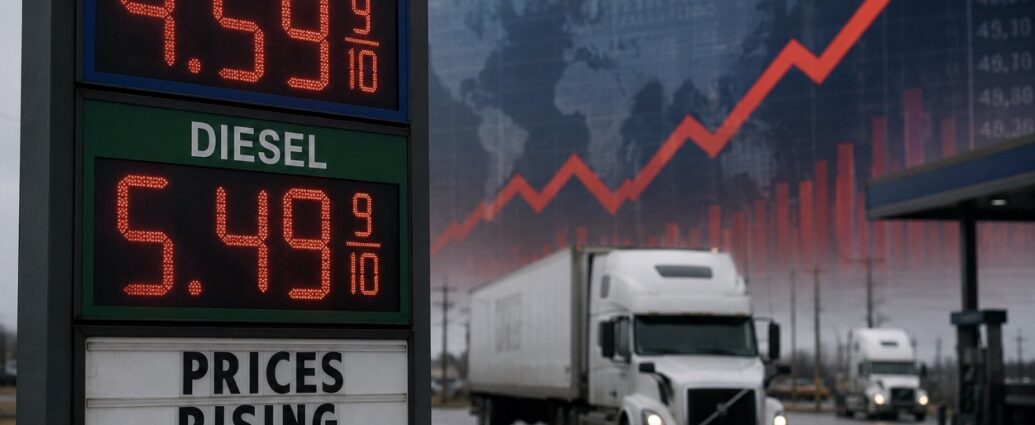
The U.S. Bureau of Labor Statistics reported Wednesday that the Producer Price Index for final demand surged 1.4% in April on a seasonally adjusted basis, marking the sharpest monthly increase since 2022 and delivering another sign that inflation pressures are accelerating across the American economy.
The reading came in far above Wall Street expectations for a 0.5% gain and followed an upward revision to March’s figure, which was raised to 0.7% from the previously reported 0.5%. On an annual basis, wholesale prices climbed 6.0% over the past 12 months, the highest yearly increase since December 2022.
The report lands one day after the government’s April Consumer Price Index showed consumer inflation accelerating to 3.8%, reinforcing fears inside financial markets that the Federal Reserve may be forced to keep interest rates elevated longer than investors had anticipated earlier this year.
Economists said the April producer inflation report reflects the growing impact of rising energy prices, tariff-related costs, transportation bottlenecks, and disruptions tied to the escalating Iran conflict and instability surrounding the Strait of Hormuz — one of the world’s most critical oil shipping routes.
Core producer inflation also showed broadening pressure beneath the surface. Excluding food and energy, core PPI rose 1.0% for the month, more than double economists’ forecasts, while the annual core rate climbed to 5.2%. Even the Fed’s preferred underlying gauge — final demand less foods, energy, and trade services — advanced 0.6%, signaling that inflation is no longer confined to oil and commodity shocks alone.
The energy category drove much of the headline increase. The BLS said prices for final demand goods rose 2.0%, led by a 7.8% spike in energy prices. Wholesale gasoline prices alone surged 15.6% during the month and accounted for more than 40% of the increase in goods inflation.
Those figures mirrored Tuesday’s CPI report, where retail gasoline prices jumped 28.4% year-over-year and became the single largest contributor to the overall inflation increase.
But analysts said the more concerning development for policymakers may be the rapid acceleration in service-sector inflation.
Prices for final demand services climbed 1.2% in April, the largest monthly increase since March 2022. Trade service margins — which reflect the spread earned by wholesalers and retailers — jumped 2.7%, while machinery and equipment wholesaling margins rose 3.5%. Transportation and warehousing services surged 5.0%.
Economists interpret those figures as evidence that businesses are increasingly passing higher costs directly to consumers instead of absorbing them internally.
David Russell, Global Head of Market Strategy at TradeStation, said the report confirms mounting concerns inside bond markets that inflation is becoming structurally embedded rather than temporary.
“Inflation is sticky and accelerating,” Russell said in a client note. “The services component is especially concerning because it points to deeper pressure beyond crude oil and headline energy volatility.”
Financial markets reacted immediately following the release. The yield on the benchmark 10-year Treasury note briefly climbed to 4.49% before easing slightly, approaching the psychologically important 4.5% threshold closely watched by investors and mortgage lenders.
Stock futures also turned lower after the data crossed the wires as traders sharply reduced expectations for any near-term Federal Reserve rate cuts.
The inflation surge is already beginning to hit American households more directly. The BLS said real average hourly earnings turned negative on an annual basis in April for the first time since 2023, meaning wage growth is no longer keeping pace with rising prices.
That erosion in purchasing power threatens to further pressure consumers already struggling with higher fuel, food, insurance, and borrowing costs.
Ben Ayers, Senior Economist at Nationwide, warned that the latest producer inflation figures likely signal additional consumer inflation ahead.
“We expect the pass-through from higher producer costs to continue in coming months,” Ayers said. “Headline CPI moving above 4% next month is now a realistic possibility.”
The report also intensifies political pressure surrounding the economy heading deeper into the summer.
President Donald Trump, speaking Tuesday before departing for meetings with Chinese President Xi Jinping, told reporters inflation pressures would ease once geopolitical tensions stabilize and energy markets normalize.
But economists cautioned that even if global oil disruptions ease quickly, inflation already embedded inside transportation, logistics, manufacturing, and service costs could take months — and potentially quarters — to unwind.
For the Federal Reserve, the latest data complicates an already difficult balancing act.
Cutting interest rates while producer inflation runs at 6.0% risks reigniting inflation expectations and weakening confidence in the Fed’s commitment to price stability. Yet additional rate hikes could place further strain on business investment, housing activity, and an already slowing labor market.
Mortgage rates have already remained elevated near multi-decade highs, commercial borrowing costs continue pressuring real estate developers and small businesses, and credit markets are showing signs of tighter lending standards following several months of renewed inflation volatility.
Fed officials have largely remained on hold throughout 2026, but markets increasingly view that stance less as strategic patience and more as a defensive pause while policymakers wait to see whether inflation stabilizes or accelerates further.
The next major test arrives quickly. The government’s May Consumer Price Index report is scheduled for release on June 10, followed by May Producer Price Index data on June 11.
Those reports may determine whether April represented a temporary geopolitical shock — or the beginning of a broader second wave of inflation across the U.S. economy.
JBizNews Desk
© JBizNews.com. All rights reserved. This article is original reporting by JBizNews Desk. Unauthorized reproduction or redistribution is strictly prohibited.