The Islamic Republic’s decision to renew its attacks on Gulf states early Sunday morning, despite the Memorandum of Understanding (MoU) signed by Tehran and Washington, was as much a signal of the regime’s continued commitment to its “resistance” axis for its hardliners as it was a protest against the Lebanon-Israel agreement, experts told The Jerusalem Post.
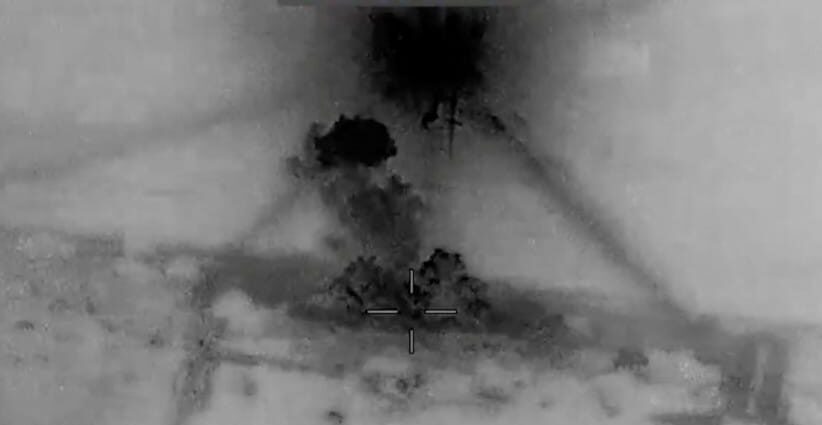
Iran targeted US military bases in Kuwait and Bahrain with missiles and drones shortly after US President Donald Trump renewed threats against the Islamic Republic, should it not honor the agreement.
“There may come a point when we are no longer able to be reasonable and will be forced to militarily complete the job that we very successfully started,” Trump said, adding, “If that happens, the Islamic Republic of Iran will no longer exist!”
IRGC says it will make US bases ‘experience hell in the coming days’
The Islamic Revolutionary Guard Corps (IRGC) Navy Command announced its plans for American bases in the region to “experience hell in the coming days.”
Though the IRGC said in a statement that it had only targeted US military bases, an Iranian attack damaged a residential building in the Muharraq province.
The United States initially launched attacks on Iran after a Panama-flagged tanker was attacked by an Iranian drone in the Strait of Hormuz on Saturday, a critical waterway that was meant to be opened as a condition to Iran receiving previously frozen assets and receiving a significant reprieve from sanctions, allowing it to sell oil.
With terms largely considered favorable to Iran by experts who have spoken with the Post over the past week, Dr. Menahem Merhavi, a fellow at the Harry S. Truman Institute for the Advancement of Peace at the Hebrew University of Jerusalem, explained that the Islamic Republic was trying to “show that they’re still in charge.”
The attacks, intended as a show of dominance, come as the Islamic Republic’s hold over Lebanon was seriously threatened by the Jerusalem-Beirut agreement on Friday. The agreement outlines a structured process for disarming the Iran-backed Hezbollah, which would eventually allow Israel to withdraw its troops from Lebanon.
Hezbollah, established in 1982 by supporters of the Islamic Revolution, is fundamentally rooted in the Iranian concept of Wilayat al-Faqih (Guardianship of the Jurist), making it a group loyal to the Islamic Republic.
This loyalty became apparent when the Shi’ite group dragged Lebanon into a renewed round of conflict in March in response to the killing of Ayatollah Ali Khamenei.
Threatening Iran’s hold in Lebanon, Hezbollah, “is something that really pushes their back to the wall,” Merhavi explained, alluding to the fact that a cornered Iran is more likely to strike and that the situation could worsen should Beirut’s efforts to rid itself of the group intensify.
Merhavi also noted that despite the terms of the agreement bringing the economic boost the struggling regime needed, hardliners have seen the negotiations as a form of concession to Western powers.
The attacks on Gulf nations, he said, are Iran “trying to give a few punches to show that they’re not defeated, that they didn’t just shake the hands of the Americans for nothing, and that they’re still daring despite the MoU.”
How will Washington react to Iran’s ‘punches’?
Whether the agreement will fall through entirely depends on how Washington reacts to the “punches,” Merhavi noted.
For Bahraini analyst Dr. Ahmed Alkhuzaie, the issue is very much that the MoU provided a band-aid for a wound needing more serious treatment.
“By focusing on optics and short‑term relief, the MoU froze the surface of the conflict but left its structural triggers untouched, making the arrangement inherently fragile,” he explained.
“The Memorandum of Understanding did not so much successfully reopen the Strait of Hormuz as it temporarily eased pressure on maritime traffic without resolving the deeper crisis.
“In reality, the agreement was a narrow, stopgap measure that treated shipping lanes as an isolated technical issue, while deliberately excluding the core drivers of instability: Iran’s advancing nuclear program, its entrenched proxy networks, and its expanding missile and drone arsenals.”
From the Gulf perspective, Alkhuzaie said that Iran’s actions are not being accepted as random breaches but “calculated moves to exploit the truce,” using the “MoU as a shield that lowers the risk of direct US retaliation, giving it space to consolidate regional leverage.”
“By keeping provocations below the threshold of triggering a kinetic American response, Iran tests the boundaries of the agreement and signals that its operational freedom remains intact despite the diplomatic framework,” he noted, stating that such actions widen the gap between the US and its Gulf partners.
“For Gulf capitals, Iran’s strikes prove that the MoU lacks deterrent power, functioning more like a managed ceasefire than a genuine security guarantee. The perception grows that Washington is increasingly focused on risk avoidance and crisis management rather than enforcing absolute security.”
Iran’s decision to continue attacks is also a signal to both the Gulf and Washington that “paper agreements” will not contain its deployment of asymmetric tools, he continued, adding that the attacks communicated Tehran was unwilling to depart from its regional influence, whether that be through its proxy network or through holding maritime security hostage.
“By ensuring that its neighbors remain within operational reach, Iran creates a permanent state of latent risk, establishing a framework where any future negotiations over its nuclear program or regional security must explicitly account for and accommodate its asymmetric leverage,” he highlighted.
The message that this strategy communicates ties back to the Islamic regime’s foundational, ideological mandate, “the export of the revolution – which requires a state of perpetual external friction,” Alkhuzaie explained.
“To abandon this revolutionary posture in favor of a definitive, Western-style peace would strip the ruling clerical and military elite of their domestic legitimacy and their primary rationale for holding power.
“Consequently, Tehran does not view diplomacy as a pathway to an ultimate peace but rather as an instrument of crisis management designed to ease economic pressure while preserving its core strategic objectives.”