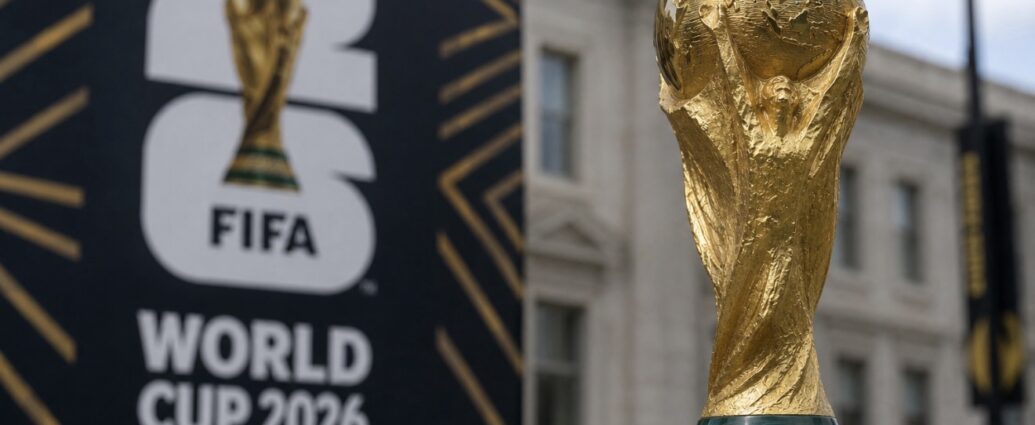
The 2026 FIFA World Cup, billed as the biggest gambling event in history, has become a record-breaking stretch for the companies that let Americans trade on the outcome. Kalshi cleared more than $31 billion in notional trading volume in June, up more than 70% from $17.9 billion in May, according to user-collected data on Dune Analytics, while rival Polymarket posted a record $10.8 billion on its international platform. The figures, tallied as the tournament reached its knockout rounds over the July 4 weekend, are the clearest sign yet that event-contract exchanges have moved from a crypto curiosity to mainstream finance.
Kalshi has kept daily trading volume above $1 billion nearly every day since the tournament kicked off on June 11, the first World Cup expanded to 48 teams. Polymarket’s international platform handled more than $10.8 billion in June, while its U.S.-regulated platform processed more than $3.5 billion, up from $1.77 billion a month earlier, as traders poured into contracts tied to individual matches, tournament winners and player propositions.
The surge has also produced a new competitor. Rothera, an event-contract exchange formed as a joint venture between trading firm Susquehanna International Group and Robinhood, launched in June and immediately generated more than $2 billion in trading volume after Robinhood began routing certain World Cup contracts through the platform. According to Bank of America, Rothera already accounts for about 7% of the U.S. prediction-market industry.
Retail investors have concentrated heavily on the U.S. national team. Traders have placed more than $64 million on Kalshi and $122 million on Polymarket wagering that the United States will win the tournament, despite both exchanges assigning only low single-digit probabilities—approximately 4.3% on Kalshi and 3% on Polymarket. Team USA faces Belgium in the Round of 16 on Monday night, a match expected to generate another surge in trading activity.
The largest individual market remains the tournament champion. Kalshi’s World Cup Winner contract has attracted more than $832 million in trading volume, with roughly 35% of money backing France, the tournament favorite. Both exchanges have aggressively promoted the event to attract new customers. Polymarket offered a prize worth up to $2 million for anyone submitting a perfect knockout-stage bracket, while Kalshi prominently featured World Cup trading in the title of its mobile application.
Trading data also suggests users are holding positions rather than simply placing short-term wagers. Kalshi’s open interest—the value of active contracts awaiting settlement—has climbed above $1 billion for the first time. Polymarket’s open interest sits just below $400 million, elevated but generally consistent with recent months. Bank of America estimates Kalshi has averaged roughly $125 million in trading volume per World Cup match, with parlays accounting for about one-third of that activity, while controlling nearly 80% of the U.S. sports prediction-market sector.
The industry’s rapid growth is unfolding alongside an important legal battle.
More than a dozen states have challenged Kalshi and Polymarket, arguing the companies are operating unlicensed sports betting businesses. The exchanges, supported by the Commodity Futures Trading Commission (CFTC), maintain that event contracts fall under federal commodities law rather than state gaming regulations. CFTC Chairman Michael Selig has criticized state enforcement actions against federally regulated exchanges and warned the agency is prepared to defend its jurisdiction in court. Legal experts believe the dispute could ultimately reach the U.S. Supreme Court.
The industry’s handling of unprecedented sports-related trading volume is also attracting attention beyond regulators.
Asaf Meir, chief executive of market-integrity firm Solidus Labs, which works with Kalshi, described the World Cup as a proving ground at a time when regulators, institutional investors and Wall Street firms are evaluating whether prediction markets can expand well beyond sporting events into elections, economic data and other real-world outcomes.
The tournament concludes on July 19 at MetLife Stadium in New Jersey.
By then, the platforms will not only have crowned a World Cup champion—they will also have established a public track record that could influence how far prediction markets are allowed to expand into mainstream finance.
JBizNews Desk | New York
© JBizNews.com All Rights Reserved. Reproduction or distribution without written permission is prohibited.