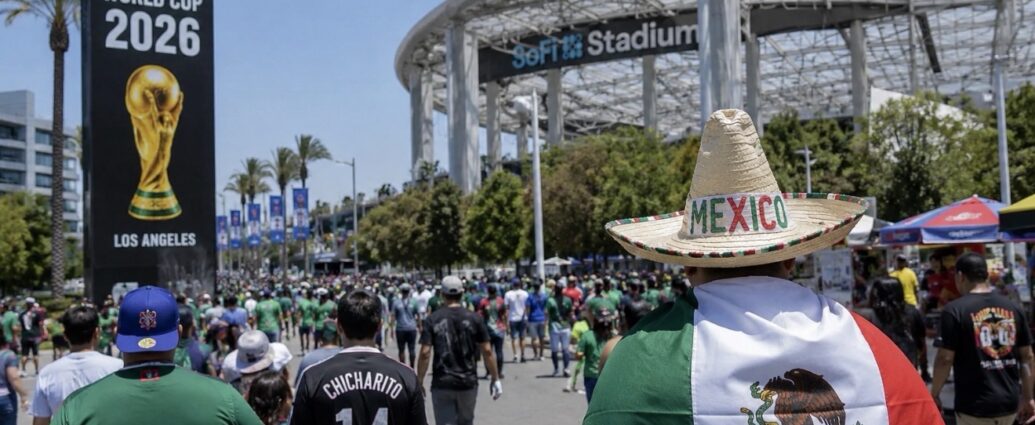
The 2026 FIFA World Cup, now underway across the United States, Canada, and Mexico, is on track to become the biggest sports betting event in American history, according to projections from leading gaming research firms. Analysts at Eilers & Krejcik Gaming estimate U.S. legal sportsbooks will take in roughly $2.82 billion in wagers during the tournament under their base-case forecast, with an upside scenario exceeding $4.3 billion. Either figure would eclipse betting volumes seen during recent Super Bowls and NCAA March Madness tournaments.
The tournament opened on June 11 and runs through the July 19 championship match at MetLife Stadium in East Rutherford, New Jersey. Along the way, matches are being played in major host cities including Los Angeles, New York/New Jersey, Dallas, Atlanta, Miami, Houston, Seattle, Philadelphia, Boston, Kansas City, San Francisco Bay Area, Guadalajara, Mexico City, Monterrey, Toronto, and Vancouver.
For the United States, the tournament represents more than a sporting event. It has become a major economic driver for sportsbooks, host cities, tourism businesses, restaurants, hotels, and state governments.
Soccer has traditionally ranked behind football and basketball in American sports betting, but several factors have changed that equation. This is the first World Cup hosted largely on North American soil in more than three decades, the first featuring an expanded 48-team field and 104 matches, and the first offering television schedules that are convenient for U.S. audiences instead of requiring early morning viewing because of overseas time zones.
Legalized sports betting has also expanded dramatically since the U.S. Supreme Court struck down the federal sports betting ban in 2018. More than 30 states now allow legal mobile sports wagering, enabling millions of Americans to place bets directly from their smartphones.
For sportsbook operators, the World Cup represents an enormous business opportunity.
Deutsche Bank projects that FanDuel will process roughly $1.3 billion in World Cup wagers, while DraftKings is expected to handle approximately $1.1 billion. BetMGM and Caesars Sportsbook are projected to account for another $300 million to $500 million combined. ESPN Bet and Fanatics Sportsbook are also expected to benefit from increased customer activity throughout the tournament.
Unlike American football, however, soccer produces relatively thin profit margins for sportsbooks. Industry analysts estimate operators retain only about 5 to 7 percent of the total amount wagered on soccer after paying winning bettors. That makes betting volume—not higher margins—the key to profitability.
Another development this year is the growing role of federally regulated prediction markets.
Platforms such as Kalshi and Polymarket allow users to trade contracts tied to match outcomes, group winners and the eventual World Cup champion. One industry projection estimates prediction-market trading volume during the tournament could reach $2.37 billion, although that figure includes contracts that are bought and later resold. Alex Kane, chief executive of Sporttrade, estimates the equivalent betting handle is closer to $474 million.
Globally, the numbers are even larger.
Research firm H2 Gambling Capital estimates approximately $60 billion will be wagered worldwide across legal and illegal markets during the tournament. Of that total, roughly $2.9 billion is expected to come through legal U.S. sportsbooks, $2.5 billion through Mexico, $300 million through Canada, and the remaining $54 billion through betting markets across Europe, Asia and Latin America.
The surge in betting also carries significant implications for state finances.
States with legalized sports wagering tax sportsbook revenue, meaning higher betting activity generally produces additional tax collections. Depending on the jurisdiction, those funds may support education, transportation, infrastructure, public safety or state general funds. A record-breaking World Cup could therefore become one of the largest sports-related tax events ever experienced by many states.
Several factors could determine whether betting reaches the upper end of analyst forecasts.
One is the performance of the U.S. Men’s National Team. Analysts say a deep run by the American squad would likely attract millions of casual fans who otherwise would not place bets. Another is continued consumer participation. Industry surveys indicate that a majority of people planning to closely follow the tournament expect to place at least one wager, while several sportsbook operators have reported customer engagement running ahead of internal expectations.
For now, the projections remain just that—projections. Final betting figures will not be available until after the World Cup concludes in July. But with millions of dollars already flowing through sportsbooks every day and strong consumer interest across North America, analysts believe the tournament is well on its way to becoming the largest legal sports betting event the United States has ever seen.
JBizNews Desk
New York
© JBizNews.com All Rights Reserved. Reproduction or distribution without written permission is prohibited.