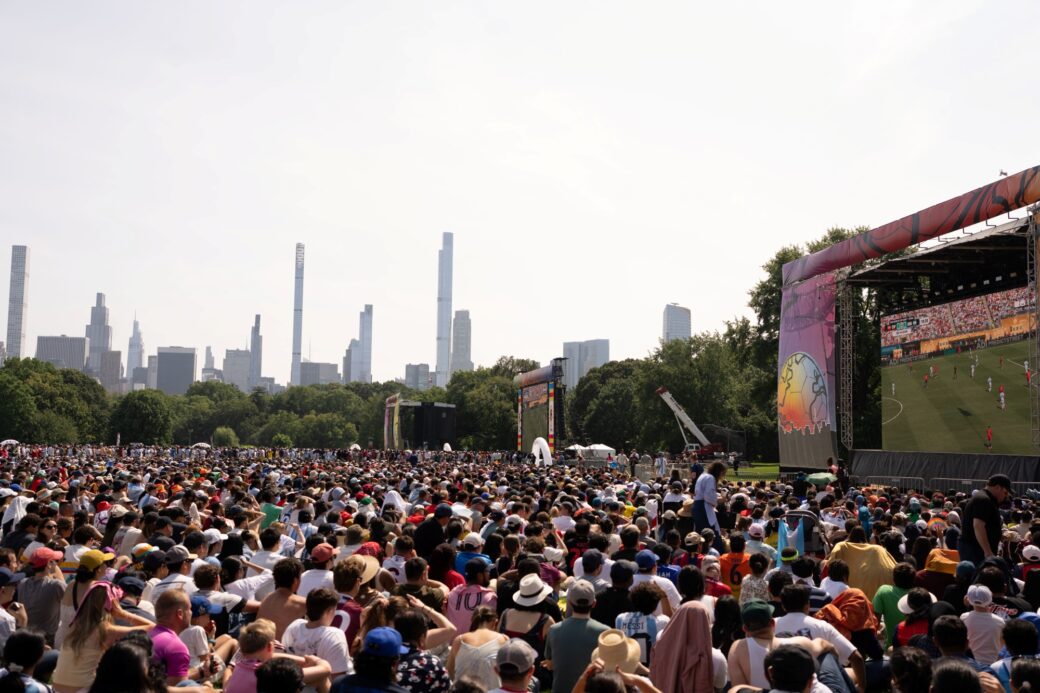
The 2026 FIFA World Cup has officially come to a close, bringing hundreds of thousands of soccer fans to the New York-New Jersey area for eight matches at MetLife Stadium. Now, city and state officials are assessing whether the projected economic impact of hosting the tournament materialized. While the region’s overall economic impact goals will likely be met, some projections, including a boost in hotel occupancy, fell short of expectations.
Initial projections
Last July, the NYNJ Host Committee released an economic impact summary projecting that NY and NJ would receive a $3.3 billion economic boost from hosting eight tournament matches, with more than 1.2 million visitors expected to attend.
The report also estimated $1.3 billion in total labor income for the regional economy and $1.7 billion in spending from match and non-match attendees, according to Bloomberg.
Additionally, the organization projected that more than 26,000 jobs would be generated across both states to support the tournament, along with roughly $432 million in state and local tax revenue. Hotels across the five boroughs were expected to generate between $250 million and $300 million in additional revenue.
Actual economic impact
A report from Tourism Economics found that through the five World Cup Group Matches hosted in New Jersey in June, there was $1.2 billion in direct visitor spending, generating $2.1 billion in total economic impact. That number does not include operational spending or the impact of the games hosted in July, including the Final match held on Sunday.
According to the NYNJ Host Committee, $228 million in state and local tax revenue was generated during the Group Stage in June.
FIFA is expected to announce a record $15 billion in revenues from the entire tournament, which spanned 16 cities across North America, far exceeding the projected $11 billion.
While the World Cup delivered major gains across several economic indicators, some industries still fell short of expectations.
Hotels & tourism
Hotels across the city fell short of their initial projections, generating between $100 million and $150 million in additional revenue—about half of the $250 million to $300 million originally estimated, according to the New York Times.
Between June 8 and July 4, the New York metropolitan area generated roughly $1.07 billion in hotel room revenue, a 20.6 percent increase compared to the same period last year.
However, officials noted that some of the increase was likely driven by the New York Knicks’ NBA Finals appearance. Vijay Dandapani, president and CEO of the Hotel Association of New York City, told Crain’s that in the days following the team’s first championship victory since 1973, hotel occupancy dropped sharply, with occupancy rates between June 15 and June 20 falling below the same period in 2025.
In the Mid-Hudson region, hotels generated approximately $86 million in room revenue during the same period, up 18.3 percent year-over-year. On Long Island, hotels generated around $117 million, representing a 24 percent increase from the previous year.
New Jersey hotels saw revenue increase by more than $40 million during the tournament when compared to the same period last year, as reported by the Times. The Garden State also saw a substantial boost in Airbnb and similar short-term rental bookings. In Jersey City and Newark, demand increased 37 percent compared to the same period in 2025.
Meanwhile, demand in NYC increased just 3 percent, a figure attributed to the city’s stricter regulations surrounding short-term rentals in the five boroughs.
The eight consecutive sold-out matches at MetLife Stadium welcomed more than 560,000 fans. Through the first five matches held at the stadium in June, the state recorded $1.2 billion in direct visitor spending and a total economic impact of $2.1 billion. Those figures did not include the final three matches, but state officials said the tournament was expected to far exceed initial revenue projections, according to a press release.
The Times Square Alliance told the Times that Times Square saw an average of 254,400 pedestrians per day from mid-June to mid-July, a 7 percent increase compared to the same period last year. The area’s daily peak reached 305,300 pedestrians.
Bars & restaurants
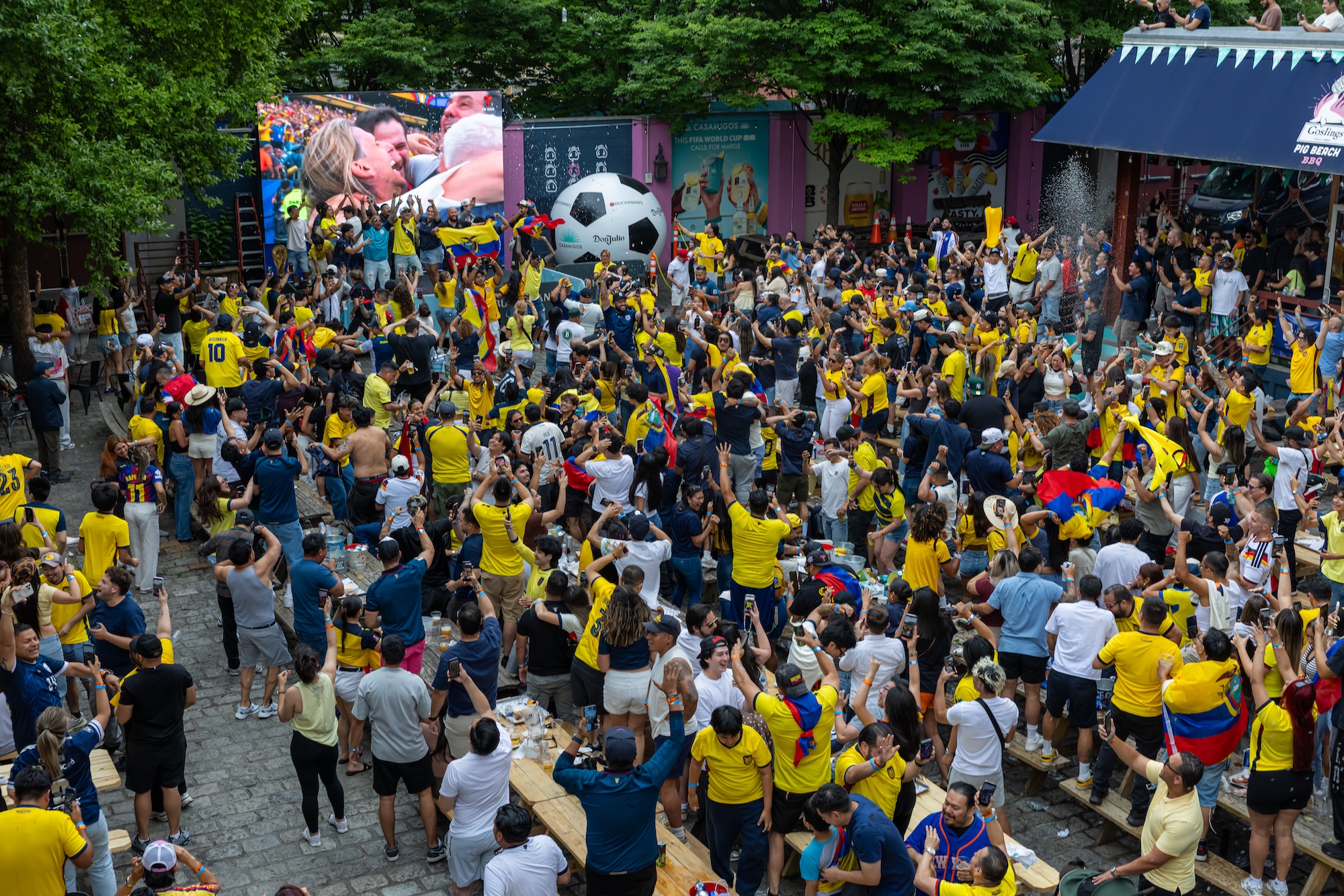
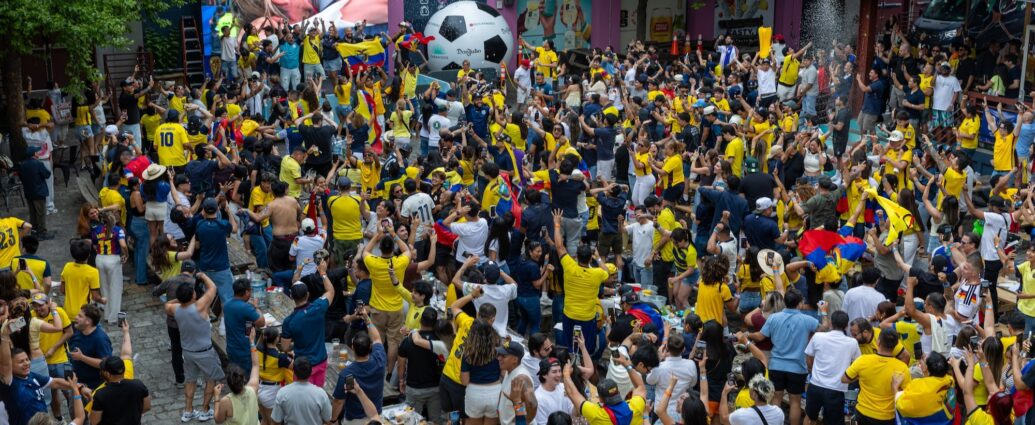
Many bars and restaurants across the city reported benefiting from the tournament, according to a snap survey of 60 businesses conducted by the NYC Hospitality Alliance. Among venues that aired the matches, 63 percent reported increased sales, including 29 businesses that saw a significant increase.
More than half hosted watch parties, nearly half added televisions or upgraded audiovisual equipment, 46 percent scheduled additional staff or shifts, and 42 percent offered match-day food and drink specials.
Additionally, 70 percent of respondents said the excitement surrounding the World Cup being hosted in the region had a positive effect on the city’s business climate, rising to 76 percent among venues that screened matches.
However, businesses that did not show the matches were more likely to report lower sales, with some respondents also citing street closures, delivery disruptions, operating restrictions, and communication challenges as obstacles.
The Host Committee’s Welcome Rewards Program, launched in May, generated roughly 10,000 visits to more than 1,000 small businesses, restaurants, cultural institutions, and community events across NY and NJ by encouraging fans to earn points and prizes through local spending.
NYC also launched its own special meal program, the “Five Boroughs Winners Special,” which offered $26 meal and drink deals, along with commemorative cups, at more than 900 restaurants and bars.
Transportation
Transportation to the tournament proved smoother than anticipated. NJ Transit told the Times that it carried between 22,000 and 26,000 fans to and from each match, totaling roughly 185,000 passenger trips. The average ride from Penn Station to MetLife Stadium took about 35 minutes.
New Yorkers also benefited from discounted bus transportation to MetLife Stadium, with round-trip fares reduced from $80 to $20. Through the service, 97 percent of fans arrived at the stadium before kickoff, with nearly 120,000 bus tickets sold.
Buses transported fans from staging areas to the stadium in less than 10 minutes, while Midtown travel times were up to 23 percent faster than historical averages across all eight match days, despite the influx of visitors.
“When we brought the FIFA World Cup to New York, we wanted to make sure every New Yorker, every community and every industry would benefit—these past six weeks have proven that effort a success,” Gov. Kathy Hochul said.
“As fans from around the world flocked to New York, hotel revenues went up, spending at local businesses increased and our affordable buses moved people to and from the game faster than ever,” she added.
However, ridership fell short of initial projections, which called for up to 40,000 fans to take NJ Transit per match. As a result, more attendees drove to the stadium despite limited parking availability and prices starting at $225 per space. The increase in vehicle traffic contributed to congestion around MetLife, including during some rush-hour commutes.
While tournament attendees benefited from quick service to the stadium, regular NJ Transit riders faced increased delays and service changes. On match days, NJ Transit prohibited riders from boarding NJ-bound trains from Penn Station for four hours before kickoff.
RELATED:
- NYC Council wants a ‘cultural passport,’ more public bathrooms, and Pelé Way for World Cup
- 2026 World Cup Final will be held in New Jersey
- NYC and NJ selected as host city for 2026 FIFA World Cup
The post World Cup brought billions in economic impact to NYC region first appeared on 6sqft.