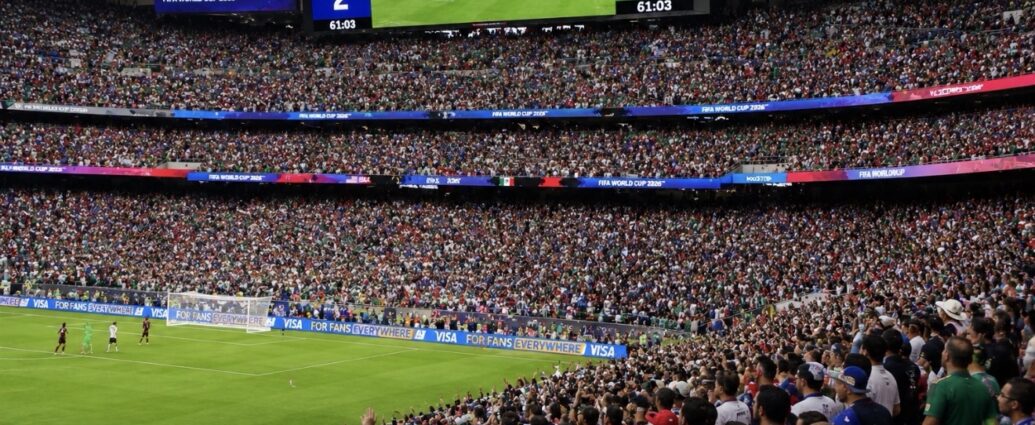
The 2026 FIFA World Cup has shattered soccer’s all-time attendance record, with packed stadiums across the United States, Canada and Mexico drawing unprecedented crowds and delivering a major economic boost to host cities. A total of 4,644,549 fans passed through the turnstiles during the group stage that concluded late last month, filling 99.7% of available seats and averaging 64,508 spectators per match, according to FIFA. The total surpassed the previous group-stage attendance record of about 3.6 million, set when the United States hosted the tournament in 1994.
“This is a true reflection of our fans’ love for the beautiful game,” FIFA President Gianni Infantino said as the group stage wrapped. With the knockout rounds now underway and the July 19 final approaching, the crowds continue to grow. The tournament also set a single-day attendance record of 426,834 spectators on June 25, while fans from 210 countries and territories have attended matches so far.
For host cities, those record crowds are translating into significant business activity. Card spending across the tournament’s 16 host cities climbed 5.4% from a year earlier between June 10 and June 28, while spending by out-of-town visitors surged 17.4%, according to the Bank of America Institute. Hotels, restaurants, bars, retailers and rideshare companies have all benefited from the influx of visitors, while FIFA fan festivals in cities from Philadelphia to Los Angeles have attracted millions more who never entered a stadium.
The concession numbers tell their own story. During the group stage alone, fans purchased more than 2.8 million beers, 300,000 hot dogs and nearly one million bottles of water inside stadiums, according to FIFA. More than three million supporters also signed up for digital Fan IDs, giving organizers and sponsors direct access to one of the largest global sports audiences ever assembled.
Attending the tournament has not come cheaply. On FIFA’s official ticketing platform, seats for the 104-match tournament have ranged from about $60 to nearly $11,000, with prices fluctuating based on demand. For the championship match at MetLife Stadium outside New York, premium seats reached roughly $33,000, while resale tickets for marquee knockout matches were listed near $20,000 on StubHub. Fans following their teams from city to city have reported spending anywhere from about $2,500 for a single destination trip to as much as $150,000 for premium hospitality packages covering multiple matches.
The travel boom has been uneven across the hospitality industry. A report from FCM Consulting found hotel rates in 13 of the 16 host cities climbed at least 80% compared with last year. Rooms in Guadalajara that averaged about $90 last summer were going for $511, while Boston averaged roughly $611 a night and Houston about $205. Before kickoff, however, the American Hotel & Lodging Association reported that roughly 80% of host-city hotels were seeing bookings below expectations, with many operators citing visa delays and geopolitical uncertainty that discouraged some international travelers. Domestic visitors have made up much of the attendance.
The excitement on the field continues to keep stadiums full. The U.S. Men’s National Team faces Belgium in the Round of 16 on Monday in Seattle, though it will be without leading scorer Folarin Balogun, who is suspended after receiving a red card in the victory over Bosnia and Herzegovina. Mauricio Pochettino’s squad is seeking its first World Cup quarterfinal appearance since 2002, while defending powers led by stars including Kylian Mbappé remain among the favorites to win the tournament.
For businesses, every sold-out match brings another wave of customers. FIFA, which operates as a nonprofit and reinvests tournament revenue into developing the sport, estimates in a study prepared with the World Trade Organization that the World Cup will generate $80.1 billion in global economic activity, including $30.5 billion in the United States alone. Whether host cities ultimately realize lasting economic gains will be debated long after the final whistle, but for now the numbers are unmistakable: stadiums are packed, businesses are bustling, and the 2026 FIFA World Cup has already made attendance history.
JBizNews Desk | New York
© JBizNews.com All Rights Reserved. Reproduction or distribution without written permission is prohibited.