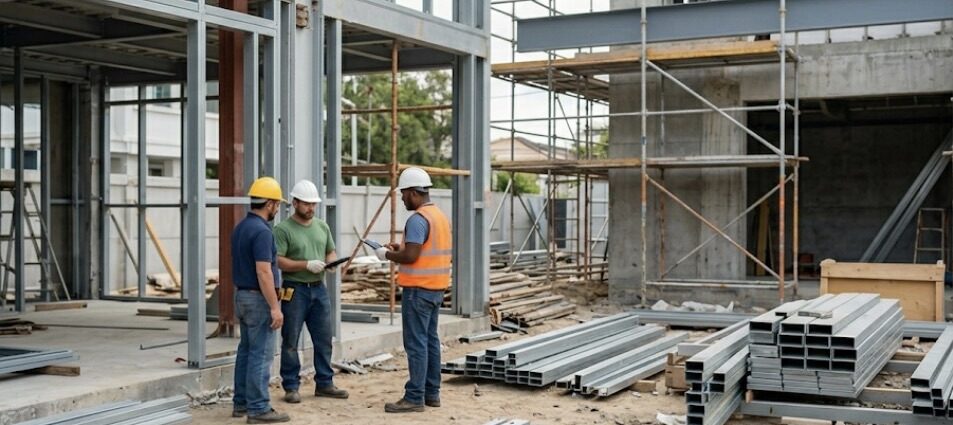
Construction employers are seeing a modest improvement in how younger workers view the trades, but the industry still confronts a stubborn labor shortage that threatens housing supply and project timelines. In a report released April 20, National Association of Home Builders said interest in construction careers among adults ages 18 to 25 has doubled over the past decade to 6% from 3%, and the group said 73% of young adults cited “good pay” and the chance to gain “useful skills” as key reasons to consider the field, according to the association’s latest workforce research.
Even with that shift, NAHB made clear the pipeline remains too thin for the industry’s needs. “Additional work is needed to educate the public about the growing opportunities for well-paying, long-term careers in the skilled trades,” the association said in its report, pointing to a gap between improving perceptions and actual recruitment. That matters for homebuilders because labor constraints continue to limit how quickly companies can bring new homes to market, a pressure NAHB has repeatedly tied to affordability challenges across the U.S. housing market.
The broader labor picture remains tight. Associated Builders and Contractors said in its 2025 workforce outlook that the construction industry would need to attract hundreds of thousands of additional workers on top of normal hiring demand to keep pace with expected activity. Anirban Basu, chief economist at ABC, said in that report that “the construction industry must continue to raise wages, enhance benefits, and invest in workforce development” if it wants to close the gap, a warning that underscores why even better sentiment among Gen Z has not yet translated into enough new entrants.
Federal data show why employers remain concerned. The U.S. Bureau of Labor Statistics has said employment in construction and extraction occupations is projected to grow over the next decade, with many openings coming not only from expansion but also from retirements and workers leaving the field. In its occupational outlook, BLS said median pay in many construction trades exceeds the national median for all occupations, reinforcing NAHB’s finding that compensation remains one of the industry’s strongest recruiting tools.
Builders and trade groups have argued for years that the sector suffers from an image problem as much as a wage problem. Home Builders Institute, the workforce development arm of NAHB, has said employers need to counter outdated assumptions that four-year college paths offer the only route to stable earnings. Ed Brady, president and chief executive of HBI, has said in public remarks that skilled trades careers can offer “excellent wages and career advancement without the burden of student debt,” a message the organization has used in outreach to schools, community groups and military veterans.
That message appears to resonate more than it did a decade ago, but not enough to erase structural barriers. NAHB said younger adults still need more exposure to what modern construction jobs look like, including the use of technology, specialized training and clear advancement tracks. The association’s report said many respondents remain unfamiliar with the range of opportunities available, from carpentry and electrical work to project management and specialty contracting, suggesting the industry still struggles to market itself effectively to first-time job seekers.
The stakes extend beyond builders’ payrolls. Federal Reserve Chair Jerome Powell has said repeatedly that the U.S. housing market faces a long-running shortage of available homes, and industry groups argue labor scarcity adds to that imbalance by slowing completions and raising costs. NAHB has said that “builders continue to face elevated construction costs and persistent labor shortages,” a combination that can feed directly into home prices and rents. For executives across real estate, building materials and home improvement, the workforce issue has become a core operating constraint rather than a temporary post-pandemic disruption.
Companies have responded by expanding apprenticeship programs, partnering with high schools and community colleges, and promoting shorter training pathways. National Center for Construction Education and Research has said in its workforce materials that credential-based training can help workers move into jobs faster while giving employers a more predictable skills pipeline. At the same time, economists and trade groups continue to note that demographic trends, including an aging workforce, mean replacement hiring alone will remain a major challenge for years.
The latest NAHB findings suggest the industry has made some progress in changing minds, especially among younger adults who increasingly value practical skills and earnings potential. But the report’s central message is less celebratory than cautionary: interest is rising from a very low base, and employers still need to convert awareness into actual hires. What comes next will matter well beyond the jobsite. If builders, educators and policymakers can turn that early interest into sustained recruitment, the payoff could reach housing supply, infrastructure capacity and wage growth across the trades; if not, the labor squeeze that has dogged construction for years is likely to remain a defining business risk.
JBizNews Desk