JBizNews Desk
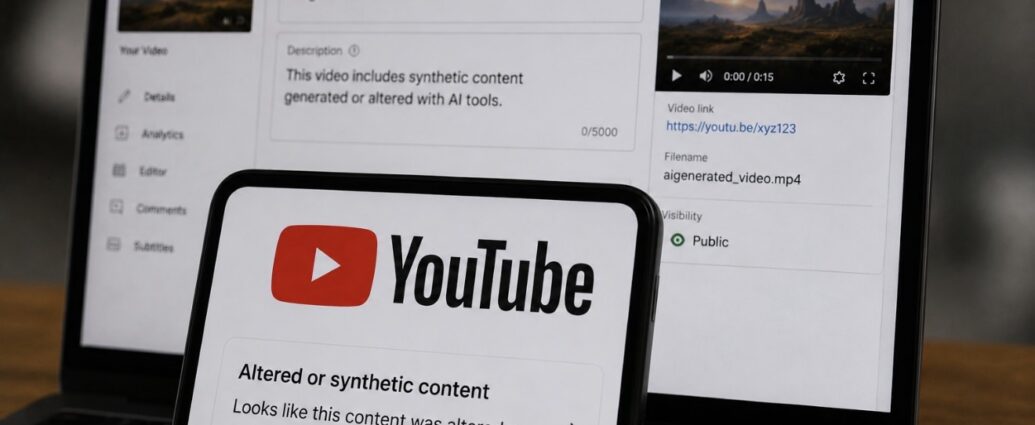
YouTube announced Wednesday that it will begin automatically detecting and labeling videos containing significant photorealistic AI-generated content, marking a major shift away from the platform’s previous reliance on creators voluntarily disclosing synthetic media themselves.
The change reflects growing pressure on major technology platforms to address the explosion of realistic AI-generated video flooding social media and online content feeds.
Under the updated system, YouTube said its detection tools will automatically apply disclosure labels when its systems identify substantial AI-generated or manipulated visual content — even if creators fail to disclose it themselves.
The rollout begins gradually this month.
The company originally introduced voluntary AI-content disclosures in 2024, but acknowledged Wednesday that users increasingly want clearer transparency surrounding synthetic media as generative video tools become more advanced and difficult to distinguish from real footage.
The labels are also becoming significantly more visible.
For standard long-form videos, the disclosure will now appear directly beneath the video player and above the description section. For YouTube Shorts, labels will appear as overlays directly on the video itself.
Less realistic or clearly fictional content will continue receiving more limited disclosures inside expanded descriptions.
The company said creators who believe their content was incorrectly flagged can appeal through YouTube Studio. However, labels may remain permanently attached in cases where videos were created using Google-owned AI systems such as Veo or Dream Screen, or when videos include embedded C2PA metadata or SynthID watermarks indicating AI generation.
YouTube said its systems rely partly on metadata analysis and watermark detection to identify synthetic content, though the company declined to fully disclose the technical methods behind the detection tools.
Importantly for creators, the labels will not directly reduce monetization eligibility or suppress videos inside recommendation algorithms.
The company framed the disclosures as informational rather than punitive, arguing that transparency offers a more scalable solution than broad removals as AI-generated content rapidly expands online.
The announcement arrives alongside a broader tightening of YouTube’s policies surrounding deepfakes and synthetic media.
Earlier this month, the platform expanded its deepfake removal protections to cover all adults over age 18, allowing individuals to request removal of AI-generated content depicting their likeness. Voice-cloning protections are also expected later this year.
For YouTube, whose business depends heavily on viewer trust and advertiser confidence, the new labeling system represents a balancing act: allowing creators to continue using AI tools while giving viewers clearer signals about what is real and what is synthetic.
As increasingly realistic AI-generated content floods the internet, YouTube is effectively betting that disclosure — rather than outright bans — will become the most practical way to manage the next era of online media.
San Bruno, California — JBizNews Desk
© JBizNews.com All Rights Reserved. Reproduction or distribution without written permission is prohibited.