By JBizNews Desk
Mark Zuckerberg said something Wednesday that could quietly reshape the cloud computing business.
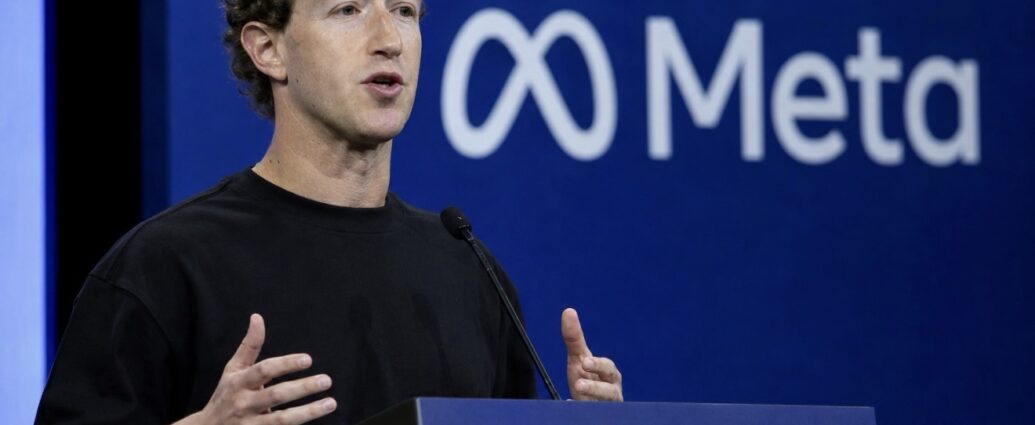
Asked at Meta’s annual shareholder meeting whether the company would ever compete with Amazon and Microsoft in cloud computing, Meta chief executive Mark Zuckerberg answered plainly: “It’s definitely on the table.”
The condition he attached was just as interesting as the answer.
Meta would consider getting into the cloud business, Zuckerberg said, if the company ends up building more data-center capacity than it needs for itself.
To understand why that matters, it helps to know one thing about how Big Tech is structured today.
There are four companies in America that build computing power at a truly massive scale — what the industry calls hyperscalers.
Three of them — Amazon, Microsoft and Google — rent that computing power out to other businesses. That rental business has names everyone in tech knows: AWS, Azure and Google Cloud. Together they generate hundreds of billions of dollars a year selling computing power to companies that do not want to build their own infrastructure.
Meta is the fourth hyperscaler.
And Meta is the only one of the four that does not sell its computing power to anyone else.
Until now, Meta has built data centers strictly to power its own businesses — Instagram, WhatsApp, Facebook and, increasingly, its artificial intelligence models.
What changed is the scale of what Meta is building.
The company told investors in April that it now plans to spend between $125 billion and $145 billion on capital expenditures in 2026 — most of it on AI data centers and the chips that go inside them.
That is nearly double what Meta spent in 2025, and more than the company spent in 2025 and 2024 combined.
Meta is building so much infrastructure that one data-center campus alone, in rural Louisiana, will use roughly the same amount of electricity as 4.2 million homes.
That is the backdrop to Zuckerberg’s comment.
When a company is spending money on that scale, the question of what to do with leftover computing capacity stops being theoretical.
“Almost every week,” Zuckerberg said, “there are different companies that come to us from outside asking us to both stand up an API service or asking if we have compute that they could buy from us.”
In other words, the customers are already there.
They are knocking.
Meta has, so far, said no.
If that changes, the implications are large.
The cloud infrastructure market is worth roughly $600 billion a year and is currently dominated by three players. A fourth hyperscaler stepping in — one that already owns the chips, the buildings and the power contracts — would be the most credible new entrant the industry has seen in years.
Wall Street has been nervous about Meta’s spending for a different reason.
When the company raised its capex range in April, the stock fell sharply the next day. Investors saw a company pouring massive amounts of cash into infrastructure with no obvious way to directly earn it back.
Alphabet and Amazon reported earnings during the same period, and their stocks moved higher. The difference was straightforward: both companies already have cloud businesses that turn AI infrastructure into recurring revenue streams. Meta does not.
Zuckerberg’s comments Wednesday were the first public acknowledgment from him that this could eventually change.
He did not commit to launching a cloud business. He said it was “on the table.”
But the framing he chose — that Meta would enter the market if it ends up with excess capacity — matters. It signals that the company is no longer ruling out a path Wall Street has been pushing for over a year.
And it quietly puts Amazon, Microsoft and Google on notice that the fourth hyperscaler might someday show up as a direct competitor instead of just another customer.
For now, Meta is still buying cloud capacity, not selling it.
The company signed a cloud agreement reportedly worth more than $10 billion with Google Cloud last August, a $14.2 billion deal with CoreWeave in September, a $3 billion deal with Nebius in November, and has reportedly been in talks with Oracle for another major contract.
Meta is, at this moment, one of the largest cloud customers in the world.
The interesting question is what happens when the company finishes building enough infrastructure that it no longer needs anyone else’s.
New York — JBizNews Desk
© JBizNews.com All Rights Reserved. Reproduction or distribution without written permission is prohibited.