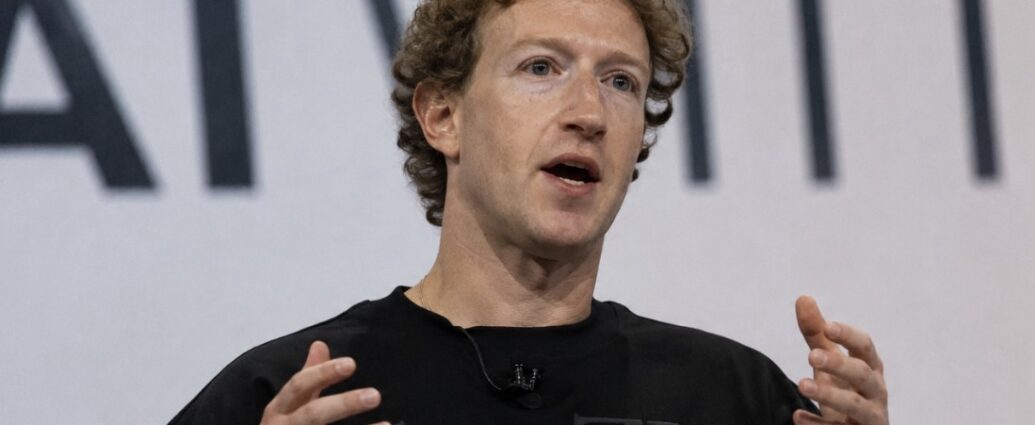
Meta Chief Executive Mark Zuckerberg argued Wednesday that advanced artificial intelligence could produce more jobs and entrepreneurs if the technology is widely available instead of controlled by a small group of companies.
Speaking in comments published July 29, Zuckerberg pushed back against predictions that increasingly capable AI will mainly eliminate employment. He said broad access could allow individuals to start businesses, create products and compete without the capital, staffing or technical resources traditionally required.
For workers and small-business owners, the argument centers on whether AI becomes a tool they can control or a system used primarily by large employers to reduce payroll.
A contractor could use an AI assistant to prepare estimates, schedule jobs and communicate with customers. A retailer might create advertising, track inventory and respond to inquiries without hiring separate specialists. Someone with an idea but limited financing could potentially build a website, develop a prototype or test a business plan at far lower cost.
Zuckerberg predicted that an economy built around widely distributed superintelligence would become more entrepreneurial because more people could turn their expertise into products and services.
“Superintelligence” generally refers to AI capable of outperforming humans across a broad range of intellectual tasks. Such systems do not yet exist in the fully developed form Zuckerberg describes, making his employment forecast a vision rather than an established economic outcome.
The key question is who receives the productivity gains.
Businesses already use generative AI to write documents, produce marketing materials, analyze information and automate customer service. Those tools can help employees accomplish more, but they can also reduce the number of workers needed for certain assignments.
Meta itself has demonstrated that tension. The company has continued investing heavily in AI infrastructure and models while also eliminating thousands of positions through broader cost reductions and organizational changes.
That record does not disprove Zuckerberg’s argument that new jobs could emerge. It does show that job creation and displacement can happen at the same time—and that workers losing positions may not automatically qualify for the opportunities being created.
New employment linked to AI development has appeared in data-center construction, electrical work, energy production, chip manufacturing and model training. Many of those jobs, however, require different skills or are located far from the offices where technology and administrative positions are being reduced.
Small businesses face a similar divide.
Companies that train employees to use AI may improve productivity without cutting staff. Others may conclude that fewer workers can produce the same output, particularly in customer support, marketing, basic design, bookkeeping and administrative work.
Older employees and workers with limited access to training could be especially vulnerable. A tool may be technically available to everyone while remaining economically useful only to people who understand how to apply it safely and effectively.
Cost will also determine whether AI truly becomes widely distributed. Consumers can access many systems for free, but their most capable features may require subscriptions, specialized software or expensive computing resources.
Entrepreneurs must also consider errors, copyright concerns, customer privacy and the possibility that confidential business information could be exposed through an improperly used AI service.
Zuckerberg’s position favors keeping advanced models broadly available and avoiding regulations that place development in the hands of only a few companies. He has argued that excessive restrictions could protect existing technology leaders by making it harder for smaller competitors to enter the market.
Yet unrestricted access introduces its own risks. The same systems that help someone create a business can be used to produce scams, impersonate people, spread false information or automate cyberattacks.
Policymakers are therefore confronting two competing consumer concerns: preventing dangerous uses without making legitimate AI tools too costly or complicated for ordinary workers and small companies.
For households, the most important measure will not be how powerful an AI model becomes. It will be whether the technology increases income, creates businesses and improves opportunity—or simply allows companies to produce more with fewer people.
The difference may come down to training.
Workers who learn how to use AI as part of their existing profession may become more valuable. Those who are excluded from that transition could face greater pressure as employers compare their output with employees using automated tools.
Small-business owners may also need practical education rather than broad promises. Knowing how to create a marketing plan is useful, but knowing when the generated information is wrong, legally risky or harmful to customers may be equally important.
Zuckerberg’s forecast presents AI as a force that could lower the cost of entrepreneurship and spread economic power more widely.
Whether that happens will depend less on the technology alone than on who can afford it, who receives training and whether businesses use the gains to expand opportunity or reduce headcount.
JBizNews Desk | Menlo Park
© JBizNews.com All Rights Reserved. Reproduction or distribution without written permission is prohibited.