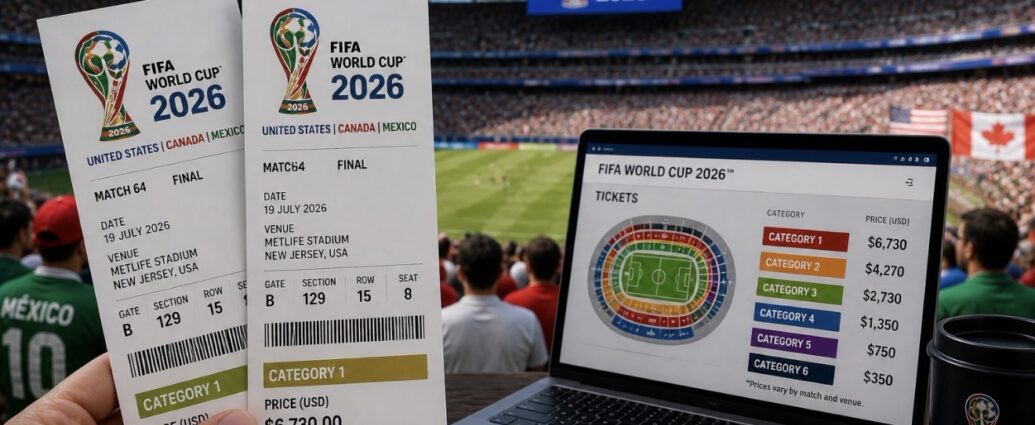
Ticket prices for the 2026 men’s World Cup in North America are drawing sharp scrutiny as fans, consumer advocates and market observers question whether FIFA has pushed too far with a demand-based sales model for the biggest tournament in soccer. Reuters reported that Gianni Infantino, president of FIFA, said in January demand for the event “is equivalent to 1,000 years of World Cups at once,” a remark that framed the governing body’s aggressive pricing posture as sales opened for one of the most commercially ambitious editions of the tournament.
The numbers circulating through official and resale channels have intensified that debate. In reporting cited by Reuters and other major outlets, some premium seats for marquee matches have reached eye-watering levels, while entry prices for less prominent group-stage games still sit far above what many supporters consider affordable. FIFA has said its approach reflects demand conditions rather than a fixed-price model, and Bloomberg reported that David Parry, a ticketing executive tied to the tournament’s sales strategy, said the organization is using “a revenue-management approach similar to airlines,” signaling that prices can move higher when early demand outpaces expectations.
That explanation has done little to calm critics who argue the World Cup risks turning into a premium entertainment product rather than a global public spectacle. The Associated Press reported that John Rivera, president of the United States Soccer Fans Alliance, called the pricing structure “a monumental betrayal of the sport’s fans,” saying ordinary households face a financial barrier even before travel, lodging and food costs enter the equation. His criticism echoes a broader concern among supporter groups that the tournament’s expansion to 48 teams and 104 matches has not translated into broader affordability.
Wall Street analysts and sports economists say the pricing experiment could test the limits of fan loyalty even for a tournament with unmatched global appeal. CNBC cited Emily Johnson, a senior analyst at Morgan Stanley, saying average top-end pricing now compares unfavorably even with major U.S. championship events, and she warned that secondary-market activity could drive prices further from face value. That matters because the 2026 tournament, hosted by the United States, Canada and Mexico, already carries unusually high travel costs for many international supporters given the geography and hotel market dynamics across multiple host cities.
The resale market has added another layer of controversy. The Financial Times reported that Anna Lee, a spokesperson for Ticketmaster, said the company’s marketplace does not set resale prices, though listings have reflected extreme markups for the most sought-after matches. The same report said FIFA retains a commission on secondary transactions, a detail likely to sharpen questions over whether the governing body benefits not only from high primary pricing but also from speculative resale behavior that can push headline prices into six-figure territory.
Even so, demand appears robust in the early phases. FIFA has said multiple group-stage matches already sold out through official channels, and the organization has projected that all 104 matches can fill. In public statements cited by Reuters, FIFA has maintained that the tournament’s scale, the presence of major national teams and the first men’s World Cup in North America since 1994 create a rare supply-demand imbalance. That commercial confidence helps explain why the governing body appears willing to absorb criticism now in exchange for record ticketing revenue later.
The issue extends beyond sticker shock for elite seats. Reports from outlets including Fortune and ABC News have highlighted elevated prices even for matches involving traditional powers such as Argentina and Brazil, with fans saying attendance increasingly looks like a luxury purchase. Maria Sanchez, identified by ABC News as a longtime supporter from Texas, said seeing top teams in person has “become a luxury experience,” a sentiment that captures the tension between soccer’s mass-market identity and the premium-event economics now shaping major international tournaments.
Economists say the long-term business risk for FIFA lies not in whether it can sell out 2026, but in what fans remember afterward. MarketWatch cited Alan Cheng, a sports economist at the University of Chicago, saying that if supporters conclude the World Cup has become unaffordable, the damage could extend beyond ticket revenue into merchandise, sponsor sentiment and future engagement. That warning carries weight as sports leagues and event operators across the U.S. and Europe increasingly adopt dynamic pricing systems that maximize yield but can erode trust among core customers.
For now, FIFA appears intent on pressing ahead while preserving a limited affordability argument through lower-tier inventory. In comments cited by Reuters, Sara Liu, head of fan engagement at FIFA, said the organization aims to provide “access points for a broader audience” through later sales phases and cheaper categories for selected matches. The next rounds of ticket releases, and the public response to them, will offer the clearest test yet of whether FIFA can balance record revenue with fan legitimacy ahead of a tournament that promises huge commercial returns but now faces a growing reputational challenge.
JBizNews Desk