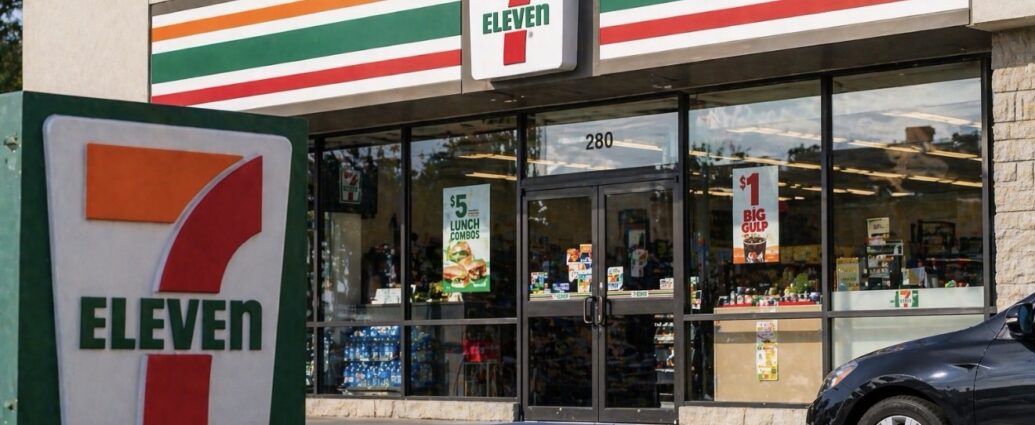
7-Eleven’s parent Seven & i Holdings plans to shrink its North American footprint in fiscal 2026, underscoring a sharper push toward larger, food-led convenience stores as the company tries to lift returns in its biggest overseas market. In its full-year earnings materials released on April 9, Seven & i said it expects 645 store closures or conversions in North America during the fiscal year ending Feb. 28, 2027, while opening 205 locations, a move that implies a net reduction of 440 sites. The company said in its presentation that it is pursuing “portfolio optimization” and a shift toward “larger-format and food-focused stores,” according to the official investor release.
The planned cuts arrive at a delicate point for 7-Eleven, which has spent years trying to improve store productivity after its acquisition of Speedway and amid softer discretionary spending by lower-income consumers. In the same earnings release, Seven & i said North America faced “a challenging consumer environment” and pressure on cigarette sales, while food and private-label categories remain central to its turnaround. Reuters reported after the filing that the company did not identify which locations would close, and the presentation itself noted that some sites would shift through “conversion to wholesale fuel stores” rather than shut entirely.
Management framed the move as part of a broader restructuring rather than a retreat from the U.S. and Canada. Seven & i President Stephen Dacus said in the company’s earnings presentation that the group is focused on “improving asset efficiency and capital productivity,” language that investors have heard repeatedly as the retailer responds to pressure to simplify its business. Bloomberg and the company’s own materials both highlighted that North America remains the group’s largest earnings contributor, making store quality and format mix more important than raw unit count.
The strategy reflects a wider industry reality: convenience retailers increasingly depend on prepared food, beverages and loyalty-driven traffic as fuel margins and tobacco volumes become less reliable. Alimentation Couche-Tard, operator of Circle K, told investors in recent earnings commentary that food programs and merchandising remain key growth levers, while Casey’s General Stores has repeatedly said pizza and prepared meals help drive same-store sales. Against that backdrop, Seven & i said in its filing that it intends to prioritize stores with stronger food-and-drink offerings, a stance that aligns with what analysts at Morningstar and other retail researchers have described as the sector’s clearest path to margin expansion.
The scale of the planned reduction also matters because 7-Eleven still operates one of the largest convenience networks in the region. Company disclosures show the group runs, franchises or licenses thousands of stores across the U.S. and Canada, and executives have argued that network density still offers a competitive advantage in distribution and brand recognition. Even so, Seven & i said in its April 9 materials that some stores no longer fit its target model, and Reuters noted the company paired the closure plan with a commitment to invest in higher-performing formats rather than maintain weaker locations.
Investors have pushed the Japanese retailer to move faster on underperforming assets and governance reform, especially after a prolonged period of strategic scrutiny. Financial Times and Reuters have both reported in recent months that Seven & i has faced pressure from shareholders to unlock value and sharpen management accountability. The company’s latest earnings package echoed that theme, saying it aims to “accelerate transformation” in convenience operations and improve returns on invested capital, according to the official presentation.
The North America plan sits alongside a broader reset at the parent company, which has been reworking leadership and portfolio priorities. In public statements tied to recent results, Seven & i has emphasized a simpler operating structure and tighter focus on its convenience business after years of expansion into adjacent retail formats. Bloomberg reported that investors continue to watch whether management can translate those promises into steadier earnings growth, particularly in the U.S., where labor, shrink and consumer trade-down behavior have complicated the outlook for retailers across formats.
For employees, suppliers and landlords, the immediate issue is location-level execution, and that remains unclear. Seven & i did not disclose a list of affected stores in its earnings release, and the company said only that closures and fuel-only conversions would unfold during fiscal 2026. That leaves open how much of the reduction comes from outright shutdowns, how many sites remain in operation under a different model, and which markets see the heaviest cuts. Reuters said those details had not been provided as of the company’s April 9 filing.
What comes next matters beyond one retailer. If 7-Eleven succeeds in replacing weaker stores with bigger, food-centric locations, it could reinforce a broader industry shift toward convenience outlets that look more like compact quick-service hubs than traditional gas-and-cigarette stops. If the closures instead signal deeper demand weakness, competitors and consumer brands could face tougher traffic trends across the channel. For now, Seven & i has made its direction clear in its own words: fewer low-productivity stores, more capital behind formats that can sell higher-margin food and beverages in a tougher North American market.
JBizNews Asia Desk