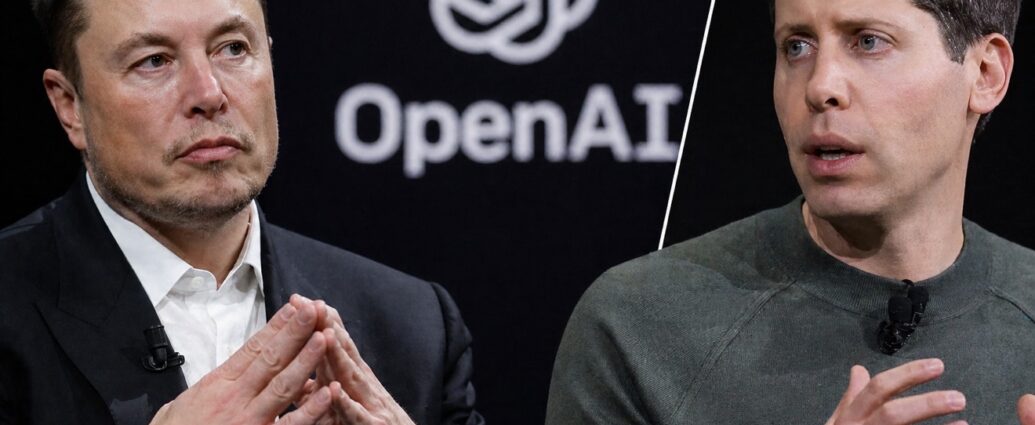
Elon Musk and OpenAI are moving toward a high-stakes court fight in California that could test how far a nonprofit-backed artificial intelligence lab can pivot into one of the world’s most valuable private companies. In a lawsuit filed in federal court and updated through recent hearings, Musk argues that Sam Altman, Greg Brockman and OpenAI abandoned the organization’s founding commitment to develop AI for the public benefit, while OpenAI has called the case meritless in court papers and public statements reported by Reuters and The Wall Street Journal.
The dispute matters well beyond a personal feud because OpenAI sits at the center of the generative-AI boom, backed by billions of dollars from Microsoft and racing against rivals including Google, Anthropic and xAI. In a blog post published by OpenAI in response to the litigation, the company said Musk had previously supported a for-profit structure as the company sought more capital, while court filings cited by Bloomberg show Musk contending that the company’s current model contradicts the mission he helped establish in 2015.
At the center of the case is a question that Silicon Valley increasingly cannot avoid: whether frontier AI can remain governed by public-interest ideals once the cost of building the technology reaches into the tens of billions of dollars. In earlier public remarks, Sam Altman said “the cost of compute” and the scale of model development demanded far more capital than a conventional nonprofit could raise, a point he made in interviews cited by Financial Times and CNBC, while Musk has repeatedly said on his platform X and in legal filings that OpenAI “has become a closed source, maximum-profit company effectively controlled by Microsoft.”
The legal battle has already produced consequential rulings even before any jury hears the full case. In March 2024, Reuters reported that Musk sued OpenAI and Altman for breach of contract and fiduciary duty, and by August 2024 a federal judge allowed key parts of the case to proceed while narrowing others, according to court records and reporting from Bloomberg. In those filings, OpenAI said the claims “rest on convoluted, false factual premises,” while Musk’s lawyers argued the company’s restructuring and commercial partnerships represented a “textbook betrayal” of its founding principles, as quoted in the complaint.
The company’s ties to Microsoft give the case broader commercial weight because the software giant has become OpenAI’s most important strategic partner and cloud provider. Microsoft President Brad Smith said in public testimony and company statements cited by Reuters that the partnership aims to “advance AI safely and responsibly,” and regulatory filings show Microsoft has committed multibillion-dollar investments to support model training and product deployment. That relationship has drawn antitrust and governance scrutiny in the U.S., U.K. and Europe, adding another layer of significance to any court finding on how much control outside investors and partners exert over OpenAI.
The governance issue became even more visible after the boardroom crisis in November 2023, when OpenAI’s nonprofit board abruptly removed Altman before reinstating him days later. In a memo to employees published by major outlets including The New York Times and Reuters, interim leadership said the board had lost confidence in Altman, while Altman later told staff and investors he looked forward to “returning to OpenAI” and continuing the company’s mission. That episode gave Musk’s legal team fresh material to argue that the organization’s governance no longer matches its public-interest branding, though OpenAI has said subsequent board changes strengthened oversight.
The case also lands as Musk builds xAI, his own artificial-intelligence company, creating an unavoidable competitive backdrop. Musk said when launching xAI in 2023 that its goal is to “understand the true nature of the universe,” according to the company’s public announcement, and Reuters has reported that xAI quickly raised capital and expanded data-center ambitions. OpenAI has pointed to that rivalry in public responses, saying Musk is trying to slow a competitor, while Musk maintains in legal filings that his claims focus on charitable purpose and contractual commitments, not market share.
Investors and policy makers are watching because the trial could influence how AI ventures structure themselves, raise capital and describe their missions to donors, employees and regulators. Legal experts quoted by Bloomberg and WSJ have said the dispute could clarify whether nonprofit control can coexist with aggressive commercial expansion, especially in sectors where safety claims and public-benefit language help attract talent and political support. OpenAI has said in statements that its structure exists to ensure artificial general intelligence “benefits all of humanity,” while critics including Musk argue that phrase now sits uneasily beside closed models, enterprise contracts and investor economics.
What comes next matters not only for the parties in court but for the rules of the AI economy. If Musk wins meaningful relief, OpenAI could face pressure on governance, licensing and future fundraising; if OpenAI prevails, the verdict may strengthen the industry’s argument that mission-driven labs need corporate-style capital and control to compete. Either way, as recent reporting from Reuters, Bloomberg and court filings makes clear, the case stands to shape how the most powerful AI companies balance public promises with private power.
JBizNews Desk