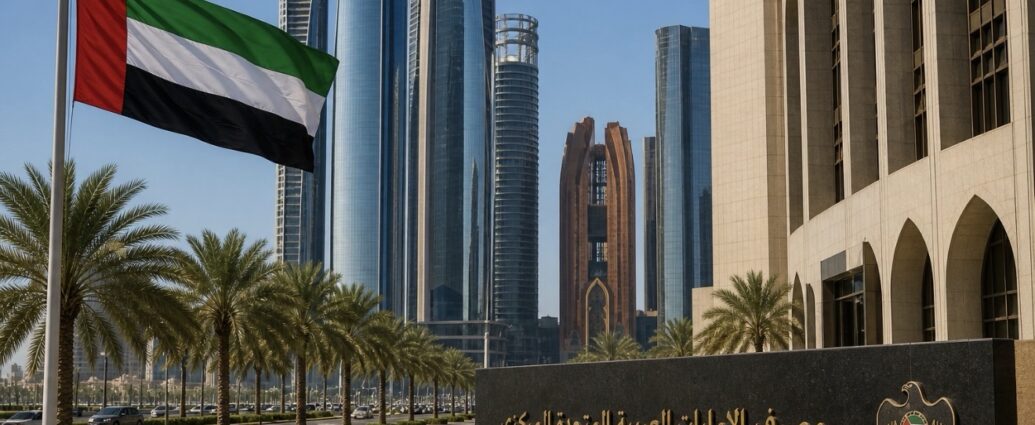
Abu Dhabi Is Seeking a Dollar Lifeline That Only Five Countries in the World Currently Have
By JBizNews Desk | Abu Dhabi — May 6, 2026
The United Arab Emirates confirmed Monday it is in active discussions with the United States about establishing a currency swap line with the Federal Reserve — a financial arrangement so exclusive that only five countries in the world currently hold one, and one that signals a profound shift in the region’s economic and geopolitical alignment.
UAE Minister of Foreign Trade Thani Al Zeyoudi disclosed the talks at the “Make It In The Emirates” conference, framing the effort as a mark of strategic partnership rather than financial need. “They are only having it with five countries,” he said. “Being part of that group means that transactions, trade, investments between both nations reach a level where that swap is highly needed… it is not about bailing out.”
That distinction — prestige versus necessity — is central to how the UAE is presenting the move. But the timing reveals a deeper story.
What a Currency Swap Line Actually Is
A Federal Reserve swap line allows a foreign central bank to exchange its local currency for U.S. dollars directly, bypassing global currency markets. In times of financial stress, it provides immediate access to dollar liquidity — effectively functioning as an emergency backstop.
The Fed currently maintains permanent swap lines with only five institutions: the European Central Bank, Bank of Japan, Bank of England, Bank of Canada, and Swiss National Bank. All are long-standing Western allies with deeply integrated financial systems.
If approved, the UAE would become the first Gulf nation — and one of the few non-Western countries — to join that circle.
Why the UAE Is Asking Now
The request comes at a moment of escalating regional instability.
The UAE confirmed it intercepted Iranian missiles on Monday — the first activation of its defense systems since the April ceasefire between the United States and Iran. At the same time, disruptions in the Strait of Hormuz have pushed oil markets higher and raised concerns about supply stability.
For the UAE, the financial implications are immediate. Reduced oil flow threatens dollar inflows, increases the risk of capital outflows, and places pressure on the dirham’s long-standing peg to the U.S. dollar — a cornerstone of the country’s economic system.
Al Zeyoudi’s comments mark the first official confirmation that Abu Dhabi is seeking direct access to U.S. dollar liquidity in response to these pressures.
The move comes just days after another major shift: the UAE formally exited OPEC and the broader OPEC+ alliance on May 1, ending nearly six decades of membership. The decision frees the country from production limits but also signals a strategic pivot away from traditional oil alliances toward closer alignment with the United States.
Dollar Diplomacy in Action
Taken together — the OPEC exit, the swap line request, and the UAE’s active role in regional defense — the message is clear: Abu Dhabi is moving decisively into Washington’s financial and security orbit.
A Federal Reserve swap line is more than a technical arrangement. It represents trust — in a country’s financial system, central bank credibility, and political alignment. It effectively guarantees access to U.S. dollars on demand, the most critical currency in global trade and energy markets.
For the UAE, whose economy depends heavily on dollar-denominated oil exports, that access would provide the strongest possible financial safeguard short of a formal alliance.
For the United States, the implications extend beyond finance. A stable UAE with assured dollar liquidity is a more reliable partner in a region where energy flows remain under threat. Roughly 20% of global oil supply passes through the Strait of Hormuz, and continued disruptions have already contributed to rising fuel costs worldwide.
Whether the Federal Reserve ultimately agrees to extend such a privilege remains uncertain. The decision would be unprecedented and carry significant geopolitical weight.
But the fact that discussions are underway — and publicly acknowledged at a moment of active military tension — signals a shift happening in real time.
The Middle East’s financial map is being redrawn, and the dollar is once again at the center of it.
JBizNews Desk
© JBizNews.com. All rights reserved.