JBizNews Desk | Friday, May 8, 2026
The artificial intelligence boom has created enormous wealth for a narrow slice of Americans — and nowhere is the resulting economic divide more visible, or more measurable, than in the San Francisco Bay Area housing market, where luxury home prices have surged to record highs while the most affordable neighborhoods have declined in value.
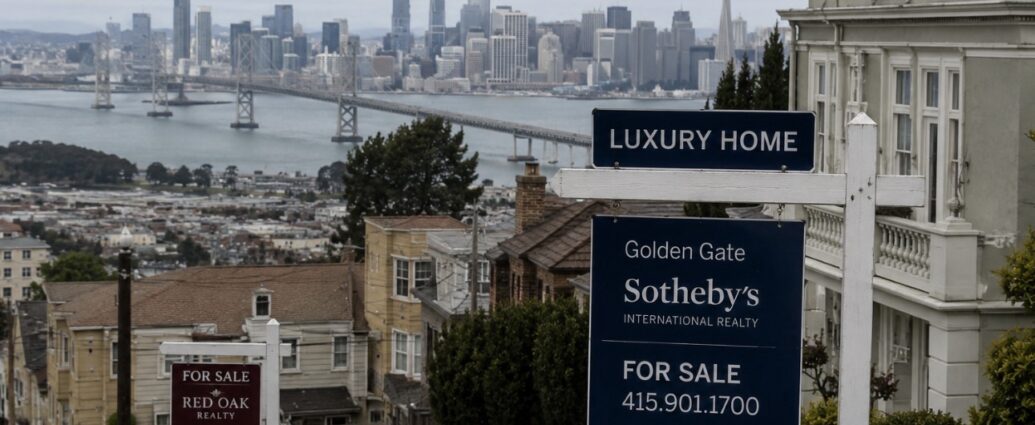
Luxury zip codes in the San Francisco Bay Area saw a 13.4% average jump in home prices in the two years following the launch of ChatGPT, according to a new report from Redfin. That is more than double the 6.3% average increase in the price segment immediately below luxury. The most affordable Bay Area zip codes saw home prices fall outright during the same period.
“Luxury homeowners in Silicon Valley saw their housing wealth jump during the pandemic, and now it’s jumping again thanks to the advent of artificial intelligence and the high-paying jobs that come with it,” said Redfin Senior Economist Yingqi Xu. “Meanwhile, some owners of lower-end properties have missed out on the AI boom, with home prices in the most affordable Bay Area zip codes declining over the past two years. It’s another sign of the K-shaped economy taking shape in the Bay Area, with AI lifting the fortunes of some households and neighborhoods much more than others.”
The divergence is not just large — it is historically unusual. This marks a sharp break from the two years leading up to the launch of ChatGPT, when home-price growth was broadly comparable across all price segments in the Bay Area market. Growth during the 2020–2022 period was close to 20% across the five price categories Redfin analyzed, largely fueled by ultra-low mortgage rates and the pandemic-era homebuying surge.
The AI era has shattered that pattern — concentrating gains at the very top while leaving lower-priced neighborhoods behind.
A Bay Area Problem — Not a National Trend
Critically, Redfin says this dynamic is largely unique to the Bay Area.
In other major coastal housing markets, luxury home prices did not dramatically outperform after ChatGPT’s launch. In New York City, the trend actually moved in the opposite direction, with luxury zip codes seeing the slowest price growth during the same period.
That distinction matters because it strongly suggests the AI boom itself — not simply broader housing trends — is driving the widening divide in Northern California.
The mechanism is straightforward.
AI companies remain heavily concentrated in a relatively small corridor spanning San Francisco, Palo Alto, San Jose, Mountain View, and surrounding Silicon Valley communities. Engineers, founders, executives, and investors tied to companies like OpenAI, Nvidia, Anthropic, Meta AI, and Google DeepMind are receiving compensation packages and stock gains tied to some of the most valuable technology companies in the world.
That wealth is now flowing directly into local real estate markets already constrained by years of limited housing supply.
The Rich Get Bidding Power
In practical terms, each new AI millionaire entering the housing market increases competition for a finite number of homes.
Buyers armed with enormous stock-based wealth can routinely outbid traditional middle-class families, often paying far above asking price in all-cash offers. That dynamic pushes luxury valuations higher while simultaneously distorting pricing across surrounding neighborhoods.
For working- and middle-class buyers, the situation has become increasingly punishing.
Mortgage rates remain elevated compared to pandemic lows, meaning many families are financing homes at significantly higher monthly payments — even as values in more affordable neighborhoods stagnate or decline.
Renters face pressure from another direction. Rising expectations from landlords and investors continue pushing rents higher even in areas where broader home-price appreciation has weakened.
The “K-Shaped Economy” Becomes Visible
Economists increasingly describe the phenomenon as a “K-shaped economy” — a recovery where one group experiences rapid wealth gains while another stagnates or falls behind.
In the Bay Area, that divide is now visible neighborhood by neighborhood and zip code by zip code.
AI wealth is lifting luxury communities while many lower-income households experience declining affordability, weaker housing appreciation, and rising financial pressure.
For policymakers, the data offers one of the clearest early warnings yet about the broader societal effects artificial intelligence may have on local economies.
The AI boom is not just reshaping stock markets and corporate profits. It is reshaping physical communities, housing access, wealth distribution, and long-term economic mobility.
And in the Bay Area — the epicenter of the global AI economy — that transformation is already happening in real time.
© JBizNews.com. All rights reserved. This article is original reporting by JBizNews Desk. Unauthorized reproduction or redistribution is strictly prohibited.