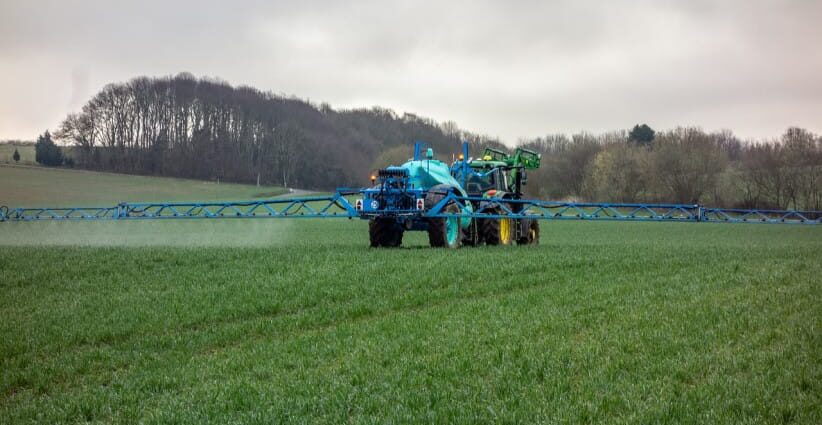
Parashat “Behar” opens with a unique and challenging commandment: Just as a person has a day of rest every seventh day, so, too, one must let the land rest for an entire year, during which the soil is left to lie fallow.
This commandment is not merely an agricultural instruction; it expresses a deep, fundamental principle in the Jewish worldview. According to Kabbalistic thought, reality is built of six directions: the four cardinal directions, above and below, and to them is added the central point, the seventh element, which serves as the unifying center of gravity.
For this reason, the structure of the world in Jewish tradition revolves around the number seven: the seven days of the week; the seven weeks of the Counting of the Omer, connecting Passover to Shavuot; the seven-year shmita cycle in which the land rests; the seven days of mourning; and the seven days of celebration for a bride and groom. About this, the sages said: “All sevenths are beloved” (Leviticus Rabbah 29:11).
Yet a simple question arises, especially in earlier generations when a person’s livelihood depended entirely on the produce of his field: Where will the food come from during the sabbatical year? The Torah itself raises this question and answers it in its own words:
“The land will give its fruit, and you will eat your fill and dwell securely upon it. And if you say, ‘What will we eat in the seventh year? We will not sow, nor gather our crops,’ I will command My blessing for you in the sixth year, and it will produce enough for three years” (Lev. 25:19-21).
However, examining these verses raises two questions.
First, a promise has already been given: “The land will give its fruit, and you will eat your fill.” Since the Torah’s promise will surely be fulfilled, why does the concern arise, “What will we eat?”
Second, one who asks “What will we eat?” thereby revealing a lack of faith, receives a special promise of blessing. So where is the blessing for those who do not ask at all?
The answer reveals a profound distinction. A person who places his trust fully in his Creator does not require an abundance of produce. A small amount suffices, and the blessing rests within the food itself. As Rashi explains: “He eats a little, and it is blessed within his intestines.” By contrast, one who feels the need to ask “What will we eat?” requires more tangible security, and thus is promised a blessing of increased yield: “I will command My blessing.” However, this blessing comes together with increased labor and effort.
This idea also appears in parashat “Behukotai,” in the blessings promised to Israel if they follow God’s ways:
“Your threshing will last until the vintage, and the vintage will last until the sowing; you will eat your bread to satisfaction and dwell securely in your land” (Lev. 26:5).
Rashi explains: “Your threshing will last until the vintage – there will be so much grain that you will be occupied with it until the grape harvest, and with the harvest until the time of sowing; ‘you will eat your bread to satisfaction.’ One eats a little, and it is blessed within him.”
Here, too, the question arises: If there is such an abundance of produce, why is an additional blessing needed, that one eats little yet is satisfied?
The answer reveals a fundamental principle: In Judaism, the true blessing lies not in quantity but in quality. It is better to have little with blessing than abundance without satisfaction. In the sabbatical year, as in life in general, the ideal is quality; quantity is sometimes only a secondary solution.
To seek quantity is to lack an appreciation in quality
THE DIFFERENCE between quantity and quality begins in one’s mindset. A person focused on externals constantly seeks more of everything. Even if proven rationally that he has enough, he will continue chasing greater quantity. By contrast, when money and livelihood are seen as a means rather than an end, one can be content with a small amount that carries blessings and makes room for more meaningful pursuits.
This was also the case with the generation of the desert when the Children of Israel were sustained by the manna from heaven. Each day, an exact portion descended for each family according to its needs, and it sufficed completely because it was blessed within them, creating a sense of fullness. This reality freed a person from the endless pursuit of quantity and allowed focus on spirituality. In this way, that generation became prepared to receive the Torah.
A story illustrating this in our own times involves Rabbi Aharon Yehuda Leib Shteinman, of blessed memory, who told a group of students seeking to understand the foundations of Judaism: “When I was a child, the shop near us had a very limited selection – bread, butter, milk, and a few fruits and vegetables. You are growing up in a generation with dozens of types of dairy desserts in the refrigerator. Is it any wonder that it is harder for you to connect to spirituality?”
The message is clear: In a generation of nearly unlimited abundance, where possibilities are almost endless, it becomes harder to recognize the value of quality. The pursuit of quantity obscures the true goal – to live a life with meaningful content.
When a person learns to focus on quality, he suddenly discovers how much good already exists in his life. From there, he can draw closer to the truth and direct himself toward what truly matters. ■
The writer is rabbi of the Western Wall and holy sites.