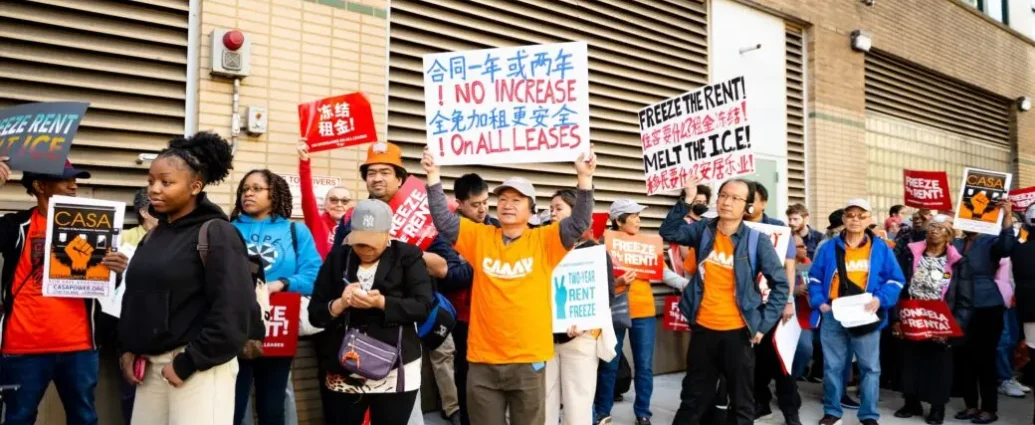
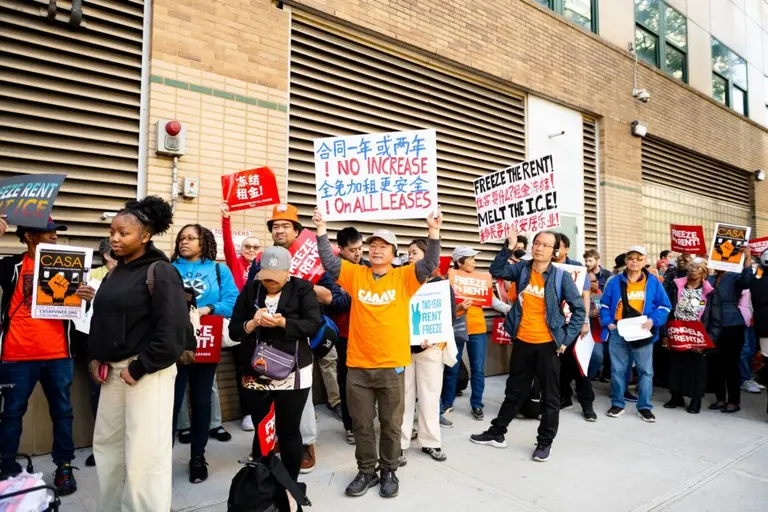
In a preliminary vote on Thursday, the Rent Guidelines Board (RGB) backed rent adjustments that included leases with no increases, advancing Mayor Zohran Mamdani’s promise of a rent freeze for New York City tenants living in one million stabilized apartments. It’s not a done deal. The nine-member board voted for proposed adjustments between 0 and 2 percent for one-year leases and 0 and 4 percent for two-year leases, leaving the door open for a potential increase. The final guidelines, likely falling somewhere in that range, will be voted on by the board on June 25.
Mamdani made freezing the rent for the two million New Yorkers living in stabilized housing a central pledge of his campaign last year. Despite former Mayor Eric Adams’ attempt to block him, the mayor earlier this year named six members to the RGB, which consists of two members to represent tenant interests, two for owner interests, and five members to represent the general public.
“New Yorkers are being crushed by the cost of living, and they need real relief,” Mamdani said in a statement. “I’m encouraged to see the Board taking seriously the data around affordability, operating expenses, and the pressures facing both tenants and small property owners as it sets this preliminary range.”
Every year, the board bases its rent adjustments on several metrics that reveal the current economic conditions for both landlords and tenants. The board’s report showed the Price Index of Operating Costs, which looks at taxes, labor costs, fuel, utilities, maintenance, administrative costs, and insurance costs in rent-stabilized properties, rose 5.3 percent this year.
But the net operating income (NOI) for landlords rose 6.2 percent between 2023 and 2024 citywide, the third consecutive year that NOI increased.
Landlords have long claimed NOI is a “flawed metric” for small rent-stabilized buildings because it does not factor in mortgage debt and major capital expenses. As 6sqft previously reported, profits are also lower for older buildings with a majority of stabilized apartments, in contrast to those with a mix of stabilized and market-rate rentals.
According to the report, income increased 4 percent in buildings with 50 percent stabilized apartments, 3.5 percent in buildings with 80 percent stabilized, and 2.4 percent in buildings with 100 percent stabilized units. The data showed that 9 percent of buildings are distressed, meaning the owner is losing income, slightly down from the year prior, with a vast majority of distressed properties built before 1974.
Small Property Owners of New York (SPONY) board president Ann Korchak said the board’s data is “distorted” because it combines majority-rent stabilized buildings with core-Manhattan and newer buildings that are more profitable. The group believes there should be separate lease adjustments for apartments in older buildings.
“The RGB, in its final vote in June, must provide separate rent orders for buildings constructed pre-1973, or these older properties are going to fall further into economic distress and ultimately into the hands of predatory landlords, or worse, the city will add this housing to its abysmal NYCHA portfolio,” Korchak said in a statement.
Korchak also hinted at taking legal action against the board. “Flouting its obligations, making decisions based on politics, and demonstrating a clear bias against small owners has serious legal implications,” she said.
Last year, the board approved rent hikes for the fourth year in a row, with a 3 percent increase for one-year leases and a 4.5 percent increase for two-year leases.
During Adams’ tenure, the rent went up cumulatively by 12 percent for rent-stabilized units. Under Mayor Bill de Blasio, the board approved rent freezes several times. Rents went up just 6 percent during his eight years as mayor.
It’s important to note that during de Blasio’s tenure, until 2019, when the state outlawed vacancy decontrol, landlords were able to raise the rent by 20 percent on vacant apartments and remove them from rent stabilization once hitting a certain threshold.
Thursday’s preliminary vote marks the first time the board is considering a freeze on two-year leases, which tenant advocates say is needed amid the city’s growing affordability crisis. According to the NYS Tenant Bloc, which launched last year to campaign for a rent freeze and tenant-friendly candidates, with rent-stabilized tenants struggling to make ends meet, evictions up 12 percent in 2025, and the Trump administration’s cut of federal benefits like SNAP and housing aid, a rent freeze is a “common sense intervention.”
“When tenants get organized, participate in the political process, and use their political power, we can win,” Sumathy Kumar, NYS Tenant Bloc Director, said in a statement following the board’s vote on Thursday.
“Organized tenants helped put Zohran Mamdani in office, and organized tenants will ensure the Rent Guidelines Board delivers on a promise supported by over one million New Yorkers. A rent freeze on one and two-year leases is a common-sense intervention supported by the data and by tenants who make up the majority of New York City.”
The first public meeting on the lease adjustments will be held on May 21 at 9:30 a.m. at Spector Hall in Manhattan. There are four hearings scheduled on June 4, June 8, June 11, and June 16, where the public can testify. The final vote is scheduled for June 25 at 7 p.m. at El Museo del Barrio.
RELATED:
- Landlord income up 6 percent as board considers rent adjustments for NYC’s stabilized apartments
- NYC rent freeze likely: Mamdani announces six appointees to Rent Guidelines Board
- Rent Guidelines Board approves increase up to 4.5 percent for stabilized apartments
The post Rent freeze for stabilized apartments backed by NYC board in preliminary vote first appeared on 6sqft.