NEW YORK — Wall Street’s most bullish strategist just became even more optimistic.
Ed Yardeni, president of Yardeni Research and one of the longest-followed market forecasters on Wall Street, raised his year-end target for the S&P 500 to 8,250 on Monday — the highest forecast among major Wall Street firms and one that implies another substantial leg higher for U.S. stocks after an already historic rally.
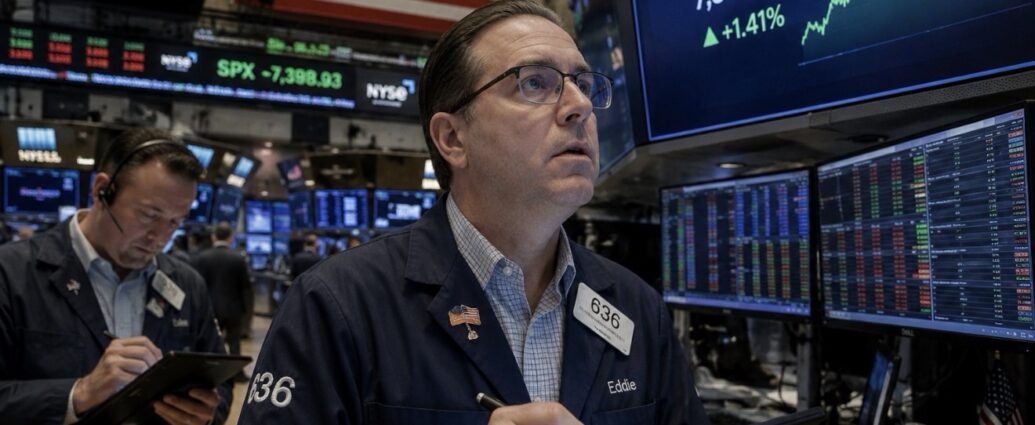
The new target, raised from his prior forecast of 7,700, represents approximately 11.5% upside from Friday’s record close of 7,398.93, which the benchmark index reached following stronger-than-expected April employment data and another wave of powerful corporate earnings reports.
Speaking Monday on CNBC’s Squawk Box, Yardeni said the scale of the current earnings surge forced him to become even more bullish.
“I’ve been bullish, but not bullish enough,” Yardeni said. “The earnings estimates of analysts have been phenomenal. I’ve never seen anything like it.”
The first-quarter earnings season has become one of the strongest in recent market history.
According to FactSet senior earnings analyst John Butters, more than 400 S&P 500 companies have now reported quarterly results, with approximately 84% beating earnings expectations — a pace that would mark the highest corporate earnings beat rate since the second quarter of 2021.
Year-over-year earnings growth for reporting companies is currently running at approximately 25.6%, dramatically above the five-year average growth rate of roughly 7.1%.
Analysts now project overall S&P 500 earnings growth of approximately 23% for full-year 2026, an expansion Yardeni described as “extraordinary.”
The bullish revisions are spreading across Wall Street.
RBC Capital Markets recently raised its 12-month S&P 500 target to 7,900, while HSBC increased its year-end 2026 forecast to 7,650.
Yardeni’s new 8,250 target now exceeds forecasts from nearly every major investment bank and research firm, including:
- Oppenheimer: 8,100
- Deutsche Bank: 8,000
- Morgan Stanley: 7,800
- Citigroup: 7,700
- JPMorgan: 7,600
- Goldman Sachs: 7,600
That makes Yardeni the single most bullish major strategist on Wall Street.
Behind the optimism is a convergence of economic and structural forces many analysts believe are fundamentally reshaping corporate profitability.
Yardeni pointed to rapidly accelerating productivity gains tied to artificial intelligence, which companies increasingly say are boosting efficiency, lowering labor costs, and improving margins across multiple industries.
At the same time, he argued the labor market has settled into what he described as a healthier equilibrium — strong enough to support consumer demand without creating the extreme inflationary wage pressures that previously worried markets.
Another key driver is demographic wealth.
Retiring baby boomers now collectively control an estimated $89 trillion in net worth, providing a massive reservoir of consumer spending power and investment capital that continues supporting both economic activity and financial markets.
Yardeni also cited ongoing infrastructure spending, tax incentives, and business depreciation benefits embedded in the administration’s so-called “One Big Beautiful Bill” as additional tailwinds for corporate America.
The strategist sharply raised his earnings outlook accordingly.
He now projects S&P 500 earnings-per-share of $330 for 2026, up from his previous estimate of $310. He also raised his 2027 earnings forecast to $375 per share, up from $350.
And Yardeni’s longer-term outlook is even more aggressive.
He said Monday he now expects the S&P 500 to eventually reach 10,000 by the end of 2029, though he added the milestone “might arrive ahead of schedule” if current trends continue.
The primary threat to that thesis remains geopolitics — particularly the Iran conflict and the resulting oil price shock now rippling through the global economy.
Brent crude surged above $104 per barrel Monday after President Trump declared the fragile Iran ceasefire “on life support,” renewing concerns that prolonged energy disruptions could eventually reignite inflation and pressure both consumers and corporate margins.
But so far, Yardeni argues, the economy has continued absorbing the shock remarkably well.
“The key to all this is, don’t underestimate the resilience of the economy, the resilience of the consumer,” he said. “If that continues to be the case, the same goes for earnings.”
For investors, the implications are significant.
The market rally that many initially viewed as narrowly concentrated in a handful of AI-related technology stocks is increasingly broadening into a wider earnings-driven expansion across sectors ranging from industrials and infrastructure to financials, energy, manufacturing, and consumer spending.
And if corporate profits continue accelerating at anything close to the current pace, Wall Street’s most bullish strategist believes the market may still be far from finished climbing.
JBizNews Desk
© JBizNews.com. All rights reserved. This article is original reporting by JBizNews Desk. Unauthorized reproduction or redistribution is strictly prohibited.