WASHINGTON — The Trump administration is preparing to suspend longstanding federal limits on beef imports as soaring meat prices increasingly strain American households and threaten to become a growing political liability heading into the summer grilling season.
According to a report Monday by The Wall Street Journal, the administration plans to suspend the annual tariff-rate quota system governing imported beef — a major policy shift designed to increase supply and reduce record-high prices for ground beef and steaks at grocery stores nationwide.
The tariff-rate quota program, overseen by the U.S. Department of Agriculture, currently allows a fixed volume of imported beef to enter the United States at lower tariff rates each year. Once that threshold is exceeded, significantly higher duties take effect, discouraging additional imports and effectively limiting lower-cost foreign beef from entering the domestic market.
Under the proposed change, those caps would effectively disappear, allowing unlimited imported beef to enter at the lower tariff rate — a move expected to increase supply for meat processors, supermarkets, restaurants, and consumers.
The policy shift is part of a broader package of measures the administration is assembling to address food inflation and mounting pressure from consumers frustrated by sharply rising grocery bills.
Alongside the quota suspension, the administration is reportedly preparing to direct the Small Business Administration to expand loan access and financing programs for domestic ranchers and cattle producers. Officials are also planning to roll back several federal regulations impacting ranchers, including a controversial USDA livestock rule requiring electronic ear tags for cattle tracking.
The administration additionally plans to weaken federal protections for gray wolves and Mexican wolves under the Endangered Species Act, responding to years of complaints from ranchers in Western states who argue predator attacks have imposed growing financial burdens on cattle operations.
The aggressive policy push comes amid one of the tightest cattle supply environments in modern U.S. history.
The U.S. cattle herd fell to just 86.2 million head as of January 2026 — the lowest level on record — while the nation’s beef cow inventory has dropped approximately 8.6% since 2020.
A combination of severe drought across major cattle-producing regions, destructive wildfires that wiped out grazing land and feed supplies, and the prolonged closure of the Mexican border to live cattle imports due to outbreaks of New World screwworm have sharply constrained domestic beef production.
The result has been a historic surge in prices.
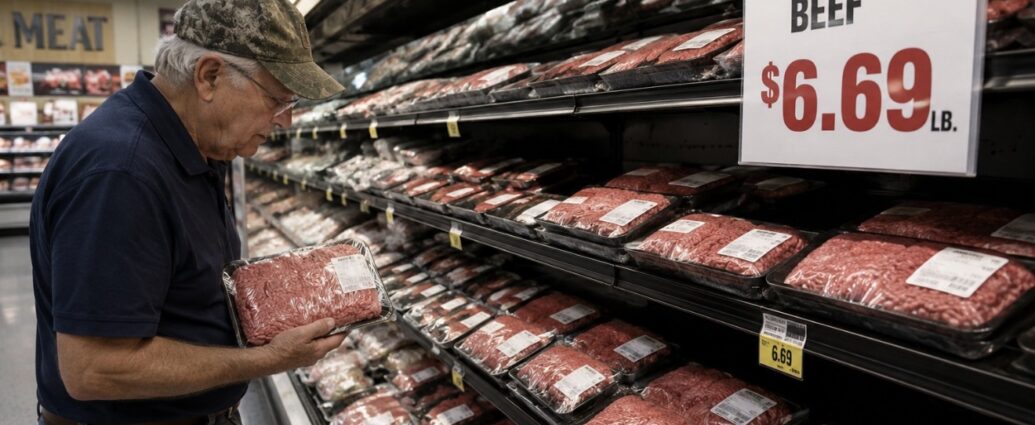
Ground beef climbed to a record $6.69 per pound in late 2025, while sirloin steak prices moved above $14 per pound, more than double what many Americans were paying less than a decade ago.
The administration has already taken smaller steps in recent months to ease supply shortages.
In February, President Donald Trump signed a proclamation expanding tariff-rate quotas for lean beef trimmings imported from Argentina by 80,000 metric tons for 2026, with the added supply structured in quarterly allotments beginning in mid-February.
That earlier move triggered immediate backlash from ranching organizations and domestic cattle groups, including the National Cattlemen’s Beef Association (NCBA), which warned that increasing foreign beef imports could further weaken U.S. producers while offering only limited price relief to consumers.
A bipartisan group of 52 House lawmakers also challenged the decision in a letter sent to the Agriculture Department and the office of the U.S. Trade Representative.
Now, with the administration preparing a far broader suspension of import restrictions, industry resistance is expected to intensify.
Critics argue that the underlying issue driving high beef prices is not simply limited supply, but the growing concentration of market power among a handful of dominant meatpacking companies that control processing capacity and pricing leverage throughout the supply chain.
The ranching advocacy group R-CALF USA has repeatedly argued that previous periods of increased beef imports coincided with shrinking domestic cattle herds and persistently elevated consumer prices — raising doubts that import liberalization alone will deliver meaningful savings at supermarket checkout counters.
For the White House, however, the political pressure surrounding food inflation appears to be outweighing industry objections.
Beef prices have increasingly become part of the broader affordability debate confronting voters, particularly as Americans continue facing elevated costs for groceries, housing, insurance, and energy.
Whether the administration’s supply-side strategy ultimately lowers prices enough for consumers to notice remains uncertain. But with Memorial Day and the peak summer grilling season approaching, the White House is clearly signaling that it intends to show voters it is taking aggressive action on one of the most visible symbols of inflation hitting American families.
JBizNews Desk
© JBizNews.com. All rights reserved. This article is original reporting by JBizNews Desk. Unauthorized reproduction or redistribution is strictly prohibited.