The U.S. consumer goes on trial this week as the country’s largest retailers report fiscal first-quarter earnings against the backdrop of a 4% jump in WTI crude, the highest 10-year Treasury yield in a year, and a fourth consecutive weekly decline in the SPDR S&P Retail ETF, according to corporate filings and the Schwab investor calendar. Home Depot kicks off the week before the bell Tuesday, followed by Target, TJX Companies, Lowe’s and Williams-Sonoma on Wednesday and Walmart, Ross Stores, Ralph Lauren, Deere and Deckers Outdoor on Thursday. Toll Brothers and Cava Group also report Tuesday, alongside the Census Bureau’s April housing starts and building permits data. The final University of Michigan Consumer Sentiment reading for May arrives Friday.
Home Depot Inc. is the first major read. Analysts surveyed by Yahoo Finance expect the Atlanta-based home-improvement retailer to post fiscal Q1 earnings per share of $3.41, down roughly 4% from $3.56 a year earlier, on revenue of $41.54 billion. The company in February guided full-year fiscal 2026 sales growth of 2.5% to 4.5%, comparable sales of flat to +2.0% and adjusted EPS growth of 0% to 4% off a fiscal 2025 base of $14.69. Shares closed Friday near $304, far below their 52-week high of more than $426 and within striking distance of a 52-week low of $299.27. The average sell-side price target sits at $404, with 21 Strong Buy ratings against one Sell, suggesting bulls see deep value after the slide. Investors will look closely at any updated full-year guidance and at any commentary on consumer big-ticket weakness — a pressure that Whirlpool Corp. CFO Jim Peters flagged earlier this month, telling investors that Iran war anxiety has pushed Americans to delay refrigerator, washer and dryer purchases.
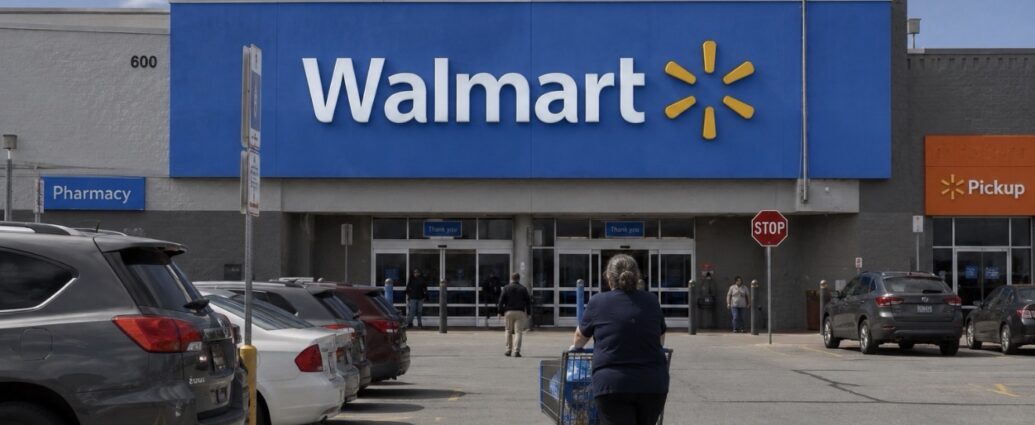
Walmart Inc. is the centerpiece. UBS analyst Michael Lasser wrote in a preview note that the world’s largest retailer “continues to gain traction with higher-income consumers” through better merchandise and a deeper digital assortment, and is positioned to “set the bar for the rest of the industry” amid a challenging backdrop. Lasser flagged Walmart’s so-called second profit-and-loss strategy — built around advertising, third-party marketplace and Walmart Connect — as the central margin lever, with returns on that segment “beginning to inflect.” Walmart’s fiscal Q3 results last November set the comparison bar: comparable U.S. sales rose 4.5% excluding fuel and e-commerce sales jumped 28%. Walmart also recently shifted its primary listing from the New York Stock Exchange to the Nasdaq.
Target Corp. is the most pressured of the three majors. The retailer cut its profit outlook in November after shoppers turned to Walmart and Costco Wholesale Corp. for value, and its store-traffic trends have remained soft. The company is also still digesting the unwinding of its in-store Ulta Beauty shop partnership, which had been a meaningful driver of female foot traffic. Analysts will scrutinize any color on the Target Circle loyalty rebuild and on the back-half outlook for school and grocery categories. TJX Companies Inc., by contrast, has been one of the rare bright spots — the T.J. Maxx, Marshalls and HomeGoods parent raised guidance last quarter and cited a “strong start” to spring as value-conscious shoppers trade down. Lowe’s Companies Inc. is expected to mirror Home Depot’s pattern, while Ross Stores Inc. should benefit from the same trade-down tailwind helping TJX.
The sector backdrop is uniformly soft. The SPDR S&P Retail ETF fell more than 6% last week, on pace for its worst weekly performance since October 2025. Weakness concentrated in National Vision Holdings Inc., Kohl’s Corp., Sally Beauty Holdings Inc. and Advance Auto Parts Inc., all down double digits on the week, while larger names including Carvana Co., O’Reilly Automotive Inc., TJX and Amazon.com Inc. also slid. April retail sales excluding autos rose 0.7%, slowing sharply from a 1.9% gain in March, and a sizable share of the dollar growth reflected higher prices rather than higher unit volumes. RSM US chief economist Joe Brusuelas told CNN that “the war has come home, and Americans can feel it and see it in their grocery basket,” with polling showing 75% of Americans say the Iran war has hurt their finances.
Beyond retail, Tuesday’s April housing starts and building permits will give a fresh read on whether elevated mortgage rates and high construction-input prices are finally constraining homebuilder activity. Toll Brothers Inc. earnings the same morning will color the high end of the market. Wednesday’s FOMC minutes — still reflecting the Jerome Powell era — may be eclipsed by Kevin Warsh’s first communications as Fed chair. Nvidia Corp. earnings after the bell Wednesday remain the week’s marquee event.
For investors, the trade is straightforward: a softer-than-expected consumer print from Walmart or Target would harden the case that the Iran war and higher-for-longer rates are finally reaching the checkout line; a beat from Walmart with strong e-commerce and Walmart+ numbers would do the opposite. With the S&P 500 still less than 2% from its all-time high reached Thursday, even small surprises will move the tape.
— JBizNews Desk
© JBizNews.com. All rights reserved. This article is original reporting by JBizNews Desk. Unauthorized reproduction or redistribution is strictly prohibited.