What impact have American Jews had on the practice of Judaism in Israel? The answer to that question is the focus of Adam S. Ferziger’s latest book, Agents of Change: American Jews and the Transformation of Israeli Judaism. Ferziger is a noted scholar of Orthodox Jewish culture in the United States and Israel, as well as a professor at Bar-Ilan University.
In this ambitious work, he traces the contributions of North American trailblazing educators who made aliyah to the Jewish state between the mid-1960s and the early 1980s and helped lay the foundations for the moderate stream of Orthodox Judaism in Israel.
Ferziger focuses on eight individuals who, in his estimation, transformed Israeli Judaism and had a correspondingly major impact on North American Jewish life as well.
“Their innovative positions,” writes Ferziger, “have found extensive expression in areas that have been at the center of Orthodox debates since the late 20th century, including the role of women in religious and public life, LGBTQs, interactions with non-Orthodox denominations and nonobservant Jews, religious leadership and the authority of the state rabbinate, religious conversion, perceptions of Jewish experience outside Israel, and attitudes toward academic Jewish studies – including biblical criticism.”
The author points out that while the accomplishments of those leaders were initially peripheral to mainstream Israeli religious life, they eventually succeeded in cultivating numerous students who, inspired by their teachings, translated and adapted their religious outlook into Israeli terms.
In other words, “a ‘recalibration’ process transpired that facilitated the refinement and amendment of concepts and positions that can be traced to 20th-century American Modern Orthodox Judaism through ongoing interaction with Israelis and their native contexts.”
Also felt in the US and Canada
Moreover, Ferziger posits that the influence of these trailblazers’ accomplishments has also been felt in North America, due in part to the many college-age and postgraduate students who spent gap years in Israeli institutions and have served as conduits for their ideas upon their return to the US and Canada.
Selecting the top Jewish educational leaders is a little like picking an all-star team in baseball. There will always be those who disagree with the selection and suggest that others should have been chosen.
Therefore, Ferziger discusses at length why he did not include other significant English-speaking figures. Ultimately, he says, the figures he selected were American immigrants who not only taught and wrote about Judaism but also spent their time building and leading Israel-based educational institutions.
The top eight
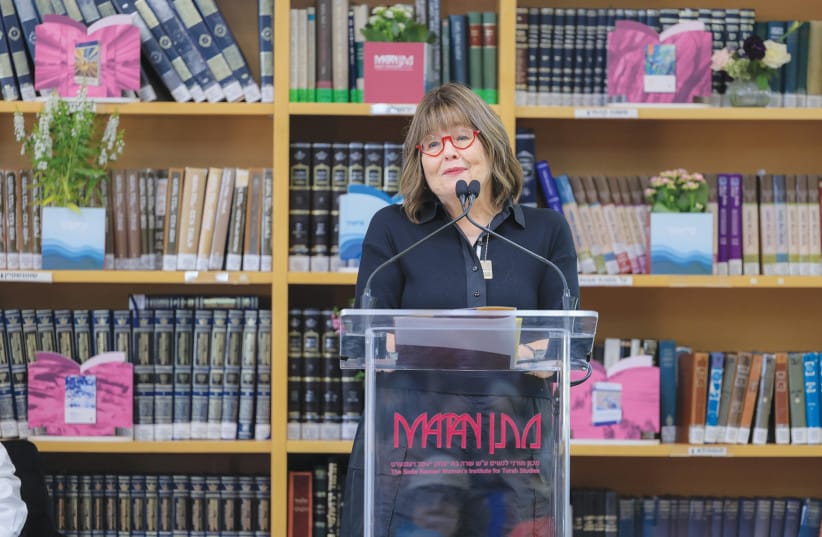
His list includes two women: Malka Bina, founder of Matan Women’s Institute for Torah Studies; and Rabbanit Chanak Henkin, founder and dean ofta Nishmat.
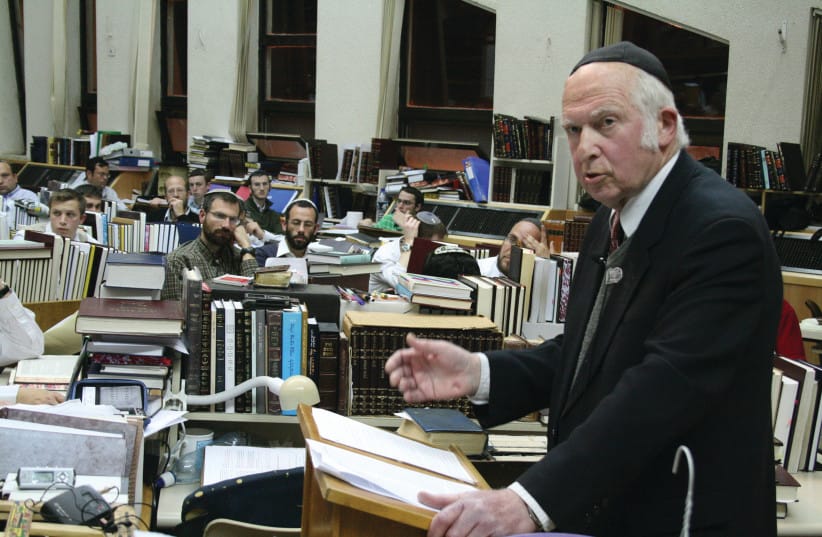
The rest are rabbis whose names have become bywords: Rabbi Dr. Aharon Lichtenstein, rosh yeshiva of Yeshivat Har Etzion; Rabbi Shlomo Riskin, chief rabbi of Efrat and founder of the Ohr Torah Stone institutions; Rabbi David Hartman, philosopher and founder of the Shalom Hartman Institute; Rabbi Daniel Tropper, co-founder of Gesher, which fosters dialogue among different sectors of the Jewish people; Rabbi Nachum Eliezer Rabinovitch, head of Yeshivat Birkat Moshe; and Rabbi Chaim Brovender, founder of Midreshet Lindenbaum – originally known as Yeshivat Hamivtar and Michlelet Bruria.
B-G’s visit to the US
Ferziger sets the stage for the increased interest among young American Jews in the Zionist enterprise with his fascinating March 1960 description of then-prime minister David Ben-Gurion’s visit to the US. During his nine-day visit, he spoke to students at Brandeis University, at the Conservative-affiliated Jewish Theological Seminary (JTS), the Reform movement’s
Hebrew Union College-Jewish Institute of Religion, and at Yeshiva University (YU).
One of the main thrusts of Ben-Gurion’s visit, Ferziger explains, was promoting one-year study programs in Israel for college youth.
While the sight of American Jewish college students coming to Israel for a year of study is considered commonplace today, 60 years ago the very idea was considered most unusual.
Ben-Gurion delivered his remarks at JTS and YU in Hebrew and interacted directly with the students. At the conclusion of his visit to JTS, he told them, “If I may beseech you, anyone who is willing to settle in the Land of Israel, I encourage you to do so.”
At YU, he said, “To the outstanding, the daring, the pioneers, among you… I want to share the hidden subversion in my proposal… Certainly a year in the land will benefit you and American Jewry… but I have a scheme; many of those who shall come to Israel will not return and will remain there. This is what I intended to share with you this morning: Everyone should come for at least a year, the best of you for eternity.”
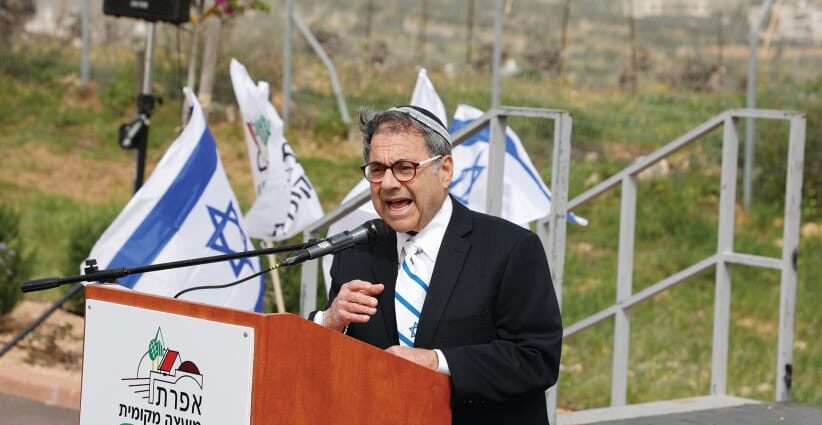
One of the students in attendance, and editor of the YU newspaper, then known as Steven Riskin, would rise to prominence as a leading rabbi and educator and later make aliyah in 1983.
Rabbi Lichtenstein
Ferziger presents cogent descriptions of the accomplishments and contributions of the eight educators to Israeli religious life, and, justifiably, places a special focus on the work of Rabbi Lichtenstein, titling the section “The Game-Changer.”
“It is imperative to emphasize why Lichtenstein’s arrival was such a critical moment in the emergence of Israeli Moderate Orthodoxy,” he writes. “At base, he was undeniably an extraordinary Torah scholar with a superb rabbinical pedigree, who was nurtured by and maintained relationships with some of the leading traditionalist authorities of the time. His own Talmudic lectures charted new analytic directions within the same conceptual approach as Lithuanian-style haredi [ultra-Orthodox] and RZ [Religious Zionist] yeshivot in Israel and throughout the world. Thus, in contrast to other like-minded figures, regardless of one’s opinion of his ideological positions and policies, it was harder to simply dismiss him as insufficiently grounded in core sources of religious knowledge and commitment.”
The book’s second section, “Dimensions of Israeli Moderate Orthodox Judaism,” discusses distinct specific aspects of Israeli moderate Judaism, including, among others, Rabbi Aharon Lichtenstein’s evolving worldview of the non-Orthodox world, and how it has changed over the years; Orthodox feminism, biblical scholarship, and Orthodox Judaism in Israel and North America, as well as Reform and Conservative synagogue-centers in Tel Aviv.
Moderate Orthodox Judaism
Part Three, “Homeland and Beyond,” focuses on the dissemination of Israeli moderate Orthodox Judaism and pays particular attention to the work of Rabbanit Michelle Farber in the popularization of the Daf Yomi (Talmudic) study for women, as well as the accomplishments of the Torah MiZion movement, which has also served to inculcate moderate religious values in communities around the world.
Interestingly, one of the most important sections of the book is the appendix, in which Ferziger provides a list of the Israel-based students and protégés of the eight educators, thus lending ample proof not only of their accomplishments but also of their enduring influence on future generations.
While many olim sometimes despair of their seeming inability to influence and effect change in Israeli society, it is inspiring to read of the impact these particular individuals have had on the Jewish world.
Agents of Change is well written, thorough, and particularly relevant for English-speaking olim. The book might have gained a more personal dimension – and been further strengthened – had Ferziger actually interviewed some of the educators he discusses, allowing them to offer their own reflections on their accomplishments.
However, despite this minor quibble, it is a most worthwhile read.
AGENTS OF CHANGE
AMERICAN JEWS
AND THE TRANSFORMATION
OF ISRAELI JUDAISM
By Adam S. Ferziger
NYU Press
472 pages; $37