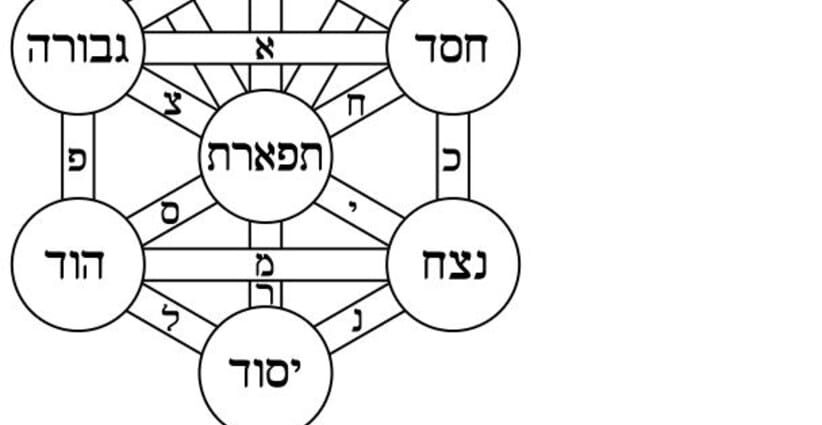
Near the end of his book Introduction to the Zohar: The Wisdom of Truth, Rabbi Yehuda Leib HaLevi Ashlag writes a sentence that is hard to read even now.
“All of the glory of the people of Israel in Poland and Lithuania has been reduced to a handful of refugees in the Holy Land. We, those who remain, must now repair the horribly distorted situation.”
He was not writing after the Holocaust. He was writing inside it. What he believed that repair required is what this volume contains.
Introduction to the Zohar: The Wisdom of Truth, translated by Yoel Finkelman, is Rabbi Ashlag’s introduction to the foundational text of Jewish mysticism, the Zohar.
Known as the Baal HaSulam, Rabbi Ashlag spent his life building what he called a ladder toward that text, a commentary precise enough that any serious person could begin to climb it.
Six questions
He opens the book with six questions, none of them rhetorical. What is the purpose of creation? Why does a God who desires only to give create creatures who suffer? When we look at ourselves, we feel defective and low, yet we know we were made by a perfect Maker. How do we reconcile that? His method for answering them is unusual: Look at the end of the action, not the middle. Begin with what God intended when He created.
Infinite good
What God intended, he argues, was to bestow infinite good on His creatures. But infinite pleasure requires infinite desire to receive. And that desire to receive is the one thing not already present in God because from whom would God receive? It is the single genuinely new thing in creation. The entire material world, he writes, is “nothing other than the desire to receive.” This is less a mystical claim than a description of ordinary experience: we want, we pursue, we acquire, we want again.
Difference in form
The Baal HaSulam then reaches for an image to explain what that desire does to us spiritually. Think of a stone quarried from a mountain. In the physical world, an ax separates the stone from the rock face. In the spiritual world, there is no ax. What separates two things is the difference in form. Two people who love the same things and hate the same things cleave together as one body. Two people of opposite nature are as distant as east from west. God gives; we receive. That difference in form is what separated the soul from its Source, and closing it is what a human life is for.
The only thing that can be cured
Here is where the book turns. The desire to receive is not the disease. It is the only thing that can be cured. A person cannot repair what is not within him. The desire had to be given to us in its raw, selfish form precisely so that we could do something with it: redirect it, through the practice of Torah and the commandments, away from the self and toward something larger. Every act performed with genuine intention moves the needle. The transformation is gradual, and the Baal HaSulam is precise about what happens when it stalls. The suffering built into human life, he argues, is the alternative route to the same destination for those who don’t choose the other path.
He draws the connection between that framework and the catastrophe he is living through with the directness of a man who has nothing left to protect. When Jews abandon the inner life of their tradition, performing its forms without genuine intention, the forces of destruction in the world are strengthened. He is not speaking in metaphor. He names what he has witnessed: “Each and every one who remains must commit his entire being to increasing the study of the internal aspect of Torah and granting it its rightful place.”
Rabbi Shimon bar Yochai
The Zohar, the book that all of this introduces, was composed in the 2nd century by Rabbi Shimon bar Yochai. The Baal HaSulam says he never investigated the question of authorship because anyone who genuinely understands what the Zohar contains cannot doubt that its author was at least at the level of that Tanna. If he were told it was written by one of the 48 prophets, he writes, that would make more sense than attributing it to a lesser figure. If he became convinced Moses himself received it at Sinai, he would be satisfied. He is positioning you before you open the Zohar itself: Know what you are approaching.
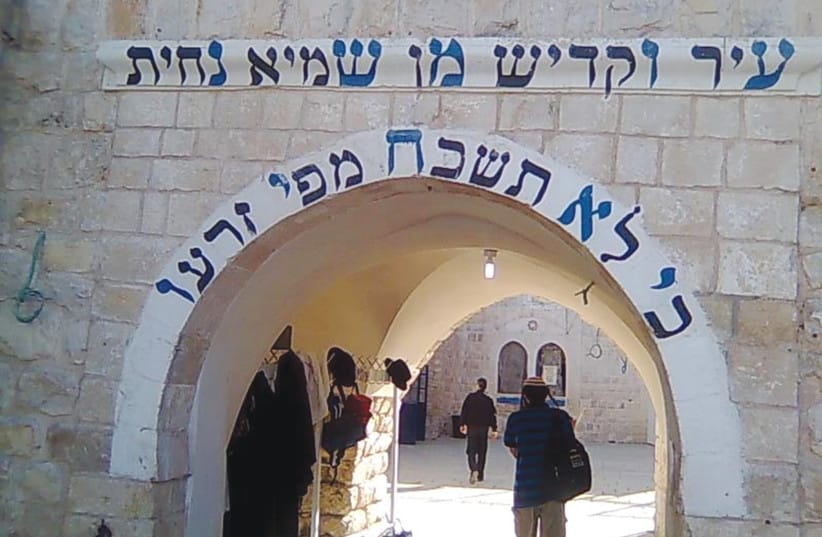
The book closes with a line from the Zohar itself: “The Zohar will bring them out of exile in mercy.”
A ladder is not a destination
He named his commentary on the Zohar “HaSulam,” “the ladder,” and explained that a ladder is not a destination. If you rest on the rungs, you never reach the attic. Finkelman’s translation is precise without being reductive, and the editorial additions orient without intruding. I have spent years around Jewish texts. This one told me something about what they are all pointing toward that I had not found expressed so clearly anywhere else.■
INTRODUCTION TO THE ZOHAR: THE WISDOM OF TRUTH
By Rabbi Yehuda
Leib HaLevi Ashlag
Translated by Yoel Finkelman
Maggid Books and Share
134 pages; $25