In recent days, as yet another roller-coaster ride of news has unfolded, with rumors of an Iran deal, there has been renewed talk of several countries joining the Abraham Accords. This is presented as a rumor, linked to the White House’s current talks about reaching an Iran deal.
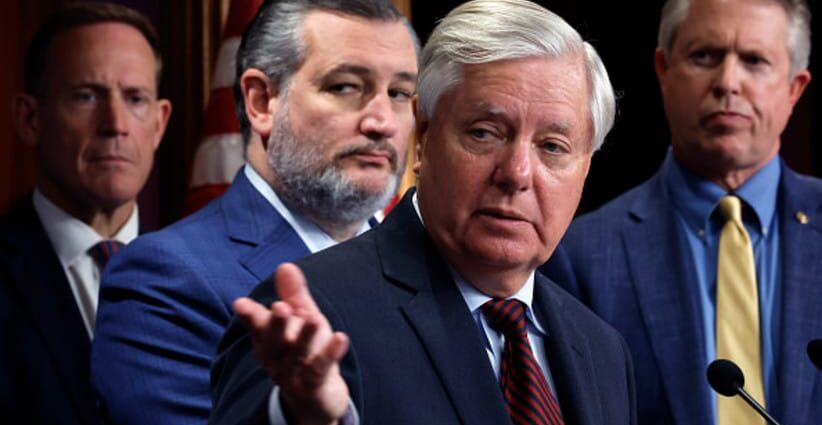
US Senator Lindsey Graham wrote on X that “if, in fact, as a result of these negotiations to end the Iranian conflict, our Arab and Muslim allies in the region agreed to join the Abraham Accords, it would make this agreement one of the most consequential in the history of the Middle East. Saudi Arabia, Qatar, and Pakistan joining the Abraham Accords would be beyond transformative for the region and world. It is a brilliant move by President Trump.”
His comment has raised eyebrows in the region. The question about the expansion of the Abraham Accords has been in the news since the first Accords were signed in 2020. At the time, there was widespread optimism that the Accords between Israel, the UAE, and Bahrain would expand rapidly. Indeed, there was movement in Sudan, Morocco, and other countries.
However, over time, it became clear that while some countries with existing amicable ties to Israel might “join” the Accords, securing new agreements with countries such as Saudi Arabia would be a long shot.
New ‘Abraham Accords’ phenomenon not grounded in reality
Nevertheless, when the Biden administration came into office, there were reports every few months about how Saudi Arabia “might” now join. Every few months, the reports would appear in the media, get the usual news cycle, and then fade. Then they would come back again, like a planet in the solar system rotating around the sun.
This phenomenon of “new Abraham Accord” members never seemed to need to be grounded in reality. Saudi Arabia, for instance, has always said that any move to join the Accords will need to be linked to Israel shifting its stance on Palestinian rights and statehood. Riyadh has been supporting an Arab peace initiative for more than two decades.
However, while Riyadh has been flexible and clear in its demands, Israel’s ruling coalition is often seen as inflexible in the Gulf. Israel elected a more right-leaning government that included voices antagonistic toward prospective Abraham Accords members in 2022. The October 7 War has only made things more difficult. In some ways, Iran’s backing of the October 7 war was designed to prevent the expansion of the Accords. On the other hand, there was ample opportunity to listen to the concerns of countries such as Saudi Arabia.
In recent years, instead of there being more movement toward peace and regional integration, there have been articles quietly arguing that Israel will be confronting the “Sunni” states of Saudi Arabia and Turkey, once the Iran war is complete. This presents a new set of emerging enemies for Israel to confront.
Instead of making it seem like the Accords might expand and lead to move peace and stability, these kinds of articles tend to raise concerns in places like Riyadh. The same is true in Doha, where they can read numerous articles slamming Qatar. The idea that Qatar would join the Accords at the same time it is being slammed seems questionable.
Saudi Arabia is watching other developments. Not only is there more violence and clashes in the West Bank, but Riyadh is concerned about the chaos that the Iran war has unleashed. Voices in the Gulf have been critical of what they see as Israel’s support for this conflict. They also wonder about some of the other choices being made in Jerusalem. For instance, Israel’s Prime Minister recently said he had visited the UAE. This was not a public or official visit, apparently, and the UAE pushed back on the report. This kind of report does not make the Gulf countries comfortable.
Gulf countries tend to be cautious, and they care about protocol, respect, and ceremony. As such, the first Abraham Accords countries had already expressed concern in 2021 about being used as a campaign stop ahead of Israeli elections. They don’t want to be seen as being used. They want to feel like partners.
It is believed that back in 2020, when the UAE and Bahrain were moving toward normalizing ties with Israel, they consulted with Saudi Arabia. At the time, Saudi Arabia’s Crown Prince Mohammed Bin Salman was close to the leader of the UAE, Mohammed bin Zayed. Saudi Arabia also plays a key role in the security of Bahrain, having backed the monarchy there during the Arab Spring. Saudi Arabia is a big state in the Gulf. It doesn’t always agree with Qatar or the UAE, but Saudi Arabia is taken seriously in the region and the world. It sees itself as the leading Muslim country in the world. As such, it wants to be accorded respect.
Tensions between Riyadh and Abu Dhabi
Recently, there have been tensions between Riyadh and Abu Dhabi. But the tensions are sometimes presented as being worse than they are. The UAE is portrayed as having a unique set of ties with Israel. This can work toward trade with India and other corridors in the region. It could also dovetail with Israel’s policies regarding recognition of Somaliland. As a more conservative power, Riyadh is cautious in these issues. The UAE, once called “little Sparta,” is seen as more adventurous. This has also led to the UAE’s involvement in Libya, Sudan, Yemen, and other conflicts. The Saudis led the UAE into Yemen in 2015, against the Houthis, but their views diverged.
Therefore, the Abraham Accords, likely backed by Riyadh in 2020, have since moved on. Over the last half-decade, Riyadh has examined whether the Accords met expectations. They may have met with some expectations, but there is a sense in the Gulf that much is to be desired. Had they accomplished what was expected or led to peace and integration and movement in terms of better conditions for the Palestinians, it is likely they would have expanded.
Today, there is still a “wait and see” approach in the Gulf. It’s possible the Trump administration can move things more into the “see” category. However, that will likely require more than just some talk and rumors in the run-up to a new deal. It would likely require more foundational aspects and understandings.
The tone of Graham’s post has prompted reactions in the Gulf. The senator wrote, “to Saudi Arabia and others: Now is the time to be bold for the future of a new Middle East. I expect, as Trump has suggested, you will, in fact, join the Abraham Accords, effectively ending the Arab-Israeli conflict. If you refuse to go down the path suggested by President Trump, it will have severe repercussions for our future relationships and render this peace proposal unacceptable. Further, it would be seen by history as a major miscalculation.”
He added, “President Trump: Stick to your guns in getting a good deal with Iran. Equally important, stick to your guns in insisting Saudi Arabia and others join the Abraham Accords as part of these negotiations.”
It remains to be seen what comes next.