By JBizNews Desk
WASHINGTON — U.S. Trade Representative Jamieson Greer said Tuesday, May 26, 2026, that tariffs on Mexico are not going away, even as American and Mexican negotiators begin formal talks this week on the future of the United States-Mexico-Canada Agreement (USMCA), underscoring how dramatically Washington’s approach to North American trade has shifted under President Donald Trump.
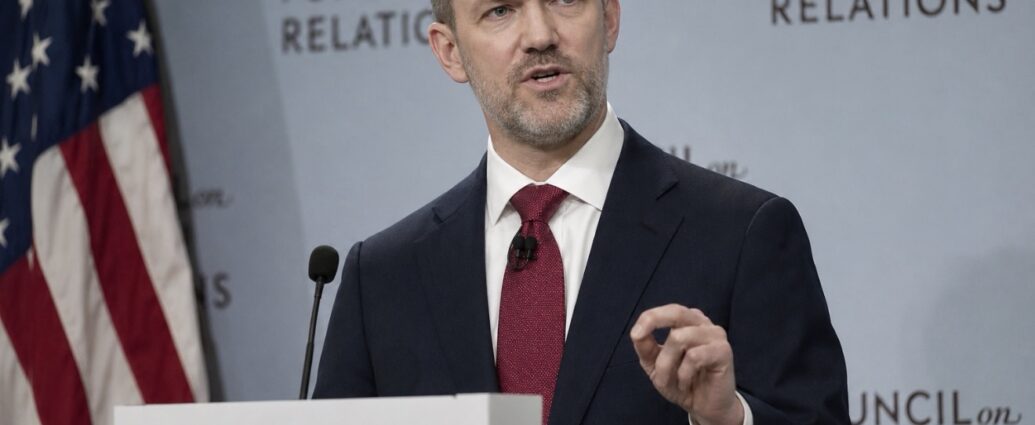
Speaking at the Council on Foreign Relations in Washington, Greer dismissed the idea that the upcoming USMCA review would restore the largely tariff-free trade environment that defined North America for decades under NAFTA and the original 2020 USMCA framework.
“The U.S. is going to have tariffs,” Greer said. “Even with somebody like Mexico, or other countries that are in our own hemisphere, we’re going to have tariffs as long as we have a giant trade deficit.”
The remarks landed as U.S. and Mexican officials opened the first formal negotiating round in Mexico City ahead of the July 1, 2026 review deadline built into the agreement’s sunset clause. Canada was notably absent from this week’s talks, highlighting growing strains between Washington and Ottawa that U.S. officials now openly describe as more difficult than the relationship with Mexico.
At the center of the negotiations is a fundamental question about what USMCA is supposed to be. When Trump negotiated the agreement during his first term to replace NAFTA, the White House pitched it as a modernized trade pact designed to keep manufacturing inside North America. Six years later, the administration is signaling the deal is evolving into something much more aggressive: a regional industrial alliance built around tariffs, supply-chain controls and coordinated pressure on China.
The current tariff structure already reflects that shift. A 50% tariff now applies to imported steel, aluminum and copper entering the United States. Mexican-made medium- and heavy-duty trucks face a 25% duty, while Mexican tomatoes carry a 17% tariff. None of those measures fall under the original USMCA framework, and Greer made clear they are not temporary.
The administration is also pushing for tougher rules of origin, one of the most important and contentious parts of the agreement. Rules of origin determine how much of a product must actually be made inside North America in order to qualify for tariff-free treatment.
Under the current USMCA structure, 75% of a vehicle’s content must come from the United States, Mexico or Canada to move across borders duty-free, and a portion of the labor must come from workers earning at least $16 an hour. The rules were designed to discourage automakers from importing low-cost parts from Asia, assembling products in Mexico and then shipping them into the U.S. market without tariffs.
Now Washington wants those requirements tightened further, with a greater percentage of manufacturing specifically tied to U.S.-made content.
The second major issue is what Greer described as “external tariff coordination.” In practical terms, the United States wants Mexico and Canada to align their own tariffs more closely with Washington’s trade barriers against countries outside the region, particularly China.
U.S. officials increasingly argue Chinese manufacturers have been routing products through Mexico and Canada to gain indirect access to the American market under USMCA rules. Earlier this month, Greer told the House Ways and Means Committee that Mexico has already raised tariffs on roughly 1,400 products from China, Vietnam and other countries. Mexican Economy Minister Marcelo Ebrard has acknowledged his government is currently working through 52 separate U.S. trade demands.
“If Mexico and Canada coordinate externally with us, there can be preferential treatment internally,” Greer said Tuesday. “Ultimately, at the end of the day, frankly, for national security reasons, I want to have our supply chain sourced from this hemisphere, right from North America.”
Mexico and Canada, however, are being treated very differently by Washington.
Mexican President Claudia Sheinbaum has worked to maintain a cooperative relationship with Trump while tying trade negotiations to White House priorities including cartel enforcement and illegal migration. Mexico has also avoided retaliating directly against U.S. tariffs and has instead moved to raise duties on Chinese imports, steps that appear to have preserved goodwill inside the administration.
Canada took the opposite approach after the Trump administration imposed tariffs last year, responding with retaliatory duties on American products. Greer said Tuesday the U.S. now has “significant” disputes with Ottawa extending well beyond trade policy alone, and he openly questioned whether a deal could be finalized before the July 1 review date.
The auto sector remains the largest pressure point in the negotiations. More than half of all vehicles and auto parts produced in Mexico are exported to the United States, alongside a major share of Mexican steel production. American manufacturers support tougher origin rules in theory but worry that escalating tariffs and shifting requirements could raise costs and disrupt deeply integrated supply chains built over three decades.
Farm products, aluminum, lumber and dairy are also emerging as flashpoints. U.S. farmers continue pushing for better access to Canadian dairy markets, while Canadian aluminum producers remain exposed to the administration’s tariff strategy.
The stakes stretch far beyond trade lawyers and diplomats. USMCA governs nearly $1.8 trillion in annual North American trade, making it one of the largest economic relationships in the world. Any major changes will ripple through car prices, appliance costs, manufacturing investment decisions and supply chains that touch millions of jobs across all three countries.
The review itself stems from a “sunset clause” built into the agreement. Every six years, the United States, Mexico and Canada must decide whether to extend USMCA for another 16 years or move into a rolling cycle of annual reviews that could eventually allow the deal to expire in 2036 if no agreement is reached.
Greer acknowledged Tuesday that negotiations are unlikely to conclude by July 1 and will continue through the summer and likely into the fall.
For businesses and consumers, however, the broader direction from Washington now appears unmistakable. The era of largely tariff-free North American trade that began with NAFTA in 1994 is ending. In its place, the United States is building a more protectionist economic bloc centered on tariffs, domestic manufacturing and strategic competition with China.
Washington — JBizNews Desk
© JBizNews.com All Rights Reserved. Reproduction or distribution without written permission is prohibited.