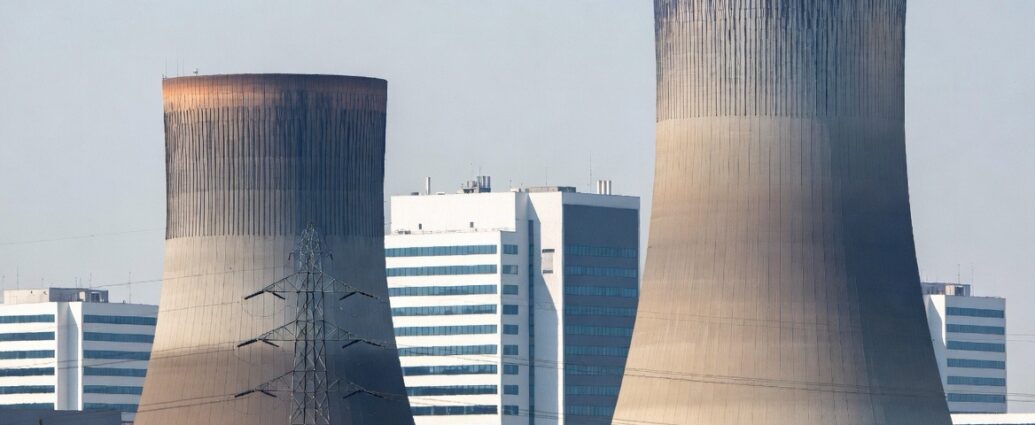
A strange thing is happening in the power business: the companies racing to build artificial intelligence are quietly becoming some of the biggest customers for nuclear energy, and the money is reshaping a corner of the market left for dead a decade ago. The clearest recent sign came this month, when GE Vernova detailed a plan to pair nuclear and natural gas at a single site to feed a data center campus. In a project with Blue Energy, the company plans to combine its gas turbines with the BWRX-300 — the only small modular reactor under construction in the Western world today — to deliver about 2.5 gigawatts to a nearby data center campus, with gas power possible by 2030 and nuclear by 2032, according to GE Vernova power chief Eric Gray.
The reason is simple math. U.S. power usage is expected to climb at least 30% by 2030, with most of the new demand coming from data centers, according to energy consulting firm Grid Strategies. Those centers need power 24 hours a day, an “always-on” supply that wind and solar cannot provide without prohibitively expensive battery storage — which is exactly what nuclear delivers.
That has lit a fire under the whole sector. Nuclear ETFs have posted triple-digit returns, uranium prices are holding near $86 a pound driven by AI data center demand, and the U.S. government is working to cut regulatory hurdles to get new reactors online faster. Over the past year, the URNM uranium fund has climbed roughly 89%, the broader NUKZ nuclear fund about 73%, and the URAN fund around 65%.
The tech giants are the demand engine. Amazon, Alphabet, and Microsoft have all signed deals to tap power from nuclear reactors, and Meta has gone furthest of all. In January, Meta struck deals with Oklo, Vistra, and TerraPower to supply up to 6.6 gigawatts of nuclear power by 2035, on top of a 20-year agreement with Constellation Energy to take output from the Clinton Clean Energy Center in Illinois beginning in 2027, a deal expected to preserve 1,100 local jobs and generate $13.5 million in annual tax revenue.
The investment thesis splits into a few clear lanes. There are utilities like Constellation Energy negotiating long-term power contracts with hyperscalers, advanced- and small-modular-reactor developers like Oklo and NuScale chasing first commercial deployments, uranium miners, and engineering firms positioned to capture reactor restarts and new construction. Cameco draws attention for its integrated uranium and reactor-services business, and its part-owned Westinghouse is tied to an $80 billion U.S. government agreement to build new reactors.
Small modular reactors are the part of the story drawing the most excitement. Unlike traditional plants that power entire cities, SMRs are compact enough to power individual buildings like factories and data centers. NuScale is the furthest along of any U.S. SMR developer and holds the only design certified by the Nuclear Regulatory Commission, with its shares jumping 7% after upbeat deployment progress in May 2026.
There is a real supply squeeze underneath the hype. The uranium market is entering a structural deficit after a decade of underinvestment in mining, and Western nations moving away from Russian enriched uranium are scrambling to rebuild domestic supply chains. That combination — surging demand, tight supply, and government backing — is what has turned a long-dormant industry into one of the hottest themes on the market.
The everyday angle is the part that should not get lost. Data center load growth has broken the grid-planning assumptions of the past decade, and utilities are now racing to add round-the-clock power. How that demand gets met — and how much new generation costs — will help determine electricity bills for ordinary households and the reliability of the grid everyone depends on.
None of this is guaranteed. Reactors take years to permit and build, costs can balloon, and timelines slip. Whether the projects now on the drawing board reach full operation on schedule remains to be seen. But the direction is hard to miss: the AI economy is turning into an energy-intensive industrial system, and nuclear power — fuel, reactors, and the companies that build them — has become one of the clearest ways that demand is showing up in the market.
JBizNews Desk | Energy Markets
© JBizNews.com All Rights Reserved. Reproduction or distribution without written permission is prohibited.