It may be that when Israelis look back on the war with Iran, they will remember it not because of the operations, assassinations, or brief euphoria, but as the moment one of Prime Minister Benjamin Netanyahu’s most important political assets finally collapsed: the belief that he was the man who knew how to preserve Israel’s standing in the United States.
That was always central to his image.
Even Israelis who disliked or distrusted Netanyahu often still believed one thing: that he understood America better than any other Israeli politician.
That he knew how to speak to the American system, manage presidents, and keep Israel close to the center of global power – not only militarily, but as a respected sovereign ally. Which is why the spectacle of recent months has been so jarring.
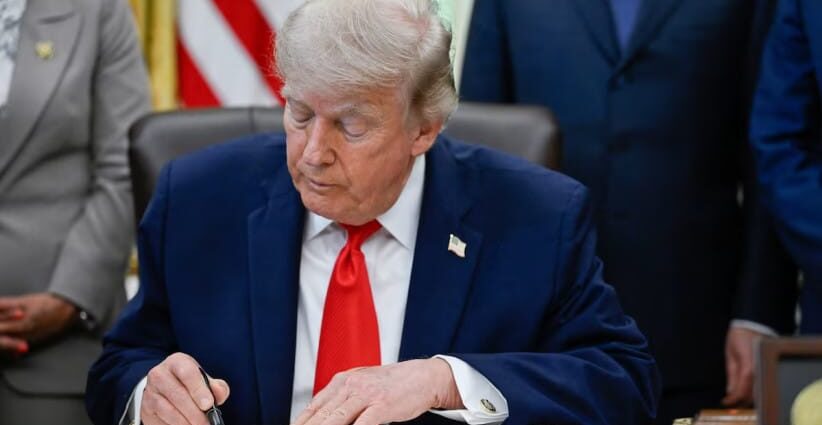
The president of the United States now speaks publicly about Israel’s prime minister as though he were subordinate. President Donald Trump openly boasts that he decides what Israel can or cannot do.
He speaks as if Israeli military operations require his approval, while reports suggest that he cursed Netanyahu privately, describing him as “difficult” and implying that the prime minister is dragging America into conflicts that do not serve US interests.
Israel has always depended strategically on the United States – for weapons, diplomatic cover, intelligence, and deterrence. But for decades, American presidents at least maintained the appearance of a relationship between sovereign allies.
Even during fierce disputes – from Eisenhower through Bush Sr., Obama, and Biden – US presidents generally avoided publicly portraying Israel as a client state acting on their personal instructions.
Ironically, it was Trump – long presented by Netanyahu and the Israeli right as proof of Netanyahu’s diplomatic brilliance – who shattered that convention.
The irony is sharper because the Israeli right reacted with near hysteria to former US president Biden’s much milder conduct during the Israel-Hamas War.
When Biden briefly delayed weapons shipments over Rafah and demanded a plan regarding civilians and hostages, this was portrayed in Israel as humiliation and proof that Democrats were “anti-Israel.”
Yet the weapons arrived, Israel entered Rafah, and Biden never spoke about Israel as a vassal requiring his permission to act. Trump does exactly that – and Netanyahu’s camp swallows the humiliation in near silence.
The real problem with this war, of course, beyond the disgrace, is that it follows a war whose strategic results increasingly resemble failure.
The war against Iran was sold as a historic opportunity to reshape the Middle East: eliminate the nuclear threat, weaken Iran’s axis, and perhaps even destabilize the regime itself.
At first, it seemed dramatic progress was being made. Israeli and American forces struck deep inside Iran, killed senior figures, and damaged infrastructure. For a moment, it appeared the regime had entered real shock.
But the familiar gap between tactical and strategic success quickly reappeared. Iran understood it did not need to win militarily to shift reality.
Threats to the Strait of Hormuz, disruptions to trade routes, cheap drones, and regional instability were enough to pressure the global economy.
Energy prices rose, Gulf states panicked, and Western governments rushed to pressure Washington to stop escalation. At that point, a central weakness of the US-Israeli strategy became obvious: there was a plan for the opening military phase, but almost none for what came afterward.
There was no real strategy for regime change, no serious preparation for prolonged economic warfare around Hormuz, and little Western willingness to absorb the cost of a long conflict. Once again, the West lost patience before Iran did.
Moreover, Trump entered the confrontation after already weakening America’s alliance system for years.
He insulted NATO allies, started tariff wars with them, treated strategic partners as props for domestic politics, and even threatened, outrageously, to invade Greenland, the territory of NATO ally Denmark.
What once would have seemed utterly absurd became normalized.
This severely weakened the West’s ability to coordinate pressure on Iran. Many European elites appeared to despise Trump more than the regime in Tehran.
European governments did not want a nuclear Iran, but they were also reluctant to politically rescue a president who many blamed for the escalation itself – after years of unilateralism, bullying, and contempt for allies.
As a result, the final outcome looks very far from the original promises. The Iranian regime survived. The nuclear program was not really destroyed. The ballistic missile system remains intact, without even demands to limit it. Hezbollah was not dismantled.
The Houthis still threaten shipping lanes. Hamas still exists. Iran is expected to receive sanctions relief that could strengthen both the regime and its regional proxies – and face no demands to end this outrageous aggression against the Middle East.
Indeed, the regime faces no demands for democratic reforms or even for a promise not to massacre protesters again – even though that was the impetus for the war.
Israel, meanwhile, is left with less international legitimacy, deeper dependence on Washington, and the image of a country capable of striking hard militarily but unable to translate military achievements into a stable political outcome.
From tactical gains to strategic failure
What makes this especially painful is how different things might have been. In December 2023, Israel had a rare strategic opening.
After October 7, much of the world genuinely sympathized with Israel. Hamas had already suffered severe losses, and many Arab states understood that it threatened regional stability as well.
Most importantly, Israel still possessed broad international legitimacy.
It was still viewed primarily as a country responding to a horrific massacre – not as a country trapped in an endless war without a clear political objective, driven partly by revenge and collective punishment that killed tens of thousands of civilians.
At that stage, the Biden administration attempted to advance a sweeping regional deal, perhaps Israel’s greatest strategic opportunity in decades.
The proposal included a hostage deal, a gradual end to the war, normalization with Saudi Arabia and other Arab states, and major international and Arab pressure to remove Hamas from power in Gaza and replace it with a reformed Palestinian Authority backed by international support.
It could have been a historic turning point. Israel might have emerged from October 7 with stronger regional alliances, normalization with Saudi Arabia, renewed standing in the West, and at least some hope for a more stable regional future.
But Netanyahu chose differently. He prolonged the war without a clear political strategy, partly because any such regional solution would have forced him to confront both the Palestinian issue and his far-right coalition partners.
As the war dragged on, Israel’s international legitimacy eroded sharply.
Democratic support in America weakened, younger Western audiences turned away, and Europe – Israel’s main trading partner – grew increasingly hostile. Instead of isolating Iran, Israel ended up exhausted, politically dependent on Trump, and facing an Iranian regime that remains standing and perhaps is even strengthened.
For years, Israelis told themselves that the world respects power above all else. There is truth in that. But the world also respects wisdom, responsibility, strategy, and the ability to offer hope. It does not respect brutality and stupidity.
This is what Netanyahu’s Israel increasingly looks like: a thug with polished English.
And it is becoming harder to imagine Netanyahu convincing enough Israelis that he is still the man who can deliver security, status, or dignity. The clock is ticking to the October elections. Since Netanyahu is not a man to walk into defeat, expect trickery.