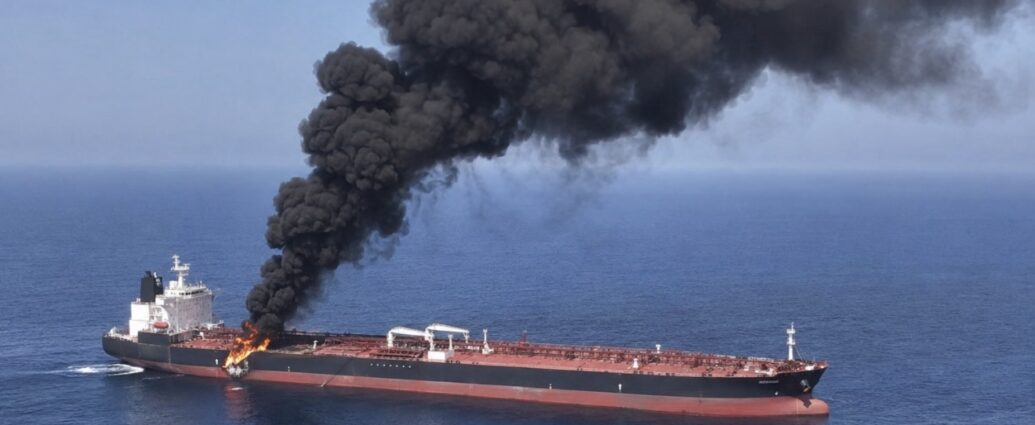
The U.S. Treasury Department revoked the license that had allowed Iran to sell its oil on the world market on Tuesday, July 7, choking off a key source of revenue for Tehran after attacks on commercial ships in the Strait of Hormuz. The department’s Office of Foreign Assets Control (OFAC) said it withdrew the authorization because the understanding reached with Iran last month was contingent on compliance, and U.S. officials said Iran had failed to uphold its commitments.
A senior U.S. official said Iran’s actions in the Strait of Hormuz were unacceptable and warranted consequences while emphasizing that Washington remains committed to pursuing a broader diplomatic agreement if Tehran changes course.
The Treasury action effectively unwinds an arrangement that was only weeks old. Under last month’s interim agreement, Iran had been permitted to continue limited oil exports through August 21 while negotiations continued. Tuesday’s move dramatically shortens that timeline. Existing transactions must now be wound down by July 17, with any payments required to remain in blocked, interest-bearing accounts inside the United States. New oil sales under the license are no longer permitted.
The decision follows a fresh escalation in one of the world’s most important energy corridors.
According to the United Kingdom Maritime Trade Operations (UKMTO), three commercial vessels were attacked in or near the Strait of Hormuz in recent days. The incidents included damage to the Qatari liquefied natural gas carrier Al-Rekayyat, along with attacks involving an oil tanker and another commercial vessel. Dr. Majed Al Ansari, spokesperson for Qatar’s Ministry of Foreign Affairs, confirmed the incident involving the LNG carrier. U.S. military forces later responded with strikes against Iranian targets, according to U.S. Central Command, although the Treasury action stands as a separate economic response.
Energy markets reacted immediately.
Brent crude, the international benchmark, settled approximately 3% higher at $74.16 per barrel, while U.S. West Texas Intermediate (WTI) finished 2.8% higher at $70.44. Following news of the Treasury’s license revocation, prices continued climbing in after-hours trading, with Brent approaching $76 per barrel and WTI rising above $72, representing gains of roughly 5% from the previous trading session.
“Obviously today is the next level of breakaway from the memorandum of understanding,” said Bob Yawger, director of energy futures at Mizuho, describing the market’s reaction to the deteriorating relationship between Washington and Tehran.
For Iran, the financial consequences could be significant.
Oil exports remain one of the country’s primary sources of hard currency, generating billions of dollars annually. China continues to be the largest purchaser of Iranian crude, making restrictions on export sales particularly meaningful for Tehran’s already strained economy.
Maritime analysts believe the attacks may have been intended to increase pressure on Gulf shipping routes rather than simply disrupt individual vessels.
Michelle Wiese Bockmann, senior maritime intelligence analyst at Windward, said the recent incidents appear designed to destabilize shipping along the southern corridor protected by the U.S. Navy while encouraging greater reliance on routes where Iran maintains stronger influence.
For American consumers, however, the immediate concern is fuel prices.
The Strait of Hormuz carries roughly 20% of the world’s seaborne oil, making it one of the most strategically important waterways in global commerce. Any disruption to shipping through the strait can quickly affect crude prices, which eventually filter down to gasoline stations, airlines, trucking companies and businesses dependent on transportation.
Higher diesel prices are especially important because they affect freight transportation across the United States. Increased fuel costs for trucks, railroads and delivery companies often work their way into the prices consumers pay for groceries, household goods and countless everyday products.
There is also a balancing effect.
As one of the world’s largest oil producers and exporters, the United States benefits financially when global energy prices rise. Domestic producers generally earn higher revenues during periods of elevated crude prices. At the same time, households, manufacturers, airlines, shipping companies and small businesses typically face higher operating costs as fuel becomes more expensive.
Investors will now turn their attention to U.S. inventory data.
The American Petroleum Institute estimated that domestic crude stockpiles fell by roughly 399,000 barrels last week, while the Energy Information Administration is scheduled to release its official inventory report on Wednesday. Those figures will help determine whether tightening global supply is also being reflected inside the United States.
For now, the Treasury’s decision marks one of Washington’s strongest economic responses since the latest Hormuz crisis began. While U.S. officials continue to leave the door open for negotiations, the revocation of Iran’s oil-sales license sends a clear message that future sanctions relief will depend on Tehran’s actions, not simply ongoing diplomacy.
JBizNews Desk | Washington, D.C.
© JBizNews.com All Rights Reserved. Reproduction or distribution without written permission is prohibited.