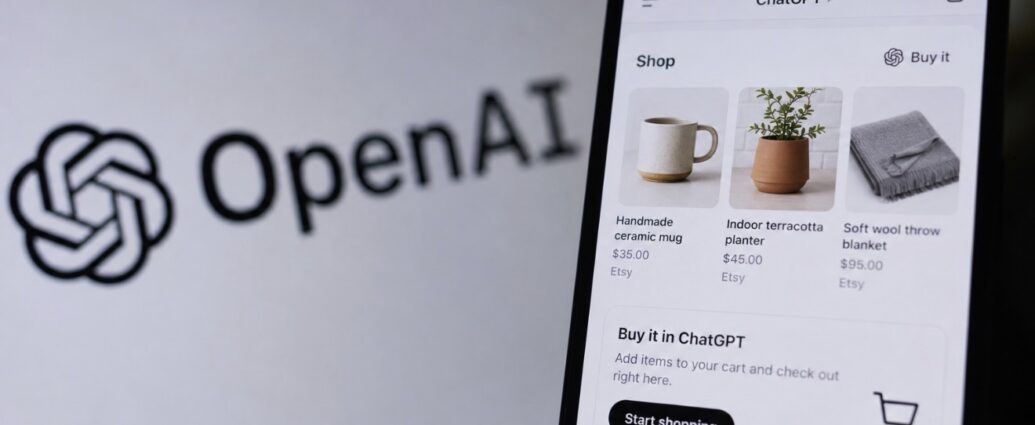
The way consumers shop online is rapidly changing, with purchasing decisions increasingly beginning inside AI-powered assistants rather than on traditional retailer websites. As more shoppers turn to platforms such as ChatGPT, Claude, Google Gemini and Microsoft Copilot for product recommendations, retailers are racing to ensure their products appear where those conversations begin.
“The shelf moved,” said Matthew Bouchner, founder and chief executive of AI commerce startup Satsuma.ai. “It is inside the assistant now.”
Shopping Begins Inside the Chat
The shift reflects a broader change in online commerce. On February 16, OpenAI introduced its “Buy it in ChatGPT” shopping experience, allowing U.S. users to purchase products from Etsy sellers and later Shopify merchants through technology built with Stripe. Today, ChatGPT serves more than 700 million weekly users, with shopping-related questions becoming an increasingly significant part of overall usage.
Major retailers have moved quickly to participate. Walmart integrated approximately 200,000 products into the ChatGPT shopping experience, recognizing that consumers are increasingly asking AI assistants what to buy before ever visiting a retailer’s website.
While OpenAI later shifted away from completing purchases directly inside ChatGPT, instead directing shoppers to retailers’ own checkout systems, the broader trend has continued. Retailers increasingly view AI assistants as another important customer touchpoint rather than simply another search engine.
Retailers Are Rethinking Their Digital Strategy
Industry analysts say retailers are still determining the best way to integrate with AI assistants.
“No one has this figured out,” said Emily Pfeiffer, principal analyst at Forrester.
Bob Hetu, vice president analyst at Gartner, said many retailers underestimated the complexity of allowing external AI assistants to securely interact with inventory systems, customer accounts and checkout platforms.
For retailers, the challenge extends beyond simply appearing in search results. Consumers are asking AI assistants to recommend products, compare options, locate inventory nearby and assemble complete shopping lists. If the information an assistant provides is outdated or incomplete, retailers risk losing sales before a customer ever reaches their website.
Building the Infrastructure for AI Commerce
That opportunity is driving companies such as Satsuma.ai, which says it enables retailers to connect inventory, shopping carts, checkout systems and loyalty programs across multiple AI assistants through a single integration.
The platform is built around the Model Context Protocol (MCP), an emerging open standard designed to help AI systems securely interact with external business software. According to the company, retailers can connect once and make their data available across ChatGPT, Claude, Gemini, Microsoft Copilot and their own AI-powered customer service platforms.
Bouchner previously founded MealMe, a shopping application that grew to more than one million users and raised $8 million in funding before evolving into Satsuma.ai. He argues that AI commerce represents a shift similar to the early days of e-commerce, when retailers that delayed investing in online shopping spent years trying to catch up.
A Battle Over Industry Standards
The race to become the standard for AI commerce is intensifying.
Google has introduced its own commerce protocol through Shopify, while retailers increasingly evaluate whether to support multiple AI ecosystems.
At the same time, companies including Amazon have taken a more guarded approach, limiting outside access to shopping data as competition among AI platforms accelerates.
For many retailers, the practical question is no longer whether customers will shop through AI assistants—but how to ensure their products are accurately represented wherever those purchasing conversations take place.
The Stakes for Retailers
Supporters of agentic commerce—the growing practice of allowing AI systems to research and complete purchases on behalf of consumers—project the market could reach $175 billion by 2030.
Although many of the technologies remain in their early stages, analysts broadly agree that AI-assisted shopping is becoming an increasingly important part of the retail landscape.
For retailers, the opportunity extends beyond selling products online. As more consumers ask AI assistants for recommendations, the companies that successfully integrate into those conversations may gain an advantage in influencing purchasing decisions before shoppers ever visit a traditional online storefront.
JBizNews Desk | New York
© JBizNews.com All Rights Reserved. Reproduction or distribution without written permission is prohibited.