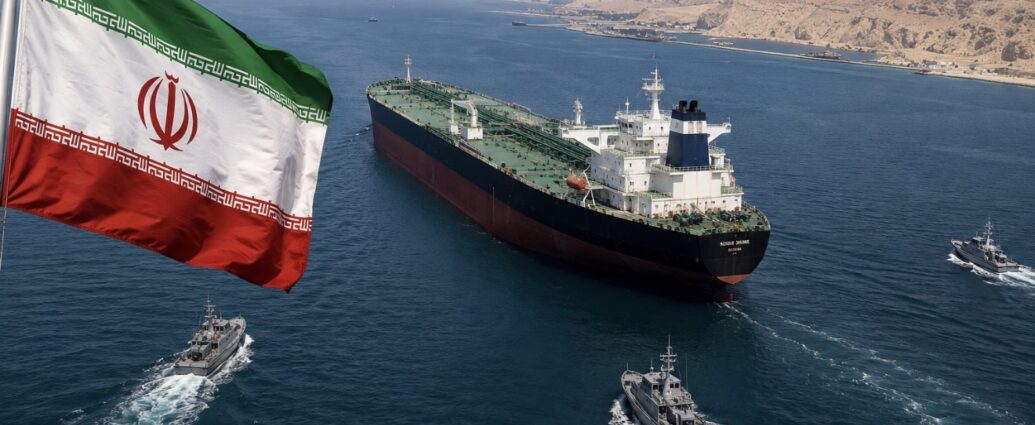
President Donald Trump declared Monday that the United States would reinstate a naval blockade of Iranian shipping through the Strait of Hormuz and impose a 20% toll on all other cargo transiting the strategic waterway, a dramatic escalation that places Washington at the center of one of the world’s most critical energy corridors. In a post on Truth Social and later comments to Fox News, Trump said the United States would become “The Guardian of the Hormuz Strait” and should be “reimbursed, at the rate of 20% on all cargo shipped,” for protecting commercial traffic.
The announcement represents a sharp reversal from the ceasefire agreement reached only weeks ago. The United States and Iran had agreed in mid-June to reopen the Strait of Hormuz following months of conflict, but that arrangement has now unraveled. The administration formally notified Congress under the War Powers Resolution that U.S. military operations against Iran had resumed, while American forces launched another round of strikes against Iranian targets. Iran’s Islamic Revolutionary Guard Corps responded by announcing retaliatory attacks against military facilities in Bahrain, Jordan, Kuwait, and Oman.
The Strait of Hormuz remains one of the world’s most strategically important waterways, carrying roughly 20% of global seaborne oil and liquefied natural gas exports. Any disruption immediately reverberates throughout global energy markets because producers in Saudi Arabia, the United Arab Emirates, Kuwait, Iraq, and Qatar depend heavily on the narrow shipping lane to reach international customers.
Trump’s proposal would fundamentally change how traffic moves through the strait. Rather than Iran attempting to charge transit fees, as it previously threatened, the president argued the United States should collect compensation for providing naval security.
“We’re going to keep the Strait, and we’ll probably run it,” Trump said. “We’ll become the guardian of the Strait. And we should be reimbursed for that.”
Financial markets reacted immediately. West Texas Intermediate crude oil climbed sharply as traders priced in the possibility of prolonged disruptions to global energy supplies, while gasoline futures also moved higher. Analysts noted that a 20% transit charge on commercial cargo could add millions of dollars to the cost of transporting oil aboard large tankers, expenses that would ultimately flow through to refiners, businesses, and consumers worldwide.
The proposal raises significant legal and diplomatic questions. International maritime law generally protects the right of transit passage through international straits used for global navigation. Whether the United States could legally impose and collect such a toll would almost certainly become the subject of international legal challenges and diplomatic disputes.
Operational questions also remain unanswered. The administration has not explained how tolls would be collected, which vessels would be subject to payment, whether allied naval forces would participate, or how ships refusing payment would be handled. Maintaining a continuous naval presence sufficient to enforce both a blockade and a toll would require substantial military resources.
The economic implications extend well beyond oil. The Strait of Hormuz also serves as a critical shipping route for petrochemicals, liquefied natural gas, manufactured goods, and other commercial cargo moving between Asia, Europe, and the Middle East. Higher transportation costs could ripple through global supply chains, increasing prices for businesses and consumers alike.
Energy-importing nations are watching developments closely. Countries heavily dependent on Gulf oil supplies could face rising import costs if shipping insurance premiums, freight charges, and security risks continue increasing. Markets remain particularly sensitive because global oil inventories are already relatively tight.
For the Gulf states themselves, the stakes are exceptionally high. Continued military activity threatens both energy infrastructure and commercial shipping throughout the region, while prolonged instability could discourage investment and disrupt export revenues that remain central to many Middle Eastern economies.
Whether the administration ultimately implements the proposed toll remains uncertain. Congressional reaction, international diplomacy, military developments, and global market responses will all influence how the strategy evolves in the coming weeks.
For now, the announcement marks one of the most significant changes to U.S. policy in the Persian Gulf in years, placing the world’s most important energy chokepoint once again at the center of international attention—and potentially reshaping global shipping, energy prices, and geopolitical tensions far beyond the region.
JBizNews Desk | New York
© JBizNews.com All Rights Reserved. Reproduction or distribution without written permission is prohibited.