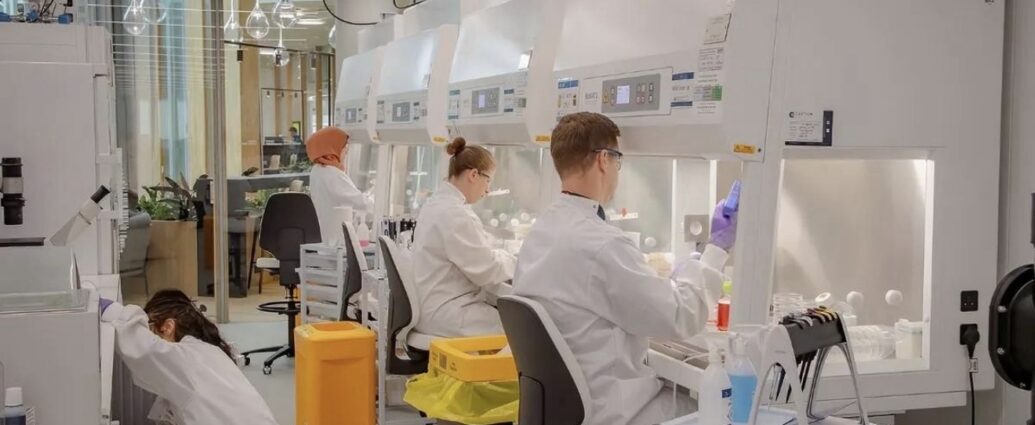
AstraZeneca PLC announced Tuesday that it has agreed to pay up to $1.5 billion for the global rights to a promising lung-cancer treatment developed by China’s Dizal Pharmaceutical, underscoring the growing importance of Chinese biotechnology innovation in the worldwide race to develop new cancer medicines.
According to a company announcement issued Tuesday, July 14, AstraZeneca entered into an exclusive global licensing agreement for Zegfrovy (sunvozertinib), an oral targeted therapy designed to treat patients with advanced non-small cell lung cancer carrying EGFR exon 20 insertion mutations.
Under the agreement, AstraZeneca will pay $600 million upfront, with an additional $900 million tied to future development, regulatory and commercial milestones. Dizal will also receive tiered royalties on future global sales.
The transaction is expected to close during the second half of 2026 and will not affect AstraZeneca’s financial guidance for the year.
The agreement strengthens AstraZeneca’s already dominant position in lung-cancer treatment.
Zegfrovy is already approved in both the United States and China for adults with advanced non-small cell lung cancer whose disease has progressed following chemotherapy. The therapy is also under regulatory review as a first-line treatment in both countries after producing encouraging late-stage clinical trial results.
Unlike traditional chemotherapy, Zegfrovy is a once-daily oral irreversible EGFR inhibitor designed to target specific genetic mutations that drive tumor growth while limiting damage to healthy cells.
Patients with EGFR exon 20 insertion mutations have historically had limited targeted treatment options, making the therapy particularly significant within the oncology community.
Dave Fredrickson, Executive Vice President of AstraZeneca’s Oncology Business Unit, said the agreement brings another differentiated targeted therapy into the company’s global cancer portfolio and expands treatment options for patients with difficult-to-treat forms of lung cancer.
Dizal Chief Executive Officer Xiaolin Zhang said AstraZeneca’s global commercial infrastructure will allow a medicine discovered by Chinese researchers to reach patients throughout the world.
The acquisition also reinforces a major shift occurring across the pharmaceutical industry.
Rather than relying primarily on internally developed medicines, many large pharmaceutical companies are increasingly licensing late-stage drugs from Chinese biotechnology firms that have already demonstrated strong clinical results.
China has rapidly emerged as one of the world’s fastest-growing centers for pharmaceutical research and development.
Industry analysts estimate that roughly one-fifth of all medicines currently under development worldwide now originate in China, reflecting years of investment in scientific research, biotechnology and clinical development.
For AstraZeneca, the strategy offers several advantages.
Licensing a medicine that has already received regulatory approval substantially reduces development risk while providing the opportunity for earlier revenue generation compared with acquiring experimental compounds still undergoing initial clinical testing.
The agreement also complements AstraZeneca’s flagship lung-cancer medicine, Tagrisso, which remains one of the world’s best-selling oncology drugs and generated approximately $7.25 billion in sales during 2025.
Together, the two therapies could strengthen AstraZeneca’s leadership in one of the largest oncology markets globally.
Lung cancer remains the leading cause of cancer-related deaths worldwide.
Non-small cell lung cancer accounts for approximately 85% of all lung-cancer diagnoses, while EGFR mutations occur significantly more frequently among Asian patients than in Western populations.
That makes China an increasingly important source not only of pharmaceutical innovation but also of clinical expertise in developing targeted treatments for genetically defined cancers.
The agreement also continues AstraZeneca’s expanding investment in China.
Last month, the company signed another licensing agreement valued at up to $5.2 billion with CSPC Pharmaceutical Group, while separately committing billions of dollars toward research, manufacturing and development operations throughout the country.
The latest transaction reflects how global pharmaceutical companies increasingly view China as both an important commercial market and a source of innovative medicines.
For investors, the agreement represents another example of AstraZeneca’s long-term strategy of strengthening its oncology portfolio through carefully targeted acquisitions and licensing agreements rather than relying solely on internal drug development.
For patients, the partnership could accelerate worldwide access to an important new targeted therapy for one of the deadliest forms of cancer.
More broadly, the transaction highlights a changing global pharmaceutical landscape.
As Chinese biotechnology companies continue producing advanced medicines capable of competing internationally, Western drug manufacturers are becoming increasingly willing to pay substantial premiums for therapies that can quickly strengthen their product pipelines.
For AstraZeneca, the acquisition is more than another licensing agreement.
It is a strategic investment in the future of precision cancer medicine—and further evidence that the next generation of breakthrough oncology treatments is increasingly emerging from a global research ecosystem rather than any single country.
JBizNews Desk | Cambridge, England
© JBizNews.com All Rights Reserved. Reproduction or distribution without written permission is prohibited.