Amazon’s Zoox received federal approval Thursday to commercially deploy purpose-built robotaxis without steering wheels, pedals or other conventional driver controls, clearing a major obstacle to charging passengers for rides.
The National Highway Traffic Safety Administration granted a temporary exemption allowing Zoox to deploy as many as 2,500 vehicles annually during each of the next two years. It is the first federal approval permitting paid service in a robotaxi designed entirely without human driving controls.
Paid rides will not necessarily begin immediately in every market. Zoox must still satisfy state and local operating requirements, including any separate permits needed to collect fares.
Even so, the federal clearance moves Zoox closer to becoming a commercial ride-hailing business rather than remaining an experimental transportation service.
Amazon acquired Zoox for approximately $1.2 billion in 2020 and has continued funding the company as it develops autonomous vehicles intended to compete with Alphabet’s Waymo, Tesla and traditional ride-hailing platforms.
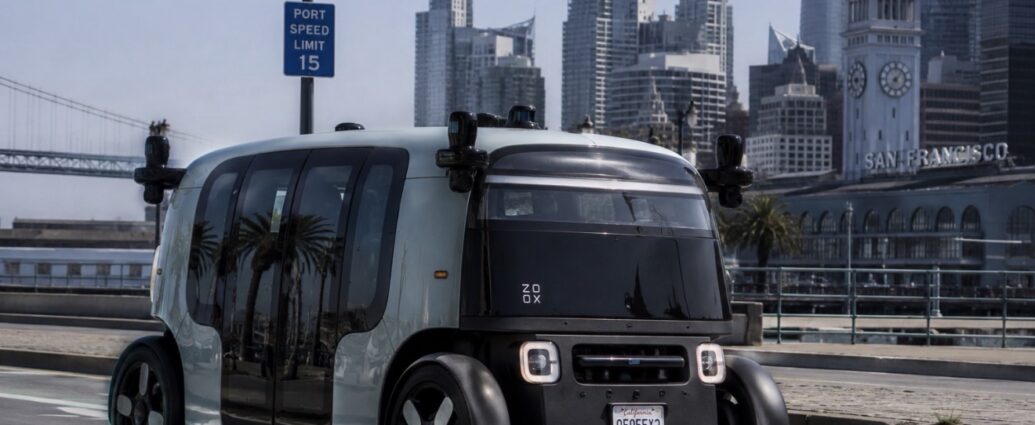
Unlike Waymo, which generally installs autonomous-driving systems on conventional vehicles, Zoox designed its electric robotaxi from the ground up. Passengers sit facing one another inside a carriage-style cabin, while the vehicle travels without a steering wheel, brake pedal or designated driver’s seat.
That design created a regulatory challenge because many federal vehicle-safety rules were written around cars operated by humans. Requirements covering mirrors, controls, seating positions and occupant protection assumed someone would be sitting behind a steering wheel.
NHTSA’s exemption allows Zoox to bypass selected requirements after the agency determined that the company’s alternative systems provide safety performance comparable to vehicles built under conventional standards.
Federal regulators attached additional conditions to the approval. Zoox must report crashes, unexpected stopping and other operating problems, while remote-support personnel must remain inside the United States. The agency can alter or revoke the exemption if significant safety concerns emerge.
Zoox also cannot sell the exempted vehicles to consumers. The approval applies to a commercial fleet owned and operated by the company rather than privately purchased autonomous cars.
That distinction matters because Zoox plans to control the entire transportation system, including vehicle manufacturing, maintenance, software, fleet operations and passenger service. Keeping ownership of the vehicles gives the company more control over repairs and software updates but also leaves Zoox responsible for the substantial cost of building and operating the network.
Public rides are already available through the Zoox app in Las Vegas, where the company began offering free service around portions of the Strip in September 2025. San Francisco riders have also been able to join a limited free program while the company prepared for commercial operations.
Las Vegas is likely to become the first market where Zoox charges passengers, subject to local authorization. San Francisco presents a more complicated regulatory environment because paid autonomous transportation requires approvals beyond the federal vehicle exemption.
Expansion plans also include testing or future service in Austin, Miami, Los Angeles, Atlanta and other cities. Zoox has been adding locations gradually, beginning with employee testing before inviting members of the public and eventually seeking permission to charge fares.
For Amazon, paid rides would create the first meaningful path toward revenue from an investment that has required years of costly vehicle development, artificial-intelligence training, manufacturing capacity and regulatory work.
The broader opportunity extends beyond passenger fares. A successful autonomous fleet could eventually give Amazon experience in driverless logistics, fleet management, mapping and last-mile transportation, although Zoox remains focused on carrying passengers.
Competition is intensifying. Waymo already operates paid autonomous services in several U.S. cities using modified passenger vehicles, while Tesla has been working to expand its own robotaxi operations. Uber and Lyft are increasingly partnering with autonomous-vehicle developers rather than building complete driving systems internally.
Zoox’s approval could also help other manufacturers seeking to build vehicles without traditional controls. Federal regulators announced alongside the exemption that they are accelerating work on national performance standards for automated vehicles, potentially replacing the current system of company-by-company exemptions.
The next test will be whether Zoox can turn federal authorization into a reliable and affordable transportation network.
Vehicle production must expand, local operating permits must follow, and the company will need to prove that its robotaxis can handle complex streets without creating traffic or safety problems. Passenger demand will also depend on pricing, service areas and whether riders trust a vehicle with no human driver and no steering wheel.
Federal approval gives Zoox permission to begin building that commercial business. It does not guarantee that the economics or public confidence will follow.
JBizNews Desk | Washington
© JBizNews.com All Rights Reserved. Reproduction or distribution without written permission is prohibited.