
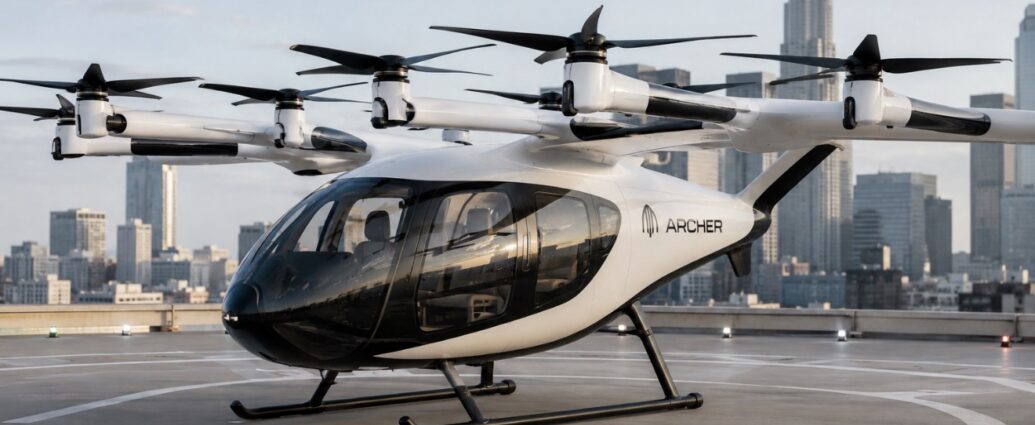
Boeing is getting out of the flying-taxi business, and it is not taking cash for it. The plane maker announced Monday that it has signed definitive agreements to hand three subsidiaries — air-taxi developer Wisk Aero, air-traffic software company SkyGrid and military drone maker Insitu — to Archer Aviation. In exchange, Boeing receives newly issued Archer stock amounting to roughly 20% of the company, a seat at the table on Archer’s board, and the right to keep using the autonomous-flight technology it spent two decades paying for.
The structure is the point. Boeing is not selling these businesses for money and walking away. It is converting them into ownership of the company that will now run them, which lets it stop funding a capital-hungry, pre-revenue industry while still holding a claim on the outcome if that industry ever arrives.
The specifics were disclosed in filings Monday morning. Boeing will take Archer Class A shares equal to 19.75% of the share count before closing, adjusted for cash. It also receives two warrants with a combined notional value of $200 million, exercisable at $13.00 and $17.88 a share, giving it a path to buy more stock over the coming years. Boeing is locked up for 12 months, capped at 19.9% beneficial ownership, and holds an option to put up to $55 million into a future Archer equity raise. The companies expect the transaction to close by the end of 2026, subject to the antitrust waiting period, with a backstop date of May 9, 2027.
What Archer gets is revenue, which it has almost none of. The three businesses together generate more than $200 million a year and operate in 35 countries, according to the companies. That comes almost entirely from Insitu, the drone unit Boeing bought in 2008, which has built more than 3,500 unmanned aircraft used for intelligence, surveillance and reconnaissance work by allied militaries. For a company still waiting on certification to fly paying passengers, acquiring a profitable defense contractor changes what the business looks like on paper immediately.
Wisk brings the technology. It has designed, built and flown six generations of electric vertical takeoff and landing aircraft over 16 years, logging more than 1,700 flight tests, with a focus on flying without a pilot aboard. SkyGrid, which Wisk acquired in 2025, builds the ground software that manages where automated aircraft go and keeps them separated from each other and from conventional traffic. Across all three units, Archer says it is inheriting close to two million flight hours of operating data, which it plans to feed into its in-house artificial intelligence system for aerospace and defense, called ZEE.
Archer Founder and Chief Executive Adam Goldstein called it a “watershed moment for Archer and the future of physical AI,” and said it accelerates the company’s shift into a diversified platform with a real revenue base rather than a single product in development.
Boeing framed the deal as a way to capitalize on prior spending while redirecting new investment to its core aircraft programs. Brian Yutko, the company’s vice president for commercial airplanes product development, described the arrangement as beneficial to both sides and said it lets the three units move faster to market than they could inside Boeing. Under a separate technology-sharing agreement, Boeing keeps access to Wisk’s core autonomy systems for its current and next-generation commercial and defense aircraft — meaning it sheds the ownership costs but not the engineering.
The divestiture fits a pattern under Chief Executive Kelly Ortberg, who has spent two years narrowing Boeing to what it does best after a stretch of production and safety crises. Last year the company sold parts of its digital aviation services arm, including flight-planning provider Jeppesen, to Thoma Bravo for $10.55 billion. Wisk and Insitu were the kind of long-horizon bets that made sense when the core business was healthy and became difficult to justify when it was not.
There is history between the two parties. Archer and Wisk spent 2023 in litigation over intellectual property before settling, agreeing to co-develop autonomous aviation technology, and giving Wisk a warrant on Archer shares as part of the resolution. Three years later, the rival that sued has become the owner.
Investors sided decisively with the buyer. Archer shares jumped roughly 16% to 20% in premarket trading Monday, while Boeing was essentially unchanged, slipping about 0.2%. Archer carried a market value above $4 billion as of Friday’s close, a fraction of Boeing’s, which is why the stake being handed over is large enough to make the aerospace giant one of its biggest shareholders.
Archer is targeting its first commercial passenger flights by the end of this year or early next.
JBizNews Desk | New York
© JBizNews.com All Rights Reserved. Reproduction or distribution without written permission is prohibited.




