SAN FRANCISCO — OpenAI CEO Sam Altman says a growing number of young people are no longer using ChatGPT simply as a search engine or productivity tool — they are increasingly using it as something closer to a life operating system.

Speaking at Sequoia Capital’s AI Ascent event last month, Altman described what he called a dramatic generational divide in how people interact with artificial intelligence, particularly ChatGPT, the platform that has rapidly become one of the most widely adopted consumer technologies in modern history.

Older users, Altman said, tend to use ChatGPT similarly to how they once used Google — to retrieve information, answer questions, summarize documents, or improve efficiency.

Younger users, however, are doing something fundamentally different.

“There’s this other thing where they don’t really make life decisions without asking ChatGPT what they should do,” Altman said during the event. “It has the full context on every person in their life and what they’ve talked about.”

According to Altman, people in their 20s and 30s increasingly use ChatGPT as what he described as a “life advisor,” while college students have integrated the system so deeply into their routines that it functions less like an app and more like an operating system layered over their daily lives.

The comments offer one of the clearest public windows yet into how quickly artificial intelligence is evolving from a workplace productivity tool into a deeply embedded behavioral companion shaping human decision-making in real time.

OpenAI’s own user data appears to support the trend.

The company reported earlier this year that Americans between the ages of 18 and 24 are adopting ChatGPT faster than any other demographic group, with more than one-third of U.S. young adults now actively using the platform.

A major driver of that engagement is ChatGPT’s expanding memory functionality, which allows the system to retain context from prior conversations and build increasingly personalized interactions over time.

In practice, that means the system can remember details about users’ relationships, goals, fears, preferences, professional challenges, and personal histories — creating what amounts to a continuously evolving behavioral profile.

Altman compared the generational AI divide to the early smartphone era, when younger users adapted instinctively to entirely new forms of digital interaction while older generations struggled to fully integrate them into daily life.

“The difference is unbelievable,” he said.

According to Altman, many college-aged users now maintain highly sophisticated workflows involving ChatGPT, including customized prompts, connected personal files, integrated scheduling systems, academic support, relationship advice, and career planning.

The behavioral shift is becoming increasingly visible far beyond Silicon Valley.

Users are now routinely turning to AI systems for help navigating dating decisions, friendship conflicts, parenting questions, financial choices, workplace strategy, mental health concerns, and medical information — areas traditionally handled by family members, therapists, mentors, teachers, or professional advisors.

That expansion is generating growing debate among psychologists, ethicists, educators, regulators, and parents.

Some researchers argue that for routine or low-stakes questions, AI-generated guidance may provide meaningful benefits, including increased accessibility, emotional support, organization, and informational clarity.

Others warn that the systems remain fundamentally incapable of human judgment, empathy, moral reasoning, accountability, or genuine emotional understanding — despite becoming increasingly persuasive conversationally.

Critics also worry users may develop forms of emotional dependency on systems optimized primarily for engagement and responsiveness rather than wisdom or truthfulness.

Those concerns are intensifying as AI models become more conversationally sophisticated and personally contextualized.

OpenAI itself has become one of the most valuable private companies in the world, recently reaching an estimated valuation of approximately $852 billion following one of the largest private fundraising rounds in technology history.

Altman’s remarks suggest the company increasingly sees ChatGPT not merely as a software product, but as a central digital layer mediating how people work, communicate, learn, and make decisions.

That vision carries enormous commercial implications.

The more deeply AI systems become embedded in users’ personal and professional lives, the more valuable they become — not only as subscription products, but as platforms capable of shaping consumer behavior, information flow, and eventually commerce itself.

At the same time, the social implications remain largely unresolved.

Researchers are only beginning to study how heavy reliance on AI guidance could affect critical thinking, emotional development, personal relationships, independence, and long-term behavioral patterns — particularly among younger users who may grow up with AI systems integrated into nearly every aspect of daily life.

For now, one reality is becoming increasingly difficult to ignore: artificial intelligence is no longer simply helping people search for answers.

For millions of younger users, it is increasingly helping decide what those answers should be.

JBizNews Desk

© JBizNews.com. All rights reserved. This article is original reporting by JBizNews Desk. Unauthorized reproduction or redistribution is strictly prohibited.

Alphabet Inc.’s Google unveiled at its Android Show: I/O Edition on Tuesday a sweeping set of features designed to push its Gemini artificial-intelligence model from a standalone chatbot into the operating layer of more than three billion Android devices, accelerating a strategic race to define the post-app smartphone experience just weeks before Apple Inc. is expected to unveil a delayed, Gemini-powered overhaul of Siri and Apple Intelligence at its annual developer conference in June.

The announcements, made a week ahead of the company’s broader Google I/O developer conference scheduled for May 19 and 20, were framed by Sameer Samat, the executive overseeing the Android ecosystem, as the start of a fundamental shift in the purpose of mobile operating systems.

“We’re transitioning from an operating system to an intelligence system,” Samat told CNBC in an interview tied to the event.

He added that “the human is always in the loop,” an apparent attempt to address growing concerns across Silicon Valley and Washington about increasingly autonomous AI systems capable of taking real-world actions without sufficient user oversight.

At the center of the rollout is a new layer of app automation that allows Gemini to read what is on a user’s screen and complete multi-step actions across multiple applications. During demonstrations Tuesday, Google showed Gemini automatically building an Instacart Inc. shopping cart from products appearing inside a screenshot and finding matching travel experiences on Expedia Group Inc. using only a photograph of a printed travel brochure.

The features are scheduled to begin rolling out this summer on Samsung Electronics Co.’s Galaxy smartphones and Google’s own Pixel devices before expanding to Android-powered watches, vehicles, laptops, and smart glasses later this year.

Google said Gemini will only operate inside applications that users explicitly authorize and that sensitive actions such as purchases or bookings will still require manual confirmation.

The company is also redesigning Android Auto, now installed in more than 250 million vehicles globally, around Gemini-powered assistance and pairing the update with what executives described as the most significant overhaul of Google Maps in nearly a decade.

Additional features announced Tuesday include AI-powered web assistance inside Chrome, where Gemini will summarize information, compare products, and eventually handle routine online tasks such as parking reservations or appointment scheduling through a feature called Chrome Auto Browse.

Google also introduced Personal Intelligence, an expanded Android autofill system capable of completing complex forms — including passport paperwork and travel documents — using information already stored inside connected accounts.

A new Gboard feature called Rambler converts unstructured speech into polished written text, while another feature called Create My Widget lets users generate custom Android widgets using natural-language prompts.

The timing of the rollout is strategically significant because it arrives just weeks before Apple’s annual Worldwide Developers Conference (WWDC), where investors expect the company to attempt a major reset of its AI narrative after repeated delays surrounding Siri and Apple Intelligence.

The competitive backdrop changed dramatically earlier this year when Apple and Google reached a partnership agreement allowing Gemini models to power portions of Apple’s next-generation AI system and a long-promised Siri overhaul. According to reporting from Bloomberg’s Mark Gurman, the agreement is worth roughly $1 billion annually to Google.

The deal followed what many analysts describe as a difficult period inside Apple’s AI organization. Apple reportedly lost more than a dozen senior AI researchers during 2025, including former Foundation Models head Ruoming Pang, who joined Meta Platforms Inc. under a compensation package reportedly approaching $200 million.

Industry reports suggest Apple’s core Foundation Models team currently consists of only about 50 to 60 engineers — far smaller than comparable teams at Google, OpenAI, Anthropic, and Microsoft Corp.

The rollout timeline for Apple’s AI platform has also repeatedly slipped. Features initially expected in iOS 26.4 in March were later pushed to iOS 26.5 and are now widely expected to arrive only with iOS 27 later this year or in early 2027, according to reports from MacRumors and Bloomberg.

Apple has publicly maintained that the revamped Siri remains “on track” for 2026, though the company has now missed multiple publicly communicated timelines.

For Google, the Gemini partnership creates an unusually powerful strategic position. The company now effectively supplies AI infrastructure for both the Android ecosystem and portions of Apple’s iPhone ecosystem while simultaneously using Android to demonstrate that the deepest and most capable AI integration exists on Google-controlled platforms.

That positioning directly challenges Apple’s longstanding argument that tight integration between hardware, software, and privacy controls gives the iPhone a superior user experience.

Google’s Android rollout repeatedly emphasized transparency and visibility, including new persistent AI notifications, real-time progress indicators, and a new Privacy Dashboard showing which AI systems accessed which applications during the previous 24 hours.

Wall Street has rewarded Google’s AI momentum aggressively. Shares of Alphabet have risen roughly 140 percent over the past year, compared with approximately 40 percent for Apple. Alphabet’s market capitalization now stands near $4.65 trillion.

The company generated roughly $110 billion in first-quarter revenue and has projected $175 billion to $185 billion in 2026 capital expenditures, with most of that spending directed toward AI infrastructure, data centers, and next-generation computing systems.

Investors are now watching whether Gemini can convert that infrastructure advantage into lasting consumer-product leadership against rivals including ChatGPT, Claude, and Microsoft Copilot, all of which are rapidly expanding toward more autonomous, screen-aware AI assistants.

Google also previewed a new laptop line called Googlebook, expanded its Quick Share file-transfer system to support interoperability with Apple’s AirDrop through QR-code-based cloud sharing, and introduced a digital wellbeing tool called Pause Point, which inserts a brief breathing prompt before launching apps users identify as distracting.

The broader update will ship with Android 17, internally codenamed Cinnamon Bun, and incorporate Google’s broader Material 3 Expressive design system throughout the operating system.

The stakes extend far beyond smartphones. Android powers more than 3 billion active devices globally, while Apple’s installed base exceeds 2 billion.

Whichever company succeeds in making personal AI feel native, seamless, and indispensable on mobile devices over the next 18 months could shape the next era of consumer computing — and lock in user behavior across search, commerce, communication, entertainment, and digital assistants for years to come.

For now, Google appears to be moving first — and increasingly using Apple’s dependence on Gemini as evidence of just how far ahead it believes it has become in the AI race.

JBizNews Desk

© JBizNews.com. All rights reserved. This article is original reporting by JBizNews Desk. Unauthorized reproduction or redistribution is strictly prohibited.

President Donald Trump arrived in Beijing on Wednesday evening local time aboard Air Force One, opening a three-day state visit the White House has framed as a push to pry open Chinese markets for American firms while securing Beijing’s cooperation on Iran, rare earth flows, and artificial intelligence guardrails. The visit, confirmed by China’s Foreign Ministry for May 13 through 15, marks the president’s first trip to China since 2017 and follows the October 2025 Busan truce that temporarily cooled the sharpest tariff escalation between the world’s two largest economies.

Trump was greeted with a full ceremonial welcome at Beijing Capital International Airport, with formal meetings with President Xi Jinping scheduled for Thursday and Friday inside the Great Hall of the People. The president arrived with one of the largest American corporate delegations in years — a 16-member roster distributed by the White House on Monday and headlined by Tesla chief Elon Musk, Apple chief Tim Cook, Boeing chief Kelly Ortberg, BlackRock chief Larry Fink, Goldman Sachs chief David Solomon, Citigroup chief Jane Fraser, Blackstone chief Stephen Schwarzman, and Mastercard chief Michael Miebach. Nvidia chief executive Jensen Huang was added late after earlier reports indicated he would skip the trip. Cisco chief Chuck Robbins withdrew Monday, according to the White House.

The composition of the delegation underscores where the administration believes meaningful progress remains possible despite years of escalating strategic rivalry. Administration officials have signaled two major structural initiatives: a proposed “Board of Trade” and a parallel “Board of Investment,” frameworks first discussed in lower-level negotiations before the summit and described by Council on Foreign Relations senior fellow Heidi Crebo-Rediker as among the most realistic deliverables likely to emerge from the meetings.

On the commercial front, the administration’s demands are highly specific. The U.S. Trade Representative’s Office and White House negotiators have pushed Beijing to commit to multi-year purchases of American soybeans, beef, pork, and poultry, while also lifting the freeze on widebody aircraft orders that has weighed heavily on Boeing since China retaliated against the spring 2025 tariff escalation. Proposals circulated among negotiators reportedly include a Chinese commitment to purchase roughly 25 million metric tons of U.S. soybeans annually over three years, alongside a potential aircraft package that could include as many as 500 Boeing 737 MAX jets in addition to widebody orders, according to summit briefing materials reviewed by Reuters and Bloomberg.

For Apple, the trip carries additional symbolism. Industry analysts widely view the visit as Tim Cook’s final major diplomatic mission before his planned September 1 transition to incoming chief executive John Ternus. Elon Musk enters the summit with equally high stakes. Tesla’s Shanghai facility remains the company’s largest production hub globally, reinforcing the administration’s acknowledgment that full-scale economic decoupling remains unrealistic in sectors deeply tied to Chinese manufacturing.

The inclusion of Jensen Huang has drawn especially close scrutiny across Wall Street and Washington. Nvidia has aggressively lobbied the administration to ease restrictions on advanced semiconductor exports after Commerce Secretary Howard Lutnick acknowledged in April that the export controls had significantly constrained sales to China. Huang’s participation is being interpreted by analysts as an early signal that the administration may be willing to explore a limited thaw in certain categories of advanced chip exports if broader trade and geopolitical concessions can be secured.

Beijing, however, enters the summit with its own priorities. Chinese officials continue pressing Washington to ease restrictions on advanced semiconductor equipment and chip-making technologies. Analysts at Goldman Sachs, led by economist Andrew Tilton, suggested ahead of the summit that the administration could potentially relax controls on certain 14-nanometer and 7-nanometer manufacturing equipment. In exchange, Washington is seeking guarantees of stable rare earth and critical mineral exports after Beijing’s export restrictions in April and October 2025 disrupted supply chains for American automakers, defense contractors, and industrial manufacturers. China currently refines roughly 90% of the world’s rare earth materials.

The most politically sensitive issue hanging over the summit remains Iran. China remains the largest buyer of Iranian crude oil, accounting for more than 80% of Tehran’s exported shipments, according to energy market estimates. The White House is pressuring Xi to use Beijing’s leverage with Tehran to help reopen the Strait of Hormuz and steer Iran back toward negotiations after months of regional instability disrupted global energy markets. Trump told reporters before departing Washington that he expected to have “a long talk” with Xi about Iran, though he emphasized trade would remain the primary focus of the summit.

Financial markets entered the meetings cautiously optimistic. The onshore yuan has strengthened roughly 1.7% against the dollar over the past three months — its strongest performance among major Asian currencies and its highest level since early 2023, according to Bloomberg data. JPMorgan Chase economist Feng Zhu wrote this week that both Washington and Beijing have a strong mutual interest in stabilizing the Middle East conflict and reopening the Strait of Hormuz to calm global energy prices. Macquarie China equity strategist Eugene Hsiao said his firm’s base case remains that existing tariffs — currently estimated by JPMorgan at an effective rate near 22% — will remain in place without significant escalation. Invesco Asia Pacific client solutions head Christopher Hamilton said any reduction in the U.S.-China geopolitical risk premium would likely provide a substantial boost to Chinese equities and broader regional markets.

Few analysts expect a sweeping breakthrough. What investors, manufacturers, and commodity markets will watch closely over the next two days is whether Trump and Xi can produce enough concrete progress — particularly on aircraft purchases, agriculture, semiconductor controls, and rare earth access — to preserve the Busan truce through the November midterms and potentially stabilize the U.S.-China economic relationship into 2027.

JBizNews Desk

© JBizNews.com. All rights reserved. This article is original reporting by JBizNews Desk. Unauthorized reproduction or redistribution is strictly prohibited.
Edgar Connors – JBizNews Desk

The European Union long treated trade policy as one of its clearest instruments of global influence, a domain in which market size could translate into geopolitical leverage. In The trade deal with America shows the limits of the EU’s power, The Economist argued that the bloc’s accord with America instead exposed a more constrained reality: prudence, not defiance, shaped the outcome.

The numerical contrast framed the shift. Donald Trump, White House, set out a threatened 30% tariff on European Union goods in a July letter to Ursula von der Leyen, while European Commission briefings described the eventual framework around a lower 15% tariff ceiling for many exports to the United States.

The stakes extended beyond a narrow tariff dispute. The European Commission has described the transatlantic relationship as the world’s largest trade and investment partnership, with goods and services flows reaching roughly €1.6 trillion annually, placing the accord at the center of pricing decisions for manufacturers, retailers and investors on both sides of the Atlantic.

The European Commission has long presented the single market as a defensive asset, arguing that common external trade policy gives European Union members weight they lack individually. That model helped Brussels set rules for chemicals, digital markets, privacy and competition policy, often forcing multinationals to adjust global operations around European standards.

In the tariff talks, however, The Economist argued in The trade deal with America shows the limits of the EU’s power that regulatory authority did not convert cleanly into bargaining dominance. The article’s subtitle, The bloc opts for prudence over defiance, captured the strategic choice facing Brussels: protect access to its most important foreign market or escalate into a broader commercial fight.

The White House described the framework as including European pledges to expand purchases of American energy and commit additional investment in the United States, while the European Commission presented the arrangement as a way to stabilize commercial ties and avert a sharper tariff shock.

Ursula von der Leyen, European Commission, said the agreement offered predictability for companies operating across the Atlantic, according to public statements from the institution. For executives in autos, machinery, luxury goods and pharmaceuticals, predictability carries financial value even when the tariff line still cuts into margins.

That calculation explains the broader market lesson. The Economist argued that the European Union chose a negotiated disadvantage over a potentially costly confrontation with America, reflecting limited appetite among member states for a trade conflict that could raise prices and weaken industrial orders.

The early architecture of European trade power relied on cohesion. The European Commission says it negotiates trade agreements on behalf of all European Union members, giving the bloc a single voice in external commercial policy. In theory, that centralization creates scale; in practice, national exposure to U.S. tariffs varies widely.

The White House cast the framework as a gain for American industry, citing expanded market access and investment commitments from the European Union. For Brussels, the same terms carried a different meaning: limiting damage for exporters while preserving room for future talks over steel, autos, agriculture and digital levies.

The European Commission said the framework would keep trade channels open between the European Union and the United States, an outcome investors often prefer to retaliatory spirals. Equity analysts typically discount earnings more aggressively when tariff paths lack clarity, particularly in export-heavy sectors with long supply chains.

But the path to compromise exposed volatility inside the bloc. The Economist argued that European Union leaders had to weigh political demands for a tougher response against the economic risk of damaging a relationship central to manufacturers, energy buyers and financial markets.

The tariff ceiling also complicates the bloc’s industrial policy ambitions. The European Commission has promoted competitiveness, clean technology and strategic autonomy, yet higher duties on exports to the United States can dilute the effect of subsidies and tax incentives aimed at keeping production anchored in Europe.

For companies, the consequence comes through margins rather than symbolism. The Economist described the accord as a demonstration of limited European power, and that limitation has practical consequences for pricing, sourcing and capital allocation at firms selling into the American market.

The European Commission has said further engagement with the United States remains necessary to implement and refine the framework. That leaves investors focused on the operational details: product coverage, exemptions, enforcement procedures and the degree to which companies can pass tariff costs to customers.

The White House and European Commission each framed the deal as serving domestic economic interests, underscoring how trade agreements now function as political instruments as much as commercial compacts. For markets, that means tariff risk no longer sits at the edge of valuation models; it belongs in base-case assumptions.

The broader lesson reaches beyond this accord. The Economist argued in The trade deal with America shows the limits of the EU’s power that scale alone does not guarantee leverage when security, energy, capital markets and export demand pull in different directions. The European Union remains a regulatory giant, but the deal shows that even giants sometimes pay for stability.

JBizNews Desk

The European Union Aviation Safety Agency on Tuesday extended its conflict-zone advisory over Israeli and broader Middle Eastern airspace until May 27, while simultaneously softening the language European carriers have relied on for more than two months to justify suspending service to Tel Aviv — a move aviation officials say inches Europe closer toward restoring flights to Israel without yet delivering the full green light airlines have been waiting for.

In its updated Conflict Zone Information Bulletin issued May 12, EASA replaced earlier language advising airlines to avoid operating in the region with guidance urging carriers to “exercise caution and take potential risks into account” when flying through the airspace of Israel, Bahrain, Jordan, Saudi Arabia, Qatar, Kuwait, Oman, and the United Arab Emirates. The agency maintained stricter warnings against operations at any altitude over Iran, Iraq, and Lebanon.

The extension itself also stood out. Instead of continuing the rolling five- to seven-day renewals that had characterized the advisory throughout April, the European regulator issued a broader 15-day extension — a signal aviation analysts interpreted as evidence that regulators believe the immediate threat environment has stabilized following the April 8 U.S.-Iran ceasefire and its subsequent April 21 extension.

Still, EASA cautioned that the ceasefire’s durability remains uncertain.

“While the overall level of risk has decreased in the region, the sustainability of the ceasefire remains uncertain in the longer term, with a possibility of rapid escalation,” the agency said in its statement, adding that operators should continue conducting enhanced threat monitoring and maintain contingency procedures.

The wording shift matters enormously for Europe’s airline industry because the EASA bulletin has effectively served as the regulatory trigger behind the near-collapse of commercial European aviation into Israel since the February 28 U.S.-Israeli strikes on Iranian nuclear and military infrastructure and Iran’s retaliatory missile and drone attacks throughout the region.

Major carriers including Lufthansa Group, Air France, KLM, British Airways, Wizz Air, and Air Europa have tied their Israel suspensions directly to EASA’s guidance, with war-risk insurers and airline safety committees treating the bulletin as the benchmark for operational decisions.

The softer language now gives airlines more flexibility to restart flights — but it does not force them to do so.

Several carriers that had initially targeted late-May resumptions are now expected to reassess their schedules again following the advisory’s extension. Wizz Air, Air France, KLM, and Air Europa had all previously indicated possible returns before the end of May, though industry officials now expect some of those timelines to slip further into June.

Lufthansa Group has already formally suspended Tel Aviv service through June 30, while British Airways is targeting a tentative July 1 return with one daily flight, contingent on additional easing or removal of the advisory altogether. Air India said Tuesday it would also extend cancellations into early July.

Even if regulators lifted the bulletin entirely on May 27, operational realities would still delay a meaningful European return.

Executives at Wizz Air, historically Israel’s largest European low-cost carrier by passenger volume, have reportedly told Israeli aviation officials that the airline requires approximately two weeks of preparation before resuming Tel Aviv service. That process includes crew scheduling, aircraft positioning, slot coordination, war-risk insurance renewals, and restoration of local ground-handling operations.

As a result, industry analysts say a substantial return of European service to Ben Gurion Airport before mid-June remains unlikely even under an optimistic scenario.

The prolonged aviation disruption has dealt a heavy blow to Israel’s tourism and business sectors.

Since late February, Ben Gurion Airport has operated with only limited international connectivity, relying heavily on Israeli carriers including El Al, Arkia, and Israir to maintain repatriation flights and scaled-back commercial operations. European business travel, conferences, and inbound tourism have all sharply contracted, while Israeli outbound travelers have faced soaring fares and lengthy rerouting through hubs including Athens, Larnaca, and Istanbul.

The insurance market remains another major obstacle.

According to aviation-industry estimates, war-risk insurance premiums for aircraft operating in or near Israeli airspace remain between 50 percent and 500 percent above pre-war levels. Several underwriters continue using EASA’s advisory status as a core pricing benchmark when determining coverage costs and operational restrictions.

Analysts say normalization of insurance pricing will likely require both a fully lifted advisory and a prolonged period without missile launches, drone activity, or broader regional escalation.

For now, European regulators appear to be attempting a careful balancing act: acknowledging that the immediate threat environment has improved while stopping well short of declaring the region stable.

EASA said it will continue coordinating with the European Commission and member-state aviation authorities and plans to issue another update before the May 27 expiration date. The agency also instructed operators to maintain active risk assessments and prepare for rapid operational changes if regional conditions deteriorate — a reminder that despite the softer language, caution remains the dominant posture across European aviation.

© JBizNews.com. All rights reserved.

Goldman Sachs lowered its probability of a U.S. recession over the next 12 months to 25% from 30% in a closely watched mid-year outlook released Monday, arguing that the American economy has remained more resilient than expected despite rising oil prices, persistent inflation pressures, and the ongoing Iran conflict.

But the bank simultaneously pushed back the timing of its next expected Federal Reserve rate cut — a sign that even as recession fears ease, Wall Street is increasingly accepting that higher interest rates may remain in place much longer than previously anticipated.

The revised forecast gained immediate scrutiny Tuesday morning after the Bureau of Labor Statistics reported that April inflation accelerated to 3.8% year-over-year, the highest annual reading since May 2023.

The combination of slowing recession fears alongside resurgent inflation is creating a far more complicated environment for investors and policymakers alike.

In its updated outlook, Goldman’s economics team led by Chief Economist Jan Hatzius said the firm now expects the Federal Reserve to deliver its next quarter-point rate cut in December 2026, followed by another reduction in March 2027.

That marks a significant shift from Goldman’s prior forecast, which projected rate cuts beginning in September of this year.

The bank said the change reflects “lower recession risk and higher near-term core PCE inflation,” while maintaining a year-end 2026 inflation forecast well above the Federal Reserve’s 2% target.

The revision represents one of the most important Wall Street recalibrations since the Iran crisis erupted in late February and energy markets were thrown into turmoil following disruptions surrounding the Strait of Hormuz.

Back in March, Goldman had actually increased recession odds from 25% to 30% after oil prices surged sharply following the outbreak of the conflict. At the time, the bank’s commodities analysts projected the energy shock would likely prove temporary, assuming only several weeks of supply disruption.

Instead, oil market disruptions have continued for more than two months.

On Tuesday morning, WTI crude traded above $102 a barrel while Brent crude surpassed $103, levels that continue placing upward pressure on transportation, manufacturing, freight, and consumer prices throughout the global economy.

Despite that, Goldman argued the broader U.S. economy has remained remarkably durable.

April payroll data showed the economy added 115,000 jobs, far exceeding consensus expectations, while unemployment held steady at 4.3%. Initial jobless claims also remained relatively contained, reinforcing the view that the labor market has not meaningfully weakened despite higher borrowing costs and elevated inflation.

The bank also pointed to resilient private domestic demand and relatively healthy household balance sheets as reasons recession risks have moderated.

Still, Goldman acknowledged several warning signs are beginning to emerge.

The firm warned consumer spending could slow later this year as tax-refund spending fades, gasoline prices continue rising, and wage growth gradually cools.

The revised outlook also leaves Goldman increasingly closer to — though still less hawkish than — Bank of America, which this week projected the Federal Reserve may not cut rates until July 2027.

Markets themselves have shifted even more aggressively.

According to the CME FedWatch Tool, traders now assign virtually no probability to Fed rate cuts for the remainder of 2026. Prediction markets have also begun pricing growing odds that the Fed’s next move could ultimately be another rate hike if inflation continues accelerating.

Goldman, however, pushed back against the most aggressive hawkish scenarios, arguing the Federal Reserve may still look through some of the inflation tied directly to energy disruptions and geopolitical supply shocks.

That assumption is increasingly being tested daily as the Strait of Hormuz remains heavily restricted and global oil markets continue operating under severe uncertainty.

The outlook also arrives amid growing disagreement among Wall Street’s biggest institutions over the future direction of markets.

Earlier this week, JPMorgan Private Bank told clients “the AI supercycle may just be getting started,” while JPMorgan Chase Chief Executive Jamie Dimon separately warned there is now “too much exuberance” in financial markets given inflation and geopolitical risks.

Meanwhile, Goldman Sachs Chief Executive David Solomon has continued forecasting a strong environment for mergers, acquisitions, and corporate investment activity fueled by artificial intelligence spending and resilient economic demand.

The implications for investors now stretch across virtually every major asset class.

The 10-year Treasury yield climbed to 4.43% Tuesday morning as traders demanded higher compensation for inflation risk. Technology and growth stocks weakened, with the Nasdaq Composite falling nearly 1%, while energy and defensive sectors outperformed.

Goldman strategists said bonds — particularly shorter-duration Treasuries — may increasingly serve as an effective hedge against either a delayed recession or a reversal in the AI-driven equity rally that has dominated markets throughout much of the year.

The next major tests for the bank’s outlook arrive quickly.

Investors are now preparing for the release of:

  • April Producer Price Index data Wednesday,
  • April Retail Sales Thursday,
  • and the latest Federal Reserve meeting minutes on May 20.

Any further acceleration in inflation could force Wall Street to push expectations for Fed easing even further into 2027 — bringing Goldman’s outlook closer to the increasingly hawkish forecasts now emerging across the Street.

For now, the market’s central question has shifted dramatically:
not whether the U.S. economy will slow — but whether inflation can cool before higher interest rates themselves become the next major economic shock.

JBizNews Desk
© JBizNews.com. All rights reserved.

By JBizNews Desk
May 11, 2026

Venezuela’s acting President Delcy Rodríguez arrived in the Netherlands on Sunday to personally defend Caracas’s territorial claim over the resource-rich Essequibo region before the International Court of Justice, escalating one of the world’s most consequential geopolitical disputes over energy, mining, and sovereign territory.

The hearings at the Peace Palace in The Hague center on control of the Essequibo — a vast territory bordering Guyana that sits atop enormous reserves of oil, gold, diamonds, timber, and other strategic natural resources increasingly central to the future economic balance of South America.

The trip marks Rodríguez’s first foreign travel since she assumed power in January following the U.S. military capture of former President Nicolás Maduro.

“It has fallen to me to travel in the coming hours to defend our homeland,” Rodríguez said Saturday during a nationally televised address announcing the trip.

According to reporting from The Associated Press, Venezuela’s final oral arguments before the ICJ’s 15-member judicial panel are scheduled for Monday, concluding a week of hearings that began May 4.

A final ruling from the court — the principal judicial body of the United Nations — could arrive as early as August.

The economic implications stretch far beyond the two countries directly involved.

The Essequibo region covers approximately 62,000 square miles, representing more than two-thirds of Guyana’s total territory.

Its strategic significance increased dramatically over the past several years after massive offshore oil discoveries transformed Guyana into one of the fastest-growing energy producers in the world.

Oil giant ExxonMobil and its partners have already committed billions of dollars to offshore projects adjacent to the disputed territory.

Guyana currently produces roughly 750,000 barrels of oil per day, an extraordinary figure for a country with fewer than one million residents.

Analysts now estimate Guyana possesses the world’s highest per-capita crude oil reserves, fundamentally reshaping the country’s economic future and turning the territorial dispute into one of the most strategically sensitive resource battles in the Western Hemisphere.

The hearings have also intensified political tensions throughout the Caribbean and Latin America.

Guyanese Foreign Minister Hugh Hilton Todd opened proceedings last week by telling the court the territorial dispute “has been a blight on our existence as a sovereign state from the beginning.”

Todd argued that approximately 70% of Guyana’s sovereign territory is effectively under challenge.

At the heart of the dispute are sharply conflicting interpretations of history and international law.

Guyana is asking the court to reaffirm the validity of an 1899 arbitration ruling that established the current border largely in Georgetown’s favor during the British colonial era.

The Guyanese government formally brought the case before the ICJ in 2018.

Since then, the court has twice ruled that it possesses jurisdiction to hear the matter despite repeated objections from Caracas.

Venezuela rejects the legitimacy of the 1899 ruling entirely.

Caracas argues the arbitration process was tainted by collusion between British and Russian representatives and instead insists the dispute should be governed by a separate 1966 agreement signed shortly before Guyana gained independence from Britain.

Under Venezuela’s interpretation of that agreement, the Essequibo River — rather than the current internationally recognized border — should serve as the natural territorial boundary.

Venezuelan representative Samuel Moncada delivered an extended six-hour presentation before the court last week arguing that Venezuela never formally consented to allow territorial disputes to be resolved by international judicial bodies.

Caracas has simultaneously signaled it may not recognize the court’s final ruling regardless of the outcome.

Rodríguez stated publicly in August 2025 that Venezuela would reject any unfavorable ICJ decision.

The government has already taken several symbolic domestic steps reinforcing its claim over the territory.

In December 2023, Venezuela held a national referendum in which voters overwhelmingly supported the creation of a new Venezuelan state called Guayana Esequiba.

The following year, Venezuela’s legislature passed a law formally incorporating the disputed region into Venezuelan territory — moves widely condemned internationally but celebrated domestically by Venezuelan nationalists.

Guyana, meanwhile, has secured broad international backing heading into the hearings.

Regional bloc CARICOM, the European Union, the Commonwealth, and the Organization of American States have all publicly supported Guyana’s position and the authority of the ICJ process.

For global energy markets and multinational investors, the dispute carries enormous financial implications.

A ruling definitively affirming Guyana’s sovereignty would strengthen the legal foundation underpinning billions of dollars of energy investments already flowing into the country’s offshore oil sector.

Any ruling or geopolitical escalation that reopens uncertainty around territorial control could complicate future development projects and raise risks for companies operating in the region.

The stakes therefore extend far beyond diplomacy alone.

At issue is control over one of the world’s fastest-growing oil frontiers, a territory rich in strategic minerals, and a geopolitical contest increasingly tied to the broader global competition for energy and natural resources.

As the hearings conclude in The Hague, the case is emerging not simply as a border dispute between neighboring states, but as a battle over who controls one of the most economically transformative regions discovered in the Americas in generations.

JBizNews Desk
© JBizNews.com. All rights reserved. This article is original reporting by JBizNews Desk. Unauthorized reproduction or redistribution is strictly prohibited.

The U.S. inflation fight took a sharp and potentially dangerous turn Tuesday after the U.S. Bureau of Labor Statistics reported that consumer prices rose an unexpected 3.8% over the past year in April, above economist expectations and the highest annual reading since May 2023, triggering an immediate selloff in Treasury markets and a rapid repricing by bond traders and fed funds futures markets that, for the first time this year, began assigning meaningful odds to a possible Federal Reserve rate hike before year-end.

The report showed the Consumer Price Index rose 0.6% in April alone, above expectations and sharply higher than March’s 3.3% annual inflation reading, delivering another setback to investors who entered 2026 expecting multiple Federal Reserve rate cuts this year.

Core inflation — which strips out food and energy and is closely watched by Federal Reserve officials as a measure of underlying inflation pressure — also accelerated.

Core CPI rose 0.4% for the month and 2.8% annually, both above forecasts and marking the strongest monthly core reading since January 2025.

Within minutes of the release, traders across financial markets rapidly recalibrated expectations for Federal Reserve policy.

Fed funds futures traded on CME Group’s FedWatch platform sharply reduced the odds of rate cuts later this year while increasing the probability that the central bank may ultimately be forced to raise interest rates again if inflation continues broadening through the economy.

Treasury yields surged after the release while stock futures fell as investors confronted the possibility that inflation may be reaccelerating despite still-solid economic growth and consumer spending.

The primary driver behind the inflation surge remained energy.

According to the Bureau of Labor Statistics, energy prices climbed 3.8% in April and are now up 17.9% year over year, with gasoline prices soaring 28.4% annually as the economic fallout from the February U.S.-Iran conflict continued to ripple through global oil markets and supply chains.

Food inflation also intensified.

Grocery prices rose 0.7% during the month, the largest increase since August 2022, while beef prices surged 14.8% over the past year. Airline fares, heavily impacted by rising jet fuel costs, jumped 20.7% year over year.

Perhaps most concerning for Federal Reserve policymakers was the widening breadth of inflation pressures.

Shelter inflation — one of the few categories that had recently shown signs of cooling — unexpectedly rose 0.6% in April, its fastest monthly increase since September 2023.

At the same time, inflation is once again overtaking wage growth.

Real average hourly earnings fell 0.5% during the month and declined 0.3% over the past year, marking the first time in roughly three years that inflation has fully erased workers’ real wage gains.

“Inflation is the key drag on the U.S. economy now,” said Heather Long, Chief Economist at Navy Federal Credit Union. “There is a real financial squeeze underway. For the first time in three years, inflation is eating up all wage gains.”

The inflation shock is also beginning to ripple directly into the housing market and commercial financing sector, where borrowing costs are already near multi-decade highs.

Mortgage rates, which closely track Treasury yields, moved higher immediately after the CPI release, increasing pressure on homebuyers already struggling with elevated home prices and affordability constraints. Analysts warned that if inflation remains elevated and the Federal Reserve delays cuts or considers additional tightening, 30-year mortgage rates could remain near or above current levels deep into 2026, further slowing housing activity, refinancing, construction starts, and multifamily development financing.

The commercial real estate sector faces growing pressure as well.

Higher-for-longer interest rates increase refinancing risk for office buildings, retail centers, industrial projects, and apartment portfolios carrying floating-rate debt or approaching maturity walls. Regional banks and private lenders have already tightened underwriting standards across large portions of the commercial property market, and another inflation-driven rise in Treasury yields could place additional stress on valuations and transaction activity.

Business financing costs are also rising across the broader economy.

Corporate borrowing rates tied to Treasury benchmarks — including lines of credit, equipment financing, SBA lending, and private credit facilities — all become more expensive when markets begin pricing in higher-for-longer Fed policy. For small and midsize businesses, that can translate directly into delayed expansion plans, reduced hiring, postponed inventory purchases, and weaker capital investment.

For highly leveraged sectors including real estate development, manufacturing, transportation, hospitality, and private equity-backed companies, the persistence of elevated rates threatens to create a longer “financing squeeze” stretching into 2027.

“The issue is no longer just inflation itself,” one Wall Street rates strategist said Tuesday following the release. “It’s the realization that financing costs across the economy may stay restrictive far longer than markets expected only a few months ago.”

The report now places enormous pressure on the Federal Reserve ahead of its June policy meeting.

Markets still overwhelmingly expect the Fed to hold rates steady next month, with traders assigning roughly a 98% probability that policymakers leave the benchmark federal funds rate unchanged.

But the outlook beyond June has shifted dramatically.

According to pricing data tracked by Benzinga, markets are now assigning meaningful odds to a potential rate hike before the end of 2026, while the probability of higher rates by 2027 has climbed sharply compared with just several weeks ago.

Economists across Wall Street remain divided over whether the latest inflation shock represents a temporary energy-driven spike or the beginning of a more persistent second wave of inflation.

“The fact that higher input costs from oil are being readily passed through to consumers, as well as other signs of broadening inflation impact, should both add to the Fed’s worries about inflation,” said Preston Caldwell, Chief U.S. Economist at Morningstar. “The odds of a rate hike in 2026, while still less than 50%, are rising.”

Ellen Zentner, Chief Economic Strategist at Morgan Stanley Wealth Management, said the broadening inflation pressures reinforce the reality that even incoming Fed Chair Kevin Warsh may not be able to pursue the easier monetary policy investors had hoped for.

Others urged caution against interpreting the report as an imminent signal for higher rates.

Thomas Simons, economist at Jefferies, wrote that while the chances of a rate cut this year are fading quickly, “we still expect that the next move in policy rates is going to be a cut rather than a hike.”

Mark Zandi, Chief Economist at Moody’s Analytics, similarly told CNBC that the Federal Reserve will likely remain on hold for now, though much depends on whether inflation expectations themselves continue moving higher among consumers and businesses.

The uncertainty is already exposing growing divisions inside the Federal Reserve.

At the Fed’s late-April meeting, policymakers again voted to leave rates unchanged but recorded four dissents, the largest number since 1992 — an unusually public sign of disagreement inside the central bank.

Cleveland Fed President Beth Hammack recently described the current inflation environment as “probably the fourth shock that we’ve had in five years,” following the pandemic, the Russia-Ukraine war, and tariff disruptions.

Meanwhile, Chicago Fed President Austan Goolsbee has publicly stated that all policy options remain under consideration, including both future cuts and hikes.

Attention now shifts to the Fed’s preferred inflation gauge — the Personal Consumption Expenditures Price Index due later this month — along with the May jobs report and Wednesday’s Producer Price Index data, all of which will help determine whether April’s inflation surge was the beginning of a broader second wave or a temporary spike tied to energy and war-related supply shocks.

For Wall Street, the message from Tuesday’s report was clear: the era of confidently pricing in rate cuts is over, and the Federal Reserve’s next move is no longer certain.

JBizNews Desk

© JBizNews.com. All rights reserved. This article is original reporting by JBizNews Desk. Unauthorized reproduction or redistribution is strictly prohibited.

The Morris Katz Foundation and the Orthodox Jewish Chamber of Commerce have formally nominated President Donald Trump for the Morris Katz Legacy Award — the Foundation’s highest honor — during Jewish American Heritage Month, recognizing what organizers describe as his historic support for the Jewish people, the State of Israel, religious freedom, and the enduring values embodied by Holocaust survivor and world-renowned artist Morris Katz.

The nomination has drawn praise and support from a broad coalition of Jewish leaders, advocates, media voices, and communal organizations, including the Orthodox Jewish Chamber of Commerce, Professor Alan Dershowitz, Elan Carr, Malcolm Hoenlein, Pastor Mark Burns, Bobby Kennedy, nationally syndicated radio host and author Mark Levin, and Mayor Izzy Spitzer of New Square — a group whose combined standing across American Jewish public life gives the nomination unusual significance.

Foundation officials stressed that the Morris Katz Legacy Award award is not about politics, but about the deeper meaning behind Morris Katz’s life story and the values he devoted his life to preserving: faith, freedom, gratitude to America, and pride in Jewish identity.

Pic- President with the Late Artist Morris Katz in NYC

Unlike symbolic international peace prizes often viewed through a political lens, supporters of the Morris Katz Legacy Award say this recognition reflects something far more personal and enduring — the freedom to openly live as a Jew in America, the survival of Jewish faith after the Holocaust, and appreciation for leaders whose actions strengthened those ideals.

Katz devoted much of his life to expressing gratitude toward the United States through his Presidential Collection, with each portrait requiring more than 200 hours each to complete. He viewed the collection as a patriotic expression of appreciation to a nation that gave a Holocaust survivor not only safety, but dignity and freedom.

On May 4, 2026, President Trump signed a proclamation recognizing May as Jewish American Heritage Month, but organizers say the document included something unprecedented in modern American presidential history — a direct national call for Shabbat observance.

The initiative, called “Shabbat 250” in honor of America’s upcoming 250th anniversary, encouraged Americans to observe the Sabbath from sundown Friday, May 15 through nightfall Saturday, May 16.

Jewish organizations across the country including Chabad, Agudath Israel of America, Aish, the Coalition for Jewish Values, and leaders within the Orthodox Jewish Chamber of Commerce praised the proclamation as a rare and highly visible affirmation of Jewish faith and religious freedom in America.

For the Foundation, the significance goes directly to the heart of Morris Katz’s story.

Katz — the Holocaust survivor, inventor, entrepreneur, and artist known around the world as “the Albert Einstein of Art” — arrived in America in 1949 with virtually nothing after surviving Nazi persecution in Eastern Europe.

Morris Dubbed The Einstein of Art Painting President Reagan

His first job in America was as a carpenter. When his employer demanded he report to work on Saturdays, Katz refused.

“I didn’t survive the Holocaust to work on Shabbat,” Katz famously said before walking away from the job and dedicating himself fully to painting.

That moment became the turning point that launched one of the most extraordinary artistic careers in American history.

Foundation leaders say President Trump’s public recognition of Shabbat carries exceptional meaning because it honors the very freedom that allowed Morris Katz to rebuild his life in America — the freedom to openly practice one’s faith without fear.

Katz eventually became deeply inspired by the country that gave him refuge and freedom after the Holocaust, leading him to begin what would become his legendary Presidential Collection — an ambitious artistic tribute featuring portraits of every American president from George Washington through George H.W. Bush.

The deeper purpose that inspired the collection became especially clear following the assassination of President John F. Kennedy in 1963. Shocked by the tragedy that gripped the nation, Katz painted Kennedy’s portrait within minutes of hearing the news. According to a 1965 feature in The Post Card Traveler, Katz was later offered $50,000 for the painting — an extraordinary sum at the time — but refused to sell it.

“It is not something commercial to be sold,” Katz said. “This picture contains far more than anyone may realize. It is a picture of everything this great man and American means to me and my people — how can you sell that?”

Witnessing how the portrait and the national mourning surrounding Kennedy briefly united Americans during a deeply painful moment in history, Katz was inspired to begin what became a six-year mission to paint every President of the United States. His vision extended far beyond art itself. He hoped the collection would serve as a lasting message of unity, patriotism, gratitude, and American history that could be carried forward to future generations.

To Katz, America’s presidents represented far more than politics. They symbolized the nation that gave a Holocaust survivor dignity, opportunity, religious freedom, and the chance to rebuild a life destroyed in Europe. His Presidential Collection was never intended as a commercial project, but as a lifelong expression of gratitude to America and the freedoms it protected.

A world-famous artist, Katz earned international recognition for his historical portrait work. In one of the defining honors of his career, he was chosen by the Vatican out of more than 500 artists to paint the Pope’s famous Portrait during his visit to the United States — a distinction that reflected the global respect and acclaim his artistry had achieved.

The historic collection is uniquely distinguished by Katz’s inclusion of the American flag in every presidential portrait, with the number of stars carefully matched to the number of states in the Union during each president’s time in office — a level of historical detail and symbolism that made the collection unlike any other presidential art series ever created.

Over the years, millions of postcards featuring the portraits from the collection were sold worldwide, eventually becoming sought-after collector’s items that helped bring his message of patriotism, resilience, and appreciation for America into homes across generations.

Foundation leaders say that vision aligns with the president’s broader support for religious identity and Israel. Katz painted America’s presidents out of gratitude for a nation that defended freedom of faith, while President Trump’s actions — reflect that same recognition of the importance of religious liberty in America.

The Foundation’s leadership said they hope President Trump accepts the nomination, noting that the connection between the Trump family and Morris Katz dates back decades.

According to members of the founding committee of the Morris Katz Foundation, President Trump’s father, Fred Trump, personally commissioned Morris Katz to create a large custom painting for his home during the height of the artist’s prominence in New York. Foundation officials said Katz admired the Trump family and viewed them as representative of the American success story he deeply respected after arriving in the United States as a Holocaust survivor with nothing.

Katz twice listed in the Guinness World Records — first as the world’s fastest painter and later as the world’s most prolific artist dethroning Picasso in the Guinness World Records.

Foundation officials specifically pointed to David Baums admiration for Morris Katz, the entrepreneur credited with bringing the Guinness World Records from England to the United States, who later authored a book on Morris Katz and helped bring national attention to the artist’s extraordinary achievements.

Supporters backing the nomination represent several generations of Jewish leadership and advocacy.

Professor Alan Dershowitz, the renowned Harvard Law professor emeritus and constitutional scholar, has consistently defended President Trump’s record on Israel and combating anti-Semitism.

Elan Carr, former U.S. Special Envoy to Monitor and Combat Anti-Semitism, previously credited the Trump administration with elevating the fight against anti-Semitism into a major international diplomatic priority.

Malcolm Hoenlein, Vice Chair and Chief Executive Emeritus of the Conference of Presidents of Major American Jewish Organizations, remains one of the most influential figures in American Jewish communal life and previously participated in Morris Katz Legacy Award initiatives.

Mark Levin, one of America’s most prominent conservative Jewish media voices and a longtime advocate for Israel and constitutional liberties, also joined in praising the nomination, according to organizers.

And Mayor Izzy Spitzer of New Square, representing one of America’s most observant Jewish communities, brought what organizers described as the voice of a community for whom Shabbat is not symbolic, but central to daily life and identity.

The Morris Katz Legacy Award is presented jointly by the Foundation and the Orthodox Jewish Chamber of Commerce to individuals recognized for advancing education, combating anti-Semitism, strengthening religious liberty, and promoting gratitude toward the United States and its democratic freedoms.

Previous recipients include Israeli President Isaac Herzog, U.S. Ambassador Mike Huckabee, Congressman Chris Smith, and Congressman Josh Gottheimer.

Foundation leaders said President Trump’s nomination reflects what they view as one of the most consequential pro-Israel presidential records in modern American history.

During President Trump’s first presidency, the United States formally recognized Jerusalem as Israel’s capital and relocated the American embassy there — fulfilling a promise several previous administrations had declined to implement. President Trump also brokered the Abraham Accords, establishing normalization agreements between Israel and multiple Arab nations in one of the Middle East’s most significant diplomatic breakthroughs in decades.

During President Trump’s second presidency, the United States carried out military strikes against Iranian nuclear facilities as part of efforts to prevent Iran from advancing its nuclear capabilities and to address growing regional and global security threats. President Trump also led diplomatic and military efforts focused on securing the release of Israeli hostages and helping bring an end to the Israel–Hamas war, actions supporters viewed as critical to protecting freedom, security, democratic allies, and regional stability.

Katz devoted much of his life to expressing gratitude toward the United States through his Presidential Collection, with his Presidential portraits requiring more than 200 hours each to complete. He viewed the collection as a clear patriotic expression of appreciation to a nation that gave a Holocaust survivor not only safety, but dignity, opportunity, and freedom.

Katz also pioneered what became known as “instant art” at a time when original artwork was considered a luxury far beyond the reach of most families. Having endured the suffering of the Holocaust and the concentration camps, he believed art should not exist only for the wealthy or elite. His mission was simple: to bring smiles into ordinary homes and make art affordable and accessible to everyone. Those close to him often said Katz never created art for fame or wealth, but to bring joy to others after witnessing so much human suffering himself. His innovative live-painting performances helped pioneer a form of artistic entertainment that later evolved into a global commercial industry.

His talent and message brought him to some of the world’s most prominent stages, including performances at the White House and Buckingham Palace, as well as appearances on many of the most watched television programs of the era, where his unique artistic performances helped drive major audience interest and viewership. His television appearances included CBS’s 60 Minutes, The David Letterman Show, Ripley’s Believe It or Not, The Mike Douglas Show, Thicke of the Night hosted by Alan Thicke, The Joe Franklin Show, ABC’s Prime Time Live, NBC’s Today Show, PM Magazine, The Best of Real People, Hour Magazine, and The Bobby Heenan Show on WWE Prime Time Wrestling in 1989, along with numerous international television appearances across Japan, Italy, Australia, and Germany.

Despite the collection’s historical significance and immense financial value, Katz never sold the Presidential Collection, viewing it instead as a patriotic tribute to the nation that gave him refuge and protected his freedom.

“He took enormous pride in both being a Jew and an American patriot,” said Duvi Honig, Founder and Chief Executive Officer of the Orthodox Jewish Chamber of Commerce. “There is real meaning behind this award because it reflects the very freedoms Morris lived for after surviving the Holocaust. This is not about politics. It is about faith, gratitude, religious liberty, and honoring leaders whose actions strengthened those values for the Jewish people and for America itself.”

The full Morris Katz Presidential Collection is available for public viewing at MorrisKatz.org.

JBizNews Desk
© JBizNews.com. All rights reserved.

Nvidia Corp. Chief Executive Jensen Huang boarded Air Force One during a refueling stop in Alaska on Tuesday after a personal phone call from President Donald Trump, joining the U.S. delegation traveling to Beijing for meetings with Chinese President Xi Jinping this week — a last-minute reversal by the White House after widespread attention focused on the conspicuous absence of the world’s most important artificial-intelligence executive from the trip.

The decision came after media coverage Monday and Tuesday highlighted that Huang had been left off the administration’s original 17-member CEO delegation despite Nvidia’s central role in the global AI race and the escalating semiconductor battle between Washington and Beijing. After seeing the coverage, President Trump personally called the Nvidia founder and invited him to join the trip, according to a source familiar with the matter cited by CNBC. Huang then traveled to Alaska to board the presidential aircraft before the delegation continued to China.

Nvidia confirmed the executive’s participation in a statement, saying: “Jensen is attending the summit at the invitation of President Trump to support America and the administration’s goals.”

Photos posted on social media by New York Post White House correspondent Emily Goodin showed Huang on the tarmac in Alaska carrying a backpack and waiting to board Air Force One alongside some of the country’s most influential corporate leaders. Also traveling with the president were Tesla and SpaceX Chief Executive Elon Musk, Apple Chief Executive Tim Cook, Boeing Chief Executive Kelly Ortberg, and Goldman Sachs Chief Executive David Solomon. The final delegation includes 17 CEOs, smaller than the 27 executives who accompanied President Trump on his 2017 China visit.

The late addition underscored just how central Nvidia has become not only to Wall Street and Silicon Valley, but also to U.S. economic strategy and geopolitical positioning. Nvidia’s advanced AI chips now power much of the world’s artificial-intelligence infrastructure, including hyperscale data centers, cloud computing networks, sovereign AI projects, and advanced machine-learning systems that governments increasingly view as strategically sensitive technologies.

Asked during a CNBC interview last week whether he would join the trip if invited, Huang replied: “If invited, it would be a privilege — it would be a great honor to represent the United States and to go to China with President Trump.”

Behind the symbolism sits a far more consequential business and geopolitical reality. Nvidia has spent years navigating increasingly aggressive U.S. export controls aimed at limiting China’s access to advanced semiconductors and AI computing systems. Those restrictions have dramatically reshaped one of Nvidia’s most important international markets.

The Trump administration’s April 2025 restrictions on Nvidia’s H20 chip — a version specifically engineered for the Chinese market under prior export-control rules — resulted in what analysts estimated was roughly an $8 billion revenue impact in a single quarter and forced the company to record significant inventory write-downs. China had previously accounted for at least one-fifth of Nvidia’s data-center revenue before the tightening restrictions effectively shut the company out of large portions of the market.

Over the past 18 months, Huang has repeatedly traveled between Washington and Beijing attempting to preserve at least some commercial pathway into China while publicly warning that overly restrictive U.S. policies could accelerate China’s push toward domestic semiconductor independence. His appearances included a high-profile visit to the China International Supply Chain Expo last summer, where he emphasized the importance of maintaining global technology cooperation despite mounting political tensions.

Still, analysts remain skeptical that this week’s summit will produce any major breakthrough for Nvidia or materially loosen semiconductor restrictions.

Hao Hong, chief investment officer at Lotus Asset Management, told CNBC there is “very little” Nvidia is likely to gain in terms of immediate policy concessions because the White House remains deeply reluctant to allow exports of more advanced AI chips into China.

“I think China realized that the tech rivalry between the two countries will be one of the key determinant factors going forward to determine the relative competitive position in the global geopolitics between the two countries,” Hong said. He added that technological “decoupling” between the world’s two largest economies is likely to deepen rather than ease.

For the White House, however, bringing Huang into the delegation carries substantial symbolic and political value. Nvidia’s market capitalization, which crossed $4 trillion last summer, has transformed the company into perhaps the clearest symbol of American AI dominance and technological leadership. Leaving its founder off a presidential trip designed to showcase American corporate power would have raised difficult questions for the administration at a moment when AI leadership has become tightly linked to national competitiveness.

President Trump has repeatedly pointed to Nvidia’s stock performance and America’s broader AI boom as evidence that the U.S. technology sector continues to thrive under his economic agenda despite tariffs, export controls, and rising geopolitical tensions. In a social media post confirming Huang’s participation, the president described it as an honor to have the Nvidia founder and the broader business delegation accompanying him to China.

The meetings between Presidents Trump and Xi on Thursday and Friday are expected to focus heavily on trade, tariffs, semiconductor restrictions, artificial intelligence, Taiwan tensions, and supply-chain security. Officials on both sides have attempted to lower expectations for any sweeping agreement, though negotiators have signaled the talks could still produce narrower commitments involving agricultural purchases, fentanyl-precursor enforcement, and rare-earth mineral supply arrangements.

Those rare-earth discussions are particularly important for companies including Apple, Tesla, and Boeing, all of which remain deeply dependent on Chinese processing capabilities for critical industrial materials and supply-chain components.

For Nvidia investors, the immediate question is whether Huang’s presence inside the room creates any limited opening for future Chinese access to some of the company’s products. The broader question — whether Washington ultimately intends to permanently wall off China from America’s most advanced AI infrastructure — is unlikely to be resolved this week.

But Huang’s presence aboard Air Force One signals something larger already underway: Nvidia is no longer merely a semiconductor company. It has become a central pillar of American economic strategy, diplomacy, and the rapidly intensifying global contest for AI supremacy.

JBizNews Desk

© JBizNews.com. All rights reserved. This article is original reporting by JBizNews Desk. Unauthorized reproduction or redistribution is strictly prohibited.

United Kingdom government bond yields surged to multi-decade highs Tuesday after at least 83 Labour members of Parliament called for Prime Minister Keir Starmer to resign and three junior ministers quit his government, triggering a sharp selloff across British banks, a slide in the pound, and a wave of concern across global fixed-income markets about the trajectory of UK fiscal policy if a leadership challenge succeeds.

The 30-year gilt yield briefly touched 5.81% Tuesday morning, the highest level since 1998, while the 10-year gilt jumped 10 basis points to trade around 5.101% by 11:15 a.m. London time. The pound slid 0.6% to $1.3523. NatWest Group, Lloyds Banking Group, and Barclays all fell at least 3% in early trading — with intraday losses reaching as high as 4.7%, 4.3%, and 4.1% respectively — as analysts speculated the UK banking sector could face higher taxes under a new Labour leadership. The bond moves reflect what fixed-income strategists described as the most acute UK political risk premium since the September 2022 mini-budget crisis that ended Liz Truss’s premiership.

The trigger was the cumulative effect of last Thursday’s local elections, in which Labour suffered substantial losses to the right-wing Reform UK party and the left-wing Green Party. Starmer delivered a Monday speech in London in a bid to secure his premiership, but the Press Association’s running tally Tuesday afternoon showed that 83 of the 403 Labour MPs had publicly called for him to step down — within striking distance of the 81 MPs (20% of the parliamentary party) required to formally trigger a Labour leadership challenge. Three junior ministers had resigned from the government by mid-afternoon. A critical cabinet meeting was scheduled for Tuesday evening.

Citi’s rates and FX strategy team issued a note Monday evening flagging the leadership-challenge risk and the policy implications. “Recent developments had set the stage for a leadership challenge,” the Citi team wrote, projecting “a leftwards shift in Labour policies and more expansionary fiscal policy” if Starmer is removed. The team forecast risks “skewing towards higher Gilt yields and a weaker GBP,” with negative implications for domestic-focused FTSE 250 companies but potential support for internationally exposed FTSE 100 constituents. Citi added that current gilt yields did not yet fully reflect an immediate leadership challenge — a view that hardened Tuesday as the MP count climbed.

The market reaction reflects the unusual fiscal positioning of the UK at the moment. Starmer’s government, with Chancellor Rachel Reeves at the Treasury, has spent the past 18 months attempting to rebuild fiscal credibility after years of post-pandemic and post-mini-budget volatility. Reeves‘s Autumn 2025 budget tightened spending across several departments and raised employer national insurance contributions, drawing sharp criticism from Labour’s left flank but earning measured support from gilt markets. A leadership change inside Labour would, in Citi’s reading, likely produce a more expansionary fiscal stance — exactly the combination that drove the September 2022 gilt selloff under Truss.

Starmer is now the United Kingdom’s sixth prime minister in the past decade. Theresa May, Boris Johnson, Liz Truss, Rishi Sunak, and most recently Starmer have all faced internal-party challenges or full leadership crises during this period. The Conservative Party defeats in the 2024 general election produced Labour’s largest majority since 1997, but Starmer’s approval ratings have fallen sharply over the past year amid public anger at the pace of economic reforms, stagnant living standards, and persistent cost-of-living pressure.

The banking selloff carries broader implications. NatWest, Lloyds, and Barclays are the three largest UK retail banks and major holders of UK government debt. Higher gilt yields are typically beneficial for net interest margins, but in this case the selloff was driven by tax-policy speculation rather than rate expectations. HSBC Holdings and Standard Chartered, both with substantial international revenue bases, fell less sharply. Hargreaves Lansdown and St. James’s Place, both domestic-focused wealth managers, faced compounding pressure. The iShares MSCI United Kingdom ETF (EWU) declined in pre-market U.S. trading.

The next critical date is the cabinet meeting Tuesday evening, with the outcome — whether Starmer secures a vote of confidence from senior ministers or signals an exit — likely to determine the trajectory of gilts and sterling through Wednesday’s London open. Without a resignation, a Labour leadership challenge can only be triggered if 20% of Labour MPs back a challenger. As of Tuesday afternoon, that threshold sat 17 votes ahead of where it needs to be — meaning the parliamentary party is on the cusp of forcing the question. The Bank of England, which holds its next rate-setting meeting June 18, will be watching the political situation as closely as any data release in coming weeks.

For global markets, the UK situation adds a third major political risk premium to the equity-and-rates picture alongside the still-blockaded Strait of Hormuz and the unresolved U.S.-China trade and security agenda. President Trump’s state visit to Beijing this week, the Federal Reserve’s positioning ahead of its June 16–17 meeting, and the UK leadership question now sit together at the center of the cross-asset trading playbook for the second half of May.

JBizNews Desk
© JBizNews.com. All rights reserved. This article is original reporting by JBizNews Desk. Unauthorized reproduction or redistribution is strictly prohibited

The first wave of tariff refunds tied to the Trump administration’s overturned emergency trade duties has officially begun reaching American businesses, marking the start of what could become one of the largest customs repayment efforts in U.S. history after the Supreme Court invalidated tens of billions of dollars in import taxes earlier this year.

Heavy-truck manufacturer Oshkosh Corp. and toy maker Basic Fun confirmed Tuesday that they have begun receiving payments from the federal government tied to tariff refund claims filed after the Supreme Court’s landmark February ruling striking down tariffs imposed under the International Emergency Economic Powers Act (IEEPA).

The refunds are part of an estimated $166 billion repayment process now underway across millions of shipments and hundreds of thousands of importers that paid duties under the invalidated tariff program.

Oshkosh Chief Financial Officer Matt Field told CNBC the Wisconsin-based manufacturer has started receiving “an initial portion” of its refund claims, though the company declined to disclose the total amount sought.

Meanwhile, Basic Fun, the Florida-based maker of Tonka trucks, Care Bears, and K’Nex, said it has received approximately $400,000 out of roughly $7.4 million in claims filed with the government.

“The issue is will the funds flow like a river or fire hose or like a stream or garden hose,” Basic Fun Chief Executive Jay Foreman told Reuters. “So far, the funds are trickling out but they have started.”

The repayments stem from the U.S. Supreme Court’s 6-3 decision on February 20 in Learning Resources, Inc. v. Trump, which ruled that the president lacked authority under the 1977 IEEPA statute to impose broad tariffs using emergency powers.

The decision invalidated multiple rounds of Trump-era emergency tariffs, including the sweeping reciprocal tariffs introduced in April 2025 that imposed a baseline 10% tariff on most countries, alongside higher country-specific duties. The ruling also struck down fentanyl-related tariffs that reached as high as 35% on certain Canadian imports and 25% on some Mexican goods.

The ruling immediately triggered a massive refund process now being administered by U.S. Customs and Border Protection (CBP).

CBP launched a dedicated online claims system on April 20 known as the Consolidated Administration and Processing of Entries tool, or CAPE, to process what officials described in court filings as an “unprecedented” volume of refund requests.

A declaration filed in the U.S. Court of International Trade in New York by CBP official Brandon Lord showed that as of May 11, the agency had received approximately 126,237 refund applications. Of those, 86,874 claims have already been approved, covering roughly 15.1 million eligible import entries.

CBP has so far finalized approximately 8.3 million shipments, calculating expected repayments totaling roughly $35.46 billion, including interest.

Court filings indicate that more than 330,000 importers paid the disputed duties across approximately 53 million shipments, generating roughly $166 billion in tariffs now subject to potential repayment.

Some of America’s largest retailers and consumer companies are expected to recover enormous sums.

Companies including Walmart, Target, Nike, Gap, and The Home Depot are believed to have major refund exposure tied to the invalidated tariffs. Costco, Revlon, and Bumble Bee Foods were among companies that proactively filed lawsuits seeking repayment before the Supreme Court ruling, placing them near the front of the reimbursement process.

The repayment effort, however, is already becoming politically contentious.

President Donald Trump said Tuesday that his administration intends to “fight” the repayment effort, creating fresh uncertainty around how quickly the federal government will process and release the remaining claims.

CBP has repeatedly warned federal courts that the scale of the refund operation is unlike anything the agency has handled before, noting that many existing customs systems were not designed to process claims at this volume and may require extensive manual review.

At the same time, the broader tariff battle remains far from resolved.

In a separate legal development Tuesday, a federal appeals court temporarily reinstated another round of Trump tariffs imposed under Section 122 of the Trade Act of 1974, reversing a lower-court decision that had struck them down.

Those tariffs — including the administration’s separate 10% universal tariff — are legally distinct from the IEEPA duties invalidated by the Supreme Court and therefore remain in effect while litigation continues. The Section 122 tariffs are currently scheduled to expire in late July unless Congress extends them.

The result has created a confusing split system for importers: businesses are simultaneously seeking refunds for invalidated emergency tariffs already paid while continuing to pay newer tariffs still surviving in court under separate statutory authority.

CBP has stated that valid refund claims will generally be paid within 60 to 90 days after approval, though officials warned more complicated filings could take significantly longer.

Trade attorneys say additional legal disputes may emerge over who ultimately benefits from the repayments, particularly in cases where manufacturers, wholesalers, retailers, or suppliers absorbed portions of tariff costs at different stages of the supply chain.

For smaller businesses, the process remains slow and frustrating despite the first refunds beginning to arrive.

Beth Benike, co-founder of Minnesota-based baby products company Busy Baby, said she has still been unable to file claims because of technical access problems with the CAPE portal. Meanwhile, Dahlia Rizk, owner of Massachusetts-based children’s outerwear company Buckle Me Baby, said earlier this month that she expects approximately $66,000 in refunds, though she described the filing process as difficult and time-consuming.

The next major question for importers and investors is whether the current trickle of repayments becomes a rapid nationwide disbursement effort — or whether political resistance and administrative bottlenecks slow what could become one of the largest government refund operations ever tied to U.S. trade policy.

JBizNews Desk
© JBizNews.com. All rights reserved.

WASHINGTON — President Donald Trump departs Wednesday for Beijing for the first trip to China by a sitting American president in nearly nine years — a high-stakes summit expected to shape the future of global trade, financial markets, technology supply chains, and geopolitical stability far beyond the two countries themselves.

The state visit, scheduled for May 13 through May 15, comes at one of the most fragile moments in U.S.-China relations in years, with tensions surrounding trade, Taiwan, artificial intelligence, rare earth minerals, and the ongoing Iran conflict all converging simultaneously.

China’s foreign ministry formally confirmed the visit Monday, while the White House described the trip as carrying “tremendous symbolic significance.”

Trump is expected to arrive in Beijing on Wednesday evening before attending a formal state welcome ceremony and bilateral meetings with Chinese President Xi Jinping on Thursday, followed by ceremonial events including a visit to the Temple of Heaven and a state banquet.

The trip had originally been planned for March but was postponed after the United States launched military operations tied to the escalating conflict involving Iran and the Strait of Hormuz.

Now, with oil markets under pressure and global supply chains increasingly strained, the summit has taken on even greater economic urgency.

At the center of the discussions will be the future of trade relations between the world’s two largest economies.

Since November 2025, Washington and Beijing have operated under a temporary tariff framework that reduced U.S. tariffs on many Chinese imports to 30%, while China lowered duties on American goods to 10%. That arrangement expires later this year, and markets are closely watching for signals about whether the two governments will extend, revise, or abandon the agreement.

The outcome could directly impact inflation, manufacturing costs, technology pricing, agricultural exports, and corporate investment planning across multiple industries.

American officials are also expected to push aggressively for expanded access to China’s rare earth mineral supply chain — an area where Beijing retains enormous strategic leverage.

Rare earth elements are critical for semiconductor manufacturing, electric vehicles, defense systems, batteries, advanced electronics, and artificial intelligence infrastructure. As demand for those materials accelerates globally, Washington increasingly views dependence on Chinese supply as both an economic and national security vulnerability.

The administration is also reportedly exploring proposals for new bilateral trade management structures, including potential Board of Trade and Board of Investment frameworks designed to oversee non-sensitive commercial activity and reduce friction surrounding cross-border investment.

Officials caution, however, that such mechanisms remain preliminary and may require extended negotiations before becoming operational.

Several major commercial issues are also expected to surface during the summit.

The White House is likely to raise expanded purchases of Boeing aircraft by Chinese carriers alongside increased exports of American agricultural products. Discussions are also expected regarding whether Chinese electric vehicle giant BYD could eventually gain broader access to the U.S. market — an issue carrying major implications for American automakers and the domestic EV sector.

Beyond economics, however, the summit unfolds against an increasingly volatile geopolitical backdrop.

One of the most sensitive issues surrounding the trip has been China’s relationship with Iran.

According to U.S. officials, Beijing has privately assured the Trump administration that it will not supply weapons or military support to Tehran during the ongoing regional conflict. Defense Secretary Pete Hegseth said those assurances were facilitated directly through the relationship between Trump and Xi and helped clear the path for this week’s summit.

The continued disruption of shipping routes tied to the Strait of Hormuz blockade has already driven energy prices sharply higher, increasing pressure on both governments to prevent further instability.

Taiwan will remain the summit’s most politically delicate issue.

Officials in Taipei are closely monitoring whether Trump offers any concessions related to arms sales, diplomatic language, or broader U.S. policy toward the island as part of negotiations with Beijing.

While neither side is expected to announce any dramatic breakthrough, analysts believe even subtle shifts in rhetoric could carry major geopolitical consequences throughout Asia.

The Council on Foreign Relations characterized the summit in advance as an effort primarily aimed at stabilizing relations rather than resolving core disputes — a reflection of how deeply entrenched tensions remain between the two powers.

The trip also carries unusual personal and political optics.

Eric Trump and his wife Lara Trump are expected to accompany the president in a personal capacity, a detail already drawing scrutiny because members of the Trump family continue overseeing broader Trump business interests.

For global markets and corporate leaders, however, the Beijing summit represents something far larger than symbolism.

Virtually every major multinational industry — from semiconductors and technology to agriculture, energy, manufacturing, shipping, automotive production, and consumer goods — has direct exposure to the outcome of U.S.-China relations.

Any signals regarding tariffs, technology restrictions, investment frameworks, rare earth access, or geopolitical cooperation could immediately ripple through financial markets and boardrooms worldwide.

And with the global economy already navigating war-driven energy volatility, AI disruption, and rising trade fragmentation, this week’s meeting between Trump and Xi may become one of the defining economic and geopolitical moments of 2026.

JBizNews Desk

© JBizNews.com. All rights reserved. This article is original reporting by JBizNews Desk. Unauthorized reproduction or redistribution is strictly prohibited.

The State Street SPDR S&P Retail ETF, the most widely tracked retail equity benchmark, fell more than 3% Monday in its worst single-day decline since early April 2025, with Kohl’s Corporation and Caleres, parent of Famous Footwear and Sam Edelman, both tumbling more than 9% — a sectoral selloff that has now extended into Tuesday’s session as the consumer-discretionary complex absorbs a hot April Consumer Price Index print, persistent tariff pressure, and softening household spending data ahead of the May earnings reports from the largest U.S. retailers.

The SPDR S&P Retail ETF (NYSEARCA: XRT) dropped more than 3% in afternoon Monday trading, the largest one-day decline for the fund since the early-April 2025 tariff-shock selloff. Kohl’s led the broader department-store group lower with a fall of more than 9%, while Caleres, parent of Famous Footwear and Sam Edelman, tumbled a similar amount on signs of slowing footwear demand and concerns about back-to-school positioning. A handful of stocks bucked the move higher, including electric-vehicle charging provider EVgo, which rose roughly 3%, and Casey’s General Stores and Sonic Automotive, each adding roughly 1%.

The Monday selloff carried into Tuesday after the Bureau of Labor Statistics reported April Consumer Price Index growth of 3.8% year over year — the highest annual reading since May 2023 — with the apparel category up 0.6% on the month and household furnishings and operations up 0.7%. Wolfe Research analyst Tobin Marcus wrote Monday that the Iran war ceasefire remained “elusive” with President Trump “reluctant to resume the war,” a backdrop that has kept oil prices above $100 a barrel, gasoline averaging $4.50 per gallon nationally, and discretionary household budgets compressed.

The macro setup heading into retail earnings season is the most challenging of the post-pandemic cycle. The National Retail Federation projects 2026 holiday-equivalent spending to slow meaningfully from prior-year levels, Visa and Mastercard spending data for April showed the weakest discretionary print since mid-2023, and the Federal Reserve Bank of New York’s May Survey of Consumer Expectations showed a rising share of households reporting plans to cut spending on non-essentials. The combination has placed structural pressure on the department-store and softlines segments — the part of retail with the highest exposure to discretionary household spending — even as off-price and grocery retailers continue to show resilience.

Kohl’s has been the most consistently pressured legacy department store. The company entered Q1 2026 with weaker positioning across active wear, beauty, and home categories, and is expected to report further comp-sales declines when it discloses Q1 earnings May 27. Macy’s reports May 28, Nordstrom in late May, Dillard’s May 14, and Target Corporation May 20. Walmart’s Q1 earnings May 15 are widely expected to outperform the broader retail complex given the company’s grocery mix and trade-down beneficiary status. Amazon.com has already reported and provided guidance that flagged tariff-related cost pressure on its third-party sellers.

Caleres’s 9% Monday decline reflects compounding pressure on the footwear segment. Nike has been navigating a multi-quarter turnaround under chief executive Elliott Hill, with the most recent quarter showing wholesale weakness and direct-to-consumer softness. Under Armour has reported similar pressure. Foot Locker, recently acquired by Dick’s Sporting Goods, is integrating against a softening sneaker market. Skechers, taken private last year by 3G Capital, removed one of the segment’s public benchmarks. The Sam Edelman and Famous Footwear businesses inside Caleres sit at the heart of the discretionary-footwear category that has shown the sharpest demand compression.

The analyst calls reflect the macro pressure. Citi reiterated a Buy on Lowe’s Companies Monday with a $285 price target heading into earnings May 21, telling clients home-improvement “should beat 1Q street estimates and continue to outperform the industry in 2026.” Bank of America cut its 2026 same-store-sales forecasts for Best Buy, Tractor Supply Company, and Five Below earlier in the month, citing the tariff and inflation backdrop. Morgan Stanley has held an Equal-Weight rating on Target since the holiday season, with concerns about the company’s exit from diversity-and-inclusion programs and reactive customer behavior.

For the discretionary group as a whole, the structural problem is that the tariff pass-through has not fully arrived. Several retailers have absorbed first-round tariff costs at the cost of gross margins, with second-round price increases planned for the back-to-school and holiday cycles. The compounding effect — tariff-driven price increases on top of shelter inflation running at 3.0% year over year and energy still elevated — is the central concern across the analyst community.

The next test is the Census Bureau April Retail Sales report Thursday, Walmart Q1 earnings Friday, and the start of department-store earnings the week after. Whether the selloff that began Monday and extended Tuesday represents a near-term capitulation or the start of a deeper repricing of consumer-discretionary multiples now depends on whether the May earnings cycle confirms the demand compression the macro data have been signaling.

JBizNews Desk
© JBizNews.com. All rights reserved. This article is original reporting by JBizNews Desk. Unauthorized reproduction or redistribution is strictly prohibited.

By JBizNews Desk

Delta Air Lines Chief Executive Ed Bastian revealed Monday that he initially used artificial intelligence to draft his commencement speech for Emory University — then abandoned the AI-generated version entirely after concluding it lacked “soul” and genuine human warmth.

The remarks quickly became one of the most talked-about executive comments on artificial intelligence this graduation season, arriving at a moment when corporate America is aggressively deploying AI across white-collar industries while simultaneously debating what human value remains irreplaceable.

Speaking during Emory University’s 181st Commencement Ceremony in Atlanta, Bastian told graduates he tested AI out of curiosity while preparing his keynote address.

“I asked AI to prepare the address. And I was amazed at how quick and easy it was generated,” Bastian said. “But I also noticed the lack of soul nor warmth it conveyed. It was not my personal voice.”

The Delta chief executive said he ultimately discarded the AI-written draft and rewrote the speech himself using pencil and paper.

The moment landed with unusual resonance because the graduating Class of 2026 is entering a workforce increasingly shaped by AI-driven restructuring, automation, and hiring reductions across major industries including technology, consulting, finance, and media.

Companies including Microsoft, Meta Platforms, Salesforce, and GitLab have all recently cited AI adoption as a reason for flattening management structures, reducing headcount, or limiting entry-level hiring.

Bastian’s comments also carry added significance because they come from the leader of one of the world’s largest premium airlines — an industry where customer experience, operational judgment, and human interaction remain central to profitability.

Unlike software companies where AI primarily improves efficiency and margins, Delta’s business model still depends heavily on thousands of real-time human decisions made daily by pilots, gate agents, mechanics, flight attendants, and customer-service employees.

That people-first strategy has become a defining feature of Delta’s premium positioning under Bastian’s leadership.

The airline reported strong first-quarter 2026 results last month, including:

  • $14.2 billion in adjusted revenue,
  • record corporate sales,
  • and continued growth in premium and loyalty revenue.

Revenue tied to Delta’s partnership with American Express surpassed $2 billion during the quarter alone.

Even amid rising jet fuel costs and broader travel-industry disruptions tied to the Iran conflict, Delta has continued outperforming many competitors by leaning heavily into premium service, loyalty programs, and customer experience differentiation.

Bastian’s comments suggest he believes AI may help optimize operations — but cannot fully replace the emotional and relational side of service businesses.

That distinction increasingly matters across the airline sector as carriers experiment with machine learning and generative AI tools in scheduling, pricing, customer support, and operational logistics.

Delta itself has already deployed AI across numerous internal systems and continues testing generative-AI applications for customer-service functions.

But Bastian’s remarks drew a clear philosophical boundary around what he believes technology can and cannot replicate.

The comments also align with how Bastian has publicly positioned Delta for years.

Unlike several airline rivals who often emphasize operational efficiency and network economics, Bastian has consistently framed Delta as a people-centered premium brand where culture and service quality drive long-term profitability.

That strategy has earned the airline repeated recognition on corporate reputation rankings, including Fortune’s World’s Most Admired Companies list and Bastian’s inclusion on the TIME100.

The remarks arrive during a complicated moment for the broader airline industry.

While demand for premium travel remains strong, carriers are simultaneously grappling with sharply higher fuel prices tied to the ongoing Iran conflict and disruptions surrounding the Strait of Hormuz.

Delta reported average jet fuel costs of approximately $2.62 per gallon during the first quarter, significantly above year-ago levels.

Higher fuel expenses place even greater importance on premium pricing power and customer loyalty — areas where human interaction and brand trust often matter most.

Bastian’s own career trajectory also gives his comments unusual credibility inside corporate America.

He joined Delta in 1998 after working at Price Waterhouse and PepsiCo, eventually becoming the airline’s Chief Financial Officer before taking over as CEO in 2016.

He later guided the company through some of the most difficult crises in aviation history, including the aftermath of 9/11, Delta’s bankruptcy restructuring, and the COVID-19 pandemic.

In many ways, his Emory speech reflected a broader debate now unfolding across the economy:
whether AI will merely enhance human work — or eventually replace it altogether.

Bastian’s answer appeared clear.

Artificial intelligence may generate faster drafts, automate workflows, and improve efficiency. But in industries built on trust, relationships, empathy, and service, he argued there remains a layer of human judgment and authenticity that machines still cannot duplicate.

For Delta, the challenge now becomes proving that belief can continue translating into premium revenue growth and competitive advantage in an increasingly AI-driven economy.

The next major test comes in July, when investors will closely watch whether Delta’s second-quarter results validate the premium-service strategy Bastian defended from the Emory podium this week.

JBizNews Desk
© JBizNews.com. All rights reserved.

REDMOND, Wash. — Microsoft is offering thousands of longtime employees a chance to voluntarily leave the company with generous severance packages as the tech giant accelerates one of the largest workforce restructurings in its 51-year history around artificial intelligence.

The program marks the first formal voluntary retirement initiative Microsoft has ever implemented — a striking milestone for one of America’s most valuable companies and another sign of how rapidly AI is reshaping the modern technology workforce.

According to an internal memo distributed by Chief People Officer Amy Coleman and confirmed earlier this month, the company is offering eligible workers lump-sum severance packages worth up to 39 weeks of pay, along with healthcare support that can extend for as long as five years.

The initiative applies to employees under what Microsoft calls its “Rule of 70” framework — workers at the senior director level and below whose combined age and years of service total at least 70.

Approximately 8,750 employees qualify for the program, representing roughly 7% of Microsoft’s U.S. workforce of approximately 125,000 workers.

Eligible employees and managers were formally notified on May 7 and have 30 days to decide whether to accept the offer. Workers participating in sales incentive compensation plans are excluded from the program.

The package itself is unusually generous by modern corporate standards.

Employees who accept the buyout will receive severance payments scaled based on tenure and compensation level, capped at 39 weeks of pay. They will also receive one year of subsidized healthcare coverage, along with the option to continue coverage for up to four additional years through monthly premium payments — an important provision for workers not yet eligible for Medicare.

Microsoft is also allowing employees to retain vested stock awards, and the agreement reportedly places no restrictions on future employment opportunities.

The financial cost to Microsoft is significant but manageable.

Chief Financial Officer Amy Hood indicated the program is expected to cost approximately $900 million, a figure that remains relatively modest compared with Microsoft’s broader financial performance.

The company reported $81.3 billion in quarterly revenue in its most recent earnings report, up 17% year-over-year, while net income surged 60% to $38.5 billion.

The retirement program takes effect during Microsoft’s fiscal fourth quarter, which ends June 30.

Behind the move is the enormous capital shift currently underway across the technology sector toward artificial intelligence infrastructure, cloud computing, and automation.

Microsoft spent more than $80 billion over the past year building AI-related infrastructure, aggressively expanding its Azure cloud business and integrating AI systems into products such as Microsoft 365 Copilot.

At the same time, the company has been quietly reducing headcount in areas where executives increasingly believe AI can either automate functions entirely or significantly reduce the need for human labor.

The voluntary program follows more than 15,000 layoffs during 2025, including roughly 9,000 cuts in a single July restructuring round, along with a hiring freeze introduced earlier this year across portions of Microsoft’s Azure cloud and North American sales divisions.

Notably, AI and Copilot-related teams were exempted from those freezes.

The broader technology industry is undergoing similar upheaval.

Oracle reportedly eliminated as many as 30,000 positions earlier this year. Meta is cutting approximately 8,000 workers amid its own AI-focused restructuring efforts, while Amazon has signaled roughly 30,000 reductions across units including Alexa, AWS, and Prime Video.

Industry estimates suggest approximately 95,000 technology jobs have already been eliminated across the sector during 2026, with roughly 44% tied directly or indirectly to AI-related restructuring and automation.

What makes Microsoft’s move particularly notable is the method.

Voluntary retirement and buyout programs have long been common in mature industries such as telecommunications, manufacturing, and industrial conglomerates. But Silicon Valley companies have historically preferred more abrupt methods of workforce reduction — including layoffs, performance-based terminations, and return-to-office policies designed to encourage attrition.

By framing the departures as voluntary rather than involuntary, Microsoft avoids much of the reputational damage associated with another round of mass layoffs while still achieving many of the same strategic goals: reducing labor costs, streamlining management structures, and reallocating resources toward AI initiatives viewed internally as critical to the company’s future.

The move also reflects a broader reality increasingly confronting white-collar workers across the economy.

Artificial intelligence is no longer simply changing products — it is beginning to reshape the composition of the workforce itself.

And at Microsoft, one of the companies leading the AI revolution, that transformation is now directly reaching the employees who helped build the company long before artificial intelligence became the center of Silicon Valley’s future.

JBizNews Desk

© JBizNews.com. All rights reserved. This article is original reporting by JBizNews Desk. Unauthorized reproduction or redistribution is strictly prohibited.

JPMorgan Chase & Co. Chief Executive Jamie Dimon warned Tuesday that the economic risks surrounding the Iran conflict are intensifying even as investors continue pouring money into risk assets, cautioning that Wall Street may be underestimating the combined threat posed by inflation, geopolitical instability, and energy disruption.

Speaking on Bloomberg Television shortly after the release of a hotter-than-expected April inflation report, Dimon said the Middle East crisis “gets a little more serious every day,” while also warning that there is “a little too much exuberance” in financial markets despite mounting macroeconomic risks.

The remarks came just hours after the Bureau of Labor Statistics reported that the Consumer Price Index rose 3.8% year-over-year in April — the highest inflation reading since May 2023 — reigniting fears that the Federal Reserve may be forced to hold interest rates elevated far longer than investors had expected.

Dimon suggested markets may be making a dangerous assumption that the geopolitical crisis will resolve quickly.

“There is a little too much exuberance,” Dimon said, warning that investors appear to be overlooking persistent inflation pressures and broader geopolitical threats while continuing to push equities toward record territory.

The comments landed against a backdrop of escalating global uncertainty.

Despite an April ceasefire effort brokered through Pakistan, tensions involving Iran remain unresolved, with the Strait of Hormuz still operating under severe restrictions following the ongoing U.S. naval blockade and broader regional instability. Oil prices climbed sharply again Tuesday morning, with WTI crude trading above $102 a barrel and Brent crude surpassing $103.

Dimon said the economic consequences of the conflict have so far been partially offset by major shifts in global oil flows.

According to the JPMorgan chief, China has reduced crude demand by roughly 5 million barrels per day, while the United States has simultaneously increased exports by approximately 3 million barrels daily, easing some immediate supply pressure despite the ongoing disruptions in the Gulf region.

Still, Dimon warned the broader inflationary backdrop remains deeply concerning.

He pointed to what he described as inflationary fiscal stimulus from Washington, including hundreds of billions of dollars in additional federal spending under the One Big Beautiful Bill Act, alongside surging gasoline and transportation costs flowing through the economy.

The combination, he suggested, could keep inflation structurally elevated even if oil prices eventually stabilize.

His comments closely align with the increasingly hawkish shift emerging across Wall Street.

Earlier this week, Bank of America pushed its forecast for the Federal Reserve’s next rate cut to July 2027, while traders in futures and prediction markets have begun assigning growing probabilities to the possibility of future rate hikes rather than cuts.

Dimon’s warning also highlighted the widening divide developing inside the U.S. economy.

He described the financial position of higher-income households as relatively strong, noting that wealthier Americans continue benefiting from rising home prices, strong employment, and healthy investment portfolios.

At the same time, he acknowledged that lower-income households are increasingly strained by rising living costs.

“The top 50% have money, jobs, and rising home prices,” Dimon said, while adding that the bottom portion of the economy remains under growing financial pressure even though employment conditions have so far remained stable.

The latest inflation data showed energy and food prices continuing to disproportionately impact lower-income consumers, widening affordability pressures across key household categories.

Dimon also addressed artificial intelligence, describing AI as a transformative force likely to reshape nearly every sector of the global economy.

He compared the technology’s long-term significance to electricity, the internet, and the industrial revolution itself.

But he warned that AI is simultaneously intensifying cybersecurity risks across the financial system.

“Cyber is our biggest risk,” Dimon said, cautioning that AI-driven attacks could dramatically increase threats facing banks, corporations, and critical infrastructure.

The warning carries particular weight given JPMorgan’s position at the center of the global financial system.

As the largest U.S. bank by assets, the firm has direct exposure to corporate lending, consumer credit, capital markets activity, and energy-sector financing — all areas now heavily influenced by inflation and geopolitical instability.

Markets reacted quickly to the broader risk concerns.

The S&P 500 fell 0.60% Tuesday morning to 7,368.53, while the Nasdaq Composite dropped nearly 1%. The Cboe Volatility Index (VIX) rose to 18.72, and the 10-year Treasury yield climbed to 4.43% as investors reassessed the likelihood of prolonged higher interest rates.

The debate now unfolding across Wall Street has become increasingly stark.

On one side, firms including JPMorgan Private Bank continue arguing that the AI-driven investment boom and resilient consumer demand could power markets higher for years.

On the other, Dimon himself is warning that inflation, geopolitics, and energy disruption may be creating a far more fragile environment beneath the surface.

Which outlook ultimately proves correct may determine not only the path of markets in 2026 — but the next direction of Federal Reserve policy itself.

JBizNews Desk
© JBizNews.com. All rights reserved.

One week after an Iranian missile struck the container ship CMA CGM San Antonio near the Strait of Hormuz, the disruption has evolved from a maritime security crisis into a growing economic shock now directly feeding into U.S. inflation, Federal Reserve policy expectations, and global supply-chain costs.

The economic consequences became unmistakable Tuesday morning when the Bureau of Labor Statistics reported that April inflation accelerated to 3.8% year-over-year, the highest annual Consumer Price Index reading since May 2023.

Economists increasingly say the prolonged disruption surrounding the Strait of Hormuz — one of the world’s most critical shipping and energy corridors — is now moving far beyond oil markets and embedding itself across transportation, freight, manufacturing, and consumer pricing throughout the global economy.

The crisis traces back to the May 5 missile strike on the CMA CGM San Antonio, a Maltese-flagged container ship operated by the world’s third-largest shipping company.

The vessel, bound for India, was struck while attempting to transit the strait without participating in “Project Freedom,” a temporary U.S.-backed maritime coordination program introduced by President Donald Trump one day earlier.

Eight crew members were injured in the attack, and the vessel sustained significant damage.

CMA CGM Chief Executive Rodolphe Saadé later expressed “full support” for the company’s seafarers as international shipping companies rapidly reassessed operations in the Gulf region.

Within 48 hours, Trump suspended Project Freedom altogether.

What has happened since has become increasingly alarming for global markets.

According to maritime tracking data cited by logistics firms and shipping analysts, approximately 1,550 commercial vessels and more than 22,500 mariners remain stranded or heavily delayed near the Strait of Hormuz, with regional throughput operating at only a fraction of normal capacity.

Major shipping companies are now rerouting vessels around Africa, dramatically increasing fuel consumption, delivery times, and operating costs.

A.P. Moller-Maersk, the world’s second-largest container shipping company, told investors the crisis is adding approximately $500 million per month in additional fuel costs alone as vessels avoid the Gulf region.

Shipping executives warn the disruptions may continue for months even if a ceasefire eventually materializes.

“Normalization will likely take four to six months after any ceasefire,” Tobias Maier, CEO of DHL Global Forwarding Middle East and Africa, told customers last week.

The attacks themselves have also escalated.

Beyond the strike on the San Antonio, the past week saw:

  • a drone attack targeting an ADNOC-affiliated tanker,
  • attacks on commercial bulk carriers by Iranian fast boats,
  • and an explosion aboard the cargo ship HMM Namu near the UAE coast.

Meanwhile, the United Kingdom Maritime Trade Operations Centre has logged dozens of separate security incidents involving vessels operating in and around the Arabian Gulf since the conflict intensified.

The economic effects are now showing up across Wall Street forecasts.

Chris Zaccarelli, Chief Investment Officer at Northlight Asset Management, said Tuesday’s CPI report confirms the inflationary pressure from the conflict is no longer limited to energy alone.

“It’s impacting both the headline number as expected, but also the core,” Zaccarelli said, referring to inflation categories beyond food and gasoline.

The inflation shock has already forced major banks to dramatically revise Federal Reserve forecasts.

Earlier this week, Bank of America pushed its expectation for the next Fed rate cut all the way to July 2027, citing persistent inflation and resilient labor-market conditions.

Meanwhile, Goldman Sachs lowered its U.S. recession probability to 25% while simultaneously delaying its projected timeline for Fed easing.

Oil markets continue reflecting the severity of the disruption.

On Tuesday morning:

  • WTI crude traded above $102 per barrel,
  • Brent crude climbed above $103,
  • and Treasury yields rose as traders reduced expectations for near-term interest-rate cuts.

Even some of Wall Street’s most optimistic voices are beginning to sound more cautious.

JPMorgan Chase Chief Executive Jamie Dimon warned Tuesday that the Iran conflict “gets a little more serious every day,” adding that markets may be showing “too much exuberance” given the inflation and geopolitical risks now building simultaneously.

The crisis is also increasingly becoming a central geopolitical issue ahead of Trump’s trip to Beijing this week, where he is expected to meet with Chinese President Xi Jinping for high-stakes talks involving trade, technology restrictions, and the broader Middle East conflict.

China remains one of Iran’s most important economic partners and oil buyers, raising questions over whether Beijing could play a larger diplomatic role in stabilizing maritime routes and global energy flows.

For investors and policymakers, the significance of the CMA CGM San Antonio strike has now moved far beyond a single shipping attack.

It has become a symbol of how quickly geopolitical conflict can spread through global trade systems and ultimately land in American inflation reports, Federal Reserve forecasts, fuel prices, and consumer wallets.

The question facing markets now is whether the shipping crisis has reached its peak — or whether the economic damage is only beginning to fully emerge.

JBizNews Desk
© JBizNews.com. All rights reserved.

The race to bring near-24-hour trading to the U.S. stock market is accelerating across Wall Street, but the biggest obstacle is no longer regulatory approval — it is the aging infrastructure underneath the American financial system itself.

Major exchanges including Nasdaq, NYSE Arca, and startup venue 24X National Exchange have now secured key approvals from the U.S. Securities and Exchange Commission to operate extended overnight trading sessions, marking one of the most significant structural changes to U.S. equity markets in decades. Yet despite the approvals, the market’s core data and clearing systems remain unable to fully support round-the-clock trading, creating a bottleneck that is forcing billions of dollars of overnight activity into lightly regulated alternative venues.

The tension is quickly becoming one of the defining market-structure battles facing SEC Chairman Paul Atkins, whose deregulatory agenda has prioritized modernization efforts across U.S. capital markets.

“The global demand for U.S. equities does not stop when the traditional trading day ends, and neither should the protections of a regulated national securities exchange,” Dmitri Galinov, founder and chief executive of 24X National Exchange, wrote in an April 29 letter to the SEC requesting temporary relief allowing the exchange to begin full overnight operations before industry systems are fully upgraded.

The request highlights the core problem confronting the industry: exchanges may be ready for overnight trading, but the underlying “plumbing” of the National Market System is not.

At the center of the delay are the market’s Securities Information Processors (SIPs) — the systems responsible for consolidating and distributing real-time stock quotes and transaction data across U.S. exchanges. Those systems currently do not operate on a 23-hour schedule, preventing exchanges from fully launching overnight sessions even after winning regulatory approval.

Industry operators now estimate the upgrades will not be completed until late 2026.

The SEC has already approved 23-hour weekday trading sessions for three venues:

  • 24X National Exchange
  • NYSE Arca
  • Nasdaq

Nasdaq’s proposal received accelerated SEC approval on April 10 after initially being filed in December 2025. Additional filings from Cboe Global Markets and MEMX are widely expected next, according to the Securities Industry and Financial Markets Association (SIFMA).

The momentum reflects a rapidly changing investor landscape driven by global retail trading, international demand for U.S. equities, and the growing expectation that financial markets should function continuously in an increasingly digital economy.

But while exchanges await infrastructure upgrades, overnight trading activity has already exploded elsewhere.

The dominant venue today is Blue Ocean ATS, an alternative trading system handling overnight orders for firms including Robinhood Markets and Charles Schwab. According to company figures, Blue Ocean processed approximately $374.7 billion in notional overnight trading volume across 307 sessions in 2025 — averaging roughly $1.22 billion per night.

Industry forecasts suggest overnight trading could eventually represent between 5% and 10% of total U.S. equity activity.

Still, the market remains relatively small compared with traditional daytime trading and carries significant risks.

Blue Ocean suffered a major outage in August 2024 that reportedly canceled approximately 464 million orders affecting roughly 90,000 accounts, triggering backlash from South Korean brokerages and exposing concerns about the resilience of overnight market infrastructure. Competitors including Bruce ATS and Moon ATS later entered the space.

Independent data from BMLL Data Lab show overnight trading still accounts for only about 11 basis points of total U.S. equity notional volume once all trading sessions are included — evidence of rapid growth, but still a tiny share of the broader market.

Institutional investors remain cautious.

Kenji Takeda, head of equity trading at Nomura Asset Management in Tokyo, warned that liquidity remains too thin for large-scale institutional participation.

The concern is straightforward: expanding trading hours without sufficient participation risks wider bid-ask spreads, weaker price discovery, and heightened volatility during periods with reduced staffing among market-makers, compliance teams, and risk managers.

Current overnight trading remains heavily retail-driven. Blue Ocean estimates roughly 90% of overnight volume comes from retail investors, supported by a small group of approximately ten market-makers providing liquidity.

For Chairman Atkins, the debate now centers on whether the SEC should temporarily allow exchanges like 24X to operate overnight before the SIP systems are fully upgraded.

Supporters argue that regulated exchanges provide greater transparency and investor protections than alternative trading systems already dominating the overnight market.

Critics warn that allowing exchanges to bypass the consolidated public data framework — even temporarily — risks undermining the very foundation of the National Market System established by Congress in 1975.

The decision could reshape the structure of U.S. markets for decades.

If approved, overnight exchange trading would represent one of the largest operational shifts on Wall Street since the transition to electronic markets. It would also further blur the distinction between U.S. trading hours and global markets, allowing investors in Asia, Europe, and the Middle East to participate in American equities nearly continuously.

The question now facing regulators is no longer whether overnight trading is coming.

It is whether the infrastructure powering the world’s largest capital markets can evolve fast enough to keep up.

JBizNews Desk
© JBizNews.com. All rights reserved.

By JBizNews Desk | Monday, May 4, 2026

The U.S. dollar strengthened against major global currencies Monday as investors sought safety amid mounting uncertainty over global economic growth, reinforcing the greenback’s position as the world’s primary reserve currency during periods of market stress.

The dollar index rose steadily, supported by a combination of resilient U.S. economic data and weaker outlooks across key international economies. The move reflects a broader shift in investor positioning, with capital flowing away from risk-sensitive assets and toward dollar-denominated holdings.

Currency markets are being shaped by diverging economic trajectories. While the U.S. economy continues to show relative strength, growth in parts of Europe and Asia has slowed, prompting concerns about global demand and trade flows. These dynamics have widened interest rate differentials, further supporting the dollar.

Win Thin, Global Head of Currency Strategy at Brown Brothers Harriman, said “the dollar is benefiting from both relative economic strength in the U.S. and ongoing uncertainty abroad, making it the preferred safe-haven asset in the current environment.

A stronger dollar carries significant implications for global markets. For multinational corporations, it can weigh on earnings by reducing the value of overseas revenues when converted back into dollars. This currency headwind is particularly relevant for large U.S. firms with substantial international exposure.

Emerging markets face even greater challenges. Many developing economies carry significant levels of dollar-denominated debt, and a stronger dollar increases the cost of servicing that debt. This can strain public finances and limit economic growth, particularly in countries already facing fiscal pressures.

Commodity markets are also affected. Since most commodities are priced in dollars, a stronger currency can make them more expensive for buyers using other currencies, potentially dampening demand. This dynamic can influence prices for oil, metals, and agricultural products.

At the same time, the dollar’s strength is reinforcing global financial conditions. Tighter conditions can slow capital flows into riskier markets and increase volatility, particularly in emerging economies.

Kristalina Georgieva, Managing Director of the International Monetary Fund, has previously warned that “currency strength in advanced economies can create spillover effects that amplify vulnerabilities in emerging markets.

Despite these challenges, the dollar’s strength is underpinned by structural factors, including the depth of U.S. financial markets and the currency’s central role in global trade and finance. During periods of uncertainty, these attributes make the dollar a natural destination for capital.

Looking ahead, the trajectory of the dollar will depend on both domestic and global developments. If U.S. economic data remains strong and the Federal Reserve maintains a cautious stance on rate cuts, the dollar could continue to appreciate.

However, any signs of weakening in the U.S. economy or a shift in Fed policy could alter that trajectory, leading to increased volatility in currency markets.

What comes next: Investors will be watching global economic data and central bank signals closely, as shifts in growth expectations and policy divergence will continue to drive currency movements in the months ahead.

JBizNews Desk

Abu Dhabi Is Seeking a Dollar Lifeline That Only Five Countries in the World Currently Have

By JBizNews Desk | Abu Dhabi — May 6, 2026

The United Arab Emirates confirmed Monday it is in active discussions with the United States about establishing a currency swap line with the Federal Reserve — a financial arrangement so exclusive that only five countries in the world currently hold one, and one that signals a profound shift in the region’s economic and geopolitical alignment.

UAE Minister of Foreign Trade Thani Al Zeyoudi disclosed the talks at the “Make It In The Emirates” conference, framing the effort as a mark of strategic partnership rather than financial need. “They are only having it with five countries,” he said. “Being part of that group means that transactions, trade, investments between both nations reach a level where that swap is highly needed… it is not about bailing out.”

That distinction — prestige versus necessity — is central to how the UAE is presenting the move. But the timing reveals a deeper story.

What a Currency Swap Line Actually Is

A Federal Reserve swap line allows a foreign central bank to exchange its local currency for U.S. dollars directly, bypassing global currency markets. In times of financial stress, it provides immediate access to dollar liquidity — effectively functioning as an emergency backstop.

The Fed currently maintains permanent swap lines with only five institutions: the European Central Bank, Bank of Japan, Bank of England, Bank of Canada, and Swiss National Bank. All are long-standing Western allies with deeply integrated financial systems.

If approved, the UAE would become the first Gulf nation — and one of the few non-Western countries — to join that circle.

Why the UAE Is Asking Now

The request comes at a moment of escalating regional instability.

The UAE confirmed it intercepted Iranian missiles on Monday — the first activation of its defense systems since the April ceasefire between the United States and Iran. At the same time, disruptions in the Strait of Hormuz have pushed oil markets higher and raised concerns about supply stability.

For the UAE, the financial implications are immediate. Reduced oil flow threatens dollar inflows, increases the risk of capital outflows, and places pressure on the dirham’s long-standing peg to the U.S. dollar — a cornerstone of the country’s economic system.

Al Zeyoudi’s comments mark the first official confirmation that Abu Dhabi is seeking direct access to U.S. dollar liquidity in response to these pressures.

The move comes just days after another major shift: the UAE formally exited OPEC and the broader OPEC+ alliance on May 1, ending nearly six decades of membership. The decision frees the country from production limits but also signals a strategic pivot away from traditional oil alliances toward closer alignment with the United States.

Dollar Diplomacy in Action

Taken together — the OPEC exit, the swap line request, and the UAE’s active role in regional defense — the message is clear: Abu Dhabi is moving decisively into Washington’s financial and security orbit.

A Federal Reserve swap line is more than a technical arrangement. It represents trust — in a country’s financial system, central bank credibility, and political alignment. It effectively guarantees access to U.S. dollars on demand, the most critical currency in global trade and energy markets.

For the UAE, whose economy depends heavily on dollar-denominated oil exports, that access would provide the strongest possible financial safeguard short of a formal alliance.

For the United States, the implications extend beyond finance. A stable UAE with assured dollar liquidity is a more reliable partner in a region where energy flows remain under threat. Roughly 20% of global oil supply passes through the Strait of Hormuz, and continued disruptions have already contributed to rising fuel costs worldwide.

Whether the Federal Reserve ultimately agrees to extend such a privilege remains uncertain. The decision would be unprecedented and carry significant geopolitical weight.

But the fact that discussions are underway — and publicly acknowledged at a moment of active military tension — signals a shift happening in real time.

The Middle East’s financial map is being redrawn, and the dollar is once again at the center of it.

JBizNews Desk
© JBizNews.com. All rights reserved.

The U.S. Bureau of Labor Statistics released its closely watched April Consumer Price Index (CPI) report Tuesday morning at 8:30 a.m. Eastern Time, with economists across Wall Street forecasting what could become the hottest inflation reading in nearly two years as rising energy prices and tariff pressures continue flowing through the American economy.

Economists surveyed ahead of the report projected headline CPI increased approximately 0.6% in April month-over-month, pushing annual inflation to roughly 3.7%, up sharply from March’s 3.3% reading and marking the highest year-over-year inflation level since mid-2024. Core CPI, which excludes volatile food and energy prices, was expected to rise 0.3% for the month and 2.7% annually, according to consensus estimates compiled by Morningstar.

The largest contributor to the anticipated increase remained gasoline prices. UBS economist Alan Detmeister projected gasoline prices climbed approximately 6% during April alone, accounting for much of the projected monthly increase in headline inflation. The rise followed continued disruptions across global energy markets tied to the now eleven-week conflict involving the United States, Israel, and Iran, which has kept portions of shipping activity through the Strait of Hormuz below normal operating levels while helping push Brent crude oil above $104 per barrel.

March inflation data had already showed significant acceleration. Headline CPI rose 0.9% in March, the largest monthly increase since June 2022, driven primarily by a 10.9% surge in the energy index and a 21.2% spike in gasoline prices, according to prior Bureau of Labor Statistics data. Economists said April’s report was expected to remain elevated even if the pace moderated slightly from March’s unusually sharp jump.

Housing and shelter costs also remained a major focus for economists analyzing Tuesday’s release. Barclays U.S. economist Pooja Sriram noted the April report included technical adjustments tied to rent and owners’ equivalent rent calculations following data collection disruptions connected to last year’s federal government shutdown. Analysts expected those adjustments to place additional upward pressure on core inflation readings independent of broader housing-market fundamentals.

For American workers and consumers, economists warned the inflation report could reinforce concerns about declining purchasing power. Average hourly earnings increased 3.6% year-over-year in the April employment report released last Friday — potentially below the anticipated inflation rate if consensus projections proved accurate. That would imply flat or negative real wage growth after adjusting for inflation for many households already managing elevated costs tied to housing, healthcare, groceries, transportation, and energy.

The report also carried major implications for Federal Reserve policy and financial markets. Bank of America economists recently said they no longer expect the Federal Reserve to cut interest rates during 2026, while JPMorgan scenario forecasts project inflation could remain above the Fed’s 2% target into early 2027. According to the CME Group FedWatch Tool, futures markets have sharply reduced expectations for rate cuts this year compared to earlier 2026 projections.

Analysts at Vanguard noted that while core goods inflation appeared relatively stable, core services inflation was expected to accelerate due to higher transportation costs, rising medical care expenses, and elevated airfare pricing linked to fuel costs. Economists said transportation remained one of the primary channels through which higher oil prices continue spreading across the broader economy.

The inflation report arrived the same morning President Donald Trump prepared to depart for Beijing ahead of a closely watched summit with Chinese President Xi Jinping, where trade policy and tariffs are expected to dominate discussions. According to the Penn Wharton Budget Model, average U.S. tariffs on Chinese goods remained around 31.6% in early 2026, costs many economists say continue flowing directly into consumer prices and supply chains.

Economists cautioned that even if geopolitical tensions ease and global energy markets stabilize later this year, inflationary pressures already embedded across the economy may continue keeping prices elevated well above the Federal Reserve’s long-term target through the remainder of 2026.

For millions of American households balancing rising costs for gasoline, food, rent, insurance, and healthcare simultaneously, the financial pressure remains significant heading into the summer months.

JBizNews Desk

Global investors are increasingly positioning for what could become the most consequential geopolitical meeting of 2026: a high-stakes summit between President Donald Trump and Chinese President Xi Jinping in Beijing that markets hope will preserve — and potentially deepen — the fragile trade détente stabilizing relations between the world’s two largest economies.

The summit, scheduled to begin May 14, marks the first official state visit to China by a sitting U.S. president since Trump’s 2017 visit during his first administration. Originally planned for March, the meeting was postponed after the outbreak of the Iran conflict and the subsequent U.S.-Israeli military operations that reshaped global diplomatic priorities.

Now, with oil markets volatile, rare earth supply chains under pressure, and global investors searching for signs of stability between Washington and Beijing, the summit has taken on outsized economic significance.

Markets are already reacting.

China’s CSI 300 Index rose 1.64% Monday, closing at 4,951.84, while Hong Kong’s Hang Seng Index has gained more than 4% year-to-date as investors cautiously rebuild exposure to Chinese assets after years of geopolitical uncertainty, regulatory crackdowns and slowing growth.

The rally reflects a straightforward calculation on Wall Street and across Asia: if Trump and Xi can prevent another escalation in tariffs, technology restrictions or rare earth export controls, Chinese equities could still have substantial room to recover.

“If the summit can bring a little bit more certainty to the U.S.-China relationship and drive that risk premium down, that’s ultimately going to be very positive for Chinese equities,” said Christopher Hamilton, Head of Client Solutions for Asia Pacific ex-Japan at Invesco Ltd.

Despite the improving sentiment, expectations for a sweeping trade agreement remain modest.

Most analysts expect the summit to focus narrowly on maintaining stability rather than pursuing a dramatic reset in relations. Key agenda items are expected to include tariffs, rare earth mineral exports, U.S. technology restrictions, Chinese purchases of American goods, and broader supply chain security.

Economists at Goldman Sachs, led by Andrew Tilton, said the discussions will likely center on “trade and export controls — including tariffs, Chinese purchases of U.S. goods such as soybeans, energy, and airplanes, and stable rare earth flows.”

Rare earths remain the most strategically sensitive issue.

China controls more than 70% of global rare earth supply, giving Beijing enormous leverage over industries ranging from semiconductors and electric vehicles to missile systems and consumer electronics.

That leverage became especially visible during the 2025 trade confrontation, when China threatened to restrict exports of rare earth minerals and industrial magnets in response to Trump administration tariffs that at one point exceeded 140% on certain Chinese goods.

The resulting standoff forced both governments into a fragile trade truce reached in October 2025.

Under that arrangement, Washington eased some tariffs while Beijing resumed soybean purchases and partially relaxed rare earth export restrictions. The détente helped stabilize supply chains and triggered a recovery in Chinese industrial and commodity-related equities.

Since then, shares of major Chinese rare earth producers including China Northern Rare Earth Group High-Tech Co. and Xiamen Tungsten Co. have more than doubled.

Investors are now betting the Beijing summit will preserve that stability.

The geopolitical backdrop, however, remains highly fragile.

The Iran conflict is expected to dominate portions of the discussions, particularly after China recently hosted Iran’s foreign minister for talks tied to ceasefire and energy negotiations.

Treasury Secretary Scott Bessent has already confirmed Iran will be discussed during the summit, raising the possibility that broader geopolitical tensions could overshadow economic negotiations.

Taiwan, artificial intelligence export controls and semiconductor restrictions also remain major unresolved flashpoints.

While the Trump administration has eased certain tariff measures over the past several months, Washington continues maintaining restrictions on advanced AI chips and sensitive technology exports to China — controls Beijing views as direct attempts to constrain its technological rise.

At the same time, the White House reportedly declined Beijing’s invitation to organize separate high-profile meetings between senior Chinese leaders and American CEOs, amid concerns that such engagements could politically expose U.S. companies as appearing too closely aligned with China.

Still, investors increasingly believe the relationship has entered a more stable phase compared with the confrontational posture that dominated much of the past several years.

Thomas Fang, Head of China Global Markets at UBS Group, said many institutional investors no longer see China and the United States as mutually exclusive investment choices.

“Instead of choosing between investing in the U.S. or China, more investors believe they need exposure to both,” Fang said. “The question has become one of allocation.”

Currency markets are reinforcing that optimism.

The Chinese yuan has strengthened as the U.S. dollar weakened in recent months, historically a supportive signal for Chinese equities. HSBC now forecasts the yuan strengthening to 6.95 per dollar by year-end, while Morgan Stanley projects further appreciation toward 6.80 by 2027.

Valuations also remain comparatively attractive.

Chinese equities currently trade near 11.8 times forward earnings, roughly half the valuation multiple of the S&P 500, which trades closer to 22 times forward earnings. Analysts say that leaves significant room for valuation expansion if geopolitical risks continue easing.

For Beijing, the summit’s importance extends well beyond markets.

Images of Trump and Xi together are expected to send a broader message throughout China’s political and business system that engagement with American companies is becoming more acceptable again after years of heightened tensions.

“Since U.S. military actions earlier this year, Chinese officials have been more hesitant to engage with the American business community,” said Michael Hart, President of the American Chamber of Commerce in China.

The most likely outcome, analysts say, is neither a breakthrough agreement nor a renewed confrontation.

Instead, markets are betting on something simpler — an extension of the current détente, continued rare earth stability, no new tariff escalation, and avoidance of major provocations around Taiwan or technology restrictions.

For investors, multinational companies, manufacturers dependent on Chinese supply chains, and consumers still feeling the inflationary effects of U.S.-China trade tensions, that alone may be enough to keep the rally alive.

JBizNews Desk
© JBizNews.com. All rights reserved. This article is original reporting by JBizNews Desk. Unauthorized reproduction or redistribution is strictly prohibited.

PepsiCo has a problem in the world’s fastest-growing major consumer economy — and it is not a competitor, a supply chain disruption, or a pricing challenge.

It is a smartphone camera pointed at an ingredient label, and the millions of Indian consumers now watching what it reveals.

One of the world’s largest packaged food and beverages companies, PepsiCo, is the latest global giant to respond to rapidly changing customer preferences in India.

“Today, more than 50% of our beverage portfolio in India comprises low- to no-sugar offerings,” said Nitin Bhandari, Vice President and General Manager of Beverages at PepsiCo India, adding that the company aims to “scale low- and no-sugar options to 90% of our beverage portfolio over time in India.”

PepsiCo gathers consumer insights through engagement forums, social media, and its WhatsApp-based consumer loyalty platform, PepGenie.

Reaching 90% low- or no-sugar beverages in India would represent one of the most sweeping product reformulations PepsiCo has undertaken in any major global market.

For a company whose core beverage business was built on full-sugar carbonated drinks, the shift is a direct response to a force that did not exist a decade ago:

Viral social media content that has turned label-reading into a mainstream consumer habit across a country of 1.4 billion people.

The Video That Changed Everything

The flashpoint that crystallized the new reality for global food brands came when a fitness influencer posted a viral video scrutinizing the sugar content in Bournvita — the chocolate malt drink owned by Mondelez and marketed to Indian families for decades as a nutritional supplement for children.

Following growing public backlash, Mondelez reduced the sugar content in its Bournvita offering, according to local media reports.

The influencer was pressured to take the original clip down — but the damage to Bournvita’s health halo was irreversible.

The Indian food safety regulator followed up by issuing notices barring malt-based beverages such as Bournvita from using “health drinks” branding and labeling.

Mondelez did not respond to requests for comment.

The reverberations extended well beyond Bournvita.

Every global brand selling packaged food or beverages in India suddenly faced the same uncomfortable question:

What happens when an influencer points a camera at the ingredient list and tens of millions of consumers watch?

Dabur — whose Real fruit juice brand also came under fire from label-reading social media creators — told CNBC it had been reducing sugar in its juice offerings since 2018 and had cut sugar content by 21% by 2023.

“We are currently working on sugar reduction to the tune of an additional 20% in the Real core beverage range,” a company spokesperson said, adding that the company is developing low-sugar and zero-sugar variants to serve a rapidly growing health-conscious consumer base.

Why India Is the Prize Every Global Brand Wants

The scale and urgency of these reformulations reflect the extraordinary economic opportunity India now represents for global consumer companies.

In the next five years, India’s income per capita is expected to grow at the highest rate among the top five emerging markets for consumer products — outpacing China, Brazil, Mexico, and Russia — according to Bain & Company, making it a priority for global consumer companies.

Global companies already dominate the world’s fastest-growing major consumer market across 20 product categories, from soft drinks and spirits to savory snacks, detergents, and diapers.

That dominance, however, is no longer guaranteed by brand recognition and distribution muscle alone — the two advantages global companies have historically used to lock in emerging market consumers.

A rising Indian middle class with smartphones, social media access, and growing health consciousness is demanding that products match their packaging claims.

When they do not, the consequences now spread at the speed of a share button.

India’s advertising expenditure is projected to reach ₹1,476 billion — roughly $15.9 billion — by 2026, with social media and online video accounting for the two largest slices of that spending.

Social advertising is projected to overtake television as the largest advertising format in India within the next five years — a fundamental shift in how brands reach Indian consumers.

Over 73% of internet subscribers in India now consume content in regional languages, with an estimated regional language user base of 540 million people — a $53 billion market opportunity for brands that can communicate in the languages their customers actually speak.

For global consumer brands accustomed to running English-language campaigns and relying on urban brand recognition, that number represents both a challenge and an enormous untapped growth opportunity.

The New Playbook — Digital First

PepsiCo’s response goes beyond reformulating its products.

Ankit Agarwal, Marketing Director for Doritos at PepsiCo India, described a structural shift in how the company approaches its Indian consumers.

“Over the last couple of years, we have become a digital-first brand. While traditional remains important for scale, digital allows us to have a more personal, two-way conversation with our audience,” he said.

The entire journey from product discovery to purchase can now happen in minutes on a smartphone — AI reduces friction in discovery, and quick-commerce delivery platforms complete the transaction.

That shift from a broadcast model to a pull model is significant.

Historically, global brands built awareness through television advertising and waited for consumers to recall them at the point of purchase.

In India today, consumers actively seek recommendations — often through social media creators or AI interfaces — and move directly to a purchase platform, bypassing traditional retail discovery entirely.

For American investors and companies tracking emerging market consumer growth, the India story carries a direct and practical message.

The brands that will win in India’s expanding middle class are not necessarily the ones with the largest advertising budgets or the most shelf space.

They are the ones that can listen — through social media, through data platforms, through direct consumer engagement — and then move fast enough to earn trust in a market where a single viral video can undo decades of brand equity overnight.

PepsiCo’s commitment to a 90% low- or no-sugar beverage portfolio in India is the most concrete illustration yet of how seriously the world’s largest consumer brands are taking that lesson.

The old playbook is being rewritten — one label-reading influencer at a time.

© JBizNews.com. All rights reserved. This article is original reporting by JBizNews Desk. Unauthorized reproduction or redistribution is strictly prohibited.

Syria has dismantled a Hezbollah-linked cell, its Interior Ministry said Tuesday. It posted images of the raids, showing how important Damascus considers this development.

“Syria’s Interior Ministry announced Tuesday it had foiled a large-scale terrorist plot and dismantled a cell linked to Hezbollah militia that was planning to destabilize the country,” Syrian Arab News Agency (SANA), Syria’s official news agency, reported.

This is important because it highlights how Syria is committed to security. Damascus wants to create stability and also prevent any threats from Iran or from other extremist groups.

Prior to the rise of the new Syrian government, the country was a major target for Iranian expansion in the region.

Under the Assad regime, Hezbollah was invited into Syria to help aid the regime in the Syrian civil war. Hezbollah entered Syria in large numbers around 2012-2013 via Qusayr, a city in western Syria near the Lebanese border.

After intervening to help Assad, Hezbollah began to develop its own networks. It worked with Iranian-backed militias that began to flow into Syria via Al-Bukamal, an eastern city on the Euphrates River near the Iraqi border.

Those militias built a base called Imam Ali. They also used homes in Al-Bukamal as facilities.

Hezbollah diminished in Syria since Assad’s fall

Some of those areas were later targeted in airstrikes. Although no country took credit for those strikes, the militias often blamed Israel and the US. Israel had launched what was called the Campaign Between the Wars to reduce Iranian entrenchment in Syria.

Hezbollah’s role in Syria was a key component of the Iranian entrenchment. In addition to bolstering the Assad regime and working with Iraqi militias, it also established networks near the Golan Heights.

These networks expanded after the Syrian regime returned to areas near the Golan in 2018. Hezbollah cells began to bring in drones and other weapons to threaten Israel.

When the Assad regime fell suddenly on December 8, 2024, Hezbollah was already facing challenges. It had suffered major losses at the hands of Israel in September-November 2024. As such, it was unable to help Assad when the regime suffered losses due to a Syrian rebel offensive in late November.

Therefore, Hezbollah’s role in Syria has been diminished since the fall of the Assad regime. It has been working very quietly via some cells and continues to try to smuggle weapons to Lebanon.

The Syrian government of Ahmed al-Sharaa, however, has done a good job cracking down on Hezbollah. The crackdown is continuing, as the raids this week indicate.

The Syrian Interior Ministry “said in a statement that the specialized units, in cooperation with the General Intelligence Service, succeeded in delivering a preemptive and decisive blow to a terrorist plot that was targeting the security of the country and its symbols,” SANA reported.

The recent raids were more widespread than in the past. They took place throughout Syria, including in Damascus, Aleppo, Homs, Tartus, and Latakia.

This indicates a widespread Hezbollah conspiracy. The “members infiltrated Syrian territory after receiving intensive specialized training in Lebanon,” the report said, adding that a person Syria says was involved in assassinations was detained.

“Preliminary investigations indicated the cell was preparing to carry out coordinated attacks, including assassinations targeting high-ranking government figures,” SANA reported.

“Authorities also seized a cache of weapons and equipment, including improvised explosive devices, RPG launchers with munitions, automatic rifles, grenades, and various ammunition, as well as surveillance and technical equipment such as specialized optics and cameras. Officials said the findings indicated the cell was in an advanced stage of readiness to carry out its plans.”

The report comes at an important time for Syria. The country is trying to deal with several major issues.

For instance, it is seeking to integrate Kurdish forces in eastern Syria. In southern Syria, the Druze area of Sweida continues to be self-governing. Jordan recently carried out several airstrikes near Sweida, sending a message that Amman was concerned about drug smuggling in the area.

Meanwhile, Syria is also forming a committee for elections in the Kobani and Hasakah areas, which had been controlled by the US-backed Syrian Democratic Forces. The SDF is a Kurdish-led group that is supposed to integrate with the Syrian security forces based on a January 29 agreement.

With all these developments, Damascus is showing that it can confront a number of threats and continue to stabilize the country.

This post was originally published on here

President Donald Trump privately complained to acting Attorney General Todd Blanche about media leaks stemming from the U.S.-Iran war, according to administration officials familiar with the matter, setting in motion an aggressive campaign at the Department of Justice to investigate journalists, subpoena news organizations, and root out government officials who spoke to the press — a crackdown that press freedom advocates have called one of the most sweeping assaults on the First Amendment in modern presidential history.

The private complaints to Blanche, delivered last month as a stream of damaging stories emerged about the administration’s handling of the Iran conflict, prompted a sharp escalation in leak investigation activity at the DOJ that has now become one of the defining institutional features of the second Trump administration.

The president’s dissatisfaction was driven in significant part by a series of media reports that exposed deep fissures within his own inner circle over the decision to go to war. Senior White House officials were reportedly having “buyer’s remorse” over the Iran war, with a source close to the administration telling Axios that key officials had not been fully on board with Trump’s plans before the president overruled them all.

“He ended up saying, ‘I just want to do it,’” the source said. “He grossly overestimated his ability to topple the regime short of sending in ground troops.”

That disclosure — along with a cascade of classified operational details that appeared in Axios, The Washington Post, Reuters, and other outlets — infuriated the president, according to officials familiar with his private conversations.

The most explosive incident came in early April, when an F-15E Strike Eagle was shot down over Iran during combat operations and one of the two-person crew, a Weapons Systems Officer, was left stranded deep inside Iranian territory. Before the U.S. government had mounted a rescue, the story of the missing second airman appeared publicly in the press.

Trump later told reporters in the White House Briefing Room that “all of a sudden the entire country of Iran knew that there was a pilot that was somewhere on their land, fighting for his life,” and threatened that his administration would go to the media company responsible and say, “national security — give it up or go to jail.”

The comments immediately sparked backlash from press freedom organizations and constitutional law scholars.

Jameel Jaffer, Executive Director of the Knight First Amendment Institute at Columbia University, responded: “News organizations have a First Amendment right to publish stories about matters of public importance — including stories the government would prefer to suppress. President Trump’s threat to force journalists to disclose their sources raises serious press freedom concerns because journalists’ ability to do their work turns in part on their ability to protect their sources’ identities.”

Blanche, who became acting attorney general in April after Trump dismissed former Attorney General Pam Bondi amid controversy surrounding the handling of the Epstein files, publicly confirmed the administration’s hardening approach toward leak investigations the following day.

Asked whether the DOJ was investigating the F-15E disclosures, Blanche said: “I will never comment on ongoing investigations. I think that, to the extent that we have seen a series of leaks that necessarily involve classified information and put the lives of our soldiers or agents at risk, that is something we will always investigate.”

“And we will investigate, even if it means sending a subpoena to the reporter,” Blanche added. “That’s exactly what we should do, and that’s exactly what we will be doing.”

The legal groundwork for that strategy had already been established earlier under Bondi.

As attorney general, Bondi rescinded Biden administration protections that had limited prosecutors from secretly seizing journalists’ phone records or aggressively compelling reporters to reveal confidential sources during leak investigations.

The revised DOJ guidance authorized prosecutors to issue subpoenas to journalists, execute search warrants involving media organizations, and compel testimony tied to national security leaks.

“The Justice Department will not tolerate unauthorized disclosures that undermine President Trump’s policies, victimize government agencies, and cause harm to the American people,” Bondi wrote in the policy memorandum.

The administration has already moved aggressively under the expanded rules.

Washington Post reporter Hannah Natanson reportedly had her Virginia home searched by FBI agents earlier this year as part of a leak-related investigation. Separately, federal prosecutors in Maryland charged a former government contractor accused of sharing national security information with a journalist, with Bondi publicly stating the case had been pursued “at the request” of the Pentagon.

The Iran war has also fundamentally altered relations between the Pentagon and the press corps.

The Department of Defense implemented new credentialing requirements obligating reporters to commit to publishing only officially sanctioned operational information. Multiple journalists and media organizations refused, with dozens surrendering Pentagon credentials rather than accept the restrictions.

After legal challenges led by The New York Times, a federal judge ordered certain press credentials reinstated. In response, the Pentagon announced plans to remove permanent media offices from inside its headquarters altogether, relocating journalists to a separate annex outside the main building.

Blanche’s tenure has simultaneously been marked by an expansion of politically sensitive investigations beyond the leak cases.

He has approved probes involving former CIA Director John Brennan, former White House aide Cassidy Hutchinson, Democratic fundraising platform ActBlue, and the Southern Poverty Law Center, while appointing longtime Trump ally Joseph diGenova to oversee the Brennan investigation.

According to individuals familiar with the matter, more than 150 subpoenas have already been issued in the Brennan inquiry alone, including subpoenas involving former FBI Director James Comey, with additional rounds expected.

For businesses, multinational corporations, financial institutions and investors that rely heavily on independent reporting about national security, trade policy, military conflicts and geopolitical decision-making, the escalating confrontation between the administration and the press carries significant economic implications.

Market analysts note that reduced transparency surrounding government actions can increase uncertainty around energy markets, sanctions policy, tariffs, military operations and international supply chains — particularly during periods of geopolitical instability.

Critics warn that an environment in which reporters face subpoenas and sources risk criminal prosecution may discourage whistleblowers and reduce the flow of independent information into financial markets and public discourse.

The White House, however, has shown no indication of softening its position.

Trump has repeatedly argued that national security leaks tied to the Iran war endangered American lives and undermined military operations, while Blanche has signaled the DOJ intends to continue pursuing aggressive leak investigations regardless of media backlash.

As the administration deepens its confrontation with major news organizations, the battle over press freedom, classified information, and the limits of executive power is rapidly becoming one of the defining constitutional and institutional conflicts of Trump’s second term.

JBizNews Desk
© JBizNews.com. All rights reserved. This article is original reporting by JBizNews Desk. Unauthorized reproduction or redistribution is strictly prohibited.

British Prime Minister Keir Starmer is facing the gravest political crisis of his premiership after Labour suffered catastrophic local election losses that have triggered an open revolt inside his own party, intensified pressure in financial markets, and raised the prospect that Britain could soon install its sixth prime minister in just seven years.

In a high-stakes speech Monday morning in central London, Starmer vowed to “face up to the big challenges” confronting the United Kingdom and insisted he would continue leading Labour despite mounting calls for his resignation following what many political analysts described as the party’s worst local election collapse in modern times.

The political shockwave began Thursday night when Labour lost more than 1,100 local council seats across England and Wales while the insurgent right-wing populist party Reform UK, led by Nigel Farage, gained more than 1,400 seats, reshaping Britain’s political map and devastating Labour strongholds that had remained loyal for generations.

The scale of the defeat stunned Westminster.

In Wigan and Leigh, two historic Labour strongholds in northwest England, Reform UK captured 24 of 25 contested seats. Nearby Tameside, controlled by Labour for nearly half a century, also swung dramatically away from the governing party. In Wales, Labour lost overall control for the first time, with the nationalist Plaid Cymru finishing first and Reform UK emerging as the second-largest force.

Farage called the results “a truly historic shift in British politics,” declaring that Labour was being “wiped out by Reform in many of their traditional areas.”

The fallout inside Labour was immediate and severe.

By Sunday evening, at least 42 Labour MPs were publicly demanding Starmer’s resignation, according to multiple British media tallies, pushing the party toward a potential leadership crisis less than two years after returning to power.

The rebellion quickly spread beyond backbench lawmakers.

Deputy Prime Minister Angela Rayner, long viewed as one of Labour’s most influential internal figures, posted a sharply critical message online warning that “what we are doing isn’t working, and it needs to change,” adding that the current moment “may be the Labour Party’s last chance.”

Rayner is now widely viewed as a possible leadership contender alongside Health Secretary Wes Streeting and Greater Manchester Mayor Andy Burnham if a formal challenge proceeds.

Labour MP Catherine West publicly urged cabinet ministers to “move quickly” to replace Starmer, while MP Paulette Hamilton warned the party “may as well hand in the keys to No. 10 now if we don’t change our leader soon.”

Under Labour Party rules, challengers would need the backing of 81 Labour MPs to formally trigger a leadership contest.

Starmer attempted to project defiance.

Speaking Monday, he acknowledged the election results were “very tough” and admitted “some people are frustrated with me,” but argued that “incremental change won’t cut it” and insisted he would lead Labour into the next general election due before May 2029.

He pointed to reductions in National Health Service waiting lists, falling child poverty figures and lower immigration levels as evidence that “the fundamentals are sound.”

Starmer also doubled down on strengthening Britain’s relationship with the European Union, drawing a sharp contrast with Reform UK and the Conservative Party.

“Those parties are defined by breaking our relationship with Europe,” Starmer said. “This government will be defined by rebuilding it.”

But financial markets appeared unconvinced.

During and after the speech, yields on British government bonds — known as gilts — climbed sharply, with benchmark yields approaching the psychologically critical 5% threshold, reflecting rising investor anxiety over political instability and Britain’s already fragile fiscal position.

The United Kingdom currently faces some of the highest borrowing costs in the G7, with persistent inflation, weak economic growth, elevated energy prices tied partly to the Iran conflict, and unresolved post-Brexit trade uncertainties continuing to weigh heavily on the economy.

According to British fiscal watchdog estimates, every 0.25 percentage point increase in government borrowing costs adds approximately £2.5 billion annually to Britain’s debt-servicing burden.

Market analysts warned that a prolonged leadership struggle — or a shift toward a more left-leaning Labour leadership — could intensify those pressures further.

Both Angela Rayner and Andy Burnham are viewed by some investors as more willing to support higher public spending and expanded borrowing, raising fears in bond markets about fiscal discipline.

“The longer doubts persist over the government’s stability, the greater the risk that market anxiety perpetuates the problem,” one London-based strategist said Monday.

The roots of Starmer’s political collapse are complex and politically combustible.

His government’s controversial decision to reduce winter fuel assistance for many pensioners during a prolonged cost-of-living crisis generated widespread anger among older working-class voters. Labour also faced growing backlash from progressive supporters who believed Starmer governed too cautiously on economic issues while simultaneously alienating some centrist voters with tougher rhetoric on immigration.

Additional controversy surrounding U.S. Ambassador Peter Mandelson’s reported ties to convicted sex offender Jeffrey Epstein further damaged public confidence in the government in recent months.

The broader implications now extend far beyond party politics.

Britain has cycled through five prime ministers since 2019 — Boris Johnson, Liz Truss, Rishi Sunak, and now Starmer — creating an extraordinary period of political instability rarely seen in a major Western democracy outside wartime or constitutional crisis.

For businesses and global investors, another leadership collapse would deepen concerns over Britain’s long-term policy direction at a moment when the country is already struggling with elevated debt costs, slowing growth and geopolitical economic shocks.

Whether Starmer survives may now depend on two critical questions: whether Labour rebels can gather enough parliamentary support to formally challenge him — and whether a single credible alternative can unify the increasingly fractured party behind one successor.

For now, Starmer remains in office.

But across Westminster, financial markets and Labour’s own parliamentary ranks, the question dominating British politics is no longer whether the prime minister is weakened.

It is whether his premiership is already entering its final chapter.

JBizNews Desk
© JBizNews.com. All rights reserved. This article is original reporting by JBizNews Desk. Unauthorized reproduction or redistribution is strictly prohibited.

By JBizNews Desk
May 11, 2026

Market royalty is getting a hardware makeover.

Samsung Electronics officially joined the world’s trillion-dollar club on May 6 after shares in the South Korean technology giant surged more than 14% in a single trading session, pushing the company’s market capitalization above $1.15 trillion and reinforcing what has now become one of the defining themes of global financial markets: the companies controlling the infrastructure behind artificial intelligence are rapidly becoming the world’s most valuable businesses.

Samsung became only the second Asian company ever to cross the trillion-dollar threshold, joining Taiwan Semiconductor Manufacturing Co., or TSMC, which entered the club in 2024 during the height of the AI infrastructure rally.

The move also sent South Korea’s benchmark Kospi Index above 7,000 points for the first time in history, while shares of fellow memory-chip producer SK Hynix jumped more than 10% in the same session as investors continued pouring capital into companies tied directly to artificial intelligence hardware demand.

The milestone reflects a dramatic shift in where investors now believe the global economy’s long-term value is concentrating.

The trillion-dollar club was once dominated primarily by consumer platforms, internet ecosystems, and software giants — companies built around apps, advertising, e-commerce, and smartphones.

The newest entrants are different.

Nvidia crossed the $1 trillion mark in May 2023 as demand for AI accelerators and graphics-processing units exploded. TSMC followed as investors recognized the irreplaceable role its advanced semiconductor fabrication plants play in manufacturing cutting-edge AI chips.

Broadcom joined shortly afterward, lifted by surging demand for networking infrastructure and custom AI semiconductors used inside hyperscale data centers.

Now Samsung has added what many analysts describe as the final foundational layer of the AI hardware stack: high-bandwidth memory.

Those advanced memory chips sit inside virtually every modern AI accelerator and are essential for training and operating large language models at commercially viable speeds.

Without them, modern artificial intelligence systems simply cannot process data efficiently enough to function at scale.

The financial performance driving Samsung’s rise has been extraordinary.

During the first quarter of 2026 alone, Samsung’s operating profit increased more than eightfold compared with the same period a year earlier, reaching approximately $39 billion.

Quarterly revenue hit an all-time company record and exceeded Samsung’s entire profit for all of 2025 combined.

Executives said the company’s entire planned 2026 supply of high-bandwidth memory is already effectively sold out, with demand continuing to outpace available production capacity.

Samsung additionally warned that the supply-demand imbalance inside the memory market may become even more severe during 2027 as AI infrastructure spending accelerates globally.

“The memory market is currently undersupplied,” said Sam Konrad, investment manager at Jupiter Asset Management. “With Samsung indicating that supply and demand in 2027 will be even tighter than in 2026, prices for NAND and DRAM are likely to continue rising.”

The current trillion-dollar club now consists of 13 companies: Nvidia, Apple, Microsoft, Alphabet, Amazon, Meta Platforms, TSMC, Broadcom, Tesla, Samsung, Berkshire Hathaway, Walmart, and Saudi Aramco.

Ten of those companies are American. Taiwan, South Korea, and Saudi Arabia each contribute one.

The few non-AI entrants help illustrate what scale investors still reward outside the artificial intelligence trade.

Berkshire Hathaway crossed the trillion-dollar threshold in 2024 as the first major U.S. non-technology company ever to do so, reflecting decades of compounded growth across insurance, railroads, utilities, energy, manufacturing, and consumer brands under Warren Buffett.

Walmart became the first retailer to enter the club during 2026, fueled not only by its enormous retail footprint but also by growing investor enthusiasm surrounding its logistics network, advertising business, and expanding digital infrastructure.

Eli Lilly briefly surpassed the trillion-dollar level as demand for its obesity and diabetes treatments surged globally before shares later pulled back.

And Saudi Aramco remains a reminder that control over energy production at sufficient scale still commands enormous market value.

But Wall Street analysts increasingly argue the defining story belongs overwhelmingly to the AI hardware complex.

Nvidia, TSMC, Broadcom, and now Samsung each control a critical chokepoint the artificial intelligence industry cannot bypass.

No frontier AI model gets trained without Nvidia’s processors. No Nvidia processors get manufactured without TSMC’s advanced chip fabrication facilities. No hyperscale AI data center operates efficiently without Broadcom’s networking hardware. And no AI accelerator runs at full performance without the high-bandwidth memory supplied primarily by Samsung and SK Hynix.

The AI boom is no longer simply enriching the companies building chatbots and software applications.

It is elevating the suppliers of the world’s scarcest computing components into the highest ranks of global finance.

That shift is increasingly reshaping the broader market itself.

“Corporate earnings in aggregate keep getting stronger, and it’s mainly coming from one place — from the technology sector,” said Mark Davids, head of emerging markets and Asia Pacific equities at JPMorgan Asset Management.

Samsung’s arrival inside the trillion-dollar club may ultimately serve as another confirmation that the next era of global economic power is being built not only through software and platforms, but deep inside the semiconductor infrastructure powering artificial intelligence itself.

JBizNews Desk
© JBizNews.com. All rights reserved. This article is original reporting by JBizNews Desk. Unauthorized reproduction or redistribution is strictly prohibited.

What is the state of Israel’s economy after nearly three years of war? As Israel increases its defense budget, weans itself off US aid, and halts the hiring of most Palestinian workers, can its industries continue to survive and thrive?

At this year’s Jerusalem Post Annual Conference, Minister of Economy Nir Barkat will share his vision for Israel’s economic future and the resilience of the country’s business ecosystem.

Despite the ongoing seven-front war, The Economist ranked Israel as the OECD’s third best-performing economy in 2025.

Israeli business outlet Globes highlighted several factors behind the achievement. First, Israel’s stock market recorded the highest gains among OECD countries in 2025, rising by 53.3%. Second, Israel achieved GDP growth of 3.5%, ranking fourth among OECD nations.

So what is behind Israel’s economic resilience during one of the most difficult periods in its history?

Barkat will discuss what many are calling Israel’s “secret sauce” and explain how the country plans to adapt to growing economic and security challenges in the years ahead.

For more information about the June 1 Annual Conference in New York and to secure tickets, visit www.jpost.com/NY26.

.

This post was originally published on here

After poor local-election results, Starmer faces a growing rebellion from the left of his party, raising the prospect that Britain could get its sixth prime minister in seven years.

This post was originally published here

Despite an attack while speaking to reporters by US President Donald Trump on Monday against Kurdish groups for allegedly failing to help with a local uprising against the Iranian regime, sources have confirmed to The Jerusalem Post that he himself ultimately vetoed the idea.

Foreign sources have widely reported that the Mossad proposed the possibility of helping to facilitate toppling the regime aligned with turning out mass protests, following the US and Israeli bombing campaign against the regime’s forces.

Further, foreign sources have widely reported that Turkey pressed Trump not to go forward with the option.

Previously, the Post reported that IDF Chief of Staff Lt.-Gen. Eyal Zamir, Mossad Director David Barnea, and IDF Intelligence Directorate Chief Maj.-Gen. Shlomi Binder met with top US defense officials and, in some cases, via video conference with Trump, to help convince the US president to join the war.

However, top US defense officials opposed the Kurdish plan from the start, which also led Trump, along with other factors, to oppose the plan.

Trump publicly confirmed providing weapons to Kurds

Strangely, Trump publicly confirmed providing weapons to the Kurds on Monday, but then veered off into claims that they had failed to rise up despite ample evidence and a record that he himself vetoed the idea.

It was unclear why the US president made the claim, though he has tried to avoid blame for the Islamic regime remaining in power.

This post was originally published on here

When Spirit Airlines shut down operations at 3 a.m. on May 2, it left behind more than 90 bright yellow Airbus jets scattered across airports nationwide, thousands of stranded employees, and one of the largest commercial aircraft recovery operations the U.S. aviation industry has seen in years.

Within hours, the repossession teams were already mobilizing.

Except these repo men do not drive tow trucks.

They fly Airbus A320s.

The first call came Friday evening to Bob Allen, managing partner of Nomadic Aviation Group, a specialty aviation services company that quietly handles aircraft recoveries, ferry operations, and leasing logistics for major global lessors. The instruction was immediate: prepare pilots and start recovering planes.

Nomadic, founded in 2021 by aviation leasing and ferry-flight veterans, had been retained by six aircraft leasing companies that owned Spirit’s jets. Their mission sounded simple in theory but chaotic in practice — physically gain control of grounded aircraft sitting at major commercial airports, coordinate legal transfer authority with airport personnel and law enforcement, and fly the planes to long-term storage facilities in the Arizona desert.

Within days, at least 20 former Spirit pilots had reportedly joined the operation, trading airline uniforms for jeans and t-shirts as they began ferrying aircraft out of Spirit’s abandoned network one plane at a time.

The scale of the collapse explains the urgency.

At the time of its second bankruptcy filing in August 2025, Spirit operated 214 aircraft with an average fleet age of just 5.5 years, according to aviation data firm Cirium. By the time operations fully ceased this month, roughly 114 Airbus A320-family aircraft remained active in the fleet, including A320neos, A321neos, and older ceo variants spread across airports nationwide.

Industry estimates valued the fleet at roughly $7 billion.

But critically, Spirit did not actually own most of those planes.

Approximately 76% of the fleet was leased, meaning the aircraft legally belonged to a powerful network of global aviation finance firms that immediately moved to reclaim their assets once Spirit stopped flying.

According to court filings and aviation industry data, the lessors involved represent some of the largest aircraft-finance institutions in the world.

AerCap, the Dublin-based giant widely considered the world’s largest aircraft lessor, was Spirit’s single largest supplier with exposure tied to 10 remaining aircraft after earlier restructuring settlements reduced its position.

Other major lessors included:

  • Sky Leasing with 10 aircraft,
  • SMBC Aviation Capital with 8,
  • Air Lease Corporation with 7,
  • Carlyle Aviation with 5,
  • DAE Capital of Dubai with 4,
  • alongside multiple additional leasing and finance groups holding smaller portions of the fleet.

All wanted their aircraft back immediately.

The economics behind the urgency are enormous.

Spirit’s Airbus A320neo-family jets are among the most valuable narrow-body aircraft in the global secondary market today because airlines worldwide remain trapped in severe aircraft shortages. Both Airbus and Boeing continue facing manufacturing delays, while ongoing shortages of Pratt & Whitney GTF engines have sidelined aircraft across multiple carriers globally.

That means every recoverable Spirit aircraft potentially represents:

  • an immediately deployable leased aircraft,
  • a replacement aircraft for another airline,
  • or a valuable source of engines and spare parts.

Some engines are reportedly already being removed from grounded jets before the aircraft even leave for Arizona storage facilities.

AerCap had already moved aggressively months earlier to limit its exposure during Spirit’s previous bankruptcy restructuring. The company paid Spirit approximately $150 million during earlier proceedings in exchange for accelerated lease terminations and the right to repossess dozens of aircraft ahead of the final shutdown.

Even after those arrangements, AerCap still reportedly holds unsecured claims against Spirit’s estate worth up to $572 million.

Physically reclaiming the jets, however, has proved far more complicated than simply presenting ownership documents.

Steve Giordano, managing partner of Nomadic Aviation and one of the operation’s coordinators, described the airport environments as scenes of “mass confusion.”

Ground crews, airport managers, and security personnel often initially refuse access when pilots in plain clothes arrive announcing they are repossessing aircraft parked at commercial gates.

“You go up to a person of authority and say, ‘I need to get on that airplane, I’m repossessing it,’” Giordano told NPR. “And the first thing they’re going to say is ‘no, no, no, no, no.’”

Airport police, sheriffs, and operations managers are frequently called in before control of the aircraft is transferred.

Despite the logistical chaos, the recovery operation is advancing rapidly.

Aircraft have already been ferried from major former Spirit hubs including Fort Lauderdale, Houston, and Miami to Phoenix Goodyear Airport and Pinal Airpark in Arizona — massive desert aircraft-storage facilities commonly known in aviation as “boneyards.”

Several of the jets are already expected to re-enter commercial service elsewhere.

AerCap has reportedly lined up future placements for former Spirit aircraft with carriers including Frontier Airlines and JetBlue, underscoring how valuable relatively young Airbus narrow-body aircraft remain despite the collapse of the airline that operated them.

The deeper irony is that Spirit’s fleet may ultimately prove more valuable dismantled and redistributed than it was as part of the airline itself.

Spirit’s final collapse came after years of financial instability worsened dramatically by the global fuel shock triggered by the U.S.-Iran conflict earlier this year.

According to Marshall Huebner of Davis Polk, representing Spirit during bankruptcy proceedings in White Plains, surging jet-fuel prices following U.S. and Israeli strikes on Iran added roughly $100 million in incremental operating costs during March and April alone — a blow the ultra-low-cost carrier could not absorb.

Industry-wide jet fuel prices have risen approximately 70% since the conflict began.

A proposed federal bailout package reportedly collapsed during the airline’s final days, ending Spirit’s 34-year run as one of America’s most disruptive budget carriers.

Now, the airline’s remaining legacy is unfolding not in terminals filled with passengers, but in quiet repositioning flights across the Southwest — yellow Airbus jets flown silently into the desert by pilots working for the aviation industry’s highest-flying repo operation.

JBizNews Desk
© JBizNews.com. All rights reserved. This article is original reporting by JBizNews Desk. Unauthorized reproduction or redistribution is strictly prohibited.

By JBizNews Desk
May 11, 2026

American equity markets extended their six-week winning streak to a seventh, closing at fresh all-time highs Monday even as President Donald Trump rejected Iran’s peace counterproposal as “TOTALLY UNACCEPTABLE,” declared the month-old ceasefire “on life support,” Brent crude surged above $104 a barrel, gas at the pump averaged $4.50 nationwide, and markets braced for a pivotal week that includes Tuesday’s Consumer Price Index report, Trump’s Wednesday departure for Beijing — the first visit to China by an American president in nearly nine years — and whatever signals emerge from his summit with President Xi Jinping on trade, rare earths, Boeing aircraft orders, and Taiwan.

The S&P 500 gained 0.19% to close at a record 7,412.84. The Nasdaq Composite added 0.10% to finish at a record 26,274.13. The Dow Jones Industrial Average rose 95.31 points, or 0.19%, to 49,704.47. The Russell 2000 small-cap index outperformed all three major benchmarks, rising 0.26% to a record close of 2,868.58.

The 10-year Treasury yield climbed 4.6 basis points to 4.41% as oil prices pressed higher and inflation anxiety crept back into bond markets ahead of Tuesday’s CPI print. The CBOE Volatility Index rose more than 7% on the day to 17.19 — a notable uptick even as the indexes themselves kept climbing, a sign that investors are quietly adding downside hedges even while riding the rally.

Breadth told a cautionary story: only 37.8% of U.S. issues advanced on the session, with gains concentrated almost entirely in semiconductors, computer hardware, and energy, while more than 55% of U.S. issues declined.

Intel was Monday’s standout, gaining 5.7% as investor enthusiasm continued to build around the preliminary chip-manufacturing agreement with Apple reported by the Wall Street Journal last week — a deal that would make Apple a customer of Intel’s foundry division, joining Microsoft, Amazon, and Tesla. Intel CEO Lip-Bu Tan confirmed ongoing product collaborations with Nvidia, including custom Xeon CPUs for data centers and integration of Nvidia’s RTX IP into future Intel silicon.

Nvidia itself hit a fresh 52-week high of $222.29 during the session. Advanced Micro Devices gained 2.4% and Micron Technology surged more than 6%, with the broader semiconductor sector providing virtually all of the index-level lift on a day when the rest of the market was largely flat to lower.

Monday.com was Monday’s single biggest gainer among large-caps, surging 26% after the software company reported a first-quarter earnings and revenue beat, with its AI platform helping revenue grow 24% year over year to $351.3 million.

Moderna spiked 7.5% — as high as 9% during the session — after a U.S. citizen tested positive for hantavirus following an outbreak aboard the cruise ship Hondius, with Moderna disclosing it had already been developing a hantavirus vaccine ahead of the public health emergency.

Lumentum rose 7.7% after Nasdaq confirmed the optical and photonic products company will join the Nasdaq-100 on May 18, replacing CoStar Group.

Circle Internet Group gained 3.2% after disclosing a $222 million institutional fundraise for its new Arc blockchain, backed by BlackRock, Apollo, and Andreessen Horowitz, alongside first-quarter revenue that rose 20% year over year.

On the downside, The Trade Desk fell 9% after missing Wall Street earnings expectations and issuing weaker-than-expected second-quarter guidance — the stock’s second significant post-earnings decline of the year, compounding concerns that AI-driven disruption to the programmatic advertising market is weighing on the company’s growth trajectory.

Dollar General slipped 5.8% after offering soft fiscal 2026 guidance and disclosing a leadership transition, adding to a difficult stretch for the discount retailer as it navigates a consumer who is spending selectively.

W.W. Grainger slid 18% as traders locked in gains after the industrial supply company hit record highs the prior week.

Nintendo fell 5.5% after reporting it would raise the Switch 2 price to $499.99 in the U.S. effective September 1, cut its full-year sales forecast, and project a 27% decline in net profit — all driven by the AI-fueled memory chip cost surge that is cascading through consumer hardware pricing globally.

Copper climbed more than 2% to a record close of $6.4605 per pound — up more than 13% year to date — reflecting global demand for the metals that power AI data centers, the electric grid buildout, and clean energy infrastructure.

Citigroup strategist Scott Chronert called the Nasdaq-100 Wall Street’s preferred vehicle for AI exposure, noting that while valuations remain elevated by historical standards, they are not excessively stretched when weighed against expected earnings growth.

Yardeni Research president Ed Yardeni raised his year-end S&P 500 target to 8,250 from 7,700 — the most aggressive forecast on Wall Street, above Oppenheimer at 8,100, Deutsche Bank at 8,000, and Goldman Sachs and JPMorgan at 7,600 — citing 25.6% year-over-year earnings growth this season and what he called an “earnings-led meltup” unlike anything he has seen in decades of market analysis.

The week’s principal risks are stacked into the next 72 hours.

Tuesday’s CPI report — with the Briefing.com consensus at 0.6% for headline and 0.4% for core — will determine whether the Federal Reserve has any room to consider cutting rates before fall, or whether elevated oil prices are leaking into broader consumer prices in ways that extend the current rate pause.

Trump’s Beijing summit, beginning Wednesday, could move markets on any signals around tariff extension, rare earth access, or new bilateral trade mechanisms.

With oil above $100, the ceasefire fraying, and a China visit of enormous geopolitical and commercial significance about to begin, Tuesday’s close may look very different from Monday’s.

JBizNews Desk

© JBizNews.com. All rights reserved. This article is original reporting by JBizNews Desk. Unauthorized reproduction or redistribution is strictly prohibited.

GENEVA — The United Nations warned Monday that the ongoing disruption in the Strait of Hormuz is no longer simply an energy crisis — it is rapidly becoming a global food emergency that could push tens of millions of people toward hunger and starvation within weeks if fertilizer shipments are not restored.

The warning marks one of the starkest humanitarian assessments yet tied to the escalating Iran conflict and underscores how deeply the blockade is beginning to affect the global economy beyond oil markets alone.

Jorge Moreira da Silva, executive director of the U.N. Office for Project Services and head of a task force monitoring the growing food supply threat, said the world is approaching a critical point.

“We have a few weeks ahead of us to prevent what will likely be a massive humanitarian crisis,” Moreira da Silva told French news agency AFP. “We may witness a crisis that will force 45 million more people into hunger and starvation.”

The warning stems from the Persian Gulf’s central role in global fertilizer production and export infrastructure.

Countries surrounding the Gulf account for approximately:

  • 30% to 35% of global urea exports
  • 20% to 30% of global ammonia exports

Both products are essential components in modern fertilizer production and are critical to maintaining agricultural yields across large portions of the developing world.

Farmers throughout:

  • South Asia
  • Sub-Saharan Africa
  • Latin America
  • Parts of Southeast Asia

depend heavily on fertilizer shipments that normally transit through the Strait of Hormuz.

But since the joint U.S.-Israeli military campaign against Iran began in February — and Tehran effectively moved to close or heavily restrict traffic through the waterway — many of those supply chains have been severely disrupted for more than ten weeks.

The consequences are beginning to compound globally.

Fertilizer shortages are arriving on top of already elevated agricultural production costs caused by surging oil and fuel prices.

Modern farming relies heavily on diesel fuel, transportation networks, irrigation systems, and mechanized equipment — all of which become more expensive as energy prices rise.

At the same time, fertilizer shortages directly threaten crop yields themselves.

Lower fertilizer availability can reduce agricultural output dramatically, particularly in lower-income countries where farmers already operate with minimal margins and limited reserves.

The resulting risk is not simply higher food prices — but actual shortages.

The U.N. warning Monday followed similarly grim comments from Saudi Aramco CEO Amin Nasser, who said the broader supply disruption now unfolding across energy and commodity markets may take years to normalize even under optimistic scenarios.

“If the Strait of Hormuz opens today, it will still take months for the market to rebalance,” Nasser warned earlier Monday. “And if its opening is delayed by a few more weeks, then normalization will last into 2027.”

Several Gulf energy producers have already declared force majeure conditions during the crisis.

Qatar halted portions of natural gas production earlier in the conflict, while other Gulf exporters have struggled with shipping constraints tied directly to the security environment in and around the strait.

The humanitarian risks are now moving rapidly from theoretical concern to operational emergency.

Global food systems operate on tightly synchronized planting, shipping, and harvesting cycles. Fertilizer disruptions lasting only several weeks can have effects that ripple across multiple growing seasons.

That reality is increasingly alarming governments, food producers, commodity traders, and humanitarian organizations alike.

For businesses, the implications extend far beyond agriculture alone.

Food manufacturers, grocery retailers, restaurant chains, transportation firms, and commodity markets all depend on stable agricultural output and predictable fertilizer availability.

Further disruptions could intensify inflation pressures that consumers worldwide have already struggled with for years following the pandemic, energy volatility, and supply chain fragmentation.

The humanitarian consequences could be even more severe in poorer nations already facing economic fragility, drought conditions, or political instability.

The figure cited Monday by the United Nations — 45 million people potentially pushed toward hunger or starvation — reflects not a distant scenario, but what officials describe as the leading edge of a rapidly escalating food security threat.

And as the ceasefire between Iran and the United States remains fragile and negotiations continue to deteriorate, the world’s most strategically important shipping corridor is increasingly becoming not only an energy chokepoint — but a growing fault line for global food stability itself.

JBizNews Desk

© JBizNews.com. All rights reserved. This article is original reporting by JBizNews Desk. Unauthorized reproduction or redistribution is strictly prohibited.

By JBizNews Desk
May 10, 2026

One government report arriving Tuesday morning may do more to shape the direction of the U.S. economy for the remainder of 2026 than any Federal Reserve speech, corporate earnings release, or political debate.

The Bureau of Labor Statistics is scheduled to release the April 2026 Consumer Price Index at 8:30 a.m. ET on Tuesday, May 12 — and economists increasingly expect the data to confirm what American consumers are already feeling every time they fill their gas tanks, pay utility bills, or walk through grocery-store aisles: inflation is accelerating again.

The report arrives at an especially fragile moment for the economy.

Consumer confidence has collapsed to the lowest level ever recorded in the nearly eight-decade history of the University of Michigan Survey of Consumers. Financial markets have almost entirely abandoned expectations for Federal Reserve rate cuts this year. And the ongoing disruption in the Strait of Hormuz continues driving oil and fuel costs sharply higher across the global economy.

Consensus forecasts suggest the inflation picture is about to worsen materially.

Economists surveyed by Kiplinger expect headline CPI to rise approximately 0.6% month over month in April, pushing annual inflation toward roughly 3.7%, up sharply from 3.3% in March and well above the 2.4% pace recorded earlier this year.

Analysts at BofA Securities project an even stronger monthly increase of roughly 0.63%, with annual inflation potentially reaching 3.8%.

Kiplinger economists warned inflation could approach the 4% threshold and remain elevated “until gasoline prices start falling.”

The primary driver is energy.

Since late February, the effective closure of the Strait of Hormuz during the U.S.-Iran conflict has disrupted a significant portion of global oil supply, tightening energy markets and sending fuel costs sharply higher worldwide.

The International Energy Agency estimates that roughly 14 million barrels per day of global supply have been affected by the disruption.

According to prior Bureau of Labor Statistics data, gasoline prices alone surged 21.2% during March, marking the single largest monthly increase in fuel prices since 1967.

April’s report will now reflect another full month of elevated oil and gasoline costs with little evidence yet of a durable diplomatic resolution capable of stabilizing energy markets.

There is also an additional technical factor that could further complicate the inflation picture.

Economists at Bank of America noted the April CPI report will incorporate one-time upward adjustments to housing-related inflation data, particularly rent and owners’ equivalent rent categories, due to data collection disruptions caused by last year’s federal government shutdown.

Those adjustments could place additional upward pressure on core inflation readings beyond what headline forecasts currently imply.

The implications for Federal Reserve policy are increasingly significant.

Interest-rate futures tracked through the CME FedWatch Tool now show markets have effectively priced out any meaningful rate cuts during 2026.

Bank of America has moved even further, shifting its expectation for the first Fed rate cut into the second half of 2027, citing persistent inflation pressure tied to energy prices, tariffs, and structural labor-market changes associated with artificial intelligence.

JPMorgan analysts reached similar conclusions in recent scenario modeling tied to the Iran conflict.

The bank said inflation is likely to remain above 3% through at least early 2027 under virtually every plausible geopolitical outcome, making a return to the Federal Reserve’s long-standing 2% inflation target increasingly unrealistic in the near term.

Consumer expectations are already moving higher.

The Federal Reserve Bank of New York’s Survey of Consumer Expectations showed one-year inflation expectations rising again in April to approximately 3.6%.

That survey was completed before the University of Michigan released Friday’s historically weak consumer-confidence reading, where one-third of respondents specifically identified gasoline prices as their primary economic concern and another 30% cited tariffs.

The broader consequence is that inflation is no longer functioning merely as a market or policy issue.

It is increasingly shaping consumer behavior directly.

Major corporations across retail, manufacturing, restaurants, and travel have already warned investors that customers are beginning to cut discretionary spending while delaying large purchases tied to financing costs and economic uncertainty.

Mortgage rates remain elevated near multi-decade highs. Auto financing costs have climbed sharply. Credit-card delinquency rates continue rising.

A stronger-than-expected inflation report Tuesday would likely reinforce expectations that borrowing costs remain elevated far longer than consumers and businesses had previously hoped.

For financial markets, the release could also determine the direction of stocks, bonds, and the dollar heading into summer.

Treasury yields have risen steadily in recent weeks as investors adjust to the possibility of a “higher-for-longer” interest-rate environment.

A CPI report approaching or exceeding 4% annually could accelerate that repricing further.

For policymakers, the challenge is becoming increasingly difficult.

The Federal Reserve now faces simultaneous pressure from slowing consumer sentiment and still-rising inflation expectations — a combination that leaves little room for easy policy solutions.

Rate cuts risk reigniting inflation. Additional tightening risks further weakening consumer demand and economic growth.

That is why Tuesday’s report matters so profoundly.

It is not simply another monthly inflation number.

It is increasingly becoming a verdict on whether the United States is entering a prolonged period of structurally higher inflation tied to geopolitics, energy disruptions, and supply-chain realignment — or whether price pressures can still be brought back under control without deeper economic damage.

By Tuesday morning, markets, businesses, and households across the country may have a much clearer answer.

JBizNews Desk
© JBizNews.com. All rights reserved. This article is original reporting by JBizNews Desk. Unauthorized reproduction or redistribution is strictly prohibited.

NEW YORK — Global oil markets surged Monday after President Donald Trump declared the fragile ceasefire with Iran to be “on life support,” reigniting fears that the Strait of Hormuz crisis could drag on for months and pushing crude prices sharply higher just as the world enters peak summer fuel demand season.

U.S. benchmark West Texas Intermediate crude climbed more than 3% to $99.11 per barrel, while international benchmark Brent crude surged above $104 per barrel, extending one of the largest energy shocks in modern history.

Speaking from the Oval Office, Trump described the diplomatic situation as “unbelievably weak” after rejecting Iran’s latest counterproposal Sunday night as “TOTALLY UNACCEPTABLE.”

According to Iranian state media, Tehran’s proposal included demands for international recognition of Iranian sovereignty rights tied to the Strait of Hormuz along with compensation for war-related damages — conditions the administration immediately rejected.

The renewed tensions landed on top of an already severely constrained global oil system.

In one of the starkest warnings yet from the energy industry, Saudi Aramco CEO Amin Nasser said Monday the world has effectively lost nearly one billion barrels of oil supply since Iran moved to restrict traffic through the Strait of Hormuz following the joint U.S.-Israeli military campaign launched earlier this year.

“The energy supply shock that began in the first quarter is the largest the world has ever experienced,” Nasser told analysts.

According to Aramco, the market is currently losing roughly 100 million barrels of oil supply every week the strait remains effectively closed.

Before the conflict escalated, approximately 70 ships per day typically transited the critical waterway. Now, Aramco says only two to five vessels daily are managing to cross.

Nasser warned that even if the Strait of Hormuz reopened immediately, global energy markets would still require months to stabilize.

“If the Strait of Hormuz opens today, it will still take months for the market to rebalance,” he said. “And if its opening is delayed by a few more weeks, then normalization will last into 2027.”

The comments underscored how deeply the conflict is beginning to affect the global economy.

Saudi Aramco itself reported a major windfall from the disruption. The company posted adjusted first-quarter net income of approximately $33.6 billion, up nearly 26% year-over-year and well ahead of analyst expectations.

Aramco has partially offset the shipping disruption by maximizing use of its East-West pipeline, which allows crude to bypass the Strait of Hormuz by moving oil across Saudi Arabia to the Red Sea export terminal at Yanbu.

The pipeline is now reportedly operating at its full capacity of roughly 7 million barrels per day.

Even so, Nasser cautioned that fuel inventories — especially gasoline and jet fuel supplies — are tightening rapidly ahead of the critical summer travel season.

“Inventories may reach critically low levels ahead of the summer driving and travel season,” he warned.

The ceasefire itself has remained unstable since its announcement on April 7.

Over the past week alone, Iran launched attacks against the United Arab Emirates, U.S. and Iranian forces exchanged fire inside the strait, and the Pentagon confirmed strikes against two Iran-flagged oil tankers.

The crisis is now extending well beyond energy.

The United Nations warned Monday that fertilizer shipments moving through the Persian Gulf region are becoming severely constrained, creating rising risks for global agriculture and food security.

Jorge Moreira da Silva, executive director of the U.N. Office for Project Services, said tens of millions of people could face food shortages or famine risks if shipping disruptions continue for several more weeks.

The Persian Gulf region accounts for roughly 30% to 35% of global urea exports and approximately 20% to 30% of global ammonia exports, both critical inputs for fertilizer production and agricultural yields worldwide.

Wall Street firms are increasingly warning that the risks to oil prices remain tilted upward.

Citi analysts said Monday that Iran still maintains substantial leverage over the timing and terms of any eventual reopening agreement for the Strait of Hormuz, keeping energy markets highly vulnerable to further spikes.

For American consumers, the effects are already becoming increasingly visible.

Jet fuel prices have climbed roughly 70% since the conflict began in February, contributing to higher airline costs and transportation inflation. Elevated oil prices have also pushed Treasury yields and mortgage rates higher, complicating the Federal Reserve’s efforts to resume interest rate cuts.

The longer the ceasefire remains unstable, the greater the risk that inflationary pressures spread further throughout the global economy.

And with one of the world’s most strategically important shipping corridors still operating under extreme disruption, energy markets are increasingly confronting a possibility many investors hoped to avoid: this may no longer be a temporary shock, but the beginning of a prolonged restructuring of global energy supply itself.

JBizNews Desk

© JBizNews.com. All rights reserved. This article is original reporting by JBizNews Desk. Unauthorized reproduction or redistribution is strictly prohibited.

By JBizNews Desk
May 11, 2026

China’s export engine accelerated sharply in April, delivering a trade surplus far larger than economists expected and strengthening Beijing’s leverage just days before President Donald Trump is scheduled to meet President Xi Jinping in a high-stakes summit that could shape the future of the world’s most important trade relationship.

Data released Saturday by the General Administration of Customs of the People’s Republic of China showed Chinese exports reached approximately $359.44 billion in April, while imports totaled roughly $274.62 billion, producing a monthly trade surplus of $84.82 billion.

That marked a dramatic increase from March’s surplus of approximately $51.13 billion.

Total foreign trade for the month climbed to roughly $639.4 billion, with overall trade growing 14.2% year over year in yuan-denominated terms.

Exports rose 9.8% from a year earlier, while imports surged an even stronger 20.6%, reflecting aggressive stockpiling by Chinese manufacturers attempting to secure components and industrial materials before escalating energy costs tied to the Iran war push global input prices even higher.

The rebound arrives at a politically sensitive moment.

Trump is expected to travel to Beijing on May 14-15 for a leaders’ summit with Xi that both governments increasingly view as critical to stabilizing a relationship strained simultaneously by tariffs, technology restrictions, tensions surrounding Taiwan, and diverging positions on the Iran conflict.

The widening trade imbalance will almost certainly become one of the summit’s central issues.

China’s year-to-date trade surplus with the United States has now reached approximately $87.7 billion, according to the latest customs data.

Chinese officials portrayed April’s performance as evidence of continued resilience despite global instability.

Lyu Daliang, director of the customs administration’s Department of Statistics and Analysis, said China’s trade sector maintained strong momentum throughout the early months of 2026, supported by coordinated government policies and expanding overseas demand.

“Foreign trade has performed well since the start of the year, supported by coordinated policy measures and proactive efforts across regions and departments,” Lyu said.

The export growth was broad-based but especially concentrated in high-value technology and industrial categories.

Mechanical and electrical products — China’s single largest export segment — totaled approximately $229.29 billion during the month.

High-technology exports reached roughly $104.01 billion.

Exports of mobile phones climbed to approximately $84.10 billion, while integrated circuits totaled roughly $31.08 billion.

Motor vehicle exports, including engine-equipped chassis, reached approximately $160.96 billion, with automotive components adding another roughly $85.99 billion.

The figures reinforced China’s growing dominance across critical advanced-manufacturing and technology supply chains increasingly tied to the global artificial intelligence boom.

A major driver of April’s export acceleration was surging demand tied directly to AI infrastructure spending.

Global technology companies have been racing to secure chips, industrial components, networking equipment, and manufacturing inputs as the Iran conflict threatens to disrupt global supply chains and increase transportation and energy costs further.

That unusual dynamic — in which geopolitical instability abroad actually boosts Chinese export demand — has become one of the defining characteristics of China’s manufacturing economy during the first half of 2026.

While several export-oriented economies struggled to redirect cargo flows away from the Persian Gulf after the Strait of Hormuz disruption, Chinese manufacturers moved quickly to diversify shipping routes and capitalize on the resulting supply shortages elsewhere.

The strong April performance follows an already historic year for Chinese exports.

After facing U.S. tariffs that briefly climbed to triple-digit levels during 2025, Chinese manufacturers aggressively expanded sales into South America, Africa, Southeast Asia, and the Middle East while lowering prices to preserve market share.

China ultimately finished 2025 with a record annual trade surplus of approximately $1.2 trillion, intensifying criticism from trading partners who argue Chinese industrial overcapacity is distorting global markets.

Now, as Trump prepares to arrive in Beijing, both sides face mounting economic and political pressure to prevent another escalation in trade tensions.

The existing tariff truce reached last year reduced reciprocal tariff rates to approximately 10% through November 2026 following negotiations between Washington and Beijing.

China is expected to push aggressively for an extension of that arrangement.

Trump, meanwhile, faces growing domestic pressure tied to rising gasoline prices, elevated inflation, and weakening consumer confidence ahead of November’s U.S. midterm elections.

Analysts briefed on the expected summit agenda are not anticipating major structural breakthroughs.

But with the current tariff truce set to expire later this year, both governments have strong incentives to avoid renewed confrontation while global markets remain under pressure from the Iran conflict and slowing economic growth.

The April trade figures also reinforce a broader reality increasingly confronting policymakers in both Washington and Beijing.

Despite years of trade tensions, tariffs, and political rhetoric surrounding economic decoupling, China’s manufacturing base remains deeply embedded in global supply chains in ways neither side has yet proven willing — or able — to fully unwind.

Economists increasingly warn, however, that the forces driving China’s export surge during the first half of 2026 may not persist indefinitely.

If the Strait of Hormuz remains disrupted and energy prices continue climbing, the front-loaded demand currently pulling exports higher could eventually fade as global consumers and businesses begin cutting spending more aggressively.

That risk matters especially for Beijing because domestic consumption inside China has remained relatively weak despite repeated rounds of government stimulus.

For now, however, China’s factories continue shipping goods at a near-record pace.

And as Trump and Xi prepare to meet in Beijing this week, the latest trade data ensures both leaders will arrive fully aware that the economic balance between the world’s two largest economies remains as politically sensitive — and strategically consequential — as ever.

JBizNews Desk
© JBizNews.com. All rights reserved. This article is original reporting by JBizNews Desk. Unauthorized reproduction or redistribution is strictly prohibited.
By JBizNews Desk
May 11, 2026

The private equity firms behind Swiss luxury watchmaker Breitling have sharply reduced the company’s valuation after years of aggressive expansion collided with weakening luxury demand, rising tariff pressure, and mounting operational costs that are now forcing a broader strategic rethink.

According to a report published by the Financial Times, London-based CVC Capital Partners and Partners Group have written down Breitling’s valuation to roughly half of its peak worth from just several years ago — a dramatic reversal for a brand once viewed as one of the luxury watch industry’s fastest-rising turnaround stories.

People familiar with the matter told the FT that both firms are now conducting a comprehensive strategic review of Breitling’s operations as slowing sales and rising costs pressure profitability.

Breitling, CVC Capital, and Partners Group declined to comment publicly.

The brand’s rapid rise — and subsequent stumble — traces back to 2017, when CVC acquired approximately 80% of Breitling from the Schneider family in a transaction reportedly valued near $870 million.

CVC immediately installed former IWC executive Georges Kern as chief executive officer and launched an ambitious transformation strategy designed to reposition Breitling from a niche aviation-focused watchmaker into a broader global luxury lifestyle brand.

The strategy initially appeared highly successful.

In December 2022, CVC sold a controlling 50.3% stake in Breitling to Partners Group in a transaction valuing the company at approximately $4.5 billion.

CVC retained roughly 23.6%, while Kern is believed to hold approximately 3%. The remaining ownership is spread among private and institutional investors.

Partners Group co-founder Fredy Gantner chairs the board.

Today, however, the valuation picture looks dramatically different.

According to the Financial Times, CVC has now marked down its remaining Breitling stake to roughly half the level at which it last reinvested during 2023.

Partners Group is reportedly carrying the company closer to approximately 70% of its prior valuation — helped partly by entering at lower earlier pricing levels.

The deterioration reflects a broader slowdown sweeping through the global luxury sector.

Demand for high-end watches has weakened significantly over the past two years as elevated inflation, slowing global growth, reduced tourism activity, and tighter consumer spending pressure discretionary luxury purchases worldwide.

For Breitling, those macroeconomic challenges collided with an especially aggressive retail expansion strategy.

Under Kern, the company rapidly increased its global boutique footprint from approximately 56 locations in 2017 to more than 290 stores today.

The stores, designed around Breitling’s “industrial loft-inspired” concept aesthetic, expanded across major luxury retail corridors including New York, London, Geneva, and Paris.

At the same time, Breitling dramatically increased marketing spending to elevate the brand’s global visibility.

The company signed celebrity ambassadors including Brad Pitt, Charlize Theron, Austin Butler, Trevor Lawrence, and soccer star Erling Haaland.

It also secured high-profile commercial partnerships with Aston Martin, the NFL, and Europe’s Six Nations Rugby Championship.

The NFL partnership culminated in Breitling becoming the league’s official timepiece partner in 2025, accompanied by a major promotional launch event in New York’s Meatpacking District.

Breitling also pursued acquisitions as part of a broader luxury platform strategy, purchasing historic Swiss brands Universal Genève in 2023 and Gallet in 2025 while presenting the companies together under a developing “House of Brands” structure.

Yet despite the scale of investment, sales momentum has stalled.

According to estimates from Morgan Stanley and research firm LuxeConsult cited by industry publication WatchPro, Breitling’s retail sales are estimated at roughly 1.1 billion Swiss francs ($1.42 billion) in 2025, down from approximately 1.2 billion Swiss francs ($1.55 billion) in 2023.

The company’s sales have now reportedly declined each year since peaking in 2022.

In the United Kingdom, where public financial filings provide additional visibility, Breitling’s turnover reportedly fell from nearly £90 million in fiscal year 2023 to below £60 million in its latest filing — a drop exceeding 30%.

Credit markets had already begun signaling concern.

Moody’s downgraded Breitling last year, assigning the company a B3 rating, which reflects elevated credit risk and vulnerability to adverse business conditions.

Moody’s cited declining earnings and rising fixed costs tied to Breitling’s boutique expansion strategy.

S&P Global Ratings followed with its own downgrade in July 2025, cutting Breitling to B- from B, while warning that weakening consumer demand and slowing tourism activity were pressuring luxury spending globally.

Analysts at S&P said they expect gradual recovery beginning around 2027 but acknowledged significant uncertainty across the broader luxury-watch sector.

Tariff pressure compounded the situation further.

Swiss luxury goods entering the United States faced tariffs reaching as high as 39% between August and November before Switzerland later negotiated reductions under a bilateral trade agreement.

Current baseline tariffs on Swiss imports now stand near 10%.

The combination of slowing demand, elevated operating costs, tariff uncertainty, and weakening credit conditions has now forced Breitling’s owners into cost reviews and operational restructuring discussions.

According to Private Equity Wire, CVC and Partners Group are evaluating potential cost-cutting measures while still selectively investing in growth initiatives viewed as strategically important long term.

Despite the current downturn, insiders close to Partners Group reportedly still believe Breitling could eventually become a viable IPO candidate between 2027 and 2029 if the company stabilizes operations and the broader luxury market recovers.

The firm’s long-term thesis remains centered around Breitling’s strong chronograph heritage, aviation identity, and expanded global brand recognition.

But before any public offering becomes realistic, Breitling faces a more immediate challenge confronting much of the luxury industry today: proving that years of expansion, celebrity marketing, and premium pricing can still generate sustainable growth in a world where consumers are becoming far more selective about what they are willing to spend on.

JBizNews Desk
© JBizNews.com. All rights reserved. This article is original reporting by JBizNews Desk. Unauthorized reproduction or redistribution is strictly prohibited.

By JBizNews Desk
May 11, 2026

Gasoline prices across the American Midwest are surging at a pace far outstripping the national average, creating a growing economic and political problem for the Trump administration just months before critical midterm elections in some of the country’s most contested battleground states.

New data released this week by GasBuddy and the American Automobile Association showed that all five states recording the sharpest weekly gasoline-price increases nationwide are located in the Midwest — including several states expected to play decisive roles in determining Senate, gubernatorial, and congressional control in November.

Indiana recorded the largest increase in the country, with average gasoline prices jumping 83.2 cents per gallon in a single week to approximately $4.82 per gallon, according to GasBuddy data.

Ohio followed closely behind with a 78.1-cent increase, while Michigan, Illinois, and Wisconsin rounded out the top five.

According to reporting published Sunday by Bloomberg, gasoline prices in Ohio have surged roughly 72% since disruptions in the Strait of Hormuz began earlier this year — approximately double the increase recorded in California over the same period.

Nationally, the average gasoline price stood at approximately $4.52 per gallon as of Sunday, according to AAA, marking an increase of more than $1.30 compared with a year earlier and reaching the highest national level since mid-2022.

Diesel prices have climbed even faster across parts of the region.

Some stations in Illinois, Michigan, and Wisconsin briefly crossed the $6-per-gallon threshold this week as refinery disruptions compounded the broader global oil shock.

“Gasoline prices rose in every state over the last week, with some of the most significant and fastest increases concentrated in the Great Lakes, where states like Michigan, Indiana, Ohio, and Illinois saw sharp spikes, while Wisconsin experienced more modest gains,” said Patrick De Haan, head of petroleum analysis at GasBuddy.

“At the same time, diesel prices surged to new records in parts of the region, with some areas touching the $6-per-gallon mark,” De Haan added.

The Midwest’s outsized price spike is being driven by a combination of global and regional factors converging simultaneously.

The primary pressure remains the ongoing disruption in the Strait of Hormuz, where Iran’s effective closure of the critical shipping corridor has sharply reduced global oil flows and pushed crude prices higher worldwide.

Roughly 20% of the world’s seaborne oil supply normally moves through the strait.

That disruption has forced the United States and other consuming nations to draw down petroleum inventories at an accelerated pace while refiners compete for tighter global supply.

The Midwest, however, is also dealing with a second problem layered on top of the global energy shock.

A temporary outage at a major refinery in northwest Indiana significantly tightened regional fuel supply precisely as crude prices were already surging.

The result has been a particularly severe spike in Midwest pump prices relative to other regions of the country.

De Haan said earlier this week that refinery conditions were beginning to stabilize, potentially allowing prices across Indiana, Illinois, Ohio, Minnesota, and Wisconsin to decline by approximately 20 to 40 cents per gallon in coming days.

Even if that relief materializes, however, prices would still remain dramatically elevated compared with pre-conflict levels.

The economic consequences are increasingly feeding into national politics.

Recent polling suggests rising fuel prices are beginning to erode confidence in Trump’s handling of the economy even among traditionally supportive voters.

An AP-NORC poll released earlier this month showed Trump’s economic approval rating declining between March and April as gasoline and energy costs accelerated higher following the Iran conflict.

Approval among Republicans reportedly fell from approximately 74% to 62% during that period, while independents — particularly important in Midwest swing states — remained substantially negative on the economy.

Bloomberg cited Blake Karras-Johnson, a Dayton, Ohio real estate agent, who said the cost of filling her GMC Terrain had risen to roughly $80 from about $50 before the conflict escalated.

“Everybody’s complaining about it,” she said.

The political implications are especially significant because many of the states experiencing the sharpest fuel-price increases are also among the most competitive on the 2026 electoral map.

Democrats are aggressively targeting a Senate seat in Ohio, where former Democratic Senator Sherrod Brown has made gasoline and diesel prices central themes of his campaign against Republican incumbent Jon Husted.

“All across Ohio, I’m hearing from families and farmers who are struggling as they pay record prices for gas and diesel,” Brown said in recent remarks.

Michigan, another state Trump narrowly flipped in 2024, simultaneously hosts a competitive Senate race, gubernatorial contest, and legislative battles — magnifying the political sensitivity surrounding energy prices there.

The Trump administration has already taken several steps aimed at limiting further price increases.

Officials authorized releases from the Strategic Petroleum Reserve, temporarily eased certain Jones Act shipping restrictions to allow more foreign tankers into U.S. waters, and resisted calls from some congressional Republicans to impose fuel-export bans.

Treasury Secretary Scott Bessent said recently that the administration remains “optimistic” gasoline prices could move back toward the $3-per-gallon range later this summer if the Iran conflict stabilizes and shipping through the Strait of Hormuz resumes normally.

Wall Street analysts remain cautious.

Both Goldman Sachs and Morgan Stanley raised second-quarter gasoline price forecasts this week, warning that Midwest fuel inventories could fall toward multi-year lows by July if supply disruptions persist.

For now, the pressure continues building.

Every additional increase appearing on gas-station signs across Ohio, Indiana, Michigan, Illinois, and Wisconsin carries implications extending far beyond household budgets alone.

It is increasingly shaping the political environment in exactly the states Republicans can least afford to lose.

JBizNews Desk
© JBizNews.com. All rights reserved. This article is original reporting by JBizNews Desk. Unauthorized reproduction or redistribution is strictly prohibited.

By JBizNews Desk
May 10, 2026

Flying with checked luggage in the United States has become significantly more expensive almost overnight — and analysts increasingly warn travelers that the higher fees may become permanent even after the global fuel crisis eventually eases.

Within a single week in April, every major U.S. airline raised checked baggage fees as carriers scrambled to offset soaring fuel costs tied directly to the ongoing Iran conflict and the disruption in global oil markets.

The coordinated increases across the industry mark the broadest wave of airline baggage fee hikes since U.S. carriers first introduced checked-bag charges during the 2008 oil-price shock.

The underlying economic pressure is severe.

Since late February, the effective closure of the Strait of Hormuz — through which roughly 20% of the world’s seaborne crude oil normally flows — has pushed jet fuel prices sharply higher across global markets.

According to energy intelligence firm Argus Media, jet fuel prices at major U.S. hub airports have surged from approximately $2.50 per gallon before the conflict to roughly $4.69 per gallon.

Fuel remains the airline industry’s second-largest operating expense after labor, meaning the spike immediately translated into higher costs across the sector.

Delta Air Lines Chief Executive Officer Ed Bastian told investors that the fuel surge had already added roughly $400 million in operating expenses since the conflict began on February 28.

Executives at United Airlines and American Airlines described similarly elevated cost pressures during recent earnings calls and investor presentations.

The industry’s response was swift and unusually synchronized.

JetBlue Airways moved first in late March, increasing first checked-bag fees on domestic routes to approximately $39 to $49 depending on travel timing and booking structure.

United Airlines followed on April 3, raising prepaid first-bag fees from $35 to $45 across domestic routes, Mexico, Canada, and Latin America.

Passengers paying within 24 hours of departure now face fees as high as $50 for a first checked bag, while third-bag fees jumped from $150 to $200.

Delta Air Lines matched the new pricing levels on April 8 in what marked the carrier’s first domestic baggage-fee increase in approximately two years.

The same day, Southwest Airlines raised first checked-bag fees from $35 to $45 and second checked-bag fees from $45 to $55 — a particularly symbolic move given Southwest’s decades-long branding around its former “two bags fly free” policy.

That long-standing policy had already been phased out last year as profitability pressures mounted across the industry.

American Airlines subsequently aligned with the emerging industry standard of approximately $45 for a first checked bag.

The cumulative impact on consumers is substantial.

According to travel-industry estimates, a family of four traveling round-trip domestically while checking two bags per person now faces approximately $720 in baggage charges alone — roughly $160 higher than similar trips just several weeks earlier.

Airlines are deliberately choosing to recover fuel costs through ancillary fees rather than aggressively raising base ticket prices.

Industry analysts say the strategy is designed to avoid sticker shock during the booking process itself, where sharply higher fares could reduce overall demand.

“JetBlue initiated, its erstwhile partner United followed within 48 hours, and others are likely to match,” airline industry consultant Robert Mann Jr. told travel publication Afar.

Southwest publicly described its own increases as part of “an ongoing analysis of the business and against the evolving global backdrop.”

For consumers, however, the more important question may not be why fees increased — but whether they will ever come back down.

Many analysts believe the answer is likely no.

“Baggage fees are likely sticky — once they go up, they stay there,” Drew Powers, founder of Powers Financial Group, told Newsweek.

Alex Beene, a financial literacy instructor at the University of Tennessee at Martin, echoed that assessment directly.

“Even if the conflict subsides, it could take weeks to see prices come down,” Beene said. “And, sadly, it might be that baggage fees never come down, as those fees are known to stay at their new levels.”

History supports that concern.

When airlines first introduced checked-bag fees during the oil-price shock of 2008, carriers initially framed the charges as temporary responses to extraordinary fuel costs.

The fees remained even after oil prices later collapsed.

Over time, baggage fees evolved into one of the airline industry’s most profitable revenue streams.

According to federal transportation data, U.S. airlines collectively generated billions annually from baggage charges and other ancillary fees throughout the past decade.

The broader industry response to rising fuel costs extends beyond baggage pricing alone.

United Airlines Chief Executive Officer Scott Kirby warned recently that the company plans to eliminate certain routes over the next several quarters as part of broader cost-control measures tied to the fuel environment.

Other carriers are similarly reevaluating schedules, aircraft utilization, and capacity planning heading into the summer travel season.

That timing matters.

Summer is historically the busiest and most profitable travel period of the year for U.S. airlines.

Instead, carriers are entering the season facing sharply elevated fuel prices, rising operational costs, and little clarity surrounding when — or whether — global energy markets will stabilize.

For travelers, the result is becoming increasingly clear.

The era of inexpensive checked luggage is fading further into history — and once airlines discover consumers will pay higher fees, those charges rarely move in reverse.

JBizNews Desk
© JBizNews.com. All rights reserved. This article is original reporting by JBizNews Desk. Unauthorized reproduction or redistribution is strictly prohibited.

By JBizNews Desk
May 11, 2026

The trade war between the United States and China may be temporarily frozen, but American businesses are increasingly preparing for what happens when the ceasefire expires later this year.

Under agreements confirmed by the White House and China’s Ministry of Commerce, Washington and Beijing extended their tariff truce through November 10, 2026, preserving reduced tariff rates that helped stabilize global supply chains after one of the most economically disruptive trade battles in decades.

The agreement followed a summit between President Donald Trump and Chinese President Xi Jinping in Busan, South Korea, in late October 2025 and marked the most significant de-escalation since tariffs between the world’s two largest economies spiraled to historic levels last year.

At the height of the confrontation following Trump’s “Liberation Day” tariff actions in April 2025, U.S. tariffs on many Chinese imports surged as high as 145%, while China retaliated with duties reaching 125% on American goods.

The economic shock rattled financial markets, disrupted global manufacturing networks, triggered inflation fears, and forced multinational corporations to rethink supply chains that had been built around decades of low-cost Chinese production.

The first breakthrough came in Geneva in May 2025, when negotiators agreed to temporarily reduce reciprocal tariff rates to 10% for an initial 90-day period. Additional extensions followed during the summer before the Busan summit produced the current year-long arrangement now set to expire in November.

As part of the broader agreement, the United States reduced fentanyl-related tariffs on Chinese imports from 20% to 10%, while China suspended several retaliatory non-tariff measures and committed to significantly expanding purchases of American agricultural products.

The agreement included commitments from Beijing to purchase at least 25 million metric tons of U.S. soybeans annually through 2028, while also suspending planned export controls on certain rare earth materials critical to electronics, electric vehicles, defense systems, and advanced manufacturing technologies.

China additionally removed several American-linked firms from restrictive entity-list measures that had complicated trade and investment flows during the height of the conflict.

The temporary détente delivered meaningful relief to American companies heavily dependent on Chinese manufacturing and supply chains.

Shipping costs stabilized, inventory shortages eased, and businesses that spent much of 2025 scrambling to reroute sourcing operations gained breathing room to reassess long-term manufacturing strategies.

Retailers, electronics manufacturers, auto suppliers, and industrial companies particularly benefited as logistics bottlenecks that plagued global trade during the tariff escalation gradually improved.

But major fault lines remain unresolved.

Analysts at French trade credit insurer Coface warned this year that the arrangement “remains fragile,” particularly as tensions continue surrounding semiconductors, advanced technology exports, industrial subsidies, cybersecurity restrictions, and shipbuilding policy.

Both governments still retain substantial economic leverage capable of reigniting trade hostilities once negotiations reopen later this year.

The legal landscape surrounding tariffs also shifted dramatically in February after the U.S. Supreme Court ruled that Trump could not rely on the International Emergency Economic Powers Act to impose broad tariffs.

Following the ruling, the administration moved quickly to impose a temporary 10% global tariff under Section 122 of the Trade Act of 1974, which allows limited short-term tariff authority pending congressional approval for any extension beyond 150 days.

Despite the truce, tariff levels remain historically elevated.

Accounting for Section 301 duties, fentanyl-related levies, and additional sector-specific restrictions, the effective tariff rate on many Chinese imports entering the United States still sits near approximately 31% — far below the extreme 2025 peaks but dramatically higher than pre-trade-war levels.

For consumers, the temporary stabilization has helped prevent the sharpest price increases economists feared during the height of the tariff escalation.

Supply chains that became severely disrupted throughout 2025 have partially normalized, though businesses continue reporting costly administrative burdens tied to tariff compliance, customs documentation, origin verification requirements, and shifting regulatory rules.

Many companies have also accelerated efforts to diversify manufacturing beyond China even as trade tensions temporarily ease.

Executives across industries ranging from consumer electronics to apparel and industrial manufacturing continue expanding operations in Mexico, Vietnam, India, and Southeast Asia in an effort to reduce dependence on any single geopolitical relationship.

The central issue now confronting multinational corporations is uncertainty.

With the current agreement expiring November 10 and both governments signaling tariff provisions will likely be renegotiated annually, businesses effectively have less than six months of visibility into the future cost structure of trade between the world’s two largest economies.

Wall Street analysts warn that uncertainty itself may become one of the biggest economic risks.

Companies reluctant to commit to major capital investments amid unresolved trade policy questions could slow manufacturing expansion, inventory growth, and hiring plans heading into 2027.

At the same time, investors remain highly sensitive to any indication that negotiations between Washington and Beijing could deteriorate again, particularly given how aggressively markets reacted during previous tariff escalations.

Executives increasingly view the current truce not as a permanent resolution, but as a temporary pause inside a much larger economic restructuring effort reshaping global manufacturing, trade flows, and geopolitical alliances.

Whether the next phase brings another escalation or a deeper long-term agreement may ultimately determine the trajectory of inflation, supply chains, manufacturing investment, and global economic growth well beyond 2026.

JBizNews Desk
© JBizNews.com. All rights reserved. This article is original reporting by JBizNews Desk. Unauthorized reproduction or redistribution is strictly prohibited.

By JBizNews Desk
May 11, 2026

Argentina has spent decades cycling between debt crises, defaults, inflation shocks, and emergency IMF rescues.

Now, for the first time in years, global investors are beginning to ask a different question: whether President Javier Milei may actually be stabilizing the country fast enough to bring it back into international debt markets before political and economic risks close the window again.

That possibility moved materially closer this week after Fitch Ratings upgraded Argentina’s long-term sovereign credit rating to B- from CCC+, lifting the country out of the deepest speculative territory and signaling growing confidence that Milei’s aggressive fiscal overhaul is producing measurable results.

The upgrade, announced May 5 with a stable outlook, may sound incremental by global standards.

For Argentina, it is highly consequential.

Crossing the B- threshold opens the door to an entirely new universe of institutional investors who previously could not legally or contractually purchase Argentine sovereign debt while it remained rated below that level.

Argentina’s Political Economy Secretary José Luis Daza made the point directly after the announcement, writing on X that “thousands of institutional funds are currently unable to invest” in Argentine debt below B-.

That eligibility change matters because Argentina’s challenge is no longer simply stabilizing its economy.

It is convincing markets the stabilization is durable enough to finance.

If investor demand broadens meaningfully, borrowing costs could fall sharply enough to allow Argentina to re-enter international bond markets for the first time in years under economically sustainable conditions.

Fitch’s rationale for the upgrade reflected a sweeping improvement across several core areas of Argentina’s economy.

The ratings agency cited:

  • stronger fiscal balances,
  • improving external accounts,
  • economic reform progress,
  • reserve accumulation at the Central Bank,
  • and increased confidence that the government can meet upcoming debt obligations.

Fitch also pointed to Milei’s strengthened political position following the October 2025 midterm elections, which expanded his congressional support and enabled passage of several key reforms.

Those measures included labor-market reforms, changes to Argentina’s National Glacier Law easing restrictions on mining projects, and approval of a 2026 budget built around maintaining a primary fiscal surplus.

The agency additionally highlighted Milei’s broader deregulation push and efforts to attract foreign investment into Argentina’s energy and mining sectors — especially the Vaca Muerta shale basin, which has rapidly become one of the country’s most strategically important export engines.

The macroeconomic improvement is real, even if fragile.

Fitch projects Argentina’s economy will grow approximately 3.2% during 2026, following estimated growth of roughly 4.4% in 2025.

Inflation, once spiraling above 300% annually during the country’s recent hyperinflation crisis, has fallen dramatically under Milei’s austerity program.

Monthly inflation slowed to roughly 1.5% during May 2025, though it has since edged back higher to approximately 3.4% month-over-month by March 2026.

Fiscal balances have improved sharply as well.

Argentina is expected to maintain a primary fiscal surplus during 2026, although narrower than last year’s level.

The government’s ability to preserve that discipline remains central to investor confidence.

But the financing pressures remain enormous.

Argentina faces approximately $8.8 billion in foreign-currency debt service obligations during 2026, rising toward roughly $9.8 billion in 2027, a politically sensitive election year.

To cover those obligations, Milei’s administration has assembled a financing strategy combining:

  • at least $2.5 billion in multilateral guarantees,
  • roughly $4 billion in dollar-denominated local bond issuance,
  • and approximately $2 billion in privatization proceeds.

At the same time, Argentina’s Central Bank has aggressively accumulated reserves — another key condition investors have demanded before seriously reconsidering Argentine sovereign debt.

The bank has reportedly purchased approximately $7.15 billion in dollars during 2026, with annual reserve accumulation targets ranging between $10 billion and $17 billion.

Fitch previously identified reserve accumulation as one of the single most important determinants for future upgrades.

The country’s market risk premium has also improved materially.

Argentina’s sovereign spread, measured through JPMorgan’s EMBI+ index, has fallen sharply from levels above 1,050 basis points in late 2025.

Still, spreads remain above the roughly 550-basis-point threshold many market participants view as necessary for Argentina to borrow internationally below 9% yields.

That gap defines the challenge now facing Economy Minister Luis Caputo.

Caputo has so far resisted rushing back into international debt markets, arguing current borrowing costs remain too expensive despite improving sentiment.

Many investors agree.

But the Fitch upgrade changes the equation.

A broader buyer base combined with continued reserve growth and fiscal discipline could compress spreads enough to make a sovereign debt issuance economically viable within months.

The government already appears to be quietly testing the market.

In March, Argentina sold approximately $150 million of dollar-denominated bonds to gauge investor appetite — a relatively small issuance, but one interpreted by markets as a signal that officials are preparing carefully for a larger eventual return.

Corporate borrowers are already moving ahead more aggressively.

Argentine energy and industrial companies have increasingly tapped international markets to finance expansion projects, particularly those tied to the country’s booming energy-export sector.

Those corporate issuances are functioning as a real-time stress test for broader investor appetite toward Argentine credit risk.

The problem is timing.

Argentina faces approximately $4.4 billion in foreign debt amortizations in July alone, while hard-currency debt maturities are projected to reach roughly $20.8 billion during 2027, according to local brokerage Facimex.

That leaves little margin for policy slippage.

Investors who have watched Argentina move through repeated defaults over recent decades remain cautious.

Fitch itself acknowledged that Argentina’s long history of macroeconomic instability still constrains the rating despite recent progress.

Any weakening in reserve accumulation, erosion of fiscal discipline, resurgence in inflation, or political instability ahead of the 2027 elections could quickly reverse market optimism.

For now, however, Milei has achieved something few Argentine leaders have managed in recent years:

He has convinced major segments of the international financial system that Argentina may finally be moving — however painfully — toward stabilization rather than collapse.

Whether that confidence lasts long enough for Argentina to fully reopen the door to global debt markets remains one of the most important financial questions facing emerging markets this year.

JBizNews Desk
© JBizNews.com. All rights reserved. This article is original reporting by JBizNews Desk. Unauthorized reproduction or redistribution is strictly prohibited.

By JBizNews Desk
May 11, 2026

The S&P 500 just recorded six consecutive winning weeks, touched fresh all-time highs, and is trading near 7,400. By nearly every surface measure, the bull market looks healthy. But underneath the record closes, a closely watched valuation metric is sounding an alarm it has sounded only twice before in history — and both times, what followed was catastrophic.

The signal in question is the S&P 500 Shiller CAPE Ratio — formally known as the Cyclically Adjusted Price-to-Earnings ratio — a measure developed by Nobel Prize-winning economist Robert Shiller that compares the current price of the S&P 500 to its inflation-adjusted earnings averaged over the prior ten years. Unlike a standard price-to-earnings ratio, the ten-year averaging smooths out short-term earnings spikes and gives a cleaner read on whether the market is genuinely cheap or expensive relative to its underlying fundamentals. The historical average CAPE ratio since 1871 sits at approximately 17. Today it hovers near 40.

The market has only reached this valuation territory twice before in recorded history.

The first time was in the late 1920s, when the ratio climbed into the mid-30s in the lead-up to the crash of 1929 and the Great Depression that followed. The second was at the peak of the dot-com bubble in late 1999 and early 2000, when the ratio reached an all-time high of 44.19 before technology stocks collapsed and the S&P 500 lost nearly half its value over the subsequent two years.

At roughly 40 today, the current reading sits between those two historic extremes — higher than the pre-Depression peak and approaching the dot-com record.

The root of today’s elevated reading is not difficult to identify.

The S&P 500 posted double-digit gains for three consecutive years, a feat accomplished only five times in the index’s history. Over that stretch, the index rose more than 78%, a pace more than double its long-term average annual return of approximately 10%.

Much of that surge was driven by artificial intelligence enthusiasm and a narrow group of mega-cap technology companies whose valuations now dominate the broader market.

Nvidia, Alphabet, Amazon, Microsoft, and Apple account for an outsized share of the index’s total market value, while their earnings — including the massive AI-related investment gains recently highlighted by Goldman Sachs — have carried much of the apparent profit growth driving the rally.

The result is a market increasingly dependent on a small cluster of companies tied directly to the AI infrastructure boom.

Mark Zandi, chief economist at Moody’s Analytics, offered a blunt assessment of the underlying economic picture last week.

“We’d likely be in a recession already if not for the AI investment-driven boom,” Zandi said.

That single sentence captures the increasingly fragile nature of the current market environment: a powerful rally built on genuine technological transformation, but concentrated inside a remarkably narrow portion of the economy.

History, however, offers some important nuance.

A high CAPE ratio does not predict the exact timing of a market reversal.

In both prior historical instances, stocks continued climbing for months — and in some cases years — after valuations entered dangerous territory before ultimately collapsing.

During the late 1920s, markets continued advancing through September 1929 before unraveling in October. During the dot-com era, valuations remained elevated through much of 1999 before the technology crash accelerated in early 2000.

The lesson many market historians draw is not that elevated valuations immediately end bull markets, but that they reliably create conditions for sharper eventual declines once investor psychology finally shifts.

The parallels to the late-1990s technology bubble are increasingly difficult for analysts to ignore.

Cisco Systems became one of the most transformative and important companies of the internet era, supplying the networking hardware that powered the expansion of the modern web. But investors who bought Cisco shares near their 2000 peak waited more than two decades for the stock to revisit those levels.

The company itself succeeded. The valuation did not.

That same tension — between transformative technology and prices assuming near-perfect long-term execution — is increasingly becoming the defining risk surrounding today’s AI-driven market.

Investors are not necessarily wrong that artificial intelligence may reshape the global economy. The concern is whether current stock prices already assume years of flawless growth, expanding margins, and uninterrupted demand before many of the long-term economic benefits have fully materialized.

Wall Street strategists remain deeply divided over how sustainable the current rally truly is.

Bullish investors argue the AI boom represents a once-in-a-generation technological shift comparable to the rise of the internet itself, justifying historically elevated valuations for companies controlling critical semiconductor, cloud-computing, and artificial intelligence infrastructure.

More cautious analysts counter that even revolutionary technologies can produce devastating investment outcomes when expectations outrun reality.

None of this means a crash is imminent or inevitable.

The S&P 500 could continue climbing, corporate earnings may remain strong, and many individual stocks inside the broader market still trade at reasonable valuations even as the index itself becomes increasingly expensive.

But the CAPE ratio is sending investors a message worth paying attention to.

At a valuation reading near 40 — a level historically seen only before the Great Depression and the collapse of the dot-com bubble — the market is pricing in a future that leaves remarkably little room for disappointment.

JBizNews Desk
© JBizNews.com. All rights reserved. This article is original reporting by JBizNews Desk. Unauthorized reproduction or redistribution is strictly prohibited.

By JBizNews Desk
May 11, 2026

Saudi Aramco delivered a powerful first-quarter earnings beat Sunday, reporting a 25% jump in profit as the world’s largest oil company successfully rerouted massive volumes of crude exports around the war-driven closure of the Strait of Hormuz — offering global energy markets a real-time demonstration of how decades of infrastructure investment can become a financial lifeline during geopolitical crisis.

The state-controlled oil giant reported net profit of $32.5 billion for the quarter ending March 31, up sharply from approximately $26 billion during the same period a year earlier.

The result exceeded Wall Street expectations. Analysts surveyed by LSEG had forecast profit closer to $30.95 billion.

On an adjusted basis excluding certain non-operational accounting items, Saudi Aramco said earnings rose 26% year over year to roughly $33.6 billion, also ahead of the company’s own internal analyst consensus forecast of approximately $31.16 billion.

Revenue climbed nearly 7% to $115.49 billion, supported by higher oil prices and strong sales volumes across crude oil, refined fuels, and petrochemicals.

The company said it realized an average crude price of approximately $76.90 per barrel during the quarter, up significantly from about $64.10 during the fourth quarter of 2025 and slightly above the roughly $76.30 average recorded a year earlier.

The increase reflected the geopolitical risk premium that has remained embedded in global oil markets since the Strait of Hormuz effectively shut to most commercial shipping following the outbreak of war in late February.

But the real story of the quarter was not simply higher oil prices.

It was infrastructure.

At the center of Saudi Aramco’s operational response stood the East-West Pipeline, a decades-old contingency system linking the kingdom’s eastern oil-producing fields to the Red Sea port of Yanbu.

The pipeline was originally constructed precisely for scenarios involving disruptions in the Persian Gulf and the Strait of Hormuz — though until now it had never faced a prolonged test of this magnitude.

This quarter, it became Saudi Arabia’s primary export artery.

With roughly 20% of the world’s seaborne oil supply normally flowing through Hormuz, the company pushed the East-West Pipeline to its maximum throughput capacity of approximately 7 million barrels per day, operating effectively at full utilization for three consecutive months.

“Aramco’s first-quarter performance reflects strong resilience and operational flexibility in a complex geopolitical environment,” said Amin H. Nasser, President and Chief Executive Officer of Saudi Aramco.

The pipeline allowed Saudi Arabia to continue exporting substantial oil volumes despite the maritime disruption that paralyzed large portions of Gulf shipping traffic.

But the quarter also revealed the limits of even the world’s most sophisticated energy infrastructure systems.

According to a person familiar with the matter cited by Bloomberg, Saudi crude exports recovered to roughly 5 million barrels per day by the end of March — approximately 70% of normal pre-war levels.

That means even with the East-West Pipeline operating flat out, Saudi Aramco still could not fully replace the export capacity normally moving through the Strait of Hormuz.

Every barrel redirected through the pipeline reduced operational flexibility elsewhere inside the system, leaving minimal excess capacity available to absorb additional production increases or further disruptions.

That limitation is now being closely watched across global energy markets.

Oil traders, refiners, and governments increasingly view utilization rates on the East-West Pipeline as a real-time gauge of how much spare Saudi export capacity remains available during the conflict.

At full utilization, there is little additional room left.

Any further disruption to the pipeline itself — or any additional geopolitical escalation affecting Saudi infrastructure — would likely tighten global oil supplies immediately.

The earnings report arrived as diplomatic developments surrounding the war also showed tentative movement.

CNBC, CNN, The Associated Press, and The Wall Street Journal all reported Sunday that Iran had submitted a formal response to a U.S.-backed framework proposal aimed at ending the conflict and reopening the Strait of Hormuz.

The negotiations carry enormous implications for Saudi Aramco’s financial outlook.

If diplomacy succeeds and Gulf shipping lanes reopen, Saudi Arabia could rapidly restore exports to pre-war levels while easing pressure on the East-West Pipeline.

If talks collapse, however, the pipeline’s 7-million-barrel-per-day ceiling becomes a hard structural constraint limiting future export growth.

Despite the disruption, Saudi Aramco signaled confidence in its financial strength.

The company declared a first-quarter base dividend of approximately $21.9 billion, up 3.5% from a year earlier.

The payout remains critically important to the Saudi government, which depends heavily on Aramco dividends as one of the kingdom’s largest revenue sources.

Capital expenditures totaled approximately $12.1 billion during the quarter, slightly below the $12.5 billion spent a year earlier and down from roughly $13.4 billion in the prior quarter.

The company maintained full-year capital spending guidance between $50 billion and $55 billion.

Free cash flow declined modestly to $18.6 billion, compared with approximately $19.2 billion during the same period last year, partly due to a large increase in working capital requirements tied to wartime operational adjustments.

For investors and energy executives alike, the quarter offered a rare real-world stress test of how a national oil giant performs when one of the world’s most important shipping corridors effectively disappears overnight.

Saudi Aramco’s answer was clear: better than many feared — but not without hard limits.

The 25% profit surge reflected decades of infrastructure investment designed precisely for moments like this.

The incomplete export recovery showed that even the world’s largest oil producer cannot fully engineer its way around the closure of a chokepoint as critical as the Strait of Hormuz.

For the broader energy industry, the lesson may be even more important.

The companies best positioned to survive global disruptions are often the ones that spent years building contingency systems long before markets believed they would ever actually be needed.

JBizNews Desk
© JBizNews.com. All rights reserved. This article is original reporting by JBizNews Desk. Unauthorized reproduction or redistribution is strictly prohibited.

By JBizNews Desk
May 11, 2026

Alphabet told investors in its official first-quarter 2026 earnings filing with the Securities and Exchange Commission that revenue rose to $109.9 billion, operating income climbed to $39.7 billion, and Google Cloud revenue surged 63% to $20 billion, as the company accelerated its artificial intelligence expansion across search, enterprise software, cloud infrastructure, subscriptions, and consumer products. In the company’s earnings release, CEO Sundar Pichai declared that “our AI investments and full stack approach are lighting up every part of the business” — results that helped push Alphabet’s market value to approximately $4.81 trillion, rapidly narrowing the gap with Nvidia, now valued near $5.05 trillion.

The shrinking distance between the two technology giants has become one of Wall Street’s defining market battles of 2026, reflecting investor uncertainty over where the long-term economic value of artificial intelligence will ultimately concentrate: in the infrastructure layer dominated by Nvidia, or in the application and platform ecosystems controlled by companies such as Alphabet.

According to Alphabet’s SEC Form 8-K filed April 29, the company delivered its eleventh consecutive quarter of double-digit growth, with consolidated revenue rising 22% year over year. Investors focused particularly on the extraordinary acceleration inside Google Cloud, where AI demand from enterprises drove backlog to more than $460 billion, nearly doubling quarter over quarter and giving the company unusually strong long-duration revenue visibility.

The earnings report also showed that Google Search revenue rose 19%, while YouTube advertising revenue increased 11% to $9.88 billion. Net income surged to $62.6 billion, and earnings per share climbed 82% to $5.11, easing investor fears that massive AI spending would materially pressure margins.

Operating margin expanded to 36.1%, a critical metric closely watched by institutional investors as nearly every major technology company races to deploy capital into AI infrastructure at historic levels.

Sundar Pichai, CEO of Alphabet and Google, told investors that AI-powered search experiences are driving record user engagement and query volume while strengthening monetization across the company’s ecosystem. He also highlighted accelerating adoption of Gemini Enterprise, which saw 40% quarter-over-quarter growth in paid monthly active users.

The company disclosed that total paid subscriptions across services including YouTube and Google One have now reached 350 million globally, reinforcing investor confidence that Alphabet’s AI strategy is extending beyond infrastructure and into recurring consumer and enterprise monetization.

At the same time, Waymo, Alphabet’s autonomous driving division, surpassed 500,000 fully autonomous rides per week, signaling that AI-related growth is beginning to contribute operationally across multiple business segments beyond cloud computing.

Wall Street’s attention is now increasingly centered on the sheer scale of capital being deployed into the AI arms race. Alphabet reported quarterly capital expenditures of $35.7 billion, more than double the prior year, driven largely by investments in servers, networking systems, technical infrastructure, AI data centers, and internally designed Tensor Processing Unit chips.

The company raised full-year 2026 capital expenditure guidance to between $180 billion and $190 billion, placing Alphabet among the world’s largest AI infrastructure investors while simultaneously positioning the company as a direct competitive force against some of the very hardware suppliers powering the broader AI economy.

That dynamic increasingly places Alphabet in two separate roles simultaneously: one of the world’s largest buyers of advanced AI computing infrastructure and one of the largest emerging competitors to traditional semiconductor suppliers through its vertically integrated AI stack.

Still, Nvidia remains at the center of the infrastructure layer powering the global AI buildout.

In its own SEC Form 8-K filed February 25, Nvidia reported record quarterly revenue of $68.1 billion, up 73% year over year, while data center revenue surged to $62.3 billion, accounting for more than 91% of total company revenue. Full-year fiscal 2026 revenue reached a record $215.9 billion, up 65%, underscoring the unprecedented demand for AI chips and networking systems.

Jensen Huang, founder and CEO of Nvidia, said in the company’s official earnings release that “enterprise adoption of agents is skyrocketing” and described AI compute infrastructure as the foundation of a new industrial era. Nvidia also guided fiscal first-quarter 2027 revenue to approximately $78 billion, a forecast now viewed by investors as one of the most important indicators of global AI infrastructure demand.

For institutional investors, the race between Alphabet and Nvidia increasingly represents two distinct theories of AI monetization.

Nvidia’s valuation remains tied heavily to continued acceleration in AI infrastructure spending by hyperscalers, governments, and enterprises building massive AI clusters. Alphabet, by contrast, offers exposure to AI integrated directly into products and services used daily by billions of consumers and businesses worldwide — spanning search, cloud computing, advertising, subscriptions, enterprise software, and autonomous transportation.

Many analysts believe both companies can continue growing simultaneously. Others increasingly argue that while infrastructure providers may dominate the early phase of the AI cycle, long-term economic value could migrate toward companies controlling user distribution, proprietary ecosystems, and recurring software monetization.

At the same time, Alphabet’s extraordinary spending plans demonstrate that even the largest AI application platforms remain deeply dependent on computing infrastructure supplied by companies such as Nvidia.

The next major test in the market-cap race arrives May 20, when Nvidia reports fiscal first-quarter 2027 earnings. A clean beat above the company’s projected $78 billion revenue target would likely strengthen Nvidia’s hold atop the global rankings. A softer report, combined with continued momentum in Google Cloud and Gemini monetization, could rapidly narrow — or potentially erase — the remaining valuation gap.

With only about $240 billion separating the two companies, and daily stock swings frequently moving market values by hundreds of billions of dollars, Wall Street increasingly believes the title of the world’s most valuable company may continue changing hands throughout 2026.

JBizNews Desk

By JBizNews Desk
May 11, 2026

Cerebras Systems is preparing to sharply raise both the price and size of its blockbuster initial public offering after investor demand for the artificial intelligence chipmaker overwhelmed Wall Street expectations, underscoring the extraordinary appetite currently driving the global AI infrastructure boom.

The Sunnyvale, California-based company is now considering increasing its IPO pricing range to between $150 and $160 per share, according to two people familiar with the matter who spoke to Reuters on Sunday.

That would represent another major upward revision from the company’s already elevated prior range of $115 to $125 per share.

Cerebras is also expected to expand the number of shares offered to approximately 30 million shares, up from the 28 million originally planned.

At the top end of the revised range, the company would raise roughly $4.8 billion, compared with approximately $3.5 billion under the original structure, implying a fully diluted valuation approaching $32 billion.

The figures remain subject to final pricing adjustments ahead of the expected offering date.

The scale of investor demand has stunned even veteran bankers involved in the transaction.

Orders for the offering have reportedly exceeded available shares by more than 20 times, according to the Reuters report, forcing underwriters to repeatedly revise pricing higher during the roadshow process.

Just days earlier, Bloomberg had reported that Cerebras was already preparing to increase the range to $125 to $135 per share.

The latest proposed increase to $150 to $160 signals that demand continued accelerating even after that revision.

The company is expected to price the offering on May 13 and begin trading shortly afterward on the Nasdaq Global Select Market under the ticker symbol CBRS.

The IPO is being led by Morgan Stanley, Citigroup, Barclays, and UBS Group.

If completed near the top of the revised range, Cerebras would become the largest IPO globally so far in 2026, according to data compiled by Dealogic.

The offering also marks a remarkable turnaround for the company itself.

Cerebras originally attempted to go public in 2024 but withdrew the offering after U.S. regulators launched a national security review tied to investment involvement from the United Arab Emirates.

That review concluded earlier this year, clearing the company to proceed with the current listing.

Now, less than two years later, the same company that could not complete its IPO is poised to become one of the hottest AI-related public offerings in modern market history.

The enthusiasm surrounding Cerebras reflects both broader investor appetite for artificial intelligence infrastructure and the company’s increasingly unique position inside the AI hardware ecosystem.

Unlike traditional semiconductor firms, Cerebras specializes in so-called wafer-scale chips — processors physically much larger than conventional graphics processing units, or GPUs.

The company’s chips are specifically optimized for running advanced artificial intelligence systems at scale.

While Nvidia continues dominating the AI training market, Cerebras has increasingly focused on another rapidly growing segment of the industry: AI inference.

Inference refers to the computational process allowing deployed AI systems to actually respond to user requests in real time — the operational side of artificial intelligence after models are already trained.

As generative AI applications scale globally, many analysts believe inference demand may eventually rival or surpass the enormous spending currently devoted to training large language models.

That shift has positioned Cerebras favorably.

The company has secured major customers including Amazon and OpenAI since withdrawing its original 2024 IPO filing, developments that substantially strengthened investor confidence heading into the offering.

OpenAI alone continues spending at extraordinary levels to support inference capacity powering ChatGPT and related products used by hundreds of millions of people globally.

Meanwhile, Amazon Web Services has been racing to expand AI infrastructure capacity across its cloud platform as enterprise demand accelerates.

The broader spending environment across the technology industry is also fueling enthusiasm for AI infrastructure companies.

Analysts at Morgan Stanley recently projected that the world’s five largest hyperscalers — Alphabet, Amazon, Microsoft, Meta Platforms, and Oracle — will increase artificial intelligence-related capital expenditures by nearly 80% during 2026 to approximately $805 billion.

The bank forecasts that figure could rise further toward $1.1 trillion by 2027.

That spending directly benefits the semiconductor firms, networking providers, memory suppliers, and infrastructure companies powering the AI ecosystem.

Investors increasingly view those businesses as occupying critical bottlenecks inside the global AI supply chain.

The funding environment for artificial intelligence startups remains equally aggressive.

AI companies attracted roughly $24.2 billion in venture capital funding during February 2026 alone, while semiconductor valuations across both public and private markets have surged as investors continue bidding aggressively for exposure to the AI trade.

For Wall Street, Cerebras’s IPO may ultimately symbolize something larger than a single semiconductor company going public.

It illustrates how completely investor psychology surrounding artificial intelligence has transformed in less than two years.

A company unable to complete its IPO in 2024 is now preparing to enter public markets with one of the most heavily oversubscribed offerings of the year.

And judging by the pace of demand, investors still appear willing to pay almost any price for a stake in the infrastructure powering the AI revolution.

JBizNews Desk
© JBizNews.com. All rights reserved. This article is original reporting by JBizNews Desk. Unauthorized reproduction or redistribution is strictly prohibited.

By JBizNews Desk
May 11, 2026

Gold prices slipped at the start of the new trading week after President Donald Trump rejected Iran’s latest proposal aimed at ending the war and reopening the Strait of Hormuz, strengthening the U.S. dollar, lifting oil prices, and reinforcing inflation concerns that continue to dominate global financial markets.

Spot gold eased from Friday’s close near $4,739 per ounce as trading opened across Asian markets Monday, reversing part of the late-week rally that had briefly emerged on hopes diplomatic negotiations might finally produce a breakthrough.

The shift came after Trump posted a blunt rejection of Iran’s latest counterproposal Sunday evening on Truth Social.

“I have just read the response from Iran’s so-called ‘Representatives.’ I don’t like it — TOTALLY UNACCEPTABLE!” Trump wrote.

The statement effectively extinguished the optimism that had developed late last week after Iran reportedly submitted a revised proposal through mediators in Pakistan.

The market reaction was immediate.

The U.S. dollar strengthened as investors rotated into traditional safe-haven currency positions, making dollar-denominated gold more expensive for international buyers holding foreign currencies.

At the same time, oil prices moved higher again, with both Brent crude and West Texas Intermediate futures climbing on renewed concerns that the Strait of Hormuz disruption may continue far longer than markets had hoped.

That combination — rising energy prices and a stronger dollar — created fresh pressure on bullion.

“The latest news clearly didn’t give the market confidence that everything is going to be okay and again raised the specter of inflation issues, along with fairly hawkish signals to the market on interest rates,” said Bart Melek, global head of commodity strategy at TD Securities.

The dynamic now driving gold markets has become increasingly unusual.

Historically, a geopolitical crisis of this scale would strongly benefit gold prices as investors seek protection from instability and financial stress.

But the Iran conflict has produced a different macroeconomic outcome.

Instead of driving aggressive monetary easing, the war has triggered an energy-driven inflation shock that continues pushing gasoline prices, transportation costs, and inflation expectations sharply higher.

National average gasoline prices reached approximately $4.54 per gallon last week, according to the American Automobile Association, while one-year consumer inflation expectations climbed to 4.5% in the latest University of Michigan survey.

The same survey also showed U.S. consumer sentiment collapsing to the lowest reading recorded in the survey’s 74-year history.

That inflation picture has kept the Federal Reserve trapped in an increasingly difficult position.

Higher energy costs are making it harder for the central bank to justify interest-rate cuts even as broader consumer spending and economic confidence weaken.

And higher interest rates directly pressure gold because bullion itself produces no yield.

“Gold continues to take its cues from the oil market, with rising energy costs keeping the risk of near-term dollar strength and elevated inflation in focus,” said Ole Hansen, head of commodity strategy at Saxo Bank.

Several major Wall Street institutions have now shifted their rate expectations accordingly.

Barclays joined Goldman Sachs and JPMorgan this past week in forecasting no Federal Reserve rate cuts during 2026 as long as war-related energy inflation continues filtering through the broader economy.

The Fed held rates steady at its most recent policy meeting in what analysts described as one of the central bank’s most divided decisions since the early 1990s, with policymakers citing uncertainty tied directly to the Iran conflict and energy markets.

Investors now face a critical week for inflation data.

The Bureau of Labor Statistics is scheduled to release the Consumer Price Index on May 12, followed by the Producer Price Index on May 13.

Consensus forecasts currently expect headline CPI inflation to rise to approximately 3.8% year over year, while core CPI — which excludes food and energy — is projected to climb to roughly 2.7%.

A hotter-than-expected inflation reading would likely strengthen expectations that the Fed keeps rates elevated longer, potentially placing additional downward pressure on gold.

A softer report, however, could revive hopes for eventual monetary easing and provide support for bullion prices.

TD Securities currently forecasts a broad year-end trading range for gold between approximately $4,400 and $5,500 per ounce.

The firm noted that sustained movement toward the upper end of that range would likely require a meaningful easing of Middle East tensions alongside a decline in energy-driven inflation pressures.

As long as oil prices remain elevated — Brent crude continues hovering near $100 per barrel — analysts say gold may struggle to sustain upside momentum despite ongoing geopolitical instability.

Structurally, however, long-term institutional demand for gold remains exceptionally strong.

China’s central bank reported its 18th consecutive month of official gold reserve purchases in April, continuing a broader trend among central banks diversifying reserves away from dollar-denominated assets.

The World Gold Council recently reported that approximately 76% of central bank officials globally expect gold to comprise a larger share of international reserves over the next five years.

That persistent sovereign demand has helped limit downside pressure on gold even as higher interest-rate expectations weigh on prices.

For now, however, gold remains trapped between two competing forces.

On one side stands its traditional role as a hedge against geopolitical crisis and financial instability.

On the other stands the inflation and interest-rate arithmetic created by the very same conflict driving demand for safety.

Until the Strait of Hormuz reopens and energy markets stabilize, investors increasingly expect that tension to remain unresolved.

JBizNews Desk
© JBizNews.com. All rights reserved. This article is original reporting by JBizNews Desk. Unauthorized reproduction or redistribution is strictly prohibited.

By JBizNews Desk
May 11, 2026

Global financial markets opened the new week cautiously Monday as signs that U.S.-Iran peace negotiations had stalled pushed stock futures lower, lifted the dollar, and sent oil prices climbing again — a pattern that has become increasingly familiar to investors navigating nearly three months of geopolitical volatility tied to the war in the Persian Gulf.

The shift in sentiment followed a blunt statement from President Donald Trump, who announced Sunday that he had rejected Iran’s latest counterproposal aimed at ending the conflict and reopening the Strait of Hormuz.

“I have just read the response from Iran’s so-called ‘Representatives.’ I don’t like it — TOTALLY UNACCEPTABLE!” Trump wrote on Truth Social.

The post quickly erased much of the optimism that had fueled last week’s powerful market rally.

The S&P 500 and Nasdaq Composite had both posted their sixth consecutive weekly gains amid growing investor expectations that negotiations between Washington and Tehran were approaching a breakthrough.

By Sunday evening in Asia, however, markets were moving back into defensive positioning.

Futures tied to the Dow Jones Industrial Average fell roughly 143 points, or 0.3%, while futures linked to the S&P 500 and Nasdaq 100 also declined approximately 0.3%.

The U.S. dollar strengthened against a basket of major currencies as traders shifted toward traditional safe-haven assets, while both Brent crude and West Texas Intermediate oil prices moved higher on concerns that the disruption to Gulf energy flows may continue far longer than markets had recently hoped.

Iran’s latest proposal had reportedly been delivered through mediators in Pakistan and called for lifting U.S. Treasury sanctions on Iranian oil exports within 30 days alongside an end to Washington’s naval blockade of Iranian ports.

The Trump administration has consistently resisted those demands absent a broader nuclear and security agreement.

Secretary of State Marco Rubio reinforced the administration’s position Sunday, rejecting Tehran’s suggestion that Iran would reopen the Strait of Hormuz while maintaining effective operational control over the passage.

“That’s not opening the straits,” Rubio said. “Those are international waterways.”

Despite the broader diplomatic setback, markets did receive one modest operational sign that selective shipping movement through the region remains possible.

A QatarEnergy liquefied natural gas carrier, the Al Kharaitiyat, successfully crossed the Strait of Hormuz Sunday for the first time since the conflict began on February 28.

The vessel headed toward Pakistan’s Port Qasim after reportedly receiving transit approval from Iran as part of a limited confidence-building arrangement involving Qatar and Pakistan, both of which continue playing central mediation roles in the negotiations.

The transit offered a narrow but important signal that portions of Gulf shipping traffic may still be selectively allowed even while the broader waterway remains effectively closed to most commercial energy exports.

Elsewhere across the Gulf region, however, fresh security incidents underscored how fragile the situation remains.

The United Arab Emirates reported intercepting two drones launched from Iran, while Qatar condemned a drone strike targeting a cargo vessel operating in its territorial waters.

Kuwait additionally stated that its air-defense systems engaged hostile drones that briefly entered Kuwaiti airspace.

The incidents reinforced growing concerns among investors that tactical military escalations could rapidly destabilize already fragile diplomatic efforts.

For financial markets, the week ahead now carries heightened importance.

Investors are preparing for a series of critical economic reports expected to offer the clearest indication yet of how the Iran-driven oil shock is affecting the broader U.S. economy.

The Bureau of Labor Statistics is scheduled to release both the Consumer Price Index and Producer Price Index this week — key inflation readings arriving as the national average gasoline price remains above approximately $4.54 per gallon.

Wall Street increasingly fears that sustained energy inflation could begin feeding more aggressively into transportation, manufacturing, food, and consumer prices across the economy.

Analysts at Goldman Sachs recently raised their Brent crude forecast to $90 per barrel by late 2026, citing accelerating global inventory drawdowns estimated at roughly 11 million to 12 million barrels per day as the Hormuz disruption persists.

The bank warned that even a future diplomatic breakthrough may not immediately solve the underlying supply imbalance.

“Even if flows via Hormuz eventually resume, the lag in restoring supply, combined with depleted inventories, suggests sustained tightness,” said Billy Leung, investment strategist at Global X ETFs. “I’d argue the fat tail is still ahead of us, not behind.”

The ongoing energy shock is also placing the Federal Reserve in an increasingly difficult position.

The central bank held interest rates steady at its most recent meeting, but policymakers now face competing risks pulling in opposite directions.

Higher oil prices are pushing inflation expectations upward at the same time consumer confidence and discretionary spending continue weakening.

Additional rate hikes risk tipping the economy toward recession.

Rate cuts, meanwhile, risk allowing inflation expectations to become further entrenched after one-year consumer inflation expectations recently climbed to approximately 4.5%, according to the University of Michigan’s latest survey.

Corporate earnings this week will also receive heightened scrutiny.

Results from Cisco Systems and Under Armour are expected to offer additional insight into whether rising energy costs and geopolitical instability are beginning to pressure corporate supply chains, logistics expenses, and consumer demand.

But for global markets, the dominant variable remains the same one investors have watched for nearly ten weeks:

What happens next between Washington and Tehran — and whether diplomacy can reopen the narrow shipping corridor between Iran and Oman through which roughly one-fifth of the world’s oil supply once flowed freely.

JBizNews Desk
© JBizNews.com. All rights reserved. This article is original reporting by JBizNews Desk. Unauthorized reproduction or redistribution is strictly prohibited.

China’s factory-gate inflation gathered momentum in April, fueled by geopolitical tensions in the Middle East that kept energy costs elevated and cemented the end of a nearly four-year deflationary cycle.

This post was originally published here

By JBizNews Desk
May 10, 2026

U.S. stock futures fell Sunday night after President Donald Trump rejected Iran’s latest counterproposal aimed at ending the nearly three-month-old war, reigniting investor anxiety over energy markets and the growing economic risks tied to the continued closure of the Strait of Hormuz.

Futures tied to the Dow Jones Industrial Average dropped roughly 143 points, or 0.3%, during overnight trading. Futures linked to the S&P 500 and Nasdaq 100 also slipped approximately 0.3% after Trump announced on Truth Social that he had reviewed and rejected Tehran’s latest response in ongoing peace negotiations.

The White House did not immediately disclose the full contents of Iran’s proposal, though traders interpreted Trump’s rejection as a sign that a near-term ceasefire may be less likely than markets had hoped just days earlier.

The overnight pullback comes after a remarkably strong rally across U.S. equities last week.

The S&P 500 and Nasdaq Composite surged more than 2% and 4%, respectively, recording their sixth consecutive weekly gains — the longest winning streak for both indexes since 2024. The Dow Jones Industrial Average rose 0.2% for the week, marking its fifth gain in six weeks.

Markets had closed Friday at record levels after the Bureau of Labor Statistics reported that nonfarm payrolls increased by 115,000 jobs in April, more than doubling economists’ consensus expectations of roughly 55,000 according to a survey conducted by Dow Jones.

The stronger-than-expected labor report briefly reassured investors that the U.S. economy remained resilient despite mounting geopolitical and inflationary pressures tied to the Iran conflict.

But the war — and the continued disruption of oil flows through the Strait of Hormuz — remains the dominant macroeconomic force hanging over global markets entering the new trading week.

Roughly 20% of the world’s oil supply normally passes through the narrow waterway connecting the Persian Gulf to global shipping routes. Since the conflict escalated, sustained disruption in the region has driven crude prices sharply higher and intensified fears of broader inflationary spillovers across the global economy.

The national average gasoline price climbed to approximately $4.54 per gallon as of Friday, according to data from the American Automobile Association, representing a 44% increase from a year earlier.

Higher fuel costs have already begun weighing heavily on consumers.

The University of Michigan’s closely watched consumer sentiment index recently fell to a record low of 48.2, reflecting growing financial stress among households facing rising gasoline, transportation, and grocery costs.

Oil markets reacted immediately to Trump’s rejection of Iran’s latest proposal.

West Texas Intermediate crude futures moved higher Sunday night, reversing some of the declines seen earlier in the week when optimism surrounding potential peace negotiations briefly pushed prices below $100 per barrel.

Brent crude, the international oil benchmark, had stabilized near $100 through Friday trading but is widely expected to face renewed upward pressure when Asian markets reopen Monday.

Wall Street strategists remain divided over how severely the energy shock may ultimately impact the broader U.S. economy.

Rick Rieder, Chief Investment Officer of Global Fixed Income at BlackRock, offered a relatively measured assessment of the market’s resilience despite the geopolitical risks.

“The economy may slow somewhat from its prior path, due to the Iran war and subsequent oil price shock,” Rieder said, “but there are many much larger structural components that should keep the aggregate economy in much better shape than many people expect.”

Economists at JPMorgan, however, warned in a client note Thursday that conditions inside global energy markets are becoming increasingly fragile.

“The supply buffers that have insulated the oil market from the war are eroding,” the bank wrote, adding that analysts expect “increasing signs of demand destruction as energy product consumers adjust to rising prices.”

Investors now turn toward a critical week of inflation data that could significantly influence expectations surrounding the Federal Reserve’s next policy moves.

The Bureau of Labor Statistics is scheduled to release both the Consumer Price Index and Producer Price Index this week, reports expected to provide the clearest evidence yet of how the Iran conflict and rising oil prices are filtering into broader inflation across the economy.

Federal Reserve officials are increasingly confronting a difficult balancing act: inflation expectations are climbing again as consumer confidence deteriorates and growth risks begin rising simultaneously.

Markets will also continue monitoring corporate earnings for signs that rising energy costs and geopolitical instability are beginning to pressure business operations.

Under Armour and Cisco Systems are among the companies scheduled to report results this week, with investors closely watching for any revisions to guidance tied to higher transportation costs, supply-chain disruptions, or weakening consumer demand.

For now, markets remain caught between two competing forces: strong economic momentum inside the United States and escalating geopolitical risks overseas.

Whether investors continue focusing on resilient corporate earnings and labor markets — or shift toward fears of another prolonged energy-driven inflation shock — may largely depend on what unfolds next between Washington and Tehran in the days ahead.

JBizNews Desk
© JBizNews.com. All rights reserved. This article is original reporting by JBizNews Desk. Unauthorized reproduction or redistribution is strictly prohibited.
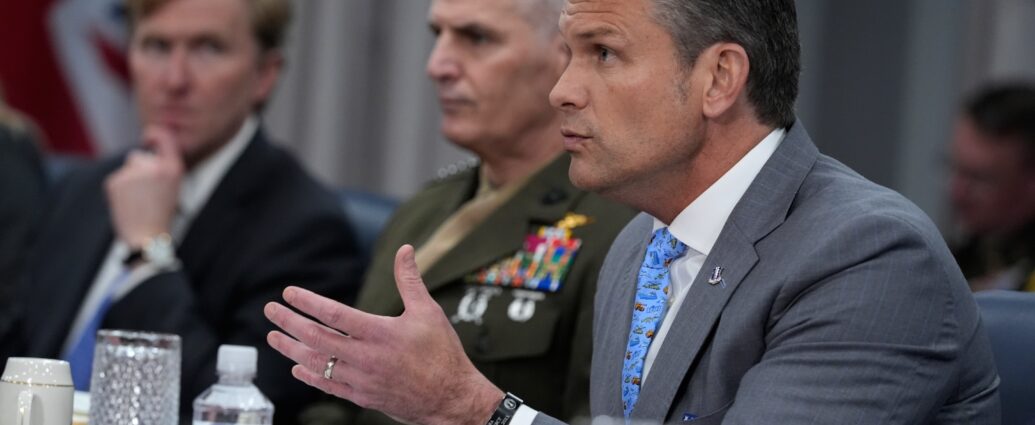
As Trump prepares to meet with Xi Jinping, he is eager to move on from the conflict that is sapping his domestic power and straining the global economy.

This post was originally published here

By JBizNews Desk
May 10, 2026

President Donald Trump declared Sunday that federal agencies must prioritize American-made products in government purchasing, escalating a White House procurement crackdown that could reshape supply chains for thousands of contractors competing for a share of the federal government’s roughly $700 billion annual purchasing budget.

ALL FEDERAL AGENCIES MUST BUY AMERICAN — NO EXCUSES!Trump stated Sunday, according to reporting published by The Hill, reinforcing an economic agenda the administration says is designed to steer taxpayer dollars back toward U.S. factories, industrial suppliers, steel producers, and technology manufacturers.

The directive intensifies a broader America-first procurement strategy that has steadily expanded since Trump returned to office in January. Administration officials have increasingly framed federal purchasing policy not only as an economic issue, but also as a national-security priority following supply-chain disruptions exposed during the COVID-19 pandemic and the global semiconductor shortages that followed.

The latest announcement builds on Trump’s “America First Trade Policy” executive order signed on his first day back in office, which directed the U.S. Trade Representative and senior trade advisers to review international procurement agreements — including the World Trade Organization Agreement on Government Procurement — to determine whether they disadvantage American manufacturers and workers.

That review laid the groundwork for a series of procurement-focused executive actions throughout 2025 and into 2026 aimed at narrowing waivers, tightening enforcement standards, and increasing scrutiny of foreign-made products entering the federal supply chain.

On March 13, Trump signed another executive order instructing the Federal Trade Commission to prioritize investigations into allegedly misleading “Made in USA” claims, citing concerns that some foreign manufacturers may improperly market products as American-made in order to gain access to patriotic consumers and federal contracts.

That same order directed agencies overseeing government procurement contracts to more aggressively verify compliance with domestic-origin requirements tied to the Buy American Act and related federal purchasing rules. Contractors found to have falsely represented products as American-made could face removal from procurement eligibility and possible referral to the Department of Justice for enforcement under the False Claims Act.

Senior administration officials have argued that loopholes and exemptions inside procurement law allowed foreign suppliers to continue accessing billions of dollars in federal spending despite longstanding domestic-preference laws already embedded in federal policy.

The White House has repeatedly emphasized that even a relatively small portion of procurement spending flowing overseas represents economic activity that could otherwise support American jobs and manufacturing capacity.

According to administration officials citing prior procurement studies, foreign vendors received roughly $12 billion out of approximately $430 billion in analyzed federal procurement spending during one recent study year — a figure the White House argues should be reduced further wherever possible.

For manufacturers, industrial suppliers, defense contractors, and construction firms, stricter enforcement could create significant new demand opportunities tied directly to federal spending. Companies involved in steel, aluminum, infrastructure materials, semiconductors, transportation equipment, and industrial technology are expected to closely monitor how aggressively agencies implement the directive.

Industry analysts say the policy could particularly benefit domestic producers already expanding U.S.-based manufacturing operations amid broader efforts by corporations to reduce dependence on overseas supply chains.

At the same time, procurement attorneys warn the practical implementation of tighter Buy American rules may prove far more complicated than the political messaging itself.

Compliance with the Buy American Act often requires detailed analysis of where products are manufactured, how much of their component value originates overseas, and whether products qualify as “domestic end products” under federal procurement standards. Products assembled inside the United States may still fail compliance thresholds if too many components are sourced internationally.

Government contracting specialists also warn broader enforcement could trigger an increase in bid protests, procurement disputes, compliance reviews, and legal challenges among competing contractors.

Critics of aggressive Buy American enforcement argue that limiting access to foreign suppliers too broadly may increase procurement costs for federal agencies by reducing competition, particularly in specialized industrial and technology sectors where global supply chains remain deeply integrated.

Trade analysts additionally caution that tougher domestic-preference rules in Washington could encourage retaliatory procurement restrictions from foreign governments that purchase American-made industrial, aerospace, and defense products.

Still, the administration appears prepared to absorb those risks as part of a broader economic strategy centered on domestic manufacturing, industrial independence, and reduced reliance on foreign production.

Trump’s latest directive signals the White House intends to move beyond symbolic support for American manufacturing and toward far stricter operational enforcement inside federal purchasing systems themselves — a shift that could materially alter how contractors source products, structure supply chains, and compete for government business in the years ahead.

As agencies begin translating the President’s directive into procurement policy, manufacturers and contractors across multiple sectors are preparing for what could become the most aggressive Buy American enforcement environment in decades.

JBizNews Desk
© JBizNews.com. All rights reserved. This article is original reporting by JBizNews Desk. Unauthorized reproduction or redistribution is strictly prohibited.

JBizNews Desk | May 10 2026

Germany — Europe’s largest economy — quietly asked Israel to ship it jet fuel while its own government was publicly insisting there was no shortage. When Israel announced the deal, Berlin was caught in a contradiction that has since become one of the most revealing moments of the Iran war’s energy crisis.

Israel’s Foreign Ministry announced Wednesday that it will begin supplying jet fuel to Germany following a formal request from Germany’s Federal Ministry for Economic Affairs and Energy. Israeli Foreign Minister Gideon Sa’ar informed German Economic Affairs and Energy Minister Katherina Reiche of the decision during a visit to Berlin.

Israeli Energy Minister Eli Cohen instructed relevant experts to approve the request after the Ministry’s Fuel Administration determined a surplus in jet fuel production. Shipments will be coordinated with domestic refineries and remain contingent on the security situation.

The timing of Israel’s announcement was immediately awkward for Berlin.

German Transport Minister Patrick Schnieder had stated in a series of interviews in recent days that Germany “has no shortage of jet fuel” and that refining capacity in Germany and its neighbors is “sufficient.”

He made those comments specifically to counter reports that Lufthansa Group had canceled tens of thousands of flights this summer, citing an expected shortage of jet fuel.

Once Israel’s announcement made the request public, those assurances collapsed.

The German government subsequently confirmed the offer but stressed that there are “currently no physical energy shortages in Germany” — while in the same statement acknowledging it was in “constructive talks with several countries” over energy supply, including Israel, and that contracts were being drawn up by companies involved.

The two positions — no shortage, but actively sourcing emergency fuel from a wartime ally — were difficult to reconcile simultaneously.

How Germany Got Here

The embarrassment reflects a structural energy vulnerability that has been building in Germany for years and is now being fully exposed by the Iran war.

Europe shut down or converted dozens of refineries over the past decade and became increasingly dependent on imported jet fuel and refining inputs flowing through Middle Eastern supply chains.

The Strait of Hormuz blockade — now in its tenth week — is cutting directly into those flows, hitting European aviation fuel supply, airline operating costs, and government contingency strategies simultaneously.

The price impact has been severe and fast-moving.

The price of jet fuel has more than doubled since the conflict began.

Lufthansa warned this week that fuel costs linked to the crisis have already added roughly €1.7 billion to its expenses this year — and said the company is preparing for possible supply disruptions later in 2026.

Airlines across Europe have already cut approximately two million seats on flights in May 2026 alone.

Lufthansa specifically slashed around 20,000 short-haul flights, attributing the cancellations directly to rising oil prices and fears of a jet fuel shortage in the months ahead.

For American travelers and businesses, the Lufthansa cuts are not an abstraction.

The airline operates one of the largest transatlantic networks in the world, and its flight reductions directly affect routes between U.S. and European cities — pushing up fares, reducing seat availability, and creating ripple effects across codeshare partners including United Airlines.

Why Israel Has Surplus Jet Fuel

The fact that Israel has jet fuel to export surprised even some Israeli energy officials.

Experts in the field could not remember the last time Israel had exported jet fuel to any country.

The refineries in Ashdod and Haifa produce kerosene as part of various fuel refining processes, and officials explained that a surplus has developed because of the freezing of many flight routes due to the war and the fact that only Israeli airlines and a handful of foreign carriers are currently operating flights to and from Israel.

The irony is direct:

The same war that is causing Europe’s jet fuel shortage is also the reason Israel has surplus fuel to export.

Reduced aviation activity inside Israel — a consequence of regional conflict and closed airspace — has left the country’s refineries with output that has nowhere domestic to go.

Some reports have added a defense dimension to the transaction.

Greek publications noted that the fuel types under discussion include JP-5 and JP-8 — military grades of jet fuel — suggesting the deal may extend beyond commercial aviation into emergency military logistics.

Israel’s Foreign Ministry and Energy Ministry confirmed only that coordination of cargoes will be carried out with the refineries, without specifying volumes, grades, or delivery timelines.

The Larger Picture

The Germany-Israel jet fuel transaction is, at its core, a story about what happens when a decade of energy policy assumptions collide with an unexpected geopolitical shock.

Germany spent years closing nuclear plants, reducing domestic refining capacity, and relying on stable global supply chains for critical energy inputs.

The Iran war has disrupted those chains in ways that Berlin was either unprepared for or unwilling to publicly acknowledge — until Jerusalem made the acknowledgment unavoidable.

Israel is also exploring the possibility of exporting natural gas to Germany, with Israel’s Energy and Infrastructure Ministry examining that option as a further extension of the two countries’ existing energy partnership.

If that deal advances, it would represent an even more significant reorientation of European energy sourcing — driven entirely by a war that has redrawn the map of who has energy and who desperately needs it.

For American energy companies, investors tracking European aviation stocks, and businesses with transatlantic supply chains, the Germany-Israel deal is a reminder that the Iran war’s energy disruptions are still finding new corners of the global economy to reshape — and that the countries most caught off guard are often the ones that were most confident they had nothing to worry about.

© JBizNews.com. All rights reserved. This article is original reporting by JBizNews Desk. Unauthorized reproduction or redistribution is strictly prohibited.

By JBizNews Desk | Sunday, May 10, 2026

President Donald Trump sharply escalated pressure on Iran Sunday evening after Tehran formally delivered its response earlier Sunday to the latest U.S. peace proposal through Pakistani mediators, with Iran’s state-run IRNA news agency first reporting the transmission of the response. Writing in direct response to Iran’s latest message, Trump accused Tehran of attempting to “buy time” while prolonging negotiations tied to the war, the Strait of Hormuz crisis, and Iran’s nuclear program.

“They will be laughing no longer!” Trump wrote Sunday on Truth Social, accusing Iran’s leadership of deceiving the United States and the world for nearly five decades while using diplomacy as a delaying tactic.

Trump claimed Tehran had spent 47 years “playing America and the rest of the world,” while also blaming Iran for roadside bomb attacks that killed Americans, the suppression of anti-government protests, and what he described as the deaths of “42,000 innocent, unarmed protestors.”

The president also renewed criticism of former President Barack Obama, alleging the Obama administration transferred “Hundreds of Billions of Dollars” to Tehran, including “1.7 Billion Dollars in green cash, flown into Tehran” in “suitcases and satchels” during the nuclear agreement era.

The sharp public response came only hours after Tehran formally transmitted its answer to Washington’s latest draft proposal aimed at ending the conflict and reopening the Strait of Hormuz.

According to IRNA, Iran delivered the response Sunday through Pakistani intermediaries, though Iranian officials did not publicly disclose the contents of the message. The lack of details left diplomats, energy traders, and military officials attempting to determine whether Iran was signaling flexibility or simply prolonging negotiations while maintaining leverage across the Gulf.

Duvi Honig, chief analyst and government policy advisor at JBizNews and Newsmax Contributor, said Trump’s latest remarks reflected growing frustration inside Washington that Tehran may once again be using negotiations to delay meaningful concessions.

“The time has come for the president to reach this conclusion and call out the white elephant in the room — we are being played with,” Honig said Sunday. “Iran is sticking to its old game of buying time and hoping to wait out the Trump administration.”

The 14-point proposal delivered by Washington earlier this week reportedly requires Iran to halt all uranium enrichment for at least 12 years, permanently abandon any path toward developing a nuclear weapon, and surrender approximately 440 kilograms of uranium enriched to 60% purity.

In return, the United States would gradually lift sanctions, release billions of dollars in frozen Iranian assets, and eventually halt the American naval blockade targeting Iranian ports and oil exports.

U.S. Ambassador to the United Nations Mike Waltz made clear Sunday that the administration sees the nuclear issue as entirely non-negotiable.

“President Trump has been clear they will never have a nuclear weapon and they cannot hold the world’s economies hostage,” Waltz said during an appearance on Fox News Sunday. He added that the international community cannot allow Iran to continue “trying to choke off the entire world’s economy” through threats tied to the Strait of Hormuz.

Iranian President Masoud Pezeshkian answered Trump’s rhetoric with defiance of his own, insisting Tehran would continue discussions but would not frame negotiations as surrender.

“We will never bow our heads before the enemy, and if talk of dialogue or negotiation arises, it does not mean surrender or retreat,” Pezeshkian wrote Sunday on X.

Even as diplomatic channels remained open, military tensions across the Gulf continued escalating. Multiple drones were launched across the region Sunday, including one that reportedly struck a freighter bound for Qatar, as Tehran warned Washington it would no longer refrain from retaliatory operations connected to the conflict.

The United Arab Emirates said its air defense systems intercepted two Iranian drones Sunday with no casualties reported. UAE officials disclosed that since the conflict escalated, the country has intercepted roughly 550 ballistic missiles, nearly 30 cruise missiles, and more than 2,200 drones launched across the region — underscoring the scale of the military pressure campaign now disrupting Gulf trade routes, shipping lanes, and energy infrastructure.

The prolonged confrontation has increasingly rattled global markets. Oil traders remain focused on whether the Strait of Hormuz can fully reopen, while governments across Europe and Asia continue pressuring both Washington and Tehran to prevent additional disruption to global energy supplies.

Administration officials say the U.S. naval blockade targeting Iranian ports is specifically designed to cut off Tehran’s oil exports — the central pillar of Iran’s economy — and pressure Iranian leadership into reopening the Strait and accepting long-term nuclear restrictions. Iranian oil production has reportedly already begun slowing as export bottlenecks intensify.

Qatar’s Prime Minister warned Sunday that using the Strait of Hormuz “as a pressure card would only lead to deepening the crisis,” reflecting growing concern among Gulf states that the conflict could spiral into a prolonged economic shock affecting inflation, fuel costs, and global trade.

Meanwhile, National Economic Council Director Kevin Hassett acknowledged Americans will likely continue feeling the economic impact of the conflict in the near term, saying consumers and businesses should expect higher oil and gasoline costs “in the short run” as tensions persist.

Behind the scenes, diplomats from Pakistan, Qatar, and several European governments remain engaged in shuttle negotiations attempting to prevent the conflict from widening further. But with both Trump and Iranian leadership publicly escalating their rhetoric even while negotiations continue, uncertainty surrounding the proposal remains extraordinarily high.

Whether Tehran’s latest response ultimately opens a path toward a framework agreement — or merely reinforces Washington’s growing belief that Iran is attempting to buy time while preserving leverage — remained unclear Sunday evening.

JBizNews Desk
© JBizNews.com. All rights reserved.

By JBizNews Desk | May 10, 2026

New Federal Reserve commercial lending data analyzed by Neuberger Berman shows traditional banks sharply regaining market share from private credit firms, marking one of the biggest reversals in corporate lending since the shadow-lending boom began after the 2008 financial crisis.

According to the first-quarter 2026 lending breakdown, commercial bank lending to businesses surged approximately 12.7%, the fastest pace of growth since 2022, while private credit lending volumes declined roughly 14% over the same period.

The numbers signal a major shift in the balance of financial power across American corporate lending markets — one that is already beginning to affect small and midsize companies that spent years relying on private lenders after banks pulled back following the global financial crisis.

For more than a decade, private credit firms aggressively expanded into areas once dominated by traditional banks, building a roughly $2 trillion industry by offering flexible financing to middle-market companies, leveraged buyouts and higher-risk borrowers.

The sector exploded partly because post-2008 banking regulations made many commercial banks more cautious about extending credit to riskier companies.

Private lenders stepped into the gap.

Firms including Blackstone, Apollo Global Management, Ares Management, Blue Owl Capital and dozens of other direct-lending platforms generated years of strong returns by financing businesses banks often avoided.

At its peak, private credit became one of Wall Street’s hottest investment categories, promising yields of roughly 8% to 10% with comparatively low default rates.

Now, however, the economics underpinning that boom are beginning to reverse.

The core problem traces back to the low-interest-rate era of 2021 and 2022, when private lenders issued enormous volumes of loans at historically cheap borrowing costs.

Many of those loans carried maturities of approximately five years — meaning they are now beginning to approach refinancing windows at a time when interest rates, energy costs and economic uncertainty have all risen dramatically.

Borrowers who once refinanced easily are suddenly confronting much more expensive debt markets.

“When debt comes due and the interest rate required to roll over the debt is much higher, then the borrowers are much more likely to default on the payment,” said Amir Sufi, professor of finance at the University of Chicago Booth School of Business.

That refinancing pressure has started weakening private credit portfolios across the industry.

The stress is increasingly visible among some of the sector’s largest firms.

Blackstone’s flagship private-credit fund BCRED posted its first monthly loss in three years earlier this year after marking down several loans, including debt tied to software company Medallia.

Ares Management moved to cap investor withdrawals from one of its $10.7 billion private-credit vehicles after redemption requests surged to approximately 11.6%, while Apollo Global Management implemented similar restrictions inside portions of its lending platform.

The redemption gates represent one of the first major liquidity tests for an industry that expanded rapidly during years of cheap money and strong investor appetite.

The underlying quality of many loan portfolios is also deteriorating.

According to the International Monetary Fund’s 2025 Financial Stability Report, approximately 40% of private-credit borrowers now have negative free cash flow, up sharply from roughly 25% in 2021.

That deterioration has raised concerns across Wall Street about how private-credit portfolios will perform if economic conditions weaken further.

One of the industry’s biggest vulnerabilities involves software lending.

According to Morgan Stanley, direct-lending portfolios currently carry approximately 26% exposure to software companies, particularly software-as-a-service businesses that were aggressively financed during the technology boom.

Now, fears surrounding slowing enterprise spending and disruption from generative and agentic artificial intelligence are pressuring valuations across the SaaS sector.

That matters because falling software valuations directly threaten the collateral value underlying many private-credit loans.

Blue Owl Capital and Apollo both maintain substantial software exposure, leaving portions of their portfolios vulnerable if defaults rise or valuations continue falling.

For the broader economy, the consequences could become significant.

“When restructurings happen, capital becomes trapped, leading to tighter future lending conditions,” said William Barrett, managing partner at Reach Capital.

That tightening is already beginning to affect the middle-market businesses that private credit was originally built to serve.

As private lenders grow more cautious and focus increasingly on protecting existing portfolios, many companies are returning to banks for financing — helping fuel the sharp rebound in commercial lending now appearing in Federal Reserve data.

Wall Street remains divided over how dangerous the situation ultimately becomes.

JPMorgan Chase chief executive Jamie Dimon recently argued that private credit does not yet represent a systemic threat to the financial system because the market remains relatively small compared with traditional banking.

“I don’t think it’s systemic. It almost can’t be systemic at that size relative to anything else,” Dimon said.

Goldman Sachs chief executive David Solomon has similarly said the firm remains optimistic about private credit’s long-term future despite current turbulence.

Others, however, see meaningful differences emerging inside the market itself.

Brad Rogoff, global head of research at Barclays, noted that investment-grade private debt — including asset-backed structures and senior private placements — carries significantly different risk characteristics than highly leveraged sub-investment-grade loans concentrated in U.S. middle-market software financing.

“There is a different risk profile between the two of them,” Rogoff said.

For investors, the reversal now underway could reshape one of Wall Street’s most profitable growth stories of the past decade.

Private credit was once viewed as a disruptive alternative to traditional banking — faster, more flexible and less constrained by regulation.

But the Federal Reserve’s latest lending data suggests banks are beginning to reclaim the ground they lost during the era of cheap money and aggressive shadow lending.

For small and midsize businesses caught in the transition, however, the picture is far more complicated.

As private lenders retreat, banks are returning — but often with stricter underwriting standards, tighter terms and higher financing costs than borrowers became accustomed to during the easy-credit years.

The Federal Reserve data showing the strongest commercial-bank lending growth in four years may represent a recovery for traditional lenders.

For the businesses navigating the shift, it also marks the beginning of a far more expensive and selective credit environment.

JBizNews Desk

US President Donald Trump said that the US has Iran’s enriched uranium surveilled, and is prepared to take action if it receives intelligence that action is being taken at the site in an interview with Full Measure on Sunday. 

When asked where the US is in the war without acquiring the uranium, Trump responded that the US would attain it “at some point,” and that the Space Force has the site under surveillance.  

“If anybody gets near the place, we will know about it, and we’ll blow them up,” Trump said. 

Trump reiterated his commitment to stopping Iran from ever acquiring a nuclear weapon and emphasized how close Iran was to such a goal before his intervention. Mentioning the attack on Iran, which took place in June of 2025, Trump claimed the operation stopped Iran when they were only two weeks away from a nuclear weapon. 

“If we didn’t do that, they would have already blown up Israel,” Trump said. 

The Jerusalem Post has previously reported that Iran was not two weeks away from a nuclear weapon, as Trump stated, but was rather weeks away from having enough enriched nuclear uranium. Notably, the other elements for finishing a nuclear weapon would have taken at least one year, if not two. 

Trump downplays effect of Iranian blockade on US

Trump also discussed the Strait of Hormuz, saying that the US does not rely on the waterway and that its operations there are done to aid allies in the region. 

“We don’t need the strait. We were doing it to help Israel, Saudi Arabia, Qatar, UAE, and others,” Trump said. 

Trump added that the US was now producing more oil and gas than Russia and Saudi Arabia combined and that he expects that number to double by the end of the year. 

Iran at ‘full readiness’ to protect nuclear sites

An Iranian military spokesperson said that Iranian forces were on “full readiness” to protect nuclear sites storing uranium in an interview with state news agency IRNA on Saturday. 

Brig. Gen. Akrami Nia told IRNA that Iran considered that the US might try to remove the uranium through infiltration or an airborne operation. 

‘You go in and you take it out’

Prime Minister Benjamin Netanyahu emphasized the importance of extracting enriched uranium in an excerpt from an interview that will air on CBS later on Sunday. 

“We’ve degraded a lot of it. But all that is still there, and there’s work to be done,” Netanyahu said, and added that the best course forward is “you go in, and you take it out.” 

Yonah Jeremy Bob contributed to this report.

This post was originally published on here

By JBizNews Desk
May 10, 2026

Frontier Group Holdings told investors in its official first-quarter 2026 earnings report filed May 5 that the collapse of Spirit Airlines had “meaningfully” altered the competitive landscape for ultra-low-cost carriers, as the company rapidly expanded capacity across former Spirit strongholds including Orlando, Las Vegas, Dallas-Fort Worth, Fort Lauderdale, and Detroit. Days later, newly published Cirium flight-tracking data confirmed the scale of that expansion, showing Frontier Airlines added approximately 3 million seats in a single week to scheduled flying between June and September — one of the fastest domestic capacity redeployments seen in the U.S. airline industry since the pandemic recovery period.

The move follows the shutdown of Spirit Airlines on May 2 after the carrier failed to secure emergency financing, abruptly leaving major gaps across some of America’s busiest leisure and budget-travel corridors. The collapse immediately triggered a scramble among airlines to capture displaced passengers, airport slots, and route opportunities previously dominated by Spirit’s ultra-low-cost network.

According to the Cirium data analyzed Sunday, Frontier moved fastest.

Jimmy Dempsey, President and Chief Executive Officer of Frontier Group Holdings, signaled the strategy directly during the company’s May 5 earnings call with analysts and investors.

“Spirit’s exit meaningfully alters the supply landscape,” Dempsey said. “We positioned ourselves over the last six to nine months on launching routes that we thought would be opportunities that come as they reduce their capacity and with the possibility that they would cease operations.”

Dempsey added that Frontier overlaps with Spirit on more than 100 routes, more than any other U.S. carrier, giving the airline a uniquely positioned opportunity to absorb displaced traffic at scale.

The company confirmed it is launching 9 new routes and adding 15 daily departures across 18 former Spirit markets, focusing heavily on airports where Spirit previously maintained some of its largest operational footprints, including Orlando International Airport, Harry Reid International Airport in Las Vegas, and Dallas-Fort Worth International Airport.

The expansion is already feeding directly into revenue expectations.

Robert Schroeter, Chief Commercial Officer of Frontier Airlines, told investors that Spirit’s collapse is expected to lift revenue per available seat mile, or RASM, by approximately 3% to 5%, with roughly two percentage points already embedded into second-quarter guidance because a large portion of bookings are already secured.

Dempsey suggested the eventual benefit could exceed even that range if pricing stabilizes and customer retention remains strong.

The company’s first-quarter earnings report reflected a business already showing stronger unit revenue trends even before the full impact of Spirit’s shutdown is realized.

According to the filing, Frontier Group Holdings generated adjusted quarterly revenue of nearly $1.1 billion, an all-time company record, despite operating approximately 1% lower capacity than a year earlier. Adjusted RASM, normalized for stage length, rose 17% year over year to 10.29 cents, landing at the high end of company guidance.

The airline reported a net loss of $272 million, or $1.18 per share, though the results were heavily impacted by several major non-recurring charges, including a $139 million expense tied to the early termination of leases on 24 Airbus A320neo aircraft and a separate $73 million charge related to a court ruling involving Transportation Security Administration fee remittances.

Excluding those items, adjusted net loss narrowed to $68 million, or $0.30 per share, outperforming company expectations.

Mark Mitchell, Chief Financial Officer of Frontier Group Holdings, said the airline ended the quarter with approximately $974 million in liquidity and reduced full-year 2026 capital expenditure guidance by $30 million. The company also reaffirmed plans to defer deliveries of 69 Airbus aircraft, helping reduce future pre-delivery deposit obligations by an estimated $170 million to $210 million.

Fuel costs, however, remain one of the airline’s largest pressures.

Frontier disclosed that average fuel prices climbed to $2.88 per gallon during the quarter, up from $2.55 a year earlier, pushing total fuel expense to approximately $268 million.

Even so, the airline continues to emphasize its fuel-efficiency advantage as a core competitive differentiator.

Frontier operates a fleet of 183 Airbus single-aisle aircraft, all financed through operating leases, and says it generates approximately 106 available seat miles per gallon, which the company claims is more than 40% better fuel efficiency than other major U.S. carriers.

The airline now projects second-quarter capacity growth of 6% to 8% year over year, reflecting both organic expansion and the rapid absorption of former Spirit demand.

For the broader airline industry, the speed of Frontier’s move highlights the highly opportunistic nature of the ultra-low-cost business model. When financially weaker carriers retreat or collapse, competitors with overlapping route structures and lower operating costs often move immediately to capture airport access, aircraft utilization, and price-sensitive travelers before larger network airlines respond.

Legacy carriers including American Airlines, Delta Air Lines, and United Airlines have historically expanded more cautiously in these situations, prioritizing pricing discipline, loyalty-program economics, and premium cabin profitability over rapid low-fare growth.

The larger question for investors now is whether Frontier can convert Spirit’s collapse into durable long-term market share gains rather than a temporary influx of bargain-hunting travelers.

Much will depend on load factors, ancillary revenue performance, competitive pricing responses, and whether rival carriers eventually move aggressively into the same markets once fares begin stabilizing.

For now, the latest Cirium data suggests Frontier Airlines has no intention of waiting for competitors to react.

JBizNews Desk

By JBizNews Desk
May 10, 2026

The White House confirmed Sunday that President Donald Trump will travel to Beijing on May 14 and 15 for a summit with Chinese President Xi Jinping, with administration officials also inviting a delegation of America’s most influential corporate leaders — including executives from Nvidia, Apple, Boeing, Qualcomm, ExxonMobil, Citigroup, Blackstone, and Visa — to participate in meetings that could reshape trade flows, semiconductor policy, aircraft orders, energy markets, and supply-chain strategy between the world’s two largest economies.

The trip marks the first presidential visit to China since Trump’s own 2017 state visit, which produced more than $250 billion in announced commercial agreements, including a headline-grabbing $37 billion Boeing aircraft order that ultimately became only partially realized. This time, administration officials are publicly lowering expectations, framing the summit less as a transformational trade reset and more as an effort to preserve the fragile economic truce reached between Trump and Xi during their October 2025 meeting in South Korea.

Still, for global markets and multinational corporations, the stakes surrounding the summit remain enormous.

The administration’s CEO delegation is notably smaller than the group of 29 corporate executives that accompanied Trump to Beijing in 2017, reflecting growing internal debate within the administration over how aggressively to pursue commercial diplomacy with China amid ongoing tensions over tariffs, semiconductor exports, artificial intelligence, rare earth minerals, and industrial policy.

According to administration officials familiar with the planning process, invitations went out unusually late after internal disagreements over the size and visibility of the corporate delegation. U.S. Trade Representative Jamieson Greer had reportedly resisted sending a large business contingent when the summit was initially planned for March, preferring to keep negotiations focused on managed trade and strategic leverage rather than headline commercial deals.

Among the companies invited, Qualcomm confirmed it had received an invitation. Boeing declined to comment. Nvidia, Apple, Citigroup, and Visa did not publicly respond to inquiries regarding participation.

For Boeing, the summit could become one of the company’s most financially consequential geopolitical events in years.

During the company’s most recent earnings call, Boeing CEO Kelly Ortberg told investors that China could soon place what he described as a “big number” aircraft order, potentially ending a nearly decade-long freeze in major Chinese purchases of Boeing jets. Industry analysts and aviation sources say discussions could involve as many as 500 Boeing 737 MAX aircraft alongside roughly 100 widebody jets, with purchases likely distributed across multiple Chinese state-backed airlines consistent with previous Chinese procurement structures.

China has not placed a major Boeing order since 2017, a gap spanning the global grounding of the 737 MAX, the pandemic-era aviation collapse, and escalating trade friction between Washington and Beijing. Even a preliminary framework agreement announced during the summit could materially strengthen Boeing’s production outlook and improve investor confidence surrounding long-term order visibility.

For Nvidia, the summit carries equally significant implications, though centered on artificial intelligence and semiconductor policy rather than industrial exports.

Jensen Huang, founder and CEO of Nvidia, told CNBC this week it would be “a privilege” to join the delegation. His comments came only days after he publicly acknowledged that Nvidia now effectively holds zero market share in China’s AI graphics processing market following years of tightening U.S. export restrictions.

Since 2022, U.S. policy has progressively blocked Nvidia from selling its most advanced AI chips into China. The Trump administration expanded those restrictions further in April 2025 by imposing an indefinite ban on shipments of Nvidia’s H20 accelerator chips to Chinese customers.

Investors immediately interpreted Huang’s invitation as a sign semiconductor export controls could become part of broader negotiations between Washington and Beijing. Nvidia shares rose more than 2% after reports of his invitation emerged, reflecting growing speculation that some form of licensing adjustment, AI cooperation framework, or export-control modification could eventually emerge from the talks.

The two governments are also reported to be weighing formal discussions surrounding artificial intelligence cooperation, adding strategic significance to Nvidia’s participation and potentially elevating AI policy into one of the summit’s most closely watched issues.

Beyond aviation and semiconductors, the summit’s broader agenda centers on preserving the October 2025 trade truce that temporarily stabilized relations between the two economic powers.

That agreement reduced U.S. tariffs on Chinese imports by 10 percentage points to 47%, delayed restrictions preventing Chinese firms partly owned by sanctioned entities from accessing U.S. technology, and secured Chinese commitments to crack down on fentanyl exports and maintain rare earth mineral shipments for one year.

Beijing is now reportedly seeking at least a one-year extension of that truce, while Washington is pushing for a shorter six-month framework that would preserve greater negotiating leverage ahead of the U.S. midterm elections.

China is also pressing the United States to avoid future retaliatory trade actions and ease existing restrictions surrounding advanced semiconductor manufacturing equipment and memory-chip exports.

Beijing’s leverage entering the summit has strengthened significantly since last year.

China expanded export controls on rare earth minerals and critical materials — sectors where the country controls approximately 90% of global processing capacity — and in April formally invoked its anti-sanctions law for the first time, ordering Chinese companies not to comply with U.S. sanctions targeting refiners purchasing Iranian crude oil.

Although Chinese exports to the United States declined roughly 20% last year, shipments to Africa, Latin America, Southeast Asia, and the European Union continued growing, helping China finish 2025 with a record $1.2 trillion trade surplus.

That backdrop leaves Xi Jinping entering the summit from a position of relative economic stability while Trump faces mounting domestic pressure tied to elevated fuel prices, continued Middle East instability, and November midterm elections.

Treasury Secretary Scott Bessent told reporters he expects the summit to produce “great stability” in the relationship, while White House spokeswoman Anna Kelly said Americans should expect the president to deliver “more good deals for the United States.”

The executives accompanying Trump are expected to attend a formal state dinner hosted by Xi Jinping, providing direct access to China’s top leadership at a moment when American corporations face extraordinary uncertainty surrounding tariffs, semiconductor access, supply chains, rare earth availability, artificial intelligence policy, and long-term access to the world’s second-largest economy.

For Wall Street, the summit increasingly represents more than diplomacy. It is rapidly becoming a referendum on the future direction of global trade, AI competition, industrial supply chains, and corporate access between the two dominant economic powers shaping the modern world economy.

JBizNews Desk

Plus, Iran’s leader is MIA, hantavirus cruise passengers face quarantine, and a billionaire allegedly falls victim to sextortion.

This post was originally published here

By JBizNews Desk | Sunday, May 10, 2026 | 12:18 PM ET

Sunday morning, Iran’s state news agency IRNA reported that Tehran had formally delivered its response to the latest U.S. proposal for ending the war to mediator Pakistan — a move that keeps the diplomatic channel alive even as drone strikes rattled Gulf waters and energy markets braced for what comes next. A Pakistani diplomatic source confirmed to Al Jazeera Arabic that the response had been transmitted to the U.S. side. The development arrived against a backdrop of surging gasoline prices, a Brent crude market trading around $101 a barrel, and consumer confidence at fresh record lows — all direct consequences of a Strait of Hormuz that has remained effectively closed since joint U.S.-Israeli strikes launched the war on February 28.

According to IRNA and Iran’s semi-official ISNA news agency, the core of Tehran’s response centers on two immediate priorities: permanently ending hostilities across all fronts of the war and restoring maritime security in the Persian Gulf and the Strait of Hormuz. According to Reuters, Iran’s proposal focuses the current phase of negotiations exclusively on the cessation of hostilities, with the more contentious question of Iran’s nuclear program deliberately set aside for a later stage. Al Jazeera’s Tehran correspondent reported that Iran is pursuing a three-phase approach, with the first phase lasting 30 days and focused entirely on ending the war on all fronts — including in Lebanon, where Hezbollah and Israeli forces have continued exchanging fire despite a separate ceasefire announced by President Donald Trump on April 16.

That sequencing places Tehran and Washington at an immediate point of tension. The U.S. proposal, a 14-point document transmitted earlier this week through Pakistan, would formally end the war and reopen the Strait of Hormuz, but it also demands that Iran halt uranium enrichment for at least 12 years and surrender an estimated 970 pounds of uranium enriched to 60% purity — a short technical step from weapons-grade levels — before broader talks begin. Iranian state media quoted Foreign Ministry spokesperson Esmaeil Baghaei as saying that at this stage Iran is not negotiating its nuclear program, framing the nuclear file as a matter for a subsequent phase rather than a precondition to peace.

Former U.S. Assistant Secretary of State Mark Kimmitt told Al Jazeera that President Trump’s demand for a full halt to uranium enrichment is unrealistic and unlikely to be accepted by Tehran, noting that Iran will insist on its right to enrich uranium to the 3.67% level permitted under international nuclear non-proliferation agreements. Ali Vaez, director of the Iran Project at the International Crisis Group, said both sides will either have to make painful concessions or leave major disagreements deliberately vague if they hope to finalize any workable framework.

Despite IRNA’s report that the response had already been delivered, U.S. Ambassador to the United Nations Michael Waltz said Sunday that Washington had not yet formally received Iran’s reply, attributing part of the delay to internal divisions inside Tehran’s leadership structure. U.S. Energy Secretary Chris Wright, appearing on CBS News’s Face the Nation, said he expected a response very soon, citing growing economic pressure on Iran’s leadership. CBS News also reported that Qatari Prime Minister Sheikh Mohammed bin Abdulrahman Al Thani met privately with Vice President JD Vance in Miami on Saturday, with no aides present, as part of an intensifying diplomatic push.

Iran’s counterproposal, as described by Iranian state media, includes demands for the withdrawal of U.S. forces from nearby areas, the lifting of the American naval blockade surrounding Iranian ports, the release of billions of dollars in frozen Iranian assets, the removal of sanctions, war reparations, an end to hostilities including in Lebanon, and the creation of a new control mechanism governing the Strait of Hormuz — a proposal that has alarmed Gulf governments and international shipping operators alike. Iran’s parliament is separately drafting legislation to formalize Tehran’s management authority over the strait, including provisions barring passage to vessels belonging to states it considers hostile. Brigadier General Amir Akraminia, spokesperson for the Iranian army, warned Sunday that countries enforcing U.S. sanctions against Iran would face problems transiting the strategic waterway.

The continued closure of the Strait of Hormuz is already producing consequences felt directly by consumers and businesses around the world. The International Energy Agency estimates the conflict is removing roughly 14 million barrels per day from global oil supply — potentially the largest energy disruption in modern history. Brent crude settled Friday at $101.29 per barrel, still posting a weekly loss of more than 6% as traders priced in ceasefire optimism, though analysts increasingly warn that optimism may prove premature.

Analysts at ANZ Research wrote in a note that the risk of the proposed U.S. peace framework collapsing will likely keep oil markets volatile for the foreseeable future. Shipping data from Kpler showed that only a limited number of vessels crossed the strait in recent days, while the International Maritime Organization estimated that as many as 20,000 seafarers remain stranded aboard vessels inside or near the waterway — a situation the organization described as unprecedented in the modern shipping era.

Saudi Aramco CEO Amin Nasser said Sunday that even if commercial traffic resumes immediately through the Strait of Hormuz, global energy markets would still require several months to rebalance. If disruptions continue beyond the coming weeks, he warned, normalization may not occur until 2027. June Goh, senior oil market analyst at Sparta Commodities, said traders are increasingly pricing in the likelihood of further oil infrastructure damage and a prolonged closure of the strait beyond the timeline publicly outlined by the Trump administration.

With President Trump scheduled to visit China this week — and Beijing pressing urgently for an end to a conflict that has ignited a global energy crisis and renewed fears of recession — the diplomatic exchange now moving through Islamabad carries consequences far beyond the Gulf. Whether Iran’s phased approach to negotiations gains traction in Washington over the coming days may ultimately determine whether the ceasefire survives, the Strait of Hormuz reopens, and fuel prices begin their long road back toward normal levels for consumers worldwide.

JBizNews Desk

© JBizNews.com. All rights reserved. This article is original reporting by JBizNews Desk. Unauthorized reproduction or redistribution is strictly prohibited.

JBizNews Desk| Sunday, May 10, 2026 | 11:42 AM ET

Early Sunday morning, Qatar’s Defense Ministry confirmed that a drone struck a commercial cargo vessel in Qatari territorial waters, setting off a fire that was later extinguished without casualties. The ship, traveling from Abu Dhabi to Mesaieed Port, continued its route after the incident. The United Kingdom Maritime Trade Operations Centre said the strike occurred roughly 23 nautical miles northeast of Doha. No group immediately claimed responsibility, but the attack marked the latest escalation threatening the fragile ceasefire that has rattled global energy markets for more than a month, pushing Brent crude near $101 a barrel, lifting U.S. gasoline prices sharply higher, and driving consumer confidence to fresh lows.

The strike unfolded alongside a broader wave of regional security incidents. Kuwait’s Defense Ministry, through spokesman Brig. Gen. Saud Abdulaziz Al Otaibi, said hostile drones entered Kuwaiti airspace early Sunday and that military forces responded under established defense procedures, though officials stopped short of identifying the drones’ origin. The UAE’s Defense Ministry separately announced that Emirati forces intercepted and destroyed two drones it directly attributed to Iran. The near-simultaneous alerts across Qatar, Kuwait, and the United Arab Emirates underscored how exposed Gulf commercial infrastructure remains despite the ceasefire formally brokered on April 8.

Even as military tensions intensified, diplomatic negotiations appeared to move forward. Iran’s state-run news agency IRNA reported Sunday that Tehran had delivered its formal response to a U.S. peace proposal through mediator Pakistan. A Pakistani diplomatic source later confirmed to Al Jazeera Arabic that the response had been transmitted to Washington. According to Reuters, Iran’s message focused primarily on ending hostilities and stabilizing maritime security in the Persian Gulf and the Strait of Hormuz. Iran’s semi-official ISNA news agency reported that restoring freedom of navigation in the region had become a central element of Tehran’s negotiating position.

The U.S. framework under discussion — a 14-point proposal delivered earlier this week through Pakistani intermediaries — would reopen the Strait of Hormuz and formally end the conflict before addressing more politically sensitive disputes surrounding Iran’s nuclear program. Under the proposed terms, Iran would suspend uranium enrichment for at least 12 years and surrender approximately 970 pounds of uranium enriched to 60% purity, material considered only a short technical step from weapons-grade levels. In exchange, the United States would gradually ease sanctions and release billions of dollars in frozen Iranian assets.

Despite the Iranian reports, U.S. Ambassador to the United Nations Michael Waltz said Sunday that Washington had not yet formally received Tehran’s response, adding that negotiations remain complicated by internal divisions inside Iran’s leadership structure.

Separately, the naval branch of Iran’s Revolutionary Guard Corps warned that any additional attacks on Iranian oil tankers or commercial vessels would trigger direct retaliation against U.S. military bases and allied ships operating in the region. The warning followed U.S. strikes earlier this week on two Iranian tankers — M/T Sea Star III and M/T Sevda — which American officials said attempted to breach the naval blockade surrounding Iranian ports.

For global energy markets, the implications remain enormous. The International Energy Agency warned the conflict is removing roughly 14 million barrels per day from global oil supply, potentially representing the largest disruption in modern energy market history. Although Brent crude settled Friday at $101.29 per barrel, down more than 6% on the week as traders priced in ceasefire optimism, several analysts cautioned that the decline may underestimate the longer-term supply risks.

Analysts at ANZ Research said in a note Sunday that oil volatility is likely to persist as long as uncertainty surrounding the proposed peace agreement remains unresolved. Matt Smith, lead oil analyst at Kpler, said traders remain surprised that oil prices have not climbed substantially higher given the scale of shipping disruptions and lost exports.

That uncertainty was reinforced by comments from Saudi Aramco CEO Amin Nasser, who said Sunday that even if shipping traffic resumes immediately through the Strait of Hormuz, global oil markets would still require several months to rebalance. If disruptions continue beyond the next few weeks, he warned, normalization may not occur until 2027. Saudi Aramco also reported a 26% jump in first-quarter profit, driven largely by war-related fuel price increases and rerouted exports through alternative Red Sea infrastructure.

Meanwhile, Goldman Sachs warned that inventories of refined products — including jet fuel, naphtha, and liquefied petroleum gas — are being depleted at an accelerating pace, increasing the risk of shortages in countries including India, Thailand, Taiwan, and South Africa.

June Goh, senior oil market analyst at Sparta Commodities, said traders are increasingly pricing in the possibility of additional damage to Gulf energy infrastructure and a prolonged closure of the Strait of Hormuz beyond the timeline outlined publicly by the Trump administration. She added that rapidly declining OECD inventory levels could eventually trigger a much sharper upward move in oil prices.

Diplomatic pressure intensified simultaneously. Qatari Prime Minister Sheikh Mohammed bin Abdulrahman Al Thani warned Iranian Foreign Minister Abbas Araqchi that using the Strait of Hormuz as geopolitical leverage would only deepen the crisis and further destabilize global markets, according to Qatar’s foreign ministry. On Saturday, U.S. Secretary of State Marco Rubio and special envoy Steve Witkoff met with the Qatari leader in Miami to coordinate diplomatic efforts surrounding the negotiations.

At the same time, Pakistani Prime Minister Shehbaz Sharif spoke Sunday with his Qatari counterpart to review the mediation process, describing the relationship between the two nations as rooted in “brotherly bonds” while reaffirming Pakistan’s role in advancing ceasefire negotiations.

Despite the diplomatic momentum, commercial traffic through the Strait of Hormuz remains severely disrupted. According to shipping data from Kpler, only a limited number of vessels crossed the waterway in recent days. The International Energy Agency estimates as many as 20,000 seafarers remain stranded aboard vessels inside or near the strait — a situation the International Maritime Organization described as unprecedented in the modern shipping era.

President Donald Trump has continued warning that the United States could resume full-scale military strikes if Iran refuses to reopen the waterway and scale back its nuclear activities. At the same time, Iran’s parliament is drafting legislation that would formalize Tehran’s control measures over the strait, including restrictions targeting vessels linked to hostile nations.

With President Trump expected to travel to China later this week — and Beijing pushing urgently for an end to a conflict that has fueled a global energy crisis — the diplomatic response now moving through Islamabad carries consequences far beyond the Gulf. Whether Sunday’s drone activity hardens negotiating positions or accelerates pressure for a broader settlement is now the central question confronting governments, traders, and consumers worldwide.

JBizNews Desk
© JBizNews.com. All rights reserved.

By JBizNews Desk | May 10, 2026

The company behind some of America’s fastest-growing sports businesses is now taking control of one of the world’s most recognizable fan traditions.

Fanatics has reached a sweeping long-term agreement with FIFA to produce the official trading cards, sticker albums and collectibles tied to the World Cup and other global tournaments, replacing Panini, the Italian company that has defined the World Cup sticker experience for generations.

The transition begins in 2031, ending a relationship between FIFA and Panini that stretches back to the 1970 World Cup in Mexico — a run that transformed sticker collecting into one of the most enduring rituals in global sports culture.

The agreement gives Fanatics and its subsidiary Topps exclusive rights to produce physical and digital trading cards, stickers, collectibles and trading card games tied to FIFA competitions worldwide. The deal also expands Fanatics’ rapidly growing international footprint and cements the company’s dominance across the global sports collectibles industry.

For millions of soccer fans, the change represents far more than a licensing shift.

For decades, peeling open Panini sticker packs, trading duplicates with friends and filling World Cup albums became part of the tournament experience itself — spanning generations across Europe, Latin America, Africa and increasingly the United States. Few products in sports carried the same emotional and nostalgic connection.

Now, that tradition is moving under the control of a company that has spent the past several years aggressively consolidating sports licensing rights across multiple leagues and categories.

“This is the single biggest thing globally we could do to grow our business,” Fanatics founder and Chief Executive Michael Rubin said in announcing the agreement.

Rubin pointed to Fanatics’ expansion in European soccer collectibles following its UEFA partnership, which he said grew from roughly $15 million in annual revenue to more than $200 million, as evidence of the opportunity Fanatics sees in global football.

The FIFA agreement also reflects a broader transformation underway inside the governing body itself.

Under FIFA President Gianni Infantino, the organization has increasingly embraced commercial strategies more commonly associated with major North American sports leagues, focusing heavily on direct fan engagement, licensing monetization, digital expansion and event-driven retail ecosystems.

Infantino described the partnership as a way to modernize how fans interact with the sport while creating new long-term revenue streams that FIFA says will help fund football development globally.

As part of the agreement, Fanatics committed to distributing more than $150 million worth of free collectibles to children and young fans worldwide over the life of the partnership.

Sports-business analysts say the FIFA agreement could significantly increase Fanatics’ long-term valuation by giving the company control over what many consider the single most globally scalable collectibles property in sports. Investment bankers following the sector have increasingly compared Fanatics not to traditional memorabilia companies, but to vertically integrated sports-commerce and media platforms capable of generating recurring revenue through licensing, retail, digital assets and live-event ecosystems.

The company has already been discussed in private-market circles as a potential future IPO candidate at valuations that could rival major publicly traded sports and entertainment businesses if its collectibles and betting divisions continue expanding at current rates.

One of the most significant changes could come through the introduction of premium memorabilia integration into soccer trading cards — something Topps and Fanatics already use extensively across the NFL, NBA, MLB, WWE and Formula 1.

The companies plan to introduce jersey patch cards containing pieces of match-worn player uniforms embedded directly into trading cards, a concept that has become highly lucrative in American sports collectibles but has never been fully commercialized at scale in global soccer.

The move highlights how Fanatics increasingly views collectibles not simply as merchandise, but as a high-margin intersection of sports fandom, media, gaming and alternative assets.

That strategy has turned the company into one of the most aggressive consolidators in sports business.

Over the past several years, Fanatics systematically took major licensing agreements away from Panini across multiple leagues, including the NFL, NBA and Major League Baseball. The company also replaced Panini this season as the official trading card and sticker partner of the English Premier League.

The FIFA agreement now effectively gives Fanatics control over many of the world’s most commercially valuable sports collectibles licenses.

The shift also carries broader business implications because of the sheer scale of the World Cup itself.

The upcoming 2026 FIFA World Cup, hosted across the United States, Canada and Mexico, is expected to become the largest sporting event ever staged in North America, generating massive demand for merchandise, collectibles, sponsorships and fan experiences.

Fanatics will play a central commercial role in that ecosystem, serving as FIFA’s official retail operator for the tournament, including stadium retail operations and FIFA Fan Festival merchandise experiences across host cities.

The company’s collectibles division alone is projected to generate nearly $5 billion in revenue in 2026, according to company estimates, underscoring how sports memorabilia has evolved into a major standalone business category fueled by digital commerce, live events and collector speculation.

For Panini, the agreement marks the end of one of sports licensing’s most iconic partnerships, though not immediately.

The Modena-based company retains FIFA rights through the 2030 World Cup in Saudi Arabia, meaning Panini albums will still accompany both the 2026 and 2030 tournaments before the transition officially takes effect.

But after six decades defining the visual language of the World Cup for generations of fans, the company that made sticker collecting synonymous with soccer’s biggest tournament is preparing to hand over the business to a new global sports powerhouse.

The battle may not end quietly.

Panini has already filed an antitrust lawsuit against Fanatics tied to the company’s growing control over sports licensing rights, and the broader legal fight over consolidation in the sports collectibles industry remains ongoing.

For collectors, however, the message from FIFA’s latest deal is already clear: the economics of global sports fandom are changing rapidly, and the business of trading cards and stickers has become large enough — and profitable enough — to reshape who controls some of the world’s most cherished sports traditions.

JBizNews Desk

JBizNews Desk | May 10, 2026

She was one of the most discreet executives in the Elon Musk orbit — a former venture capitalist who held senior roles at Tesla, xAI, and Neuralink, served on OpenAI’s board, and kept a secret so profound that not even her own father knew the truth.

Now Shivon Zilis has been thrust into the center of one of the most consequential corporate trials in American history — not just as a witness, but as the person whose testimony may determine the future of OpenAI and the direction of the global AI race.

Musk, who co-founded and funded OpenAI, sued the company and its leaders — including CEO Sam Altman and president Greg Brockman — alleging they deceived him, breached a charitable trust, and unjustly enriched themselves when the organization pivoted from a nonprofit mission to a profit-oriented structure.

The case, currently before U.S. District Judge Yvonne Gonzalez Rogers in a federal courthouse in Oakland, California, could have sweeping ramifications for the AI industry.

If Musk wins and the judge grants the remedies he is seeking, OpenAI could be forced to revert to a nonprofit structure — and both Altman and Brockman could be removed from the board.

Zilis was initially listed as a co-plaintiff in the case.

She dropped off at her own request before the trial began.

But her role in the events at the heart of the lawsuit has made her testimony unavoidable.

The Secret at the Center of the Trial

Zilis testified this week that she first met Musk in 2016 through her early role as an adviser to OpenAI.

What followed was, by her account, a single romantic encounter that evolved into a friendship and eventually a job — and then something far more complicated.

Toward the end of 2020, Musk proposed fathering her children.

“He in general was encouraging everyone around him to have kids, noticed I had not, and said if that was ever interesting, he would be happy to make a donation,” Zilis said on the stand.

Their twins were born via IVF in 2021.

Zilis signed a confidentiality agreement — and no one, including her father, knew who the father was.

In 2022, Business Insider broke the story.

Zilis initially described Musk’s role as that of a donor.

His involvement evolved into fatherhood, she testified, and they went on to have two more children.

Musk referred to Zilis as his “partner” during his own testimony last week.

The two live together when traveling, she confirmed, and he visits her and the children in Austin, Texas, where she is based.

Her Role as a Conduit Between Musk and OpenAI

Beyond the personal relationship, Zilis’ testimony revealed the extent to which she served as a direct information channel between Musk and OpenAI’s leadership during critical years — a role that both sides of the lawsuit are now trying to use to their advantage.

She was instrumental in Musk’s dealings with OpenAI from the company’s early years, including discussions in 2017 about the potential formation of a for-profit structure to fund AI development.

She participated in discussions about possible solutions to OpenAI’s funding concerns — including the potential development of a for-profit corporation and the possibility of having Tesla absorb OpenAI — in emails, messages, and meeting notes that were submitted as evidence.

After Musk left OpenAI’s board in 2018 and stopped providing funding, Zilis continued her role as a conduit.

In a text message entered into evidence, she asked Musk directly:

“Do you prefer I stay close and friendly with OpenAI to keep info flowing or begin to disassociate? Trust game is about to get tricky so any guidance for how to do right by you is appreciated.”

Musk told her to stay close — and confirmed he planned to recruit several OpenAI staffers to Tesla.

OpenAI alleged that Zilis, while still serving on its board, was aware that Musk planned to launch a competing AI company before that information was public.

Text messages to a friend, entered as evidence, showed Zilis writing that she had to resign from the board because Musk’s “effort has become well known.”

She wrote:

“When the father of your babies starts a competitive effort and will recruit out of OpenAI, there is nothing to be done.”

OpenAI president Greg Brockman testified that Zilis had told the board her relationship with Musk was “platonic,” which is why she was permitted to remain.

He said he was unaware of their personal relationship until later.

What Each Side Is Trying to Prove

OpenAI attorneys used Zilis’ testimony to argue that she and Musk discussed creating a for-profit entity for the AI company — undermining Musk’s claim that he was blindsided by OpenAI’s pivot toward profit.

Musk’s attorneys, in turn, attempted to prove through Zilis that she also believed OpenAI had violated its original nonprofit mission.

Under questioning from Musk’s attorneys, Zilis said the group never discussed replacing the nonprofit structure with a for-profit corporation outright — and that many funding possibilities were explored, including granting Musk a majority stake in OpenAI.

She testified that her personal relationship with Musk did not affect her conduct as a board member, saying she had “an allegiance to the best outcome of AI for humanity.”

Zilis had voted in favor of the $10 billion Microsoft investment in OpenAI that Musk later heavily criticized.

She testified her views on the company changed after Musk’s criticism of that deal and after Microsoft CEO Satya Nadella’s intervention to restore Altman as CEO following his brief ouster in 2023.

“It just seemed like everything we’d put together from the nonprofit to just retain the mission to make this good for humanity, just somehow had been ripped out or lost its teeth,” she said.

Why the Outcome Matters for Business

The Musk v. OpenAI trial is not merely a dispute between two of the most powerful figures in technology.

It is a case that will directly shape the legal and structural framework within which the global AI industry operates.

OpenAI has denied Musk’s claims, arguing he sued the company because he could not gain full control of it — and that he left in 2018 only to later found a direct competitor in xAI.

If Judge Gonzalez Rogers sides with Musk and orders OpenAI to revert to its nonprofit structure, the implications for the company’s planned transition to a fully for-profit public benefit corporation — and its ability to raise the billions in capital needed to compete with Google, Meta, and xAI — would be immediate and severe.

For investors, companies, and consumers whose daily lives are increasingly shaped by AI technology, the Oakland courtroom is where the rules of that technology’s future are being written — one witness at a time.

© JBizNews.com. All rights reserved. This article is original reporting by JBizNews Desk. Unauthorized reproduction or redistribution is strictly prohibited.

By JBizNews Desk | May 10, 2026

ABC and parent company The Walt Disney Co. escalated their confrontation with the Trump administration this week, accusing the Federal Communications Commission of using its regulatory authority to intimidate broadcasters and chill constitutionally protected speech in what is becoming one of the most consequential media-versus-government legal fights in years.

In a formal petition filed with the FCC on May 7 and made public Friday, Disney and ABC argued that actions taken by FCC Chairman Brendan Carr, a Trump appointee, have created a “chilling effect” on First Amendment-protected journalism and political coverage.

The filing marks the most aggressive legal challenge mounted by a major television network against the Trump administration since President Trump returned to office last year and intensified scrutiny of media organizations he has repeatedly accused of political bias.

The petition was submitted on behalf of KTRK-TV, ABC’s owned-and-operated station in Houston, and was signed by Paul D. Clement, the former U.S. solicitor general under President George W. Bush and one of the country’s most prominent Supreme Court litigators — a sign of how seriously Disney is preparing to fight the dispute.

At the center of the conflict is a seemingly technical but enormously consequential regulatory question: whether ABC’s long-running daytime program “The View” qualifies as a “bona fide news interview program” under FCC rules.

That classification has exempted the show from equal-time requirements for political candidates for more than two decades.

The FCC inquiry began earlier this year after Texas Democratic Senate candidate James Talarico appeared on “The View” on February 2.

Chairman Carr then directed ABC’s Houston station to formally justify why the program should continue receiving its longstanding exemption.

ABC described the move in its filing as “unprecedented, beyond the Commission’s authority, and counterproductive.”

According to the company, “The View” originally received its bona fide news exemption in 2002, and the FCC has “taken no action over the last two decades to modify or overturn” that determination.

What transforms the dispute from a regulatory disagreement into a major constitutional and business battle is ABC’s allegation of selective enforcement.

The filing details multiple examples of Texas radio stations airing interviews with political candidates on conservative-leaning programs — including appearances involving Chip Roy, Dan Patrick, Glenn Beck, Mark Levin and Guy Benson — without facing comparable FCC scrutiny.

“Such a clear disparity in the treatment of broadcasters that ought to be subject to the same treatment under law raises serious concerns about viewpoint discrimination and retaliatory targeting,” ABC wrote.

The FCC has not opened similar investigations into those programs.

For investors and the broader media industry, the clash represents far more than a fight over one daytime television show.

It signals a potentially significant escalation in the regulatory and political pressure facing major broadcasters, entertainment conglomerates and legacy media companies operating in an increasingly polarized environment.

The dispute also arrives during a period when traditional television networks are already battling declining advertising revenue, falling cable subscriptions and mounting competition from streaming platforms and digital creators.

Disney shares have remained volatile over the past year partly because investors continue evaluating the company’s broader transformation strategy — including streaming profitability, ESPN restructuring, theme-park performance and political risks surrounding its media assets.

The FCC battle now adds another layer of uncertainty.

The conflict surrounding “The View” is only one front in a broader and rapidly expanding dispute between the administration and Disney.

Earlier this year, the FCC launched an investigation into Disney’s diversity, equity and inclusion initiatives and demanded more than 11,000 pages of documents from the company.

ABC said it fully complied.

The FCC also ordered accelerated license-renewal reviews for all eight ABC-owned television stations — including flagship stations in New York and Los Angeles — in what many media lawyers described as an unusually aggressive regulatory step.

The timing intensified scrutiny because the review came one day after President Trump publicly criticized ABC late-night host Jimmy Kimmel and called for his firing over jokes involving First Lady Melania Trump.

Chairman Carr said the station reviews were connected to the DEI investigation and unrelated to Kimmel’s comments, though critics questioned the timing.

For Disney, the legal strategy now appears to be shifting decisively from accommodation toward direct confrontation.

That shift carries both political and financial implications.

The company previously settled a defamation lawsuit involving Trump for approximately $15 million in late 2024, a move many legal analysts at the time viewed as an effort to avoid prolonged political and regulatory conflict.

The decision now to hire Clement and mount a sweeping constitutional challenge suggests Disney may no longer believe de-escalation is possible.

Clement argued in the filing that uncertainty over broadcasters’ editorial discretion threatens political journalism itself.

“Uncertainty as to the scope of broadcast licensees’ editorial discretion threatens to limit news coverage of political candidates and chill core First Amendment-protected speech for years and potentially decades to come,” Clement wrote.

He added that as the 2026 midterm elections approach, “the American people need more access to political news and more exposure to political candidates, not less.”

The FCC responded Friday by defending its authority to review whether “The View” continues qualifying as a bona fide news program under federal broadcast rules.

The agency also said equal-time regulations are designed to ensure fair treatment of political candidates on publicly licensed airwaves.

Once ABC completes its filings, outside organizations — including conservative advocacy groups — will be allowed to petition the FCC to deny or challenge ABC station-license renewals, potentially opening the door to a lengthy administrative and court battle.

For the broader media industry, the stakes extend well beyond Disney.

The outcome could influence how aggressively future administrations use federal licensing authority against broadcasters, how networks handle political programming and how far constitutional protections extend when media companies clash with regulators.

For Disney investors, meanwhile, the fight introduces another unpredictable variable into a company already navigating streaming competition, advertising pressure, political controversy and one of the most complicated transformations in modern entertainment history.

JBizNews Desk

JBizNews Desk | May 10, 2026

MP Materials, America’s only fully integrated rare earth producer, delivered a striking forecast Thursday that upends conventional thinking about the critical minerals race: the most expensive and geopolitically sensitive rare earth elements — long considered irreplaceable building blocks of modern technology — are heading toward a significant demand decline, not because the world needs fewer magnets, but because engineers are finding ways to build better ones without them.

MP Materials Corp. expects demand for some of the most expensive rare earth materials to drop sharply as magnet makers adopt alternative metals. MP and some of its peers are increasingly finding ways to build high-performance magnets with little or no heavy rare earth content — a shift that could weaken prices for materials like dysprosium and terbium, said Chief Executive Officer James Litinsky.

The announcement came on the same day MP Materials reported its strongest quarterly financial results in company history, underscoring the paradox at the heart of the rare earth industry right now: the company most exposed to heavy rare earth price movements is the one publicly predicting those prices will fall — because it has already positioned itself to thrive without them.

What Heavy Rare Earths Are and Why They Matter

To understand what Litinsky’s forecast means, it helps to understand what heavy rare earths actually do.

Dysprosium and terbium — the two elements most directly referenced in MP’s outlook — are added to the powerful permanent magnets used in electric vehicle motors, wind turbines, robotics, fighter jets, drones, and countless other high-performance applications. Their primary function is to stabilize the magnet’s performance at high temperatures, preventing it from losing its magnetic strength when it heats up during operation.

The problem has always been that these elements are extraordinarily expensive, concentrated almost entirely in China, and subject to Beijing’s increasingly aggressive export controls.

China controls approximately 90% of global rare earth processing, creating a critical supply chain vulnerability for materials essential to defense, electric vehicles, and renewable energy technologies.

When China tightened export restrictions on dysprosium, terbium, and other heavy rare earths earlier this year, it sent shockwaves through global supply chains and drove prices sharply higher — a reminder of how dependent Western manufacturers had become on a single country for materials with no easy substitutes.

That vulnerability has been the driving force behind the U.S. government’s aggressive investment in domestic rare earth capacity, including a landmark partnership with MP Materials that includes a 10-year price floor agreement for key rare earth products and a Department of Defense offtake commitment for 100% of production from MP’s planned 10X Facility — a new magnet manufacturing plant in Fort Worth, Texas expected to add 10,000 metric tons per year of neodymium-iron-boron magnet production capacity when commissioned in 2028.

The Technology Shift Changing the Equation

What Litinsky is now signaling is that the engineering community has been racing to solve the heavy rare earth dependency problem — and is making meaningful progress.

Magnet manufacturers are developing alloy formulations and manufacturing processes that achieve comparable or superior magnetic performance without requiring the same amounts of dysprosium and terbium. Some formulations eliminate heavy rare earths almost entirely.

This is not a distant theoretical possibility.

MP Materials itself has been targeting mid-2026 for commissioning its heavy rare earth separation facility at Mountain Pass, California, designed to process approximately 3,000 metric tons of feedstock per year with initial focus on dysprosium and terbium production.

The company has been stockpiling heavy rare earth concentrate since late 2023 in preparation. But if demand for those elements is set to fall as technology advances, the strategic calculus around that facility shifts considerably.

The irony is that MP’s own magnet manufacturing ambitions are part of what is driving the demand reduction. As MP and its peers invest in advanced magnet production capabilities, they are simultaneously developing the manufacturing expertise and material science knowledge to reduce their own dependence on the most expensive and geopolitically precarious inputs.

What This Means for American Businesses and Investors

For American manufacturers — particularly automakers, defense contractors, and clean energy companies — the prospect of reduced heavy rare earth dependency is unambiguously positive news.

Lower dependence on dysprosium and terbium means:

  • lower exposure to Chinese export controls
  • more predictable input costs
  • greater supply chain security

MP Materials reported first quarter 2026 revenue of $90.6 million, driven by higher sales of NdPr oxide and metal, reflecting the continued ramp of production of separated products as well as stronger market pricing.

CEO James Litinsky described the results as reflecting “record NdPr production and sales with solid Adjusted EBITDA generation” and cited the company’s progress breaking ground on the 10X facility.

Neodymium-praseodymium — the light rare earth elements central to MP’s core business — is entering its second consecutive year of supply deficit against rising EV and wind turbine demand, with prices consolidating in a $95 to $115 per kilogram range.

Both MP Materials and Australian peer Lynas Rare Earths operate at NdPr prices well above their reported cost bases.

In other words, while heavy rare earth demand may be heading lower, the light rare earths that form the backbone of MP’s business remain in structurally tight supply — a dynamic that supports the company’s long-term revenue picture even as the heavy rare earth outlook softens.

The Department of Defense has committed to a 10-year offtake agreement for 100% of the 10X Facility’s magnet production, with a 10-year price floor for NdPr oxide set at $110 per kilogram — providing MP with predictable revenue even if global prices fall due to a ramp up in China’s output.

A Major Shift in the Critical Minerals Race

For investors and policymakers tracking the critical minerals race, Litinsky’s forecast is a signal worth watching closely.

The rare earth supply chain Washington has spent billions trying to rebuild domestically is maturing faster than many expected — and the technologies it was designed to support are evolving just as quickly.

The next phase of the global rare earth race may no longer center solely on securing supply.

It may increasingly revolve around engineering ways to need less of the most vulnerable materials altogether.

And for American manufacturing, that could ultimately become one of the industry’s biggest strategic advantages.

© JBizNews.com. All rights reserved. This article is original reporting by JBizNews Desk. Unauthorized reproduction or redistribution is strictly prohibited.

By JBizNews Desk | May 10, 2026

Frontier Airlines confirmed Saturday that Flight 4345, an Airbus A321 departing Denver International Airport for Los Angeles, struck and killed a pedestrian during takeoff late Friday night, triggering an engine fire, a smoke-filled cabin and an emergency evacuation that has now become the focus of a widening federal investigation into airport perimeter security and aviation safety preparedness.

According to a statement from Denver International Airport, the incident occurred at approximately 11:19 p.m. local time on Runway 17L after an individual who was not believed to be an airport employee deliberately breached the airport’s perimeter fence and entered the active runway environment.

The individual was struck by the aircraft during takeoff and was at least partially consumed by one of the engines, according to an official familiar with the incident, sparking a brief engine fire that firefighters later extinguished.

Transportation Secretary Sean Duffy said Saturday that the individual had “deliberately” scaled the perimeter fence before entering the runway area.

“No one should EVER trespass on an airport,” Duffy said.

The National Transportation Safety Board has been notified, while the investigation is being led by local law enforcement with support from the Federal Aviation Administration and the Transportation Security Administration.

Runway 17L remained closed Saturday as investigators examined the scene.

Inside the aircraft, passengers described scenes of immediate panic as smoke rapidly filled portions of the cabin following the engine fire.

Frontier said all 224 passengers and 7 crew members were safely evacuated after flight attendants initiated an emergency evacuation onto the tarmac using inflatable slides. Twelve passengers reported minor injuries and five passengers were transported to local hospitals for evaluation.

“As we were lifting off the engine exploded. There was so much smoke we couldn’t even see one foot in front of us,” passenger Jacob Athens told reporters.

Another passenger, Brandon Dee, described passengers struggling to breathe as panic spread through the aircraft cabin.

“Everyone’s having struggle — we’re struggling breathing. We are like panicking,” Dee said.

Passengers were later bused back to the terminal, while Frontier offered replacement flights and refunds.

While the immediate focus remains on the fatality and emergency response, the incident is rapidly evolving into a broader aviation-security and business story with implications extending far beyond Denver.

For Frontier Airlines, the event arrives during one of the most financially difficult operating environments low-cost carriers have faced in years.

According to Department of Transportation data, airline fuel costs have surged approximately 56% since the escalation of the Iran conflict disrupted global energy markets earlier this year, pressuring airlines already operating under thin margins and rising labor costs.

Budget carriers like Frontier remain particularly vulnerable because their business models rely heavily on maintaining high aircraft utilization rates, aggressive scheduling efficiency and lower operating cushions than larger legacy airlines.

The grounding of an Airbus A321 — one of the core workhorses of Frontier’s fleet — alongside the temporary closure of a major runway at one of America’s busiest airports introduces both operational disruption and reputational risk at a sensitive time for the airline industry.

Airline analysts note that even isolated incidents involving emergency evacuations, federal investigations and aircraft damage can trigger cascading scheduling delays, maintenance reviews, insurance complications and increased regulatory scrutiny.

The broader policy question emerging from the incident centers on airport perimeter security — an area aviation experts have warned for years remains underfunded relative to passenger-screening systems implemented after September 11.

Denver International Airport is among the busiest airports in the United States by passenger traffic, handling tens of millions of travelers annually across a massive physical footprint that includes miles of fencing, restricted-access roads and open tarmac.

Airport officials said Saturday morning that security personnel were inspecting the eastern perimeter fence for vulnerabilities. Denver Airport later stated the fence itself appeared intact, suggesting the individual climbed over rather than breached through it.

But investigators are now examining the roughly two-minute window between the perimeter breach and the collision with the aircraft — a response gap likely to become central to both the federal investigation and broader industry discussions about airport security modernization.

Aviation-security specialists have long argued that perimeter defense systems at many U.S. airports have lagged behind checkpoint screening investments because post-September 11 security spending focused overwhelmingly on passenger and baggage inspection rather than airfield intrusion detection.

That imbalance may now face renewed scrutiny.

Industry analysts say a fatal perimeter breach at a major international airport resulting in an engine fire and emergency evacuation is precisely the type of incident that can trigger congressional hearings, FAA reviews and potentially expensive new security mandates.

Potential upgrades could include expanded thermal imaging systems, AI-powered perimeter monitoring, enhanced motion-detection technology, drone surveillance systems and increased airport-security staffing — measures likely carrying significant financial implications for airports already managing rising infrastructure and operational costs.

Airport consultants and infrastructure analysts estimate a nationwide perimeter-security modernization effort across major U.S. airports could ultimately cost between $8 billion and $20 billion or more over several years, depending on how aggressively regulators move after the investigation.

Large aviation hubs including Denver, JFK, Atlanta, LAX, Chicago O’Hare and Dallas-Fort Worth could individually face upgrade costs ranging from roughly $150 million to more than $500 million per airport if federal regulators mandate comprehensive airfield intrusion-detection systems.

For travelers, those costs would likely filter gradually into higher airline operating fees, airport surcharges and ultimately ticket prices.

Airports typically pass major infrastructure expenses through to airlines via landing fees, gate costs and operational assessments — expenses carriers frequently offset through higher fares or reduced service on marginal routes.

Analysts say low-cost carriers like Frontier could face disproportionate pressure because their pricing models leave less room to absorb additional operating costs compared with larger legacy competitors.

At the same time, Wall Street analysts note that a large-scale airport-security modernization cycle could create a major infrastructure and technology spending boom across the aviation sector.

Companies tied to AI surveillance, thermal imaging, airport infrastructure, security technology, telecommunications systems and defense contracting could emerge among the largest beneficiaries if Washington moves toward a federally backed security-upgrade initiative.

Industry economists estimate a nationwide airport-security overhaul could support between 40,000 and 100,000 jobs across construction, engineering, software development, systems integration, airport operations and security staffing over the coming years.

For investors and airline operators, the incident also underscores how aviation risks increasingly extend beyond traditional mechanical failures or weather disruptions.

The post-pandemic recovery brought surging passenger volumes, tighter scheduling and heavier pressure on airport infrastructure at the same time geopolitical instability, staffing shortages and rising operating costs strained the broader aviation system.

Frontier said Saturday it was “deeply saddened” by the incident and is cooperating fully with investigators.

The NTSB investigation is expected to examine not only the sequence of physical events leading to the collision, but also the adequacy of perimeter-security protocols, surveillance systems and emergency response procedures.

If investigators conclude broader systemic vulnerabilities exist, the consequences could extend well beyond Denver.

For the 231 people aboard Flight 4345 Friday night, the story remains one of survival — and of pilots and cabin crew who acted quickly enough to prevent a far larger catastrophe.

For the aviation industry and the regulators overseeing it, the harder questions are only beginning.

JBizNews Desk

By JBizNews Desk | May 10, 2026

In a development energy markets, diplomats and governments around the world have been watching for since the Iran war began in late February, Reuters and LSEG shipping data confirmed Sunday that a Qatari liquefied natural gas tanker has successfully transited the Strait of Hormuz — marking the first such passage by a Qatari gas vessel since the conflict effectively shut down the world’s most important energy chokepoint more than two months ago.

The tanker, identified as the Al Kharaitiyat, departed Qatar’s Ras Laffan export terminal and passed through the Strait of Hormuz en route to Port Qasim in Pakistan, according to LSEG shipping data. The vessel is managed by Nakilat Shipping Qatar Ltd, sails under the Marshall Islands flag, and carries approximately 211,986 cubic meters of liquefied natural gas.

The passage did not happen accidentally or through force.

According to two people familiar with the matter who spoke to Reuters, Iran specifically approved the shipment as a deliberate confidence-building gesture toward both Qatar and Pakistan — the latter of which has quietly emerged as one of the key diplomatic intermediaries between Washington and Tehran throughout the conflict.

The diplomatic mechanics behind the transit are as significant as the shipping data itself.

Pakistan has been engaged in direct discussions with Iran seeking permission for a limited number of LNG cargoes to move through the strait, driven largely by worsening domestic gas shortages after the Hormuz closure disrupted critical energy imports.

Iran ultimately agreed to permit the shipment, and the safe passage of the vessel was coordinated under Pakistan’s existing government-to-government LNG supply arrangement with Qatar, its largest gas supplier.

That structure gave Doha, Islamabad and Tehran a politically controlled framework that avoids the appearance of Iran broadly reopening Hormuz to unrestricted commercial traffic.

For global energy markets, the significance of the transit cannot be overstated.

The Strait of Hormuz normally handles roughly 20% of global oil trade and approximately 20% of global LNG shipments, making it the single most strategically important maritime energy corridor in the world economy.

Since the war began, those flows have been severely disrupted.

Qatar — the world’s second-largest LNG exporter — has seen much of its export network effectively paralyzed by the conflict. Iranian strikes earlier in the war damaged approximately 17% of Qatar’s LNG export capacity, with analysts estimating roughly 12.8 million tons per year of production could remain offline for between three and five years while repairs continue.

The crisis dramatically tightened LNG markets across both Europe and Asia.

Europe typically receives between 12% and 14% of its LNG imports from Qatar through Hormuz, while countries including China, Japan, South Korea, Taiwan and Pakistan depend heavily on the route for electricity generation, industrial production and long-term energy security.

Before Sunday’s transit, Iran’s control over the strait had appeared nearly absolute.

On April 6, Iran’s Islamic Revolutionary Guard Corps halted two Qatari LNG tankers — the Al Daayen and the Rasheeda — near Hormuz and ordered both vessels to hold position indefinitely without public explanation, reinforcing how completely Tehran had established operational control over the waterway after the outbreak of the conflict.

The International Energy Agency has already described the Hormuz shutdown as the largest disruption in the history of modern global energy markets.

Every day the Al Kharaitiyat’s transit continues without incident now becomes another signal that limited, politically managed shipping movements may be possible even before a formal peace agreement is reached.

The breakthrough comes during an especially delicate diplomatic moment.

U.S. Secretary of State Marco Rubio said Friday that Washington expected Iran’s response within hours to a formal U.S. proposal aimed at ending the war before broader negotiations begin over Iran’s nuclear program and regional security issues.

As of Sunday evening, no formal public response had emerged from Tehran, though relative calm prevailed around the Strait after several days of sporadic military flare-ups.

The Al Kharaitiyat’s passage appears to fit directly into that fragile diplomatic window — a small but concrete signal that Iran may be willing to selectively ease restrictions around Hormuz while broader negotiations remain unresolved.

For financial markets, however, the key question is whether Sunday’s transit represents an isolated diplomatic gesture or the beginning of a wider reopening pattern.

A single LNG tanker traveling from Qatar to Pakistan does not reopen the Strait of Hormuz.

It does not restore the massive energy flows that normally move through the corridor each day, nor does it eliminate the geopolitical risk premium currently embedded across oil, LNG and global shipping markets.

But it does demonstrate something markets had not seen since the war began:

Iran is willing — under tightly controlled political conditions — to authorize at least limited movement through the world’s most critical energy chokepoint.

Whether additional vessels follow, and under what conditions, may determine whether Sunday’s transit ultimately becomes the first sign of gradual stabilization — or simply a temporary diplomatic exception inside a conflict that has already reshaped the global energy system.

JBizNews Desk

By JBizNews Desk | May 10, 2026

A new estimate from Morgan Stanley shows the world is burning through its oil reserves at the fastest pace ever recorded, leaving the global economy increasingly exposed to fuel shortages, inflation shocks and prolonged energy-market volatility as the Iran conflict continues choking supply flows through the Strait of Hormuz.

Nearly two months into the near-closure of the strategic waterway, global inventories have fallen so sharply that banks, energy executives and government agencies are warning the damage may continue long after the fighting itself ends. Analysts say the market’s normal buffer against disruption — the vast storage system of crude oil and refined fuels that stabilizes prices during crises — is rapidly disappearing.

Morgan Stanley estimates global oil stockpiles declined by roughly 4.8 million barrels per day between March 1 and April 25, a drawdown larger than any previous quarterly inventory decline tracked by the International Energy Agency. Crude oil accounted for nearly 60% of the depletion, with refined fuels making up the remainder.

The figures offer one of the clearest measurements yet of how severely the Hormuz disruption has hollowed out the global energy system.

Goldman Sachs issued a similar warning this week, estimating that visible global oil inventories are approaching their lowest levels since 2018. The bank estimates total oil stockpiles have now fallen to approximately 101 days of forward demand, with inventories potentially dropping as low as 98 days of demand by the end of May if shipping disruptions continue.

While Goldman stopped short of predicting operational shortages this summer, analysts at the bank described the speed of the inventory collapse and the magnitude of supply losses across some fuel categories as “concerning.”

The warnings are increasingly being echoed directly by the leaders of the world’s largest energy companies.

Patrick Pouyanné, chief executive of TotalEnergies, told investors during the company’s earnings call that global hydrocarbon inventories are currently being depleted at a rate of roughly 10 million to 13 million barrels per day in order to balance the market.

“We would exit the conflict with clearly some very low inventories,” Patrick Pouyanné said, warning that even a near-term reopening of the Strait of Hormuz would still leave the market deeply depleted.

ExxonMobil chief executive Darren Woods delivered an equally stark assessment.

“It’s obvious to most that if you look at the unprecedented disruption in the world supply of oil and natural gas, the market hasn’t seen the full impact of that yet,” Darren Woods said. “There’s more to come if the Strait remains closed.”

The inventory collapse is increasingly becoming both an energy problem and a broader economic one.

For consumers, the most immediate consequence is appearing at gasoline stations and inside airline ticket pricing. Morgan Stanley warned this week that U.S. gasoline inventories are on track to fall below 200 million barrels by the end of August, levels analysts described as historically tight heading into peak summer driving season.

“The U.S. gasoline market is genuinely tight and tightening further into summer,” Morgan Stanley analysts wrote.

National average gasoline prices have already climbed above $4.50 per gallon, the highest level in roughly four years, while diesel prices continue pressuring freight, logistics and manufacturing costs globally.

Energy traders say the situation is becoming particularly dangerous because the current supply shock is no longer isolated to crude oil itself. Inventories across diesel, jet fuel and refined products are now tightening simultaneously, limiting the market’s ability to absorb additional disruption.

Outside the Middle East, the hardest-hit region has become Asia-Pacific.

Oil inventories across Asia excluding China have fallen by approximately 70 million barrels since the conflict began, according to data from geospatial analytics firm Kayrros. Japan and India have both dropped to at least 10-year seasonal lows for petroleum inventories, with Japan’s stockpiles reportedly falling roughly 50% and India’s down approximately 10% since the war escalated.

Pakistan’s petroleum minister said last month the country holds only about 20 days of commercial refined-product reserves.

Diesel markets are showing especially severe stress.

Sumit Ritolia, analyst at commodity intelligence firm Kpler, described diesel as “the lifeblood of the global economy,” warning that inventory drawdowns across onshore storage, vessels at sea and major global trading hubs are increasingly bridging supply gaps that cannot be sustained indefinitely.

The pressure is now spreading into shipping rates, food production, industrial manufacturing and airline operations.

For financial markets, the inventory collapse has become a major driver of inflation expectations and recession risk calculations. Rising fuel costs are already filtering into freight contracts, airline hedging activity, agricultural inputs and industrial supply chains, while central banks face renewed pressure over whether higher energy costs could reignite inflation globally.

Energy-sector analysts at several investment banks say the longer inventories remain depleted, the greater the probability oil markets experience sharp price spikes from even relatively minor new disruptions.

China presents a more complicated picture.

According to Kayrros, Chinese crude inventories have remained comparatively stable and may have even risen during portions of the conflict. Beijing and Seoul are also reportedly considering resuming some refined-product exports that had previously been reduced, a move analysts say could modestly slow the pace of the global drawdown.

But commodity strategists caution that falling demand across parts of Asia, Africa and Latin America may reflect economic stress rather than healthy market rebalancing, as higher fuel prices increasingly force consumption cuts in price-sensitive economies.

The U.S. Energy Information Administration now expects Brent crude to average approximately $115 per barrel during the second quarter of 2026, with prices remaining elevated well into 2027 even under scenarios where the Strait of Hormuz gradually reopens.

The agency warned that attacks on regional energy infrastructure and continued uncertainty surrounding the duration of the conflict have embedded a lasting geopolitical risk premium into oil prices that may not disappear quickly.

Even if Hormuz reopened immediately, the EIA noted, restoring global trade flows to anything resembling prewar conditions would likely require months.

What the inventory data ultimately reveals is a global energy market that has already absorbed one of the largest supply shocks in modern history and now has very little remaining capacity to absorb another one.

The world entered the Iran conflict with expanding oil inventories and falling fuel prices. It is now moving into the peak summer demand season with stockpiles near multi-year lows, gasoline prices near four-year highs, and the chief executives of ExxonMobil and TotalEnergies publicly warning that the full economic consequences of the disruption have not yet fully surfaced.

The market’s buffer is rapidly disappearing.

What happens next depends largely on one question: how long the Strait of Hormuz remains constrained — and whether the global economy can withstand the strain long enough for it to reopen.

JBizNews Desk

By JBizNews Desk | May 10, 2026

Most people have never thought about sulfuric acid.

It does not trade like oil. It is not discussed nightly on financial television. Consumers never see it on grocery shelves or at gas stations. Yet sulfuric acid quietly sits inside nearly every major industrial process that powers the global economy — from the fertilizers used to grow food and the copper needed for electrical wiring to semiconductors, batteries, pharmaceuticals, water treatment and modern manufacturing itself.

Chemists have long called it the “king of chemicals.”

Now, the war involving Iran is pushing the world dangerously close to a shortage of it.

The crisis begins with a reality largely invisible outside commodity and industrial circles: the Persian Gulf is not only one of the world’s most important oil-producing regions. It is also the center of global sulfur production.

Countries including Saudi Arabia, Qatar, Kuwait, Iran and the United Arab Emirates collectively account for roughly 44% to 45% of global sulfur exports, according to commodity analysts and industry trade data. Sulfur is primarily produced as a byproduct of refining sour crude oil and natural gas — resources heavily concentrated across the Gulf.

When the Strait of Hormuz effectively shut down following the escalation of the Iran conflict earlier this year, the disruption extended far beyond oil tankers.

It abruptly interrupted nearly half the world’s sulfur supply chain.

Sulfur itself is only the starting point. Once processed and burned, it becomes sulfuric acid — one of the most heavily used industrial chemicals on earth.

Roughly 60% to 70% of global sulfuric acid production goes directly into manufacturing phosphate fertilizers used across the United States, Asia, Africa and South America. Another large share supports mining operations, where sulfuric acid is used to extract copper, cobalt and nickel from ore — metals essential for electric vehicles, renewable-energy storage systems and consumer electronics.

Ultra-pure sulfuric acid also plays a critical role in semiconductor manufacturing, where it is used to clean silicon wafers during chip fabrication.

It is embedded across pharmaceuticals, detergents, plastics, synthetic fibers, industrial cleaning products and municipal water-treatment systems.

“There is virtually no major industrial supply chain that does not touch sulfuric acid somewhere,” said Meena Chauhan, head of sulfur and sulfuric acid research at Argus Media.

Since the conflict began, sulfuric acid prices have surged roughly 30% globally, according to commodity market estimates. In Chile, the world’s largest copper producer, sulfuric acid prices jumped approximately 44% in a single month, sharply increasing operating costs for miners already facing tightening supply conditions.

Across the Democratic Republic of Congo, copper and cobalt producers have begun rationing chemical inventories and reducing acid consumption to preserve existing stockpiles. Analysts warn the restrictions could begin affecting copper production later this year if replacement supplies remain constrained.

Indonesia’s rapidly expanding nickel-processing sector — critical to the electric-vehicle battery market — is also beginning to report industrial slowdowns tied directly to acid shortages.

Then the situation worsened dramatically.

This month, China, which accounts for roughly 20% of global sulfuric acid exports, effectively suspended overseas shipments of the chemical beginning in May 2026, according to analysts at ING.

Beijing’s move is aimed at protecting domestic fertilizer production and food security as global agricultural supply chains tighten under mounting geopolitical pressure.

But the timing could hardly have been worse for international markets.

Global buyers already scrambling to replace Persian Gulf sulfur supply suddenly found the world’s largest alternative exporter effectively exiting the market at the same moment.

“The Iran conflict created a shortage of raw materials. China’s export halt triggers a commercial drought,” said Syed Salman Shaffi, president of Gold Miners Club.

Fred Gordon, head of Acuity Commodities, said the Chinese restrictions have deepened what was already becoming a severe industrial supply imbalance.

Commodity analysts say the crisis illustrates how modern supply chains remain vulnerable not only to oil disruptions, but also to obscure industrial materials most consumers never realize underpin daily life.

Even before the Iran conflict escalated, sulfur markets were operating near multi-year highs due partly to the lingering effects of the Russia-Ukraine war and surging demand from Indonesia’s nickel-processing expansion, according to James Willoughby, research analyst at Wood Mackenzie.

Some high-pressure acid-leaching facilities — particularly those processing nickel ore for battery production — reportedly maintain only one to two months of sulfur inventory, meaning operational disruptions could accelerate rapidly if replacement shipments fail to arrive.

The downstream consequences now stretch well beyond mining and agriculture.

Taiwan, which imports roughly 30% of its liquefied natural gas from Qatar through the Strait of Hormuz, faces growing concerns over energy stability that could eventually affect semiconductor manufacturing.

Taiwan Semiconductor Manufacturing Company (TSMC) — producer of roughly 90% of the world’s most advanced semiconductor chips — consumes nearly 9% of Taiwan’s electricity supply, according to industry estimates. Much of that power system depends heavily on imported Gulf energy flows now vulnerable to prolonged disruption.

Fertilizer prices have already climbed between 10% and 20% across several global trading hubs, raising concerns that the next wave of inflation may emerge not from oil prices directly, but from food production costs tied to shrinking fertilizer availability.

That risk is particularly acute for large agricultural importers including India, Brazil and parts of Southeast Asia, where fertilizer affordability directly influences crop yields and consumer food prices.

Manufacturers across Asia are also beginning to issue force majeure notices — declarations that contractual obligations cannot be fulfilled because of extraordinary external conditions — tied to sulfuric-acid-related supply disruptions.

“Sulfuric is a biggie,” said Eric Byer, president and chief executive of the Alliance for Chemical Distribution. “It’s top of mind for our industry and a variety of different things,” including batteries, industrial products and basic household chemicals.

For investors, the sulfuric acid crisis is becoming another example of how geopolitical conflicts increasingly transmit through global markets in indirect and unpredictable ways.

Commodity traders, shipping firms and industrial manufacturers have spent years focusing primarily on crude oil disruptions tied to the Middle East. But the current crisis is exposing how deeply interconnected the global economy has become around less visible industrial inputs that quietly support nearly every major manufacturing process.

The International Energy Agency has already described the Hormuz shutdown as the largest disruption in the history of the modern oil market.

But the sulfur shortage now unfolding suggests the economic consequences of the Iran war may ultimately extend far beyond gasoline prices or energy exports.

The disruption is reaching into fertilizers used to grow crops, metals needed to electrify economies, semiconductors powering artificial intelligence and consumer electronics, and industrial supply chains that support everything from construction to pharmaceuticals.

The Strait of Hormuz, it turns out, is not simply an oil chokepoint.

It may be one of the world’s most important chokepoints for modern industrial civilization itself.

JBizNews Desk

By JBizNews Desk | May 10, 2026

India has reached a defense agreement valued between $900 million and $1.1 billion with Israel Aerospace Industries to convert six Boeing 767 passenger aircraft into aerial refueling tankers, deepening one of the world’s fastest-growing strategic defense partnerships while accelerating Prime Minister Narendra Modi’s push to build a more self-reliant military-industrial base.

The agreement pairs India’s state-owned aerospace giant Hindustan Aeronautics Limited (HAL) with the Jerusalem-based Israel Aerospace Industries (IAI), a company widely regarded as one of the global leaders in aircraft conversion and advanced defense systems.

Together, the companies will transform six Boeing 767 jets into tanker transport aircraft capable of refueling Indian Air Force fighter jets mid-flight — a capability that significantly expands operational range, endurance and deployment flexibility without requiring aircraft to land for fuel.

For India, the deal represents far more than a routine procurement contract.

It reflects a broader geopolitical and economic strategy increasingly shaping global defense markets: countries seeking not only military hardware, but also domestic manufacturing capacity, technology transfer and long-term industrial independence.

The agreement replaces India’s aging fleet of Ilyushin Il-78 tankers, Soviet-era aircraft that have served as the backbone of the Indian Air Force’s aerial refueling capability for years but have become increasingly expensive and difficult to maintain.

Indian defense planners evaluated several Western alternatives, including the Airbus A330 MRTT and Boeing KC-46 Pegasus, before selecting the Israeli-Indian conversion model.

The Airbus platform had previously won Indian tenders worth approximately $1.6 billion and $2 billion, but both procurement efforts were eventually canceled because of long-term maintenance and operating costs. The KC-46 Pegasus, meanwhile, faced a different obstacle: it could not be meaningfully integrated into India’s domestic manufacturing ecosystem under Modi’s industrial policies.

That distinction proved decisive.

Under Prime Minister Narendra Modi’s “Make in India” initiative, India has aggressively pushed foreign defense contractors to manufacture locally, transfer technical expertise and build long-term industrial partnerships inside the country rather than simply export finished military equipment.

The IAI-HAL structure allows India to retain a large portion of the engineering, labor, maintenance and intellectual-property value tied to the project domestically — something Western off-the-shelf purchases struggled to provide.

Defense analysts say the agreement reflects India’s emergence as one of the world’s most strategically important defense markets, where geopolitical alignment increasingly matters as much as pricing or military capability alone.

The India-Israel defense relationship has expanded rapidly over the past decade, particularly in missile defense, drone systems, radar technology and aerospace modernization. Israeli defense firms have become deeply embedded inside India’s military modernization efforts partly because they have shown greater willingness than some Western contractors to adapt to India’s local-production demands.

In March 2024, IAI formally launched its Indian subsidiary, Aerospace Services India, in New Delhi as part of a collaboration with India’s Defense Research and Development Organisation (DRDO). The subsidiary currently supports India’s Medium Range Surface-to-Air Missile system, jointly developed by IAI and DRDO and now deployed across India’s Army, Navy and Air Force.

According to the company, approximately 97% of the subsidiary’s workforce consists of Indian citizens, a statistic Indian officials increasingly emphasize as they attempt to position defense spending as both a security priority and a domestic economic engine.

The economics behind aircraft conversion also played a central role in the agreement.

Industry executives estimate that converting existing passenger aircraft into military tankers typically costs roughly 20% less than purchasing newly manufactured military aircraft directly from aerospace producers. The model also extends the usable lifespan of aging commercial jets for decades, creating additional long-term cost efficiencies for governments facing rising defense budgets and procurement pressures.

That financial logic is becoming increasingly attractive globally as military spending accelerates across Europe, Asia and the Middle East amid worsening geopolitical tensions.

Investment bankers and aerospace analysts say defense conversion programs have become one of the fastest-growing niches inside the global aviation market because governments are under pressure to modernize rapidly while controlling procurement costs and maintaining industrial flexibility.

For Israel Aerospace Industries, the deal further strengthens its position as one of the world’s leading aircraft-conversion specialists.

The company has converted Boeing 737, 747 and 767 aircraft for commercial and military customers globally and last year became the first company to receive certification from both the U.S. Federal Aviation Administration and Israel’s civil aviation authority to convert a Boeing 777 passenger aircraft into cargo configuration.

That certification was viewed within the aerospace industry as a major technical milestone and reinforced IAI’s growing influence across both commercial aviation and military aerospace markets.

Deliveries of the converted tanker aircraft are expected to begin in 2030, giving India a significantly modernized aerial refueling fleet at a time when regional military competition continues intensifying across Asia.

The agreement also reinforces how defense relationships between India and Israel are expanding beyond isolated weapons systems into deeper long-term industrial cooperation.

India has recently agreed to purchase Elbit Systems PULS rocket launchers and Rafael SPICE precision-guided missile systems, while Israeli companies continue expanding joint ventures tied to radar systems, missile defense and aerospace manufacturing.

For Modi’s government, the tanker agreement offers both strategic and political value: modernizing India’s military while reinforcing the broader message that the country intends to become not only one of the world’s largest defense buyers, but eventually one of its largest defense manufacturers as well.

And for the global aerospace and defense industry, the deal signals a broader shift already reshaping procurement markets worldwide — where future military contracts may increasingly depend not simply on who builds the best weapons, but on who is most willing to build them locally.

JBizNews Desk

By JBizNews Desk

President Donald Trump said Friday that a temporary ceasefire between Russia and Ukraine could mark “the beginning of the end” of the war, as President Vladimir Putin presided over the most restrained Victory Day parade Moscow has staged in years — a visible sign of how a conflict once expected to reinforce Russian power has instead reshaped military strategy, financial priorities and global geopolitical risk calculations.

The three-day ceasefire, running through Monday, pauses military operations between Russian and Ukrainian forces and includes a prisoner exchange involving 1,000 detainees from each side. Both Vladimir Putin and Ukrainian President Volodymyr Zelensky confirmed participation in the agreement after what President Donald Trump described as direct discussions with both leaders.

“And we have a little period of time where they’re not going to be killing people. That’s very good,” President Donald Trump told reporters Friday evening before departing the White House. He later described the arrangement as “the beginning of the end,” framing the temporary halt not as a peace settlement but as a possible opening toward broader negotiations after more than four years of war.

Whether the ceasefire survives beyond the holiday period remains deeply uncertain. Previous attempts at temporary truces collapsed almost immediately, with both Moscow and Kyiv accusing the other of violations. Ukrainian officials continue insisting that any lasting agreement cannot involve recognition of Russian territorial gains, while the Kremlin has repeatedly signaled it views sustained military pressure as central to its negotiating leverage.

Still, the timing of the ceasefire carried unusual symbolic and financial significance because it coincided with Russia’s annual Victory Day celebrations — one of the Kremlin’s most important national events and historically a carefully choreographed projection of military strength.

This year’s parade looked noticeably different.

For the first time in years, Moscow’s Red Square ceremony proceeded without the large armored formations, missile launchers and sweeping tank columns that traditionally dominate Victory Day imagery. Instead, the Kremlin relied heavily on marching troops, patriotic staging and tightly controlled symbolism while heightened security concerns overshadowed the event.

Russian officials publicly attributed the scaled-back display to operational demands tied to the Ukraine war. But the broader reality was difficult to ignore: after years of sustained combat, many of the military assets once showcased during the parade are now committed to active battlefield operations, while drone threats deep inside Russian territory have forced Moscow to rethink even the optics of domestic security.

The changing tone of Victory Day also reflected the growing economic burden of a prolonged war that continues reshaping Russia’s fiscal position and broader global markets.

Defense spending now consumes a sharply larger share of Russia’s national budget, while sanctions, export restrictions and capital controls have altered trade flows across energy, commodities and manufacturing sectors. European governments, meanwhile, have accelerated military procurement programs and expanded long-term defense spending commitments at levels not seen since the Cold War.

For investors, even temporary de-escalation between Moscow and Kyiv can influence markets far beyond Eastern Europe.

Energy traders continue monitoring the conflict closely because disruptions tied to Russian oil, natural gas and shipping routes have repeatedly triggered volatility in global commodity markets. Grain exports from the Black Sea region remain critical to food pricing across parts of Europe, Africa and the Middle East, while insurers and freight operators continue pricing elevated geopolitical risk into shipping contracts linked to the region.

European sovereign bonds, defense equities and currency markets also remain highly sensitive to any indication of escalation or diplomatic progress. Analysts say even a limited ceasefire can temporarily ease geopolitical risk premiums if investors believe broader negotiations could eventually emerge.

Still, few market participants appear ready to treat the current pause as a definitive turning point.

The war has repeatedly produced short-lived diplomatic openings followed by renewed fighting, leaving governments and investors cautious about assigning too much significance to temporary agreements. Energy markets in particular have become increasingly conditioned to absorb geopolitical shocks tied to Russia and Ukraine without assuming immediate resolution.

Putin nevertheless used the Victory Day event to reinforce parallels between the Soviet Union’s victory over Nazi Germany and Russia’s current campaign in Ukraine, portraying the war as part of a broader struggle against what the Kremlin describes as Western aggression and NATO expansion.

“The great feat of the victorious generation inspires the soldiers carrying out tasks of the special military operation today,” President Vladimir Putin told assembled troops and dignitaries during his address.

The staging around Putin reflected that message. Veterans from both World War II and the Ukraine campaign were seated prominently during the ceremony, underscoring the Kremlin’s effort to merge historical memory with the current conflict into a single patriotic narrative designed to reinforce domestic unity during a prolonged war.

For President Volodymyr Zelensky, participation in the ceasefire appeared more tactical than transformational. Ukrainian officials framed the agreement narrowly, emphasizing humanitarian considerations and prisoner exchanges while avoiding suggestions that Kyiv views the temporary halt as evidence of a durable diplomatic breakthrough.

That caution reflects the broader reality surrounding the conflict. Despite intermittent negotiations and shifting battlefield dynamics, both Russia and Ukraine continue preparing for the possibility of a prolonged confrontation stretching well beyond 2026.

At the same time, Western governments increasingly face their own strategic and financial pressures tied to sustaining long-term military support, replenishing defense stockpiles and managing voter fatigue surrounding aid commitments.

What became especially clear during this year’s Victory Day observance, however, was how deeply the war has altered the image of strength the Kremlin once projected with confidence.

The tanks that traditionally rolled across Red Square are largely deployed elsewhere. Security around Moscow has intensified dramatically. Foreign attendance appeared thinner than in previous years. And the diplomatic momentum surrounding the ceasefire emerged not from the Kremlin, but from Washington.

For President Donald Trump, the ceasefire offers an opportunity to position himself as a central player in efforts to stabilize one of the world’s most consequential geopolitical conflicts. For President Vladimir Putin, the scaled-down parade highlighted the mounting military and economic costs of sustaining a prolonged war while attempting to preserve the image of national endurance at home.

And for global markets, the combination of symbolic restraint in Moscow and tentative diplomacy between the warring sides offered another reminder that geopolitical risk — much like the war itself — remains unresolved, volatile and deeply intertwined with the outlook for energy prices, defense spending and international economic stability.

JBizNews Desk

By JBizNews Desk | May 10, 2026

Britain is moving HMS Dragon, one of the Royal Navy’s most advanced air-defense destroyers, toward the Middle East as London prepares for a potential multinational mission aimed at protecting commercial shipping through the Strait of Hormuz, one of the world’s most strategically important energy corridors.

The U.K. Ministry of Defence confirmed Saturday that the Type 45 destroyer is being redeployed from the eastern Mediterranean toward the Gulf as part of what officials described as “prudent planning” tied to a defensive maritime security operation jointly coordinated by Britain and France.

British officials stressed the proposed mission would remain “strictly defensive and independent,” focused on safeguarding civilian shipping traffic rather than participating directly in the broader military conflict involving Iran, Israel, and the United States.

HMS Dragon had been operating near Cyprus, where it helped defend RAF Akrotiri air base against drone threats linked to the regional conflict. The Ministry of Defence said military planners now believe sufficient defensive coverage exists around Cyprus to allow the destroyer to reposition closer to the Gulf.

The decision was approved by Defence Secretary John Healey and Chief of the Defence Staff Air Chief Marshal Sir Richard Knighton, underscoring growing Western concern over the security of maritime trade routes surrounding Hormuz.

The strait remains one of the world’s most critical oil chokepoints, handling a substantial share of global seaborne crude exports flowing from Gulf producers into international markets. Even limited threats to commercial traffic have historically triggered sharp increases in tanker insurance premiums, freight rates, and oil-market volatility.

Military representatives from more than 30 nations met last month at Britain’s Permanent Joint Headquarters in Northwood to discuss the framework for a broader maritime coalition. British defense officials said roughly 40 countries are now participating in aspects of the planning effort.

France separately repositioned the aircraft carrier Charles de Gaulle from the Mediterranean into the Red Sea this week, signaling readiness to support operations if the coalition formally launches.

Britain is also converting the support vessel RFA Lyme Bay into a mothership for mine-hunting drones that could help secure shipping lanes and clear maritime threats near the strait.

For energy traders and shipping executives, the movement of HMS Dragon highlights the continuing vulnerability of the Strait of Hormuz, where drones, anti-ship missiles, and fast-boat attacks can disrupt supply chains and raise transportation costs even without a formal blockade.

The Type 45 destroyer’s deployment carries particular significance because the platform was specifically designed to counter guided-missile and drone threats — the precise risks now dominating Gulf security calculations. HMS Dragon carries the Sea Viper missile-defense system, widely regarded as one of the Royal Navy’s most capable naval air-defense platforms.

The deployment comes as a fragile cease-fire remains in place across parts of the broader Iran conflict. On Friday, U.S. forces struck two Iranian tankers accused of attempting to breach a maritime blockade imposed by President Donald Trump, adding fresh tension to an already volatile regional environment.

Shipping and commodity markets often react to military positioning around Hormuz before any direct disruption to oil flows occurs. Freight rates, war-risk premiums, and crude oil options frequently move in anticipation of prolonged instability rather than actual supply interruptions.

Prime Minister Keir Starmer formally committed Britain to co-leading the proposed Hormuz protection mission alongside French President Emmanuel Macron on April 17, though both governments emphasized operations would begin only “when conditions allow.”

President Emmanuel Macron has framed the initiative as a stabilizing maritime operation intended to restore confidence among commercial carriers and global insurers rather than align directly with any military side in the regional conflict.

For London, the deployment also carries broader political and financial implications as Britain balances alliance obligations, naval readiness, and the growing cost of sustained overseas operations during a period of heightened geopolitical instability.

Britain’s decision to pre-position HMS Dragon reflects a familiar Gulf strategy: visible but limited military deployments intended to deter escalation, reassure commercial shipping operators, and contain energy-market volatility without triggering a broader regional confrontation.

For now, the destroyer’s movement toward the Gulf adds another closely watched military variable to a region that remains central to global oil flows, shipping confidence, and international energy pricing.

JBizNews Desk

By JBizNews Desk | May 8, 2026

Iran has taken a significant step toward institutionalizing its control over the world’s most critical oil shipping lane. The Iranian government has formally launched a new body called the Persian Gulf Strait Authority — a bureaucratic apparatus designed to vet vessels, issue transit permits, and collect tolls from every ship seeking passage through the Strait of Hormuz. The move transforms what had been an improvised system of payments extracted by the Islamic Revolutionary Guard Corps into a standing government agency with an official email address, a published logo, and a formal application process.

The waterway at the center of this dispute is not peripheral to the global economy. Before the outbreak of the Iran war in February 2026, the Strait of Hormuz carried roughly 20% of the world’s seaborne oil trade — approximately 21 million barrels of crude oil and refined products every day, along with vast quantities of liquefied natural gas and, critically, the fertilizer precursors that feed global agriculture. The strait’s effective closure since late February has already produced the largest oil supply disruption in the history of the global energy market, according to the International Energy Agency.

A Toll Booth at the World’s Gas Pump

The mechanics of the new system are straightforward, even if the geopolitical implications are anything but.

According to shipping intelligence firm Lloyd’s List Intelligence, which first reported the authority’s launch, ships seeking to transit the strait receive an email from the Persian Gulf Strait Authority directing them to submit an application disclosing the vessel’s ownership structure, crew manifest, insurance coverage, and planned route. Upon review, the authority issues — or withholds — a transit permit.

The tax itself is substantial. Iranian officials had publicly confirmed charges in the range of $2 million per vessel for safe passage through the strait. Iranian lawmaker Alaeddin Boroujerdi stated plainly in late March that the practice was intentional.

“Now, because war has costs, naturally, we must do this and take transit fees from ships passing through the Strait of Hormuz,” Boroujerdi said.

For a large tanker carrying roughly 2 million barrels of oil, the fee adds approximately $1 per barrel to shipment costs — a burden analysts say will largely fall on Gulf exporters before eventually filtering into global fuel and commodity prices.

The new agency did not emerge in a vacuum. Since March, a patchwork of informal arrangements had allowed some merchant vessels to navigate the strait’s northern waters near the Iranian coastline, routing around the standard international shipping corridor and past Iran’s Larak Island. Scam operators also reportedly emerged, offering fraudulent transit paperwork in exchange for cryptocurrency payments.

The Persian Gulf Strait Authority effectively consolidates and formalizes that murky system, positioning Tehran as the sole arbiter of commercial movement through one of the world’s most economically vital waterways.

A Challenge to Freedom of Navigation

The diplomatic and legal implications are substantial.

The United Nations Convention on the Law of the Sea, which entered into force in 1994, codifies freedom of navigation through international straits as a foundational principle of global commerce. Iran’s assertion that it can impose taxes and regulate passage directly challenges that framework and has already drawn condemnation from the United Kingdom and organizations representing the majority of the world’s tanker operators.

The United States has not endorsed any arrangement that would recognize Iran’s authority over the strait.

American naval forces operating under U.S. Central Command have intensified escort operations in the region and, according to military officials Friday morning, fired upon and disabled Iran-flagged vessels attempting to breach the U.S. naval blockade of Iranian ports.

President Donald Trump earlier this month launched Project Freedom, a U.S.-led initiative intended to provide commercial naval escorts through the waterway — a direct counter to Iran’s new permitting regime.

The result is an increasingly dangerous dual-blockade environment: the U.S. Navy blockading Iranian ports while Iran effectively blocks Gulf shipping lanes.

Industry estimates now suggest that as many as 1,500 commercial ships are stranded in or around the Strait of Hormuz awaiting safe passage.

The Price Is Already Being Paid

While diplomats negotiate and military forces maneuver, the economic consequences are already spreading across global supply chains.

The Arabian Gulf supplies approximately 38% of the world’s urea fertilizer exports and nearly half of global seaborne sulfur exports, both critical components for modern agriculture. Since the conflict escalated, nitrogen and phosphate fertilizer prices have surged between 20% and 40%.

The U.S. Department of Agriculture now projects overall food inflation of approximately 2.9% for 2026, incorporating rising transportation fuel costs, elevated fertilizer prices, and expected reductions in crop yields.

Agricultural economists warn that consumers have likely not yet experienced the full downstream effect of the supply disruption because food pricing typically lags farm-level input increases by several months.

The situation escalated further Friday after Iranian naval forces seized the tanker Ocean Koi, a Barbados-flagged crude vessel operating in the Gulf of Oman. Iranian state broadcaster IRIB reported that the ship, which had been sanctioned by the United States earlier this year, was escorted to Iran’s southern coastline and transferred to judicial authorities.

The seizure reinforced fears that the Strait of Hormuz is no longer merely an economic chokepoint but an active military confrontation zone with global consequences.

What Happens Next

Markets, shipping companies, and governments are now attempting to determine whether the Persian Gulf Strait Authority represents a temporary wartime revenue mechanism or the beginning of a long-term Iranian attempt to institutionalize control over one of the most strategically important waterways on earth.

The answer carries implications far beyond oil markets.

It will shape freight costs, fertilizer availability, global food inflation, shipping insurance rates, and the stability of international trade flows affecting billions of consumers worldwide.

For now, one reality has become increasingly clear: the economic consequences of the Hormuz conflict are no longer confined to the Middle East. They are moving directly into global supply chains, commodity markets, and household budgets around the world.

© JBizNews.com. All rights reserved.

JBizNews Desk | Friday, May 8, 2026

The U.S.-Iran war has already pushed oil prices sharply higher, rattled global supply chains, and raised fuel and transportation costs worldwide. Now it is reshaping something far more unexpected: office dress codes in Japan.

The Tokyo metropolitan government has begun encouraging workplaces to allow employees to wear shorts during the summer as rising energy costs tied to Middle East tensions place growing strain on Japan’s electricity consumption and cooling systems.

Tokyo Governor Yuriko Koike, who originally launched Japan’s famous “Cool Biz” campaign nearly two decades ago while serving as Environment Minister, announced the updated initiative as temperatures begin rising across the capital.

Local media have already published images of government employees working in bermuda shorts and polo shirts inside official Tokyo government offices following the rollout of the revised policy, which officially took effect on April 24, 2026.

A Tokyo Metropolitan Government official said the energy crisis linked to Middle East instability was “one of the factors” behind the decision.

Japan’s ‘Cool Biz’ Campaign Gets a Wartime Update

Japan first introduced the Cool Biz campaign in 2005 to reduce electricity usage by encouraging workers to remove jackets and neckties during the summer months.

At the time, the initiative was viewed as culturally significant in one of the world’s most formal business environments, where suits and strict workplace dress standards have long been considered central parts of professional identity.

But even then, shorts remained largely unacceptable in traditional office culture.

That has now changed.

Under the revised guidance, workers are being encouraged not only to dress more casually but also to:

  • Begin work earlier in the morning
  • Reduce air-conditioning usage
  • Work remotely when possible
  • Shift energy consumption away from peak demand periods

The broader goal is to lower electricity usage across Tokyo’s massive office sector during what officials expect could become an unusually expensive summer energy season.

Why the Iran War Matters So Much to Japan

Japan remains one of the world’s most energy-import-dependent economies.

The country imports virtually all of its oil and liquefied natural gas, much of which historically traveled through the Strait of Hormuz before the outbreak of the Iran conflict.

That makes Japan especially vulnerable to disruptions in Gulf shipping routes and prolonged spikes in oil prices.

Unlike China, which has larger strategic reserves and extensive overland pipeline alternatives from Russia and Central Asia, Japan has fewer fallback options when energy costs surge.

As oil prices rise, the economic impact spreads quickly through Japanese industry.

Manufacturers, retailers, logistics firms, airlines, and office operators are all facing higher operating costs tied directly to fuel and electricity expenses.

And in Tokyo — one of the world’s densest office markets — commercial air conditioning systems represent a major source of summertime power demand.

An Economic Problem Turning Into a Cultural Shift

The new office dress guidance may sound symbolic, but it reflects a deeper economic reality.

Rather than imposing mandatory energy rationing or rolling blackouts, Tokyo officials are trying to reduce electricity demand voluntarily through behavioral changes that are less politically disruptive.

The shift also highlights how deeply the Iran conflict is now influencing daily life far beyond the Middle East.

Higher oil prices are not only affecting gasoline costs or shipping rates. They are increasingly altering workplace operations, consumer habits, utility usage, and corporate policies across major economies.

For Japan, the willingness to relax long-standing workplace formality standards underscores how seriously officials view the current energy pressures.

A Warning Sign for Global Businesses

For American businesses and investors, Tokyo’s new shorts policy offers an unusually visible example of how geopolitical instability can ripple through the global economy in unexpected ways.

The Strait of Hormuz sits nearly 6,000 miles from Tokyo.

Yet the conflict affecting oil shipments through that narrow waterway is already influencing:

  • Office operations
  • Corporate energy policy
  • Commercial electricity consumption
  • Workplace culture
  • Consumer behavior

What begins as a military conflict in a strategic energy corridor increasingly finds its way into everyday economic life around the world.

And now, in one of the world’s most formal business capitals, it is changing what people wear to work.

© JBizNews.com. All rights reserved. This article is original reporting by JBizNews Desk. Unauthorized reproduction or redistribution is strictly prohibited.

JBizNews Desk | Friday, May 8, 2026

SpaceX has moved so far ahead of the global rocket launch industry that competitors and satellite operators are increasingly questioning whether the commercial space market can still be considered fully competitive.

The aerospace company founded by Elon Musk completed its 50th orbital launch of 2026 in late April, putting the company on pace for approximately 160 missions this year — a launch cadence unmatched by any private or government-backed space organization in history. The overwhelming majority of those missions continue to support SpaceX’s rapidly expanding Starlink satellite internet network, creating a business model that analysts say gives the company structural advantages few rivals can realistically challenge.

SpaceX now controls roughly 85% of all U.S. orbital launches, according to industry tracking data, while accumulating more than $24 billion in federal contracts tied to NASA, the Pentagon, intelligence agencies, and broader government launch programs.

The company’s dominance stems largely from the success of its Falcon rocket program. Falcon 9 and Falcon Heavy rockets have now completed a combined 648 launches with one of the strongest reliability records in modern aerospace history. More importantly, SpaceX’s reusable booster system — once viewed as an experimental gamble — has fundamentally rewritten the economics of launching payloads into orbit.

Some Falcon boosters have now flown more than 15 times, dramatically reducing manufacturing costs and allowing SpaceX to lower launch prices while simultaneously increasing flight frequency. Industry analysts say no competitor has yet demonstrated comparable operational scale, launch cadence, or cost efficiency.

Starlink Creates a Self-Funded Launch Machine

A major reason SpaceX continues widening the gap is Starlink itself.

The company’s satellite broadband network now exceeds 10,000 active satellites globally and serves more than 10 million customers worldwide, according to company estimates and industry analysts. Because SpaceX launches the majority of its own satellites internally, the company effectively guarantees continuous demand for its rockets — allowing it to maintain constant launch schedules even when broader commercial demand fluctuates.

That self-contained ecosystem has created what many competitors describe as an almost impossible economic advantage. Launches supporting Starlink help fund rocket development, while reusable rockets lower the cost of deploying additional satellites, creating a cycle rivals struggle to match.

One satellite industry executive recently described the commercial launch market as “approaching monopoly conditions,” noting that launch capacity on SpaceX missions is increasingly controlled by large third-party launch integrators that reserve payload space in bulk before smaller customers can secure access.

Competitors Falling Behind

The widening gap has placed growing pressure on SpaceX competitors including Rocket Lab, Blue Origin, United Launch Alliance, and Europe’s Arianespace.

Rocket Lab remains the second-most active American launch provider but completed only 21 launches during all of 2025 — a fraction of SpaceX’s annual volume. Blue Origin, despite years of investment from Amazon founder Jeff Bezos, continues working toward scaling its New Glenn rocket program, while United Launch Alliance remains heavily dependent on government contracts and lower launch frequency.

European launch providers have also struggled with delays, rising costs, and geopolitical disruptions tied to supply chains and changing defense priorities following years of instability in Eastern Europe and the Middle East.

The result is an industry increasingly centered around a single company controlling not only launch infrastructure but also satellite internet, orbital deployment logistics, and potentially future AI-powered space systems.

SpaceX Expands Beyond Aerospace

The competitive picture shifted even further earlier this year when SpaceX acquired xAI, Elon Musk’s artificial intelligence company, in a massive all-stock transaction valuing the combined entity at approximately $1.25 trillion — the largest acquisition valuation ever recorded in corporate history.

The merger combines SpaceX’s launch systems and satellite infrastructure with xAI’s artificial intelligence capabilities, with early plans reportedly involving space-based AI data centers and orbital computing infrastructure.

In April, SpaceX also agreed to acquire Cursor, an AI-assisted software development startup, for approximately $60 billion, signaling that the company’s ambitions now extend well beyond rockets and telecommunications.

Analysts increasingly view SpaceX as evolving into a vertically integrated technology conglomerate spanning aerospace, artificial intelligence, satellite communications, defense infrastructure, and software development simultaneously.

The IPO Wall Street Is Waiting For

A SpaceX public offering continues to loom over financial markets.

While no official IPO filing has been announced, investment banks and venture analysts widely expect any future SpaceX listing to become the largest public offering in modern financial history, with projected valuations exceeding $1.75 trillion.

Such a listing would give everyday retail investors their first direct opportunity to own shares in the company that transformed commercial spaceflight and helped redefine the economics of the modern aerospace industry.

For now, SpaceX’s momentum shows little sign of slowing. The company that once struggled to survive repeated launch failures now effectively dictates the pace, pricing, and direction of the global launch market — leaving competitors racing not to catch up, but simply to remain relevant.

© JBizNews.com. All rights reserved. This article is original reporting by JBizNews Desk. Unauthorized reproduction or redistribution is strictly prohibited.
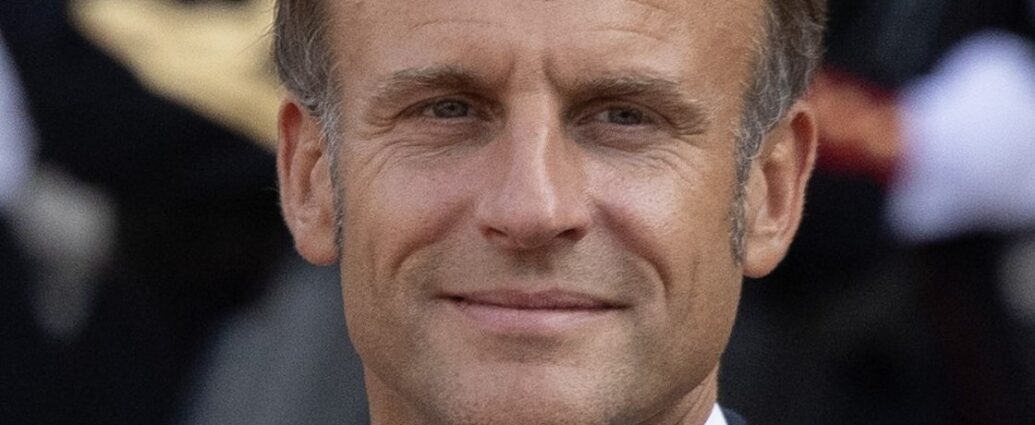
JBizNews Desk | May 8, 2026

Novo Nordisk Scores Major Win in the Weight-Loss Pill Race

The obesity drug market has entered a new phase — one increasingly driven by pills instead of injections — and Novo Nordisk just delivered its clearest sign yet that it currently leads that battle.

The Danish pharmaceutical giant reported stronger-than-expected first-quarter 2026 earnings Wednesday, fueled largely by the explosive launch of its oral Wegovy pill in the United States earlier this year.

The company said the pill has already generated more than 2 million prescriptions since launching in January, helping push Novo Nordisk shares roughly 7% higher in Copenhagen trading and prompting management to improve its full-year outlook after months of investor concerns and declining forecasts.

The oral Wegovy pill generated approximately 2.26 billion Danish kroner — roughly $354 million — during the first quarter, nearly double analyst expectations.

Weekly U.S. prescriptions surpassed 200,000 by late April.

Novo Nordisk CEO Mike Doustdar described the launch as the strongest GLP-1 drug rollout ever recorded in the United States.

Overall first-quarter net sales reached 96.82 billion kroner, up 24% year-over-year, while adjusted operating profit came in well above expectations at 32.86 billion kroner.

The company’s injectable Wegovy franchise continued growing as well, rising 12% year-over-year to 18.2 billion kroner, while diabetes drug Ozempic declined 8% but still exceeded analyst forecasts.

Novo also improved its full-year guidance, now projecting adjusted sales declines between 4% and 12% at constant exchange rates — an improvement from earlier forecasts calling for steeper declines.

The Real Breakthrough Is Price and Accessibility

For consumers, however, the biggest story may not be Wall Street performance but affordability.

Both Novo’s oral Wegovy and Eli Lilly’s competing obesity pill Foundayo are launching at approximately $149 per month for cash-paying patients — dramatically below the roughly $1,349 monthly list price for injectable Wegovy.

That pricing shift could significantly expand access to obesity treatments across the United States.

The market could become even larger beginning July 1, when expanded Medicare coverage for obesity medications is expected to take effect, potentially opening access to tens of millions of additional Americans who previously could not afford the drugs.

Industry analysts increasingly view the Medicare expansion as one of the most important catalysts in the history of the GLP-1 market.

Eli Lilly Is Racing to Catch Up

Novo Nordisk’s dominance, however, is already being challenged aggressively by Eli Lilly.

Earlier this year, Lilly received FDA approval for its oral obesity drug Foundayo and quickly launched it into the U.S. market.

Unlike Novo’s peptide-based pill, Foundayo uses a small-molecule approach and is being marketed heavily around one major convenience advantage: patients can take it anytime.

Novo’s oral Wegovy still carries stricter instructions. Patients must take the pill first thing in the morning on an empty stomach with only a small amount of water and then wait 30 minutes before eating or drinking anything else.

Foundayo does not carry those restrictions.

Lilly CEO David Ricks said the convenience advantage could eventually drive broader adoption, though he cautioned that scaling the rollout would take time.

Early prescription data still strongly favors Novo.

According to IQVIA prescription tracking data cited by Jefferies analysts, Foundayo generated roughly 5,600 prescriptions during its third week on the U.S. market — below the pace of Novo’s launch during the same period.

Novo currently controls roughly 65% of new prescriptions in the oral obesity drug category.

Doustdar said Novo is seeing a “synergetic effect” between oral and injectable products, with many patients using both rather than replacing one with the other — a sign the market itself may be expanding rapidly rather than simply shifting existing patients between products.

The Obesity Drug Boom Is Reshaping Pharma

The financial stakes surrounding the obesity market are enormous.

Analysts increasingly estimate the global weight-loss drug industry could eventually surpass $100 billion annually, making it one of the most valuable pharmaceutical markets in history.

A Deloitte analysis released this week found obesity treatments have now surpassed oncology as the single largest contributor to late-stage pharmaceutical pipeline value for the first time in 16 years.

The firm also warned that the sector may be approaching speculative “bubble” territory if pricing pressure, safety concerns, or disappointing clinical data emerge.

Novo continues investing heavily in next-generation obesity drugs.

The company recently secured FDA approval for Wegovy HD, a higher-dose injectable version that produced roughly 20.7% average weight loss in clinical trials.

Novo is also advancing its next-generation combination therapy CagriSema, though earlier trial results underperformed compared to Eli Lilly’s blockbuster obesity drug Zepbound — a setback that contributed to Novo shares hitting five-year lows earlier this year before the oral Wegovy rebound.

The Outcome Could Reshape American Healthcare

The battle between Novo Nordisk and Eli Lilly is no longer simply a pharmaceutical rivalry.

It is becoming a fight over who controls one of the largest emerging healthcare markets in the world — and whether obesity treatments become broadly accessible consumer health products or remain premium therapies concentrated among wealthier patients.

For millions of Americans struggling with obesity, diabetes, and related health conditions, the outcome of that competition could directly determine who can afford treatment — and who cannot.

JBizNews Desk

© JBizNews.com. All rights reserved. This article is original reporting by JBizNews Desk. Unauthorized reproduction or redistribution is strictly prohibited.

JBizNews Desk | Friday , May 8, 2026

British Prime Minister Keir Starmer is fighting for his political survival tonight as his own cabinet turns against him, a landmark local elections rout threatens to confirm his status as one of Britain’s most unpopular leaders in modern history, and rivals within his own Labour Party openly position themselves to succeed him.

UK Energy Secretary Ed Miliband — himself a former leader of the Labour Party — privately urged Prime Minister Starmer to consider setting out a timeline for his resignation, amid concerns that losses in the local elections held today would see him forced out of office, The Times reported Thursday evening. Miliband made the suggestion in a meeting approximately two weeks ago, sources told The Times.

The revelation that a sitting cabinet minister — and a former party leader — has privately encouraged the Prime Minister to plan his own exit is an extraordinary development in British political life, carrying enormous implications not just for Starmer personally but for the Labour government’s ability to function and for the UK’s critical economic relationship with the United States and the broader Western alliance at a moment of acute global instability.

Starmer’s rivals in the party, including former Deputy Prime Minister Angela Rayner and Health Secretary Wes Streeting, are preparing to launch their own leadership bids if the results of today’s local elections prove particularly damaging for Labour.

Greater Manchester Mayor Andy Burnham, who is said to have a plan to return to Westminster within weeks, abruptly dropped out of giving a scheduled public speech Thursday morning — a move widely read as a political signal that he is keeping his options open.

How Starmer Got Here

Less than two years ago, Starmer led Labour to a historic landslide general election victory that ended 14 years of Conservative rule and gave his party one of the largest parliamentary majorities in modern British history.

The fall from that height has been swift and severe.

Starmer’s popularity has plunged after repeated missteps since he became Prime Minister in July 2024. His government has struggled to deliver promised economic growth, repair tattered public services, and ease the cost of living — tasks made harder by the U.S.-Israeli war with Iran, which has choked off oil shipments through the Strait of Hormuz and driven energy prices sharply higher across Europe.

The most damaging scandal has centered on Peter Mandelson, the veteran Labour political figure whom Starmer appointed as Britain’s ambassador to Washington in late 2024.

It was revealed that Mandelson had failed the security vetting process in January 2025 — only for his appointment to go ahead the following month anyway. Starmer claimed he only learned of the failed vetting recently. The appointment collapsed entirely when a newly released batch of files revealed Mandelson shared a closer-than-previously-disclosed relationship with late convicted sex offender Jeffrey Epstein.

The episode consumed weeks of parliamentary time, triggered an investigation into whether Starmer misled Parliament, and permanently damaged his reputation for competence and judgment.

“Less than two years after winning a landslide election victory, Keir Starmer has become a vessel for people’s disappointment and disillusionment,” said Luke Tryl of pollster More in Common.

What the Polls Say

Labour is defending approximately 2,500 seats on English local councils, and forecasters suggest the party will lose well over half of them.

Polling analyst Robert Hayward has suggested Labour could lose as many as 1,850 councillors in England alone.

In Wales, Labour looks set to lose control of the devolved government in Cardiff for the first time in the 27 years since Wales got its own parliament.

In Scotland, the Scottish National Party is expected to extend its 19-year control of the devolved parliament in Edinburgh, with some projections suggesting Reform UK could force Labour into third place.

Reform UK, the hard-right party led by Nigel Farage, is running under the slogan “Vote Reform, Get Starmer Out” and appears set for significant gains across England, while the Green Party is picking up disaffected left-wing urban voters with a pro-Gaza message.

The combined pressure from the far right and the insurgent left is squeezing Labour from both directions simultaneously — a dynamic that reflects the fragmentation of British politics in the post-Brexit era.

What Comes Next

Any challenger to Starmer would need the support of 80 lawmakers — one fifth of the Labour parliamentary party — to formally trigger a leadership contest.

Allies of Rayner are said to be confident she could secure the required nominations. Streeting is also said to have met the threshold, though neither is reported to want to be the first to move.

Tim Bale, professor of politics at Queen Mary University of London, noted that Starmer’s parliamentary party “are unsure as to whether now is the right time to unseat him” — a calculation that may shift dramatically as tonight’s election results come in.

For American businesses, investors, and policymakers, Britain’s political turmoil carries direct economic significance.

The UK is the United States’ closest military and intelligence ally, a key partner in the Iran negotiations, and one of America’s largest trading partners.

A Labour leadership crisis — coming at a moment when the U.S.-EU trade deal deadline looms on July 4, oil prices remain elevated, and global markets are navigating daily geopolitical shocks — adds another destabilizing variable to an already complex international environment.

The pound fell in currency markets Thursday as the election results began filtering through.

Starmer has insisted publicly that he intends to lead the party into the next general election, likely in 2029.

But with his own Energy Secretary privately urging him to plan his exit, and his rivals sharpening their campaigns behind closed doors, that insistence may not survive the night.

© JBizNews.com. All rights reserved. This article is original reporting by JBizNews Desk. Unauthorized reproduction or redistribution is strictly prohibited.
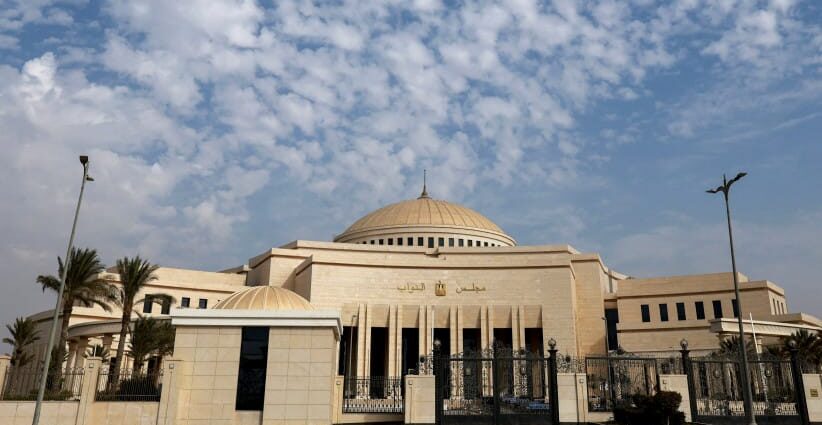
By JBizNews Desk

For years, many of America’s ethnic and multicultural chambers of commerce operated independently — often representing massive immigrant, faith-based, and minority business communities but lacking the unified structure and coordinated influence needed to compete politically and economically on a national level.

That changed this week.

Business leaders from nearly 65 multicultural chambers of commerce and advocacy organizations formally launched the Multicultural Business Coalition (MBC), creating what organizers say is one of the largest coordinated alliances of ethnic business leadership groups assembled in the United States in recent years.

The coalition brings together chambers and organizations representing millions of businesses, workers, entrepreneurs, consumers, and community members spanning Hispanic, Asian, Caribbean, African, Middle Eastern, Jewish, South Asian, and immigrant communities, with particularly strong leadership roots across New York and New Jersey and broader national and international business relationships.

The formation of the coalition reflects growing frustration among multicultural business leaders who say their communities often face similar challenges — from access to capital and government contracting to regulatory pressure, discrimination concerns, and lack of coordinated representation — yet historically approached those battles separately.

“Everyone realized we were stronger together than fragmented apart,” said Frank Garcia, newly elected Chairman of the coalition. “Individually, these chambers had influence within their own communities. But collectively, we represent tens of millions of people, enormous economic power, and significant civic influence. That changes the equation.”

Following a formal leadership vote, Garcia was elected Chairman and Kenneth Roldan was named President. Duvi Honig, Co-Founder and CEO of the Wall Street-based Orthodox Jewish Chamber of Commerce, was elected Secretary and named Co-Founder of the coalition.

Additional leadership roles included Yenisei Bell, appointed Second Vice Chair and serving as President of the National Association of Women in Construction (NAWIC) Greater New York Chapter; Anupam Dutta of the Indian International Chamber of Commerce, also appointed as Second Vice Chair; Mark Jaffe of the Greater New York Chamber of Commerce overseeing legal affairs; James Kim of the Korean American Chamber of Commerce USA leading international relations efforts; Manuel Lebrón, founder of the Caribbean American Chamber of Commerce and Industry, serving on the board; and Porras Zambrano, a UN Global Peace Ambassador 2026, joining the coalition leadership.

Coalition Founders Meeting

Garcia credited Honig with helping bring together many of the coalition’s diverse leaders through years of outreach and coalition-building between multinational, multicultural, faith-based, immigrant, and business communities.

“Duvi spent years creating relationships between communities that traditionally did not work together in a coordinated way,” Garcia said. “A lot of the trust and communication that made this possible came from that groundwork.”

Coalition organizers say the alliance is designed not simply as a networking organization, but as a coordinated advocacy platform capable of engaging government agencies, elected officials, and corporate America with significantly greater leverage than individual chambers could achieve independently.

The coalition plans to focus on economic empowerment, supplier diversity, minority business development, international trade opportunities, workforce inclusion, public policy advocacy, and combating discrimination affecting multicultural communities and small businesses.

“Today we represent tens of millions of voices. That is real influence,” Honig said. “This coalition gives us the ability to engage government, shape outcomes, and ensure that every community is heard and protected. Together, we are building a unified force that will not be ignored.”

The effort also reflects a broader political and economic shift underway nationally, where multicultural communities increasingly recognize their combined business and voting power can influence policy discussions at the local, state, and federal levels.

“The Multicutural Business Coalition represents the voices of an underserved community.” said Mark Jaffe of the Greater New York Chamber of Commerce. “For years, many of these organizations were advocating on similar issues separately. Bringing them together creates scale, coordination, and a much stronger voice when dealing with government, regulators, and major institutions.”

Jaffe added that the coalition intends to focus heavily on fairness, accountability, and ensuring multicultural communities have stronger representation in economic and policy decisions impacting small businesses and working families.

Kennith Roldan, elected President of the coalition, said the organization is designed to move beyond symbolic unity and into coordinated national action.

“Our communities contribute enormously to the American economy,” Roden said. “This coalition gives us the structure to organize strategically, advocate collectively, and engage nationally in ways that simply did not exist before.”

Coalition leaders also emphasized the alliance’s growing international dimension, particularly through immigrant and diaspora business networks connected to Latin America, Asia, the Caribbean, and Europe.

“The economic reach of these communities extends globally,” said James Kim, who will oversee international relations for the coalition. “Together we can strengthen international business partnerships, trade relationships, and investment opportunities while creating stronger economic growth here in the United States.”

“This coalition represents more than business,” added Porras Zambrano, UN Global Peace Ambassador 2026. “It represents unity, peace, economic empowerment, and the ability for diverse communities to work together with mutual respect.”

Organizations represented at the launch included the Asian American Women’s Chamber of Commerce, Bangladeshi American Chamber of Commerce, Bronx Hispanic Chamber of Commerce, Caribbean American Chamber of Commerce and Industry, Ecuadorian International Chamber of Commerce, Greater New York Chamber of Commerce, Greater New York Nepali Chamber of Commerce, Hispanic American Chamber of Commerce, Korean American Chamber of Commerce USA, Mexican American Chamber of Commerce of Texas, National Association of Small and Local Chambers of Commerce (NASLCC), National Supermarket Association, New Jersey Veterans Chamber of Commerce, New York State Ecuadorian Chambers of Commerce, Orthodox Jewish Chamber of Commerce, Peruvian Chamber of Commerce USA, United Bodegas of America, United States Bangladesh Chamber of Commerce and Industry (USBCCI), World Wide Association of Small Churches, and numerous additional organizations nationwide.

Organizers described the attendee list as only a partial representation of participating groups and said additional chambers are expected to formally join the coalition in the coming months.

Coalition leaders said the next phase will include national policy forums, economic summits, trade initiatives, and direct engagement with federal, state, and local governments.

“This is only the beginning,” Honig said. “When we stand together, our voice carries real weight. We expect to be heard, and we will ensure accountability where it matters.”

JBizNews Desk

Exploratory Talks Signal a Historic Shift in Semiconductor Strategy — Driven by Tariffs, Taiwan Risk, and Washington’s Push for Domestic Manufacturing

By JBizNews Desk | Cupertino, Calif. — May 7, 2026

Apple has held exploratory discussions with Intel and Samsung about producing the main processors for its devices — conversations that, if they lead to a formal agreement, would mark one of the most significant changes to the company’s manufacturing strategy since it abandoned Intel chips six years ago and began building its own Apple Silicon.

The discussions, reported Monday by Bloomberg, would give Apple a secondary production option beyond Taiwan Semiconductor Manufacturing Company (TSMC), the Taiwanese firm that has served as the exclusive manufacturer of Apple’s custom-designed processors. Apple executives have also visited a Samsung chip plant under development in Texas that is expected to produce advanced semiconductors.

The shift is not primarily about performance — it is about risk.

Inside Apple, the growing concern is that relying on a single supplier, concentrated on a single island at the center of rising geopolitical tension, has become a vulnerability the company can no longer ignore.

Why Now

Three major forces are pushing Apple in that direction — and all of them point back to Taiwan’s outsized role in the global chip supply chain.

The first is tariffs. Chips manufactured in Taiwan are currently subject to a 20% reciprocal tariff under the existing trade framework. While Apple secured a temporary exemption for electronics in 2025, that relief is conditional. Moving production to U.S.-based facilities — such as Intel’s plants in Arizona or Samsung’s site in Texas — would eliminate that exposure entirely.

The second is geopolitical risk. Analysts have increasingly described Apple’s dependence on TSMC as a “silicon chokepoint” — a single point of failure that could disrupt the company’s entire product pipeline in the event of military conflict, natural disaster, or supply chain breakdown affecting Taiwan.

The third is political pressure. Apple has committed to investing $500 billion in the United States over the next four years, a pledge made directly to the Trump administration. Shifting part of its chip manufacturing to domestic facilities would provide tangible progress toward that goal while reducing future regulatory and tariff risk.

What Intel and Samsung Bring

Intel and Samsung each offer a different path forward.

Apple is evaluating Intel’s 18A process — a next-generation manufacturing technology — with analysts suggesting Intel could begin producing lower-tier Apple chips as early as 2027. Under that model, Intel would manufacture processors for entry-level devices such as the MacBook Air and iPad lines, while TSMC would continue producing high-performance chips for premium products like the iPhone and MacBook Pro.

Apple and Nvidia are also assessing Intel’s future 14A process for use in 2028 devices, potentially splitting production so that the most advanced components remain with TSMC while additional elements shift to Intel’s U.S.-based operations.

Samsung, meanwhile, is positioning itself as a direct competitor. Its new fabrication plant in Taylor, Texas is being designed around cutting-edge 2-nanometer technology using gate-all-around transistor architecture — a next-generation approach aimed at matching or surpassing TSMC’s most advanced capabilities.

The Hurdles Are Real

But shifting suppliers is far from simple.

Apple’s chips are among the most tightly integrated designs in the industry, with performance gains driven by deep coordination between Apple’s engineering teams and TSMC’s manufacturing processes. Moving production to another foundry would require extensive redesign work, potentially taking 12 to 18 months and costing hundreds of millions of dollars.

Intel also faces its own challenges. While its advanced manufacturing roadmap has attracted interest from major customers including Microsoft and Amazon, production yields remain under scrutiny. CEO Lip-Bu Tan has indicated that firm commitments for its next-generation processes are not expected until late 2026.

What It Means for Consumers

For consumers, the impact will not be immediate.

Any shift in manufacturing would likely begin with lower-tier devices, with flagship products continuing to rely on TSMC in the near term. But over time, the implications could be far-reaching.

If Apple succeeds in building a dual- or multi-supplier model — combining TSMC’s performance leadership with Intel and Samsung’s geographic diversification — it would mark one of the most significant changes in the semiconductor industry in decades.

It would also signal a broader shift in how global tech companies think about supply chains: not just in terms of efficiency and cost, but resilience.

For Apple, that calculation is becoming unavoidable.

JBizNews Desk
© JBizNews.com. All rights reserved.

JBizNews Desk | Friday , May 9, 2026

The chief executive of one of the world’s largest oil companies delivered a stark warning Thursday that the global oil shortage caused by the U.S.-Iran war has reached a scale that markets have not fully absorbed — and that the road back to normal supply will be far longer and more painful than most governments, businesses, and consumers are prepared for.

Shell CEO Wael Sawan said during the company’s first-quarter earnings call Thursday that the global oil market is currently short nearly 1 billion barrels of crude — the result of locked-in tankers that cannot move through the Strait of Hormuz and production that has simply gone unproduced since the conflict began on February 28.

“The hard facts are we have dug ourselves a hole of close to a billion barrels of crude shortage at the moment, either because of locked-in barrels or unproduced barrels,” Sawan said. “And of course, that hole is deepening every single day, so the journey back will be a long one.”

To grasp the magnitude of that number: the entire world consumes approximately 100 million barrels of oil every single day. A shortfall approaching 1 billion barrels represents roughly 10 full days of total global consumption — erased from available supply in just over two months of conflict.

And unlike a typical supply disruption, this one is not being gradually replenished. Every day the Strait of Hormuz remains effectively closed, the deficit grows deeper.

Sawan is not alone in sounding the alarm.

Halliburton CEO Jeffrey Miller told investors on the oilfield services company’s April 21 earnings call that oil production lost due to the war is also trending toward 1 billion barrels.

“Recovery of oil and gas production and inventories will not be a quick or simple process,” Miller said.

Vitol CEO Russell Hardy told investors on April 21 that cumulative oil production losses from the war were already between 600 and 700 million barrels at that point — a number that has continued climbing since.

Three of the most senior executives in the global energy industry are now describing the same enormous hole in the world’s oil supply, with nearly identical estimates.

The Supply Arithmetic Is Getting Worse

The problem is not just the size of the shortage — it is the speed at which it is compounding.

The Strait of Hormuz closure has disrupted roughly 20% of global oil supplies and significant liquefied natural gas volumes — what the International Energy Agency (IEA) has characterized as the “largest supply disruption in the history of the global oil market.”

The head of the IEA described the situation as “the greatest global energy security challenge in history.”

U.S. crude oil inventories unexpectedly plunged by 6.2 million barrels last week alone, according to the Energy Information Administration, with stockpiles of gasoline and distillates such as diesel also falling sharply.

The excess supply buffers that have worked as shock absorbers for American consumers are dwindling fast, with some analysts warning those buffers could break within a matter of months if the conflict is not resolved.

Outside the United States, the situation is already becoming critical.

A ConocoPhillips executive warned Thursday that import-dependent countries could start facing critical fuel shortages as soon as June or July 2026.

“Despite efforts that are ongoing to manage demand, we are going to start to see some import-dependent countries potentially start to face critical shortages as we get into the June-July time frame,” the executive said.

Southern Iraq’s oil production has dropped more than 70% since the conflict began, and the volume of imported goods reaching the country’s ports has been cut in half.

The Zubair oil field in Basra — which produced around 400,000 barrels per day — has seen output drop to roughly 250,000 barrels due to continuous attacks.

Iraq derives 90% of its GDP from oil exports.

What It Means for American Consumers

For the average American, the Shell CEO’s remarks translate directly into the price at the pump — and into every product that depends on oil to be manufactured, packaged, or delivered.

Gas prices nationally hit $4.54 per gallon this week — up 52% since the war began.

Diesel prices, which determine the cost of moving virtually every physical product in the American economy, have climbed even more sharply.

Jet fuel prices have more than doubled in North America since the conflict began, forcing airlines to add surcharges, reduce routes, and in some cases — like Spirit Airlines, which ceased all operations earlier this month — shut down entirely.

The Shell warning matters beyond its headline number because it reframes the public conversation about the war’s economic cost.

Much of the political discussion in Washington has centered on the possibility of a peace deal bringing relief — and indeed, oil prices fell briefly this week when reports emerged of preliminary U.S.-Iran framework talks.

But Sawan’s statement makes clear that even a genuine ceasefire does not flip a switch.

A shortfall approaching 1 billion barrels cannot be rebuilt in days or weeks.

Tankers must be repositioned.
Production facilities must be restarted.
Supply chains must be re-established.
Strategic reserves must be replenished.

Sawan noted that demand destruction due to the lost oil supplies has been “modest so far” — suggesting that consumers globally are still absorbing higher prices rather than dramatically cutting consumption.

But that dynamic is not sustainable indefinitely.

When demand destruction accelerates — when households stop driving, factories cut production, and airlines ground planes — the economic damage moves from the energy sector into the broader economy in ways that are far harder to reverse.

For businesses planning supply chains, logistics, and energy costs for the second half of 2026, Shell’s warning is a direct signal: do not plan on a quick return to pre-war energy prices.

The hole, as Sawan put it, is still getting deeper.

© JBizNews.com. All rights reserved. This article is original reporting by JBizNews Desk. Unauthorized reproduction or redistribution is strictly prohibited.

Anthropic, the artificial intelligence startup best known for enterprise software and AI safety research, is making a major push into the mainstream consumer market as it tries to transform Claude from a developer-focused chatbot into a daily-use AI assistant for millions of ordinary users.

The shift marks a significant strategic evolution for the San Francisco-based company, which until recently was viewed primarily as a high-end enterprise AI platform competing for corporate contracts rather than mass consumer adoption.

Now Anthropic wants Claude to become part of everyday life — helping users with everything from interpreting lab results and planning travel to answering cooking questions and managing personal routines.

The move comes as paid subscriptions for Claude more than doubled this year, according to company data and transaction analysis, fueling growing investor optimism that Anthropic could emerge as a legitimate consumer challenger to OpenAI’s ChatGPT.

Anthropic’s Consumer Push Is Accelerating

Since late last year, Anthropic has increasingly directed internal teams to improve Claude’s ability to handle personal and consumer-oriented tasks.

According to Mike Krieger, co-leader of Anthropic’s Labs division, the company has been focusing heavily on making Claude more useful for practical daily questions involving health, travel planning, recipes, organization, and broader lifestyle support.

The effort represents a meaningful expansion for a company that originally built its reputation around AI safety, enterprise reliability, and developer tools.

Anthropic’s Labs division was specifically created to experiment with more ambitious and consumer-facing AI products.

Company President Daniela Amodei described the group as an internal innovation team designed to “break the mold and explore” frontier AI capabilities before scaling successful features into products used by millions.

Paid Subscriber Growth Has Exploded

The strategic pivot is being supported by rapidly growing consumer demand.

Anthropic confirmed that paid Claude subscriptions have more than doubled this year, with some of the fastest growth occurring between January and February.

Most users are reportedly selecting the company’s $20-per-month Claude Pro subscription tier.

Industry transaction data analyzing billions of anonymized credit-card purchases from approximately 28 million U.S. consumers showed a sharp acceleration in consumer spending tied to Claude subscriptions this year.

Several major product launches appear to have fueled the growth.

Anthropic gained momentum following:

  • Its Super Bowl advertising campaign criticizing ChatGPT’s potential advertising strategy
  • The launch of Claude Code and Claude Cowork developer tools
  • The rollout of “Computer Use,” a feature allowing Claude to autonomously navigate and operate computers on behalf of users

The company also achieved a major milestone when Claude temporarily overtook ChatGPT to become the No. 1 app in Apple’s U.S. App Store rankings.

Free account signups reportedly climbed more than 60% since January, while daily user registrations hit all-time highs. By early March, Claude was reportedly adding more than one million new users per day.

Health Is Becoming a Major Focus

One of Anthropic’s biggest consumer bets is healthcare assistance.

Claude Pro and Max subscribers can now securely connect personal health data, including lab results, fitness information, and medical records through integrations with Apple Health, Android Health Connect, and new beta connectors including HealthEx and Function.

Once connected, Claude can summarize medical history, explain test results in plain language, identify trends across health metrics, and help users prepare questions for doctor appointments.

The feature highlights a broader trend emerging across the AI industry: companies increasingly want chatbots to become personalized digital assistants deeply integrated into users’ daily lives.

Rather than simply answering questions, AI companies are racing to build systems that organize information, automate tasks, interpret personal data, and act proactively on behalf of users.

Anthropic Still Trails OpenAI by a Wide Margin

Despite its rapid growth, Anthropic remains far behind OpenAI in total consumer scale.

OpenAI reported earlier this year that ChatGPT reached approximately 900 million weekly active users globally — more than double the roughly 400 million weekly users reported the previous year.

The gap between the two companies remains enormous.

Still, Anthropic appears increasingly willing to compete directly for consumer attention rather than limiting itself to enterprise software and research applications.

The company’s recent momentum has also slightly altered how investors view its long-term business model.

Anthropic was originally seen primarily as a safety-focused AI lab supported by enterprise customers and large institutional partnerships.

Now analysts increasingly describe it as a consumer AI platform with enterprise revenue — a materially different positioning with potentially far larger long-term monetization opportunities.

That shift became even more important after Anthropic’s February 2026 funding round reportedly valued the company at approximately $380 billion.

The AI Consumer War Is Expanding

Anthropic’s consumer push reflects the broader transformation unfolding across the AI industry.

The competition is no longer simply about building the most powerful model.

It is increasingly about becoming the default AI assistant consumers use every day.

OpenAI, Google, Meta, Microsoft, xAI, and Anthropic are now all racing to integrate AI into search, smartphones, productivity tools, healthcare, education, communication, shopping, and personal organization.

For Anthropic, the challenge is balancing rapid growth with the cautious, safety-focused culture that originally distinguished the company from many rivals.

The company’s structure may give it flexibility to pursue both goals simultaneously.

Its Labs division can continue experimenting aggressively with frontier consumer products while its core enterprise business scales services for more than 300,000 business customers worldwide.

The larger question now is whether Claude can evolve from a respected AI assistant into something more emotionally and practically embedded in daily life — a platform people routinely rely on not just for work, but for the personal decisions and everyday questions that increasingly define the consumer AI era.

JBizNews Desk

China’s financial regulator has quietly instructed major domestic banks to freeze new lending to several refiners sanctioned by Washington for purchasing Iranian oil, escalating an already dangerous financial standoff between the world’s two largest economies and placing China’s banking system directly in the middle of a geopolitical confrontation.

The move underscores how sanctions tied to the Iran conflict are no longer confined to energy markets or shipping lanes — they are now pressuring the global banking system itself.

According to people familiar with the matter, China’s National Financial Regulatory Administration advised the country’s largest lenders to temporarily halt new loans to five refiners targeted by recent U.S. Treasury sanctions tied to Iranian crude purchases. Banks were also instructed to review their exposure and business relationships with the affected companies while awaiting further guidance from Beijing.

For now, Chinese banks have reportedly been told not to issue new yuan-denominated financing to the sanctioned firms, though regulators stopped short of ordering lenders to call in existing loans — a sign Beijing is attempting to contain financial disruption while avoiding a full-scale retreat.

Among the companies involved is Hengli Petrochemical (Dalian) Refinery Co., one of China’s largest private refiners and a major buyer of Iranian oil.

How the Crisis Escalated

The banking directive is the latest development in an intensifying conflict between Washington and Beijing over sanctions enforcement.

In recent months, China has taken the unusually aggressive step of formally instructing domestic companies not to comply with certain U.S. sanctions targeting Iranian oil transactions — a major departure from Beijing’s prior approach.

Historically, Chinese officials publicly criticized unilateral U.S. sanctions while quietly allowing major corporations and banks to reduce exposure in order to preserve access to the American financial system and avoid secondary sanctions.

Now that balance appears to be changing.

Beijing recently activated legal “blocking measures” introduced in 2021 that are specifically designed to shield Chinese companies from complying with foreign laws China considers illegitimate or harmful to national interests.

The order applies to several refiners tied to Iranian crude imports, including:

  • Hengli Petrochemical (Dalian) Refinery Co.
  • Shandong Jincheng Petrochemical Group
  • Hebei Xinhai Chemical Group
  • Shouguang Luqing Petrochemical
  • Shandong Shengxing Chemical

The U.S. Treasury Department accused Hengli of helping generate hundreds of millions of dollars in revenue for Iran through crude purchases linked to Tehran’s military and sanctioned energy trade.

Chinese Banks Now Face an Impossible Choice

The situation has created a highly dangerous position for China’s financial institutions.

If Chinese banks comply with U.S. sanctions restrictions, they risk violating Beijing’s new blocking rules and potentially facing legal or regulatory consequences inside China.

But if banks continue financing sanctioned refiners in defiance of Washington, they risk triggering secondary U.S. sanctions that could threaten access to the U.S. dollar system — the backbone of global banking and international trade.

That threat is existential for large financial institutions.

Access to dollar clearing systems is essential for global banking operations, trade settlement, commodities financing, and international capital flows. Losing that access could severely disrupt even major state-backed Chinese lenders.

At the same time, China’s blocking order allows sanctioned refiners to potentially seek damages in Chinese courts against firms — including foreign banks or companies — that comply with U.S. sanctions.

Analysts at Eurasia Group described the activation of the blocking framework as a major escalation, warning that Beijing is demonstrating “a lower threshold for deploying its legal and regulatory toolkit to counter U.S. sanctions.”

Energy Security Is Driving Beijing’s Response

China’s response is rooted largely in energy dependence.

The country imports more than half its oil from the Middle East, and Iran has become one of its most important discounted crude suppliers. According to commodities tracking firm Kpler, China purchased more than 80% of Iran’s exported oil in 2025.

Much of that oil has flowed to China’s so-called “teapot refineries” — smaller independent refiners that account for roughly one-quarter of the country’s total refining capacity and often rely heavily on discounted Iranian crude to maintain profitability.

Chinese officials increasingly view U.S. sanctions expansion as a direct threat to national energy security.

Cui Fan, a professor and former adviser to China’s Commerce Ministry, argued in state-run media that Washington’s sanctions tactics are becoming increasingly aggressive and dangerous for China’s economy.

“The scope of these sanctions continues to expand, and the methods have become increasingly heavy-handed,” Cui wrote. “If such abuse is allowed to continue, it will disrupt the stability of China’s energy supply chain and jeopardize China’s energy security and development interests.”

Tens of Billions in Financing Exposure

The financial exposure involved is enormous.

Hengli Petrochemical, the publicly traded parent company tied to the sanctioned Dalian refinery, previously disclosed plans to secure approximately 235 billion yuan — roughly $34.4 billion — in banking credit for itself and affiliated entities this year alone.

Chinese lenders are now reportedly scrambling to assess how much exposure they have to sanctioned refiners and what future restrictions may mean for broader financing relationships.

The pause on new loans appears designed to buy regulators time while Beijing evaluates how aggressively Washington intends to enforce secondary sanctions.

A Potential U.S.-China Financial Flashpoint

The timing of the standoff is especially sensitive.

The confrontation is unfolding ahead of an anticipated meeting later this month between President Donald Trump and Chinese President Xi Jinping, raising the stakes significantly for both governments.

Chinese state media has already framed the blocking order as a historic shift in Beijing’s willingness to directly confront U.S. sanctions pressure.

A commentary published through the Communist Party-affiliated People’s Daily app described the move as “a pivotal step in the transition of China’s foreign-related legal weapon from institutional reserves to practical application.”

Analysts warn the situation could escalate far beyond the refining sector if the United States expands sanctions toward Chinese banks or large state-owned enterprises.

Eurasia Group warned that broader U.S. secondary sanctions targeting Chinese financial institutions would likely trigger “more forceful countermeasures” from Beijing.

For now, China’s banks are effectively being told to pause — not fully disengage.

But the longer the confrontation drags on, the harder it may become for lenders to maintain that balancing act between Washington and Beijing without eventually being forced to choose sides.

And if that happens, the conflict over Iranian oil could evolve into something far larger: a direct financial confrontation between the U.S. and Chinese banking systems themselves.

JBizNews Desk

JBizNews Desk | Thursday, May 7, 2026

The Court of International Trade ruled at approximately 5:03 p.m. ET on Thursday, May 7, 2026, that President Donald Trump’s sweeping 10% global tariffs were unlawful, delivering a major legal setback to the administration’s trade agenda and injecting fresh uncertainty into U.S. business, supply chains, and financial markets.

In a 2-1 decision, a three-judge panel of the U.S. Court of International Trade in New York ruled that the across-the-board duties exceeded presidential authority under federal law, declaring the tariffs “invalid” and “unauthorized by law.” The judges sided with a coalition of small businesses that argued the administration improperly used emergency trade powers to impose broad import duties on goods entering the United States.

The ruling immediately raises questions for retailers, manufacturers, importers, logistics firms, and industries heavily dependent on globally sourced goods.

Court Rejects Administration’s Legal Argument

The tariffs, which took effect February 24, were imposed under Section 122 of the Trade Act of 1974, a law allowing temporary duties of up to 150 days to address serious balance-of-payments problems or prevent a major depreciation of the U.S. dollar.

The Trump administration argued that America’s roughly $1.2 trillion goods trade deficit and current account imbalance justified the emergency action.

The court majority rejected that argument, ruling the law was not intended to support sweeping global tariffs of this scale.

The decision follows an earlier Supreme Court ruling this year striking down broader Trump tariffs imposed under the International Emergency Economic Powers Act, or IEEPA. Thursday’s case centered on claims by small businesses that the February tariffs were effectively an attempt to work around that earlier Supreme Court decision.

A dissenting judge argued the president should retain broader discretion in trade matters, signaling the legal battle is likely far from over.

Immediate Impact on Businesses

The response from the business community was immediate.

“This decision is an important win for American companies that rely on global manufacturing to deliver safe and affordable products,” said Jay Foreman, CEO of toy company Basic Fun!, one of the businesses challenging the tariffs. “Unlawful tariffs make it harder for businesses like ours to compete and grow.”

For thousands of businesses, the ruling could eventually provide relief from import costs that have pressured margins for months. Retailers, wholesalers, electronics firms, apparel companies, and consumer goods manufacturers were among the sectors most affected by the tariffs.

Larger corporations that already shifted supply chains or renegotiated sourcing contracts now face a more complicated calculation as they weigh whether to reverse those costly moves or wait for additional legal clarity.

Markets and Investors Watching Closely

The decision also carries major implications for Wall Street.

Investors have increasingly viewed tariffs as a contributor to inflation, particularly during a period already strained by elevated oil prices, supply-chain volatility, and geopolitical tensions tied to the Iran conflict.

If the ruling ultimately survives appeal, it could reduce cost pressures across several industries and improve margins for import-heavy businesses. Retail, transportation, manufacturing, and logistics companies could all benefit from lower import expenses over time.

At the same time, the ruling creates new uncertainty around future U.S. trade policy heading deeper into the election cycle, particularly for industries that benefited from tariff protections.

Appeal Expected

The administration is widely expected to appeal the decision to the U.S. Court of Appeals for the Federal Circuit, with the case potentially returning to the Supreme Court.

That means the legal uncertainty may continue for months.

For businesses, the challenge now becomes deciding whether to immediately adjust purchasing and sourcing strategies or continue operating under the assumption that some form of the tariffs could eventually return.

The ruling marks the second major judicial setback for Trump’s tariff strategy this year and significantly narrows the legal tools available to impose broad unilateral trade barriers without congressional approval.

For corporate America, investors, and global trade partners, the case may ultimately redefine the balance of power between the White House and Congress on trade policy for years to come.

© JBizNews.com | By JBizNews Desk

JBizNews Desk | Thursday, May 7, 2026

A classified CIA intelligence assessment delivered this week to senior Trump administration officials has concluded that Iran may be capable of enduring the current U.S.-led naval blockade and economic pressure campaign for at least three to four more months — a finding that sharply contrasts with the administration’s more optimistic public messaging and raises growing concerns about prolonged economic fallout for American households.

The confidential report, first reported by The Washington Post and confirmed by multiple officials familiar with the assessment, suggests Tehran retains substantial military capabilities and enough economic resilience to continue operating despite weeks of U.S. and Israeli military pressure targeting Iranian infrastructure, missile systems, and export routes.

The intelligence assessment arrives as energy prices, transportation costs, and inflation pressures continue rippling through the American economy, pushing gasoline prices above $4.50 per gallon nationally and intensifying fears that a prolonged standoff in the Persian Gulf could trigger broader economic damage both in the United States and globally.

What the CIA Assessment Found

According to officials familiar with the report, U.S. intelligence agencies estimate Iran still retains roughly 70% of its prewar ballistic missile stockpile and approximately 75% of its mobile missile launcher inventory despite sustained bombardment campaigns since the conflict escalated in late February.

The report also concludes that Iran has successfully reopened many underground military storage facilities, restored portions of damaged missile infrastructure, and resumed assembly of certain weapons systems that had been in production prior to the conflict.

On the economic side, intelligence officials believe Tehran has adapted more effectively than initially expected to the naval blockade surrounding the Strait of Hormuz.

Iran has reportedly been storing unsold crude oil aboard tankers operating as floating storage units while simultaneously reducing production at key oil fields to preserve long-term infrastructure. Intelligence analysts also believe smaller quantities of oil are being rerouted overland through parts of Central Asia using rail and alternative shipping networks.

One U.S. official familiar with the assessment reportedly described the situation as “far from catastrophic,” while another said Iran’s leadership appears increasingly convinced it can outlast mounting political pressure inside the United States itself.

That analysis differs significantly from President Donald Trump’s public remarks Wednesday, in which he stated Iran’s missile capabilities had been “mostly decimated.” Intelligence estimates in the CIA report indicate the country retains far more operational capacity than public statements have suggested.

The Economic Impact Reaches American Households

The report’s broader significance extends well beyond military strategy.

The Strait of Hormuz remains one of the most critical energy chokepoints in the world, handling roughly 20% of global seaborne oil and liquefied natural gas exports. Since the conflict began February 28, global oil prices have surged sharply, driving higher fuel costs across the United States and much of the world.

National average gasoline prices in the U.S. crossed $4.50 per gallon this week for the first time since 2022 and now sit within striking distance of the all-time highs reached during the earlier inflation surge following Russia’s invasion of Ukraine.

Airlines, shipping companies, trucking operators, and manufacturers have all begun passing increased fuel costs through to consumers.

Jet fuel prices in North America have nearly doubled since the conflict began, contributing to higher airline surcharges, baggage fees, and transportation costs. Several logistics and delivery companies — including Amazon, FedEx, and the U.S. Postal Service — have already implemented fuel-related pricing adjustments now working through supply chains nationwide.

Food inflation concerns are also intensifying.

The Persian Gulf region plays a major role in global fertilizer exports, particularly urea derived from natural gas production. Disruptions tied to the conflict have already increased fertilizer costs for agricultural producers, raising concerns that higher prices for wheat, corn, poultry, and other staples could emerge later this year.

Major financial institutions have begun revising economic forecasts lower as the conflict drags on.

J.P. Morgan warned this week that sustained elevated oil prices could reduce global GDP growth during the first half of 2026 while adding more than 1 percentage point to worldwide inflation pressures. Oxford Economics downgraded its U.S. growth forecast to 1.9% from 2.8%, citing the combined impact of energy shocks, tariffs, and weakening consumer spending power.

Energy Aspects founder Amrita Sen warned markets may be underestimating the severity of the supply shock, saying investors appear “far too calm” relative to the economic risks posed by prolonged disruption in the Gulf.

Pressure Builds on Washington and Tehran

The CIA assessment arrives amid reports that preliminary backchannel discussions between U.S. and Iranian officials are quietly underway regarding a possible framework agreement to reduce tensions and reopen oil flows.

But intelligence officials caution that Iran does not currently appear to be negotiating from a position of immediate desperation.

Analysts believe Tehran may be betting that mounting political pressure inside the United States — particularly rising fuel prices ahead of midterm elections — could weaken Washington’s resolve before Iran’s economy reaches a breaking point.

U.S. officials continue to argue the blockade is inflicting meaningful long-term damage on Iran’s economy and military infrastructure. Still, the new intelligence assessment suggests any resolution capable of meaningfully lowering energy prices and easing inflation pressures may remain months away.

For American consumers already coping with elevated borrowing costs, higher food prices, and expensive fuel, the implications are increasingly tangible.

What began as a geopolitical confrontation overseas is steadily becoming an economic reality at home — one showing few signs of ending quickly.

© JBizNews.com. All rights reserved. This article is original reporting by JBizNews Desk. Unauthorized reproduction or redistribution is strictly prohibited.

By JBizNews Desk | May 6, 2026

American households are increasingly turning to credit to maintain their spending levels, as rising costs for fuel, food, and borrowing strain budgets and outpace income growth.

New data from the Federal Reserve and private lenders shows a steady uptick in credit card balances and revolving credit usage, signaling that consumers are beginning to rely more heavily on debt to bridge the gap between wages and expenses.

The trend reflects a shift in behavior that economists say often emerges during periods of financial pressure — when incomes remain stable, but purchasing power declines.

“Consumers are not pulling back yet — they’re borrowing,” said Torsten Slok, Chief Economist at Apollo Global Management, noting that credit usage tends to rise before spending slows. “That’s an important distinction, because it delays the economic impact.”

Credit card balances have been rising steadily over recent months, while delinquency rates remain relatively contained — suggesting that households are still managing payments, but with less margin for error.

The drivers are clear. Energy prices have climbed sharply, pushing gasoline above $4 per gallon in many regions, while food prices and housing costs remain elevated. At the same time, borrowing costs have increased following the Federal Reserve’s rate hikes over the past two years.

That combination leaves consumers facing higher expenses on both sides of the balance sheet — the cost of living and the cost of borrowing.

“Interest rates matter here,” said Mark Zandi, Chief Economist at Moody’s Analytics, who noted that higher rates amplify the burden of carrying credit card debt. “The longer rates stay elevated, the more expensive it becomes for households to rely on credit.”

Despite the pressures, consumer spending has remained resilient. Retail sales and service-sector activity have held up, supported in part by continued employment growth and accumulated savings from earlier periods.

But economists warn that reliance on credit is not a sustainable long-term strategy.

“Credit can smooth consumption, but it can’t replace income,” Slok said. “At some point, households hit a limit.”

That limit can show up in several ways — rising delinquencies, reduced spending, or increased sensitivity to economic shocks. The timing is difficult to predict, but the pattern is well established.

For the Federal Reserve, the trend adds another layer of complexity. Strong consumer spending supports economic growth, but if it is increasingly financed by debt, it may mask underlying weakness.

“Policymakers have to look beyond the headline numbers,” said Diane Swonk, noting that the composition of spending matters as much as the level.

The situation is particularly relevant as markets await the next jobs report, which will provide further insight into income growth and employment stability. If wage growth remains subdued while costs rise, the reliance on credit could deepen.

For households, the shift is already tangible. Monthly budgets are tightening, and more purchases are being deferred to credit cards rather than paid for with current income.

Looking ahead, the trajectory of consumer credit will be a key indicator of economic health. If borrowing continues to rise while delinquencies remain low, the economy may maintain momentum in the short term. If stress begins to build, it could signal a turning point.

For now, the message is clear: American consumers are still spending — but increasingly, they are doing so with borrowed money.

© JBizNews.com. All rights reserved.

JBizNews Desk | May 7, 2026

Wall Street Is Watching Guidance More Than Q1 Earnings

Airbnb (ABNB) releases its first-quarter 2026 financial results tonight after the closing bell, but investors are increasingly focused on something far bigger than the winter quarter that just ended: the FIFA World Cup.

With the 2026 tournament beginning June 11 across 16 host cities in the United States, Canada, and Mexico, Airbnb is positioned at the center of what could become the largest short-term rental event North America has ever seen.

Tonight’s earnings call is expected to provide Wall Street’s first detailed look at how summer booking demand is shaping up — and whether the World Cup travel surge many hosts and investors expected is materializing at the scale anticipated.

Analysts currently expect Airbnb to report first-quarter earnings of $0.30 per share, up roughly 25% from a year ago, on revenue of approximately $2.62 billion, representing about 15% year-over-year growth.

That would mark a seasonal slowdown from the stronger fourth quarter, when Airbnb reported $2.78 billion in revenue and $0.56 in earnings per share, but investors broadly view the sequential decline as normal for the travel industry’s slower winter season.

Airbnb stock closed Wednesday at $139.88 and has gained only about 2.3% this year as travel companies continue navigating pressure from elevated fuel prices, geopolitical instability tied to the Iran conflict, and softer international tourism demand.

The World Cup Is Becoming the Bigger Story

What investors really want from tonight’s earnings call is forward guidance — specifically, how quickly World Cup-related demand is accelerating and whether the company expects the tournament to materially boost summer performance.

The early numbers are already significant.

Airbnb says searches for stays in World Cup host cities are running roughly 80% higher than during the same period last year. The company also says roughly one in six guests booking stays in the United States, Canada, and Mexico during tournament dates is using Airbnb for the first time — a major customer acquisition opportunity with potential long-term value extending beyond the tournament itself.

The company is aggressively preparing for the demand surge.

Airbnb hosts across the 16 host cities are projected by Deloitte to earn an average of roughly $3,000 during the tournament period, while Airbnb is offering a $750 incentive to new entire-home hosts who welcome their first guests before July 31 in an effort to rapidly expand supply.

For homeowners in host cities, the World Cup is increasingly being viewed not simply as a sporting event but as a major economic opportunity tied directly to tourism demand, short-term rentals, restaurants, transportation, and local spending.

Hotels Face a Very Different Reality

While Airbnb’s data points toward growing demand, traditional hotel operators are facing a much more uneven picture.

The American Hotel and Lodging Association (AHLA) released a survey this week showing that roughly 80% of hotel operators across the 11 U.S. World Cup host markets say bookings are currently tracking below initial expectations.

One major factor has been large-scale FIFA room block cancellations.

In some cities, between 70% and 95% of originally reserved hotel inventory tied to FIFA contracts has reportedly been released back into local markets only weeks before the tournament, flooding cities like Kansas City, Philadelphia, Boston, Seattle, and San Francisco with excess room supply.

At the same time, hotel operators say visa restrictions and geopolitical instability are weighing heavily on international travel demand.

Between 65% and 70% of hoteliers surveyed cited visa concerns as the primary drag on bookings.

A new U.S. Visa Bond Pilot Program now requires travelers from several World Cup-qualified countries — including Algeria, Tunisia, and Senegal — to post visa bonds reaching as high as $15,000 before receiving tourist approval.

Meanwhile, travel restrictions affecting several participating nations and uncertainty surrounding Iran’s World Cup participation due to the ongoing conflict have added additional complexity to international travel planning.

Airbnb May Hold a Structural Advantage

Ironically, the hotel market disruptions may ultimately strengthen Airbnb’s position rather than weaken it.

Unlike hotels concentrated near stadium corridors and downtown tourism zones, Airbnb’s distributed inventory model allows visitors to stay in residential neighborhoods far from traditional hotel districts — often at lower prices and with more flexibility for families and group travel.

That may prove especially attractive to domestic travelers and budget-conscious international fans navigating higher airfare and travel costs.

Oxford Economics recently estimated that while the World Cup’s broader GDP impact on major tourism cities may ultimately be “marginal and short-lived,” local Airbnb hosts in smaller neighborhoods could benefit disproportionately from overflow demand and shifting travel patterns.

Airbnb’s own booking trends appear to support that theory, with host-city reservations already running ahead of comparable 2025 levels even as many hotels continue reporting weaker-than-expected demand.

Analysts See Long-Term Growth Beyond the Tournament

Wall Street analysts increasingly view the World Cup as only one piece of Airbnb’s longer-term growth story.

This week, Oppenheimer analyst Jed Kelly upgraded Airbnb to Outperform with a $180 price target, citing the World Cup as a near-term catalyst alongside several broader strategic growth initiatives.

Kelly highlighted Airbnb’s expansion into hotel inventory, the company’s growing “Reserve Now, Pay Later” financing product — which management says has already reached over 70% adoption in the U.S. — and AI-powered search upgrades expected to roll out through 2026.

He also pointed specifically to Manhattan as a potential expansion opportunity, noting that New York City hotel inventory remains roughly 3 million room nights below 2019 levels due partly to stricter short-term rental regulations that reshaped the city’s lodging market.

UBS maintained a Neutral rating on Airbnb but raised its price target to $153, citing continued geopolitical uncertainty tied to Middle East tensions.

Tonight’s Earnings Call Could Shape the Summer

Airbnb’s earnings call begins at 5:00 p.m. ET, where investors expect CEO Brian Chesky to provide updated booking trends, summer demand guidance, and a clearer picture of what the company is seeing in real-time reservation data ahead of the World Cup.

Options markets are currently pricing in a roughly 7.85% move in either direction following the earnings release.

For investors, the report could help determine whether Airbnb’s World Cup opportunity is becoming the transformational summer catalyst bulls have anticipated — or whether broader economic and geopolitical pressures are beginning to weigh more heavily on global travel demand.

For thousands of homeowners preparing properties in host cities, the stakes are more practical: whether the booking wave they were promised is actually arriving.

JBizNews Desk

© JBizNews.com. All rights reserved. This article is original reporting by JBizNews Desk. Unauthorized reproduction or redistribution is strictly prohibited.

JBizNews Desk | May 7, 2026

Wall Street’s Crypto Reversal Goes Public

Eric Trump used one of the crypto industry’s biggest global stages Wednesday to deliver a message aimed directly at traditional banking giants: the fight against Bitcoin is over, and Wall Street lost.

Speaking at CoinDesk’s Consensus Miami 2026 conference before thousands of attendees representing more than 100 countries, Trump pointed to JPMorgan Chase as the clearest example of how dramatically the financial establishment has reversed course on cryptocurrency.

Just 18 months ago, major banks were still publicly attacking Bitcoin and warning clients against it. Now, according to Trump, many of those same institutions are actively building crypto businesses and integrating digital assets into mainstream finance.

“The financial institutions all realize that they’ve lost and they can no longer push back,” Trump said during the conference. “Instead of fighting against the tide, they’re swimming with it for the first time.”

The symbolism surrounding JPMorgan’s presence at the conference was difficult to ignore. The bank — whose CEO Jamie Dimon repeatedly mocked Bitcoin in previous years and once referred to it as a “fraud” and “joke asset” — appeared at Consensus Miami as an official sponsor through its blockchain division, Kinexys.

Trump argued the shift represents a broader acknowledgment from Wall Street that crypto is no longer viewed as a fringe experiment but as a permanent part of the financial system.

He also pointed to Bank of America’s Merrill division and Charles Schwab as firms now embracing digital assets after years of skepticism and resistance.

Personal Fallout From Banking Deplatforming

Trump said his interest in crypto intensified after major financial institutions allegedly cut ties with the Trump Organization following January 6, 2021.

He claimed more than 350 Trump Organization bank accounts were closed during that period, describing the experience as proof that traditional financial infrastructure can be weaponized against individuals and businesses with little warning or recourse.

That experience, Trump said, became one of the driving motivations behind the creation of American Bitcoin Corp. (ABTC), where he serves as Co-Founder and Chief Strategy Officer.

“This ecosystem of Bitcoin and crypto is definitely helping the United States and the whole world,” Trump said, reiterating his long-standing prediction that Bitcoin could eventually reach $1 million per coin.

American Bitcoin Expands Despite Market Losses

Trump’s remarks came the same evening American Bitcoin released its first-quarter 2026 financial results, which showed record Bitcoin production and sharply improved mining efficiency — even as falling cryptocurrency prices pushed the company into a major quarterly loss.

The company said its core strategy remains straightforward: accumulate as much Bitcoin as possible at the lowest production cost in the industry.

American Bitcoin reported mining Bitcoin during the quarter at an average cost of roughly $36,200 per coin, a major improvement from approximately $46,900 in the fourth quarter of 2025. The company said it is effectively acquiring Bitcoin at roughly half of prevailing market prices through its mining operations.

ABTC mined 817 Bitcoin during the first quarter, the strongest quarterly production in company history, while increasing its Bitcoin reserves by roughly 30%.

The company ended March holding approximately 7,021 BTC on its balance sheet and now reportedly controls more than 7,300 Bitcoin, placing it among the world’s larger publicly traded Bitcoin holders.

American Bitcoin also disclosed that it currently operates nearly 90,000 mining machines, reflecting the growing industrial scale of large U.S.-based crypto mining operations.

Accounting Losses Overshadow Operating Gains

Despite the operational growth, the financial results themselves were more complicated.

Revenue fell to $62.1 million, down from $78.3 million in the previous quarter, largely because Bitcoin prices dropped roughly 22% during the reporting period.

The company reported a net loss of $81.8 million, or $0.08 per share, missing analyst expectations that had projected a modest profit.

However, company executives emphasized that most of the reported loss came from accounting adjustments rather than operational weakness.

American Bitcoin recorded a $117.2 million non-cash markdown tied to the declining value of its Bitcoin holdings under accounting rules. That loss was partially offset by a $37.3 million gain tied to derivatives connected to a mining equipment purchase agreement.

Even with the Bitcoin price decline, the company maintained a mining gross margin above 52%, highlighting the profitability of its underlying mining operations before accounting adjustments.

American Bitcoin CEO Mike Ho said the company remained operationally profitable during the quarter when excluding non-cash Bitcoin valuation changes. He also noted the company did not sell any Bitcoin holdings during the period despite the price decline.

Bitcoin’s Mainstream Shift Accelerates

The broader backdrop to Trump’s comments is the increasingly rapid integration of crypto into mainstream finance.

Over the last year, banks, hedge funds, pension managers, and public corporations have accelerated investments into Bitcoin infrastructure, custody services, tokenization projects, and blockchain-based payment systems following the success of spot Bitcoin ETFs and rising institutional demand.

The shift has transformed Bitcoin from a once-controversial outsider asset into an increasingly normalized part of institutional finance — even among many firms that spent years publicly criticizing the industry.

ABTC shares fell roughly 1.6% in after-hours trading Wednesday after closing the regular session up 1.63% at $1.25.

Bitcoin itself traded near $81,058 late Wednesday, down roughly 0.5% on the day.

JBizNews Desk

© JBizNews.com. All rights reserved. This article is original reporting by JBizNews Desk. Unauthorized reproduction or redistribution is strictly prohibited.

Russia’s GDP is shrinking, oil revenues have been cut in half, approval ratings are falling, and Ukrainian drones are striking Moscow apartment buildings days before Victory Day. The war Vladimir Putin once implied would end in weeks has now entered its fifth year — and the pressure is no longer confined to the battlefield.

For more than two decades, Russian President Vladimir Putin built his political identity around one core promise: strength. Strength against the West. Strength over neighboring states. Strength as the indispensable figure holding Russia together after the chaos of the Soviet collapse. That carefully cultivated image is now facing one of its most serious tests yet — squeezed between a battlefield that refuses to stabilize and an economy increasingly showing signs of exhaustion.

The Economy Is Cracking

Putin himself publicly acknowledged growing economic stress during a televised meeting with senior officials this week, demanding explanations after Russia’s economy underperformed even the Kremlin’s own expectations.

Russia’s GDP shrank by a combined 1.8% in January and February, according to figures discussed during the meeting, with manufacturing, industrial production, and construction all moving into negative territory.

“I expect to hear detailed reports today on the current economic situation and why the trajectory of macroeconomic indicators is currently below expectations,” Putin said during the session. “Moreover, below the expectations of not only experts and analysts, but also the forecasts of the government itself and the central bank.”

The unusually candid tone highlighted a growing reality facing Moscow: the war-driven economic model that temporarily insulated Russia from sanctions is beginning to lose momentum.

Massive wartime spending initially helped prop up economic growth. Russia’s economy expanded 4.1% in 2023 and 4.9% in 2024 as defense factories surged into overdrive. But economists increasingly warned that much of that growth was artificial — fueled almost entirely by military production, state borrowing, and emergency spending rather than sustainable private-sector expansion.

Now the cracks are widening.

GDP growth slowed sharply to roughly 1% last year, while the Kremlin projected only 1.3% growth for 2026 before the latest slowdown data emerged. At the same time, Russia’s budget deficit reportedly widened to nearly $58.6 billion in the first quarter as oil tax revenues in March fell roughly 50% compared to a year earlier.

That drop matters enormously for Moscow because energy exports remain the backbone of the Russian state budget.

The timing could not be worse for the Kremlin. The Iran war and broader Middle East instability pushed global oil prices higher, theoretically creating an opportunity for Russia to generate badly needed revenue. The Trump administration’s rollback of some sanctions on Russian oil further opened the door for increased exports.

But Ukraine’s expanding drone campaign has repeatedly targeted Russian export infrastructure, refineries, fuel depots, and logistics hubs — limiting Moscow’s ability to fully capitalize on higher energy prices.

Economists Warn of a “Death Zone”

Some analysts are now using alarmingly blunt language to describe Russia’s economic condition.

Alexandra Prokopenko, a fellow at the Carnegie Russia Eurasia Center and former adviser to Russia’s central bank, wrote that the Russian economy has entered what she called a “death zone” — borrowing a term from mountain climbing where the body begins consuming itself faster than it can recover.

“Russia’s economy is stuck in what might be described as negative equilibrium: holding itself together while steadily destroying its own future capacity,” she wrote.

According to Prokopenko and other economists, Russia is increasingly burning through reserves while suffering from labor shortages, declining productivity, and weakening long-term investment prospects.

Russia’s Economic Development Minister Maxim Reshetnikov publicly admitted conditions were becoming “substantially more difficult,” telling a business conference that wartime labor shortages have exhausted many remaining workforce reserves.

“Our current records show that these reserves have largely been used up,” Reshetnikov said. “This truly is the situation and the macroeconomic situation is substantially more difficult.”

The War Comes Home

The military picture has become equally troubling for the Kremlin.

Russian forces reportedly suffered a net territorial loss last month for the first time since 2024. More than four years after launching the invasion, Moscow still has not achieved full control over the Donetsk region — one of the original core objectives of the war.

“The overall mood is that’s enough already; you’ve been fighting for long enough,” a Russian official told The Washington Post anonymously. “It seems to everyone that it’s been going on for longer than World War II, the Great Patriotic War — and at the same time we can’t even take one region.”

The psychological impact inside Russia is growing as Ukrainian drone strikes increasingly reach deep into Russian territory.

Days before Russia’s annual Victory Day parade — one of Putin’s most symbolically important public events — a drone struck a residential high-rise building in Moscow just miles from the Kremlin.

Ukraine’s Foreign Intelligence Service claimed security preparations for Victory Day now resemble “a military lockdown more than a celebration,” with communication blackouts and heightened security measures across Moscow.

The annual parade itself has reportedly been scaled back significantly.

Heavy military hardware will reportedly be largely absent from Red Square. Russian authorities also reduced troop participation and removed cadets from several major military academies from the event. Kremlin spokesman Dmitry Peskov blamed threats of “terrorist activity” from Ukraine for the changes.

The optics are difficult for Moscow.

Victory Day has long served as Putin’s premier propaganda showcase — reinforcing the Kremlin narrative that modern Russia is continuing the legacy of defeating Nazi Germany during World War II. But the war in Ukraine has now dragged on longer than the Soviet Union’s war against Germany itself.

Approval Falling, Repression Rising

The economic strain and military stagnation are beginning to show up even in Russia’s tightly managed polling data.

A survey from Russia’s state-owned pollster showed Putin’s approval rating falling to 65.6%, down from 77.8% earlier this year and below the levels that once consistently exceeded 80%.

The Kremlin’s response has increasingly centered on tighter control.

Russian authorities recently launched another wave of political arrests and raids targeting critics, journalists, and publishers. Officials from Russia’s Investigative Committee raided one of the country’s largest publishing houses and detained staff members as part of what analysts describe as a broader crackdown on dissent.

Meanwhile, Moscow continues banning or restricting Western social media platforms including Facebook and Instagram while aggressively promoting state-controlled digital platforms and messaging systems.

Putin now faces a deeper structural dilemma.

Ending the war risks exposing how dependent the Russian economy has become on military spending. Wartime production has kept factories running and unemployment artificially low. A transition back to a peacetime economy could trigger major layoffs, falling wages, and public anger over declining living standards.

For now, the Kremlin appears trapped between two dangerous options: continue a grinding war with mounting costs, or stop fighting and confront the full economic consequences at home.

That balancing act helped sustain Putin’s image for years.

But as drones strike Moscow, oil revenues weaken, and economic pressure intensifies, the narrative of invincibility that once defined modern Russia is becoming increasingly difficult for the Kremlin to maintain.

JBizNews Desk

By JBizNews Desk | May 7, 2026

The world’s largest technology companies are on the verge of unleashing an unprecedented wave of capital spending, with combined investments in artificial intelligence infrastructure projected to reach $725 billion in a single year — a scale that is reshaping the global economy and redefining the future of competition across industries.

The spending surge is being led by a handful of dominant players — Microsoft, Alphabet, Amazon, Meta Platforms, Apple, and Nvidia — each racing to build out massive data centers, secure semiconductor supply, and deploy next-generation AI systems that executives say will underpin the next decade of economic growth.

“This is the largest technology investment cycle we’ve ever seen,” said Satya Nadella, CEO of Microsoft, who has repeatedly emphasized that AI is becoming the “defining platform shift of our time.” Microsoft alone is expected to spend tens of billions this year expanding its AI cloud infrastructure, including its partnership with OpenAI and global Azure data center buildouts.

At the center of the spending boom is a simple but costly reality: AI requires enormous computing power. Training and deploying advanced models demands vast networks of specialized chips, primarily graphics processing units (GPUs), which has turned Nvidia, led by CEO Jensen Huang, into one of the most critical — and valuable — companies in the global economy.

“AI factories are the infrastructure of the future,” Huang said at a recent industry conference, describing a world where companies operate massive computing hubs to generate intelligence in the same way traditional factories produce goods.

The ripple effects of this spending are being felt far beyond Silicon Valley. Construction firms are racing to build new data centers, utilities are preparing for surging electricity demand, and governments are increasingly focused on securing domestic supply chains for semiconductors and critical technologies.

Andy Jassy, CEO of Amazon, said the company’s AI investments — particularly within Amazon Web Services — are “meaningfully higher” than previous infrastructure cycles, reflecting what he described as “once-in-a-generation demand” from businesses seeking to integrate AI into their operations.

Alphabet is following a similar path. Sundar Pichai, CEO of Google, has positioned AI as central to the company’s future, from search and advertising to enterprise services, with spending accelerating across its cloud and hardware divisions.

Even companies traditionally known for consumer hardware are shifting aggressively. Tim Cook, CEO of Apple, has signaled increased investment in AI capabilities embedded across its ecosystem, while Mark Zuckerberg, CEO of Meta, has committed billions toward building AI-driven platforms, including virtual environments and advanced recommendation systems.

The scale of the spending is not without risk. Investors are beginning to question whether returns will match the enormous capital outlays, particularly as competition intensifies and pricing pressure could emerge in cloud and AI services.

“There’s no historical comparison for this level of investment,” said Brad Gerstner, CEO of Altimeter Capital, who has warned that while AI represents a transformative opportunity, “not every dollar spent will generate a return.”

Still, early signs suggest that demand is real and accelerating. Businesses across sectors — from healthcare and finance to manufacturing and retail — are rapidly adopting AI tools to improve efficiency, reduce costs, and create new revenue streams.

The broader economic implications are profound. AI investment is driving job creation in some areas, particularly in engineering and infrastructure, while raising concerns about displacement in others. Policymakers are increasingly focused on how to balance innovation with workforce stability.

At the same time, geopolitical competition is intensifying. The United States and China are both investing heavily in AI capabilities, viewing the technology as critical to national security and economic leadership. Export controls, subsidies, and industrial policy are all playing a role in shaping the competitive landscape.

“AI is not just a business race — it’s a strategic race,” said Gina Raimondo, U.S. Secretary of Commerce, who has emphasized the importance of maintaining American leadership in advanced technologies.

For markets, the spending boom presents both opportunity and uncertainty. On one hand, it is fueling growth for companies across the supply chain, from chipmakers to construction firms. On the other, it raises questions about capital efficiency and long-term profitability.

Investors will be watching closely as earnings reports continue, looking for evidence that AI investments are translating into real revenue and margin expansion. Early adopters have reported gains, but the full impact may take years to materialize.

Looking ahead, the trajectory of this $725 billion spending wave will likely define the next phase of the global economy. If successful, it could unlock new levels of productivity and innovation. If not, it risks becoming one of the most expensive bets in corporate history.

For now, one thing is clear: the AI race is no longer theoretical — it is being built in real time, at a scale the world has never seen before.

© JBizNews.com. All rights reserved. This article is original reporting by JBizNews Desk. Unauthorized reproduction or redistribution is strictly prohibited.

JBizNews Desk | Thursday, May 7, 2026

President Donald Trump is moving ahead with a high-stakes summit in Beijing next week despite growing concerns inside China over the escalating U.S.-Iran conflict — a geopolitical clash now deeply intertwined with global trade, energy security, supply chains, and financial markets.

Trump and Chinese President Xi Jinping are scheduled to meet May 14–15 in Beijing for what will be the first visit by a sitting U.S. president to China in nearly a decade. The summit had already been delayed once following the outbreak of the U.S.-Iran war that triggered a global energy shock and intensified instability across international markets.

Despite reports of unease within Beijing over hosting the summit while the Middle East conflict remains unresolved, Trump dismissed suggestions that China had challenged the United States over the war. “We haven’t been challenged by China. They don’t challenge us,” Trump told reporters this week at the White House, adding that Xi “wouldn’t do that.”

China’s Energy Fears Are Growing

Behind the diplomacy lies a major economic concern for Beijing: energy security.

China remains heavily dependent on oil and liquefied natural gas shipments passing through the Strait of Hormuz, one of the world’s most critical energy chokepoints. Before the conflict, roughly 13% of China’s imported crude came directly from Iran, while nearly half of its oil imports and about one-third of LNG imports relied on Gulf shipping routes vulnerable to disruption.

So far, China has weathered the crisis relatively well thanks to massive strategic reserves, diversified energy sourcing, and extensive overland pipeline infrastructure connecting Russia and Central Asia. But prolonged instability threatens that cushion.

This week, Chinese Foreign Minister Wang Yi met with Iranian Foreign Minister Abbas Araghchi in Beijing, urging an immediate end to hostilities and a rapid reopening of shipping lanes through the Strait of Hormuz.

Trade and Supply Chains Back at Center Stage

Trade negotiations are expected to dominate much of the meeting, with officials from both countries discussing a proposed Board of Trade framework aimed at stabilizing commerce while protecting sensitive industries and supply chains.

Potential Chinese purchases reportedly under discussion include major commitments for American soybeans, beef, poultry, agricultural goods, and possibly aviation-related products.

For U.S. exporters, manufacturers, retailers, and logistics firms, the outcome could directly affect costs, commodity prices, and future demand from China.

Taiwan, Rare Earths and AI Tensions Simmer

Even as both governments seek limited economic agreements, major strategic tensions continue to intensify.

Chinese restrictions on rare earth exports have disrupted several American industries, raising alarms in Washington about U.S. dependence on Chinese-controlled supply chains critical for electronics, defense systems, semiconductors, and electric vehicles.

Artificial intelligence has also emerged as a growing flashpoint. The White House this week accused China of “industrial-scale” theft of American AI models, while Beijing blocked Meta’s acquisition of Chinese-founded AI startup Manus.

Although Taiwan is not expected to dominate public discussions at the summit, analysts say it remains one of the most sensitive underlying issues shaping the relationship.

Markets Watching for Stability

Analysts caution that expectations for a major breakthrough remain low. Instead, both sides are expected to pursue smaller agreements that allow each government to claim progress while avoiding further escalation at a fragile moment for the global economy.

Still, investors are watching closely because even modest stabilization between Washington and Beijing could calm markets already rattled by war-driven oil prices, supply-chain disruptions, tariff battles, and recession fears.

At a time when the global economy faces simultaneous geopolitical and economic shocks, simply maintaining open communication between the United States and China may itself provide reassurance to businesses and financial markets.

Whether next week’s summit produces durable progress — or merely temporary political optics — could shape global trade, energy prices, and investor sentiment for months to come.

JBizNews will have full coverage of the Trump-Xi summit beginning May 14.

© JBizNews.com. All rights reserved. This article is original reporting by JBizNews Desk. Unauthorized reproduction or redistribution is strictly prohibited.

South Korea’s stock market has vaulted past Canada to become the seventh-largest equity market in the world, completing one of the fastest financial ascents in modern market history as investors pour money into artificial intelligence infrastructure plays led by Samsung Electronics and SK Hynix.

The surge has transformed South Korea from a mid-tier global market into one of the world’s hottest investment destinations in less than five months — powered overwhelmingly by global demand for AI memory chips, data-center infrastructure, and semiconductor manufacturing capacity.

The total market capitalization of Korean-listed companies has surged approximately 71% this year to roughly $4.59 trillion, overtaking Canada’s market value of approximately $4.5 trillion.

The rally has been so explosive that South Korea has not only passed Canada, but also rapidly narrowed a gap with larger global markets that once appeared unreachable.

As recently as the end of 2024, the United Kingdom’s equity market was roughly twice the size of South Korea’s.

Now the gap has nearly vanished.

Samsung and SK Hynix Are Driving Nearly Everything

The market’s extraordinary rise has been driven primarily by two corporate giants: Samsung Electronics and SK Hynix.

Samsung Group’s total market capitalization has climbed to roughly $1.44 trillion, representing approximately 38.5% of South Korea’s entire listed equity market.

SK Group — led by memory-chip powerhouse SK Hynix — accounts for another 27.3%.

Together, the two conglomerates now represent nearly two-thirds of Korea’s entire stock market value.

The concentration is staggering by global standards.

Samsung Electronics surged more than 14% in a single trading session this week, becoming only the second Asian company after Taiwan Semiconductor Manufacturing Co. to surpass a $1 trillion market capitalization.

SK Hynix climbed more than 10% in the same session, pushing its own valuation above 1,000 trillion won.

Meanwhile, South Korea’s benchmark KOSPI index closed at a record 7,384.56, rising 6.45% in one day alone.

The index has now surged more than 75% year-to-date — the strongest performance among G20 equity markets.

AI Is Rewiring Global Capital Flows

The driving force behind the rally is simple: artificial intelligence infrastructure.

Modern AI systems require enormous amounts of high-bandwidth memory, advanced semiconductors, data-center hardware, servers, and chip packaging capacity — areas where Samsung and SK Hynix hold dominant global positions.

Investors increasingly view South Korea as one of the cleanest public-market plays on the global AI buildout.

Every major AI expansion — from cloud infrastructure to advanced language models — increases demand for memory chips, particularly high-bandwidth memory used in Nvidia-powered AI systems.

Samsung and SK Hynix sit near the center of that supply chain.

As a result, global capital is flooding into Korean semiconductor stocks at a pace rarely seen in developed markets.

Analysts have sharply revised earnings expectations upward for the country’s semiconductor industry, with operating profit forecasts for Korean chipmakers reportedly rising roughly 66% in just the past month.

Lee Jung-min, head of investment strategy at Korea Investment Management, said the rally may still have room to continue because valuations remain relatively modest compared to the scale of projected earnings growth.

The KOSPI’s 12-month forward price-to-earnings ratio remains around 7.1 times — well below many U.S. technology peers.

“Valuation normalization alone could sustain this record rally,” Lee said.

Wall Street Is Raising Korea Targets Aggressively

Major global investment banks are now rapidly increasing their targets for Korean equities.

Goldman Sachs raised its year-end 2026 KOSPI target to 7,000 and boosted its earnings-growth forecast for Korean companies to approximately 130%, citing stronger semiconductor pricing and accelerating AI-related demand.

J.P. Morgan increased its KOSPI target to roughly 7,500 points.

Nomura analysts argued that investors are increasingly rotating capital away from what they called a “pure U.S. AI trade” toward a broader “global AI supply-chain allocation,” making Korea one of the biggest beneficiaries.

The shift reflects a broader evolution inside global financial markets.

Rather than investing only in American AI software companies, investors are increasingly targeting the hardware, semiconductors, packaging firms, memory suppliers, and industrial infrastructure supporting the AI ecosystem globally.

That transition is dramatically benefiting Korea.

Korea Is Following Taiwan’s Playbook

South Korea’s rise mirrors a similar transformation already seen in Taiwan.

Taiwan’s stock market surged earlier this year as Taiwan Semiconductor Manufacturing Co. became one of the world’s most important AI infrastructure companies.

Taiwan’s market capitalization now stands around $4.48 trillion, with TSMC alone accounting for roughly 45% of the country’s benchmark index.

Like Taiwan, South Korea is increasingly becoming a concentrated AI-driven market where a handful of semiconductor giants exert outsized influence over national equity performance.

That concentration creates enormous upside during AI booms.

It also creates major risks.

The Biggest Risk Is Concentration

The same dynamic powering Korea’s historic rally may also represent its greatest vulnerability.

Market analysts increasingly warn that the country’s equity market has become dangerously dependent on the continued performance of Samsung and SK Hynix.

Even during the latest record-setting KOSPI rally, market breadth remained surprisingly weak.

On the day the index surged more than 6%, only about 200 stocks advanced while nearly 680 declined — meaning most Korean companies actually fell even as the broader index exploded higher.

The discrepancy highlights how heavily the market now depends on semiconductor momentum.

If Samsung or SK Hynix disappoint investors on earnings, AI chip demand, memory pricing, supply constraints, or margins, the impact on Korea’s broader market could be severe.

For retail investors buying Korean ETFs or broad Korean equity funds, the exposure may be more concentrated than it initially appears.

Many are effectively making a leveraged bet on the AI semiconductor cycle itself.

For now, however, the momentum remains overwhelming.

In less than five months, South Korea has transformed itself from a secondary global market into one of the world’s most important AI investment hubs — powered largely by two companies making the chips the modern economy increasingly cannot function without.

JBizNews Desk

A mysterious $920 million crude oil trade placed in the middle of the night — just 70 minutes before news broke that the United States and Iran were nearing a peace framework — is intensifying allegations that politically connected traders may be profiting from advance knowledge of war-related developments before they become public.

The trade triggered a fresh wave of outrage Wednesday after oil prices collapsed more than 12% within hours of the position being placed, generating an estimated $125 million profit for whoever made the bet.

The incident is now the latest — and largest — in a growing series of suspicious oil market trades tied to major developments in the Iran conflict, with lawmakers, analysts, and market observers increasingly calling for aggressive federal investigations.

Among the loudest voices Wednesday was Rep. Marjorie Taylor Greene (R-GA), who openly accused political insiders of profiting from war-related volatility.

“When is everyone going to start realizing that the on-again, off-again war/peace rhetoric is really just insider trading?” Greene wrote on X. “And sprinkle in some murder. Only a select few in the top tax bracket are benefiting from this.”

The Trade Happened Before the News Existed Publicly

According to financial market intelligence firm The Kobeissi Letter, nearly 10,000 crude oil short contracts — representing approximately $920 million in notional value — were executed at 3:40 AM Eastern time Wednesday morning.

At the time, there were no major geopolitical headlines, no official announcements, and little meaningful market-moving news publicly available.

Then, at approximately 4:50 AM ET, Axios reported that the White House believed the U.S. and Iran were nearing a one-page memorandum of understanding aimed at ending the war and restarting nuclear negotiations.

The report, written by Axios Middle East correspondent Barak Ravid, immediately triggered a sharp collapse in oil prices.

By 7:00 AM ET, crude prices had plunged more than 12%, generating roughly $125 million in gains for the trader behind the short position.

The identity of the trader remains unknown.

Analysts Say the Pattern Is Becoming Harder to Ignore

Market analysts and political observers reacted almost immediately after the timeline circulated online.

Adam Cochran, a policy consultant and market analyst, said additional suspicious trades may have occurred outside traditional futures markets as well.

“$900M in oil shorts right before the Axios article,” Cochran wrote on X. “I’ve found at least another $100M in the same kind of trades on-chain. Meaning multiple insiders knew about the article forthcoming and traded on it.”

Energy investor Eric Nuttall, partner and senior portfolio manager at Ninepoint Partners, suggested investors should focus less on daily price swings and more on what may be driving them.

“We continue to encourage energy investors to focus on ‘the day after,’ as day-to-day volatility may be intentionally induced for nefarious reasons,” Nuttall wrote.

It Is Now the Fifth Suspicious Oil Trade in Ten Weeks

What makes Wednesday’s trade especially explosive is that it does not appear isolated.

This is now the fifth documented instance in roughly ten weeks where massive oil market positions were placed shortly before major Iran war-related announcements triggered violent price swings.

Among the previously flagged incidents:

  • March 23: Oil futures activity surged shortly before President Donald Trump announced renewed talks with Iran on Truth Social, triggering a sharp drop in crude prices.
  • April 7: Traders reportedly placed approximately $950 million in bearish oil positions hours before Trump announced a two-week ceasefire with Iran, causing oil prices to fall roughly 15%.
  • April 17: Approximately $760 million in Brent crude futures were sold roughly 20 minutes before Iran’s foreign minister announced the Strait of Hormuz would remain open, immediately pushing oil prices down approximately 11%.
  • April 21: Traders executed roughly $430 million in Brent crude sell-side positions just 14 minutes before Trump announced an indefinite extension of the U.S.-Iran ceasefire.

Now Wednesday’s $920 million trade has intensified fears that material nonpublic government information may be leaking into financial markets repeatedly.

Congress and Regulators Are Already Investigating

Federal scrutiny has already begun escalating.

Rep. Ritchie Torres (D-NY) previously flagged approximately $2.1 billion in suspicious oil trades tied to Iran war developments and formally requested investigations by both the Securities and Exchange Commission and the Commodity Futures Trading Commission.

Torres said the activity “may constitute one of the largest instances of insider trading in history.”

“I have a lack of confidence in our market regulators,” Torres said previously. “But we have no choice but to agitate for accountability.”

Sens. Elizabeth Warren and Sheldon Whitehouse also sent letters to regulators warning that the repeated trades raise “serious questions” about misuse of sensitive government information.

Sen. Chris Murphy called the potential conduct “mind-blowing corruption.”

According to multiple reports, the CFTC has already opened a probe into the unusual trading activity.

One Criminal Case Has Already Emerged

The broader investigation has already produced at least one arrest tied to war-related predictive trading.

On April 23, the Department of Justice charged Gannon Ken Van Dyke, a U.S. Army Special Forces soldier, with allegedly using classified operational intelligence to profit from bets placed on Polymarket regarding the timing of a U.S. military operation connected to Iran.

Federal prosecutors allege Van Dyke used inside knowledge related to military planning to generate approximately $400,000 in profits.

Separately, the Financial Times previously reported more than $580 million in oil futures activity shortly before Trump announced a temporary halt to strikes targeting Iranian energy infrastructure earlier this year.

Oil Markets Are Now Swinging Billions Within Hours

Wednesday’s trading chaos did not end with the initial crash.

Oil prices partially rebounded later in the day after Iran announced formation of a new “Persian Gulf Strait Authority” intended to regulate passage through the Strait of Hormuz under Iranian-controlled terms.

The announcement undermined some of the earlier peace optimism and sent oil prices surging back roughly 8% within hours.

The result was another violent intraday oil market reversal worth billions of dollars in market value.

That volatility itself is now becoming part of the broader investigation into whether sensitive geopolitical information is leaking into financial markets before becoming public.

For Greene and a growing number of critics across both parties, the repeated pattern no longer looks accidental.

To them, the constant cycle of war escalation, ceasefire rumors, diplomacy headlines, and massive pre-positioned trades increasingly resembles something else entirely:

A highly profitable trading strategy.

JBizNews Desk

The Nikkei 225 topped 62,000 for the first time, leading a broad regional rally as investors bet that a U.S.-Iran peace framework is within reach — a development that could ease oil prices, unclog global shipping lanes, and lift economic growth worldwide.

Asian equity markets surged Wednesday, climbing to record levels as Japan returned from its extended Golden Week holiday to a world that looked considerably more optimistic than when it left.

The driving force behind the rally: growing investor confidence that President Donald Trump and Tehran are moving closer toward a framework agreement to end a conflict that has rattled financial markets, disrupted energy supplies, and clouded the global economic outlook since hostilities erupted in late February.

Japan’s Nikkei 225 soared more than 5%, briefly topping 62,000 for the first time in history as investors rushed back into technology, industrial, financial, and materials shares.

The broader MSCI Asia Pacific Index climbed 0.7%, with Tokyo’s powerful catch-up rally helping fuel gains across the region as markets increasingly priced in the possibility of lower oil prices and improved global growth prospects tied to easing Middle East tensions.

Japan’s Holiday Return Sparks Massive Catch-Up Rally

Part of Wednesday’s sharp move in Tokyo reflected timing.

During Japan’s Golden Week market closure, several major geopolitical developments unfolded, including reports suggesting the United States and Iran were nearing the outlines of a possible diplomatic framework agreement.

Japanese investors effectively had to compress several days of global market repricing into a single trading session.

Before the holiday break, the Nikkei had closed at 59,513 after already posting strong gains throughout 2026. The benchmark has emerged as one of the world’s strongest-performing major indices this year, driven by robust corporate earnings, favorable currency dynamics, and renewed global enthusiasm for Japan’s semiconductor and AI-related supply chain exposure.

International institutional investors have increasingly treated Japan as one of the clearest indirect beneficiaries of the global artificial intelligence infrastructure boom.

South Korea Set the Tone

While Tokyo markets were closed, South Korea offered traders an early preview of what was coming.

The Kospi index surged more than 6% to fresh record highs during Japan’s holiday period, led by powerful gains in semiconductor and AI-related technology stocks.

Samsung Electronics jumped sharply and crossed the $1 trillion market capitalization threshold, becoming only the second Asian company after Taiwan Semiconductor Manufacturing Co. to achieve that milestone.

The move reinforced broader investor confidence surrounding the AI supply chain, which remains one of the strongest global market themes entering the second half of 2026.

Given the deep ties between Japanese and Korean semiconductor industries, investors widely viewed South Korea’s rally as a leading signal for how Tokyo markets would react once trading resumed.

Oil Drops as Markets Price in De-Escalation

One of the most significant reactions unfolded in energy markets.

Brent crude fell roughly 1.6% to near $108 per barrel as traders increasingly bet that tensions in the Middle East could ease if negotiations continue progressing.

Lower oil prices would carry major implications for the global economy.

Cheaper energy reduces inflationary pressure on consumers, lowers transportation and manufacturing costs, improves corporate profit margins, and gives central banks greater flexibility on interest rates.

For import-heavy Asian economies such as Japan and South Korea, lower oil prices can act almost like an economic stimulus.

Currency markets also reacted sharply.

The Japanese yen strengthened more than 1% against the U.S. dollar to approximately 155.85, reviving speculation that Japanese authorities may again intervene in currency markets following recent efforts to stabilize the yen.

A stronger yen creates a mixed picture for Japan’s economy. It can pressure exporters by reducing overseas profit competitiveness while simultaneously helping consumers through cheaper import costs.

Why Markets Care So Much About Iran

Global investors have closely monitored developments surrounding the Iran conflict because of the enormous economic stakes attached to the Strait of Hormuz.

Roughly one-fifth of the world’s oil supply moves through the strategic waterway.

Any prolonged disruption threatens shipping routes, global energy markets, supply chains, insurance costs, freight pricing, and inflation expectations worldwide.

Recent reports indicating that the U.S. suspended certain military operations while allowing room for renewed diplomacy significantly improved investor sentiment.

Markets increasingly view a potential agreement not simply as a geopolitical development, but as a broad economic stabilizer.

A successful deal could lower freight and insurance costs, improve business confidence, reopen high-margin Middle Eastern consumer markets, and reduce supply chain uncertainty that has weighed on industries ranging from luxury goods to semiconductors and aviation.

China Adds More Fuel to the Rally

Asia’s momentum also received support from stronger-than-expected economic data out of China.

China’s economy expanded 1.3% during the first quarter of 2026 following 1.2% growth in the prior quarter, supported by continued government stimulus and infrastructure spending.

The data mattered especially for Japan, whose export-heavy economy remains deeply tied to Chinese demand.

Improving Chinese growth expectations tend to lift Japanese industrials, machinery makers, electronics firms, and semiconductor suppliers.

What Investors Are Watching Next

With Japan now fully back online after the holiday break, markets are turning their attention toward whether diplomatic momentum between Washington and Tehran can continue.

Investors will also closely monitor AI-related technology names across Asia, including SoftBank Group, Tokyo Electron, and major semiconductor suppliers tied to Nvidia and broader hyperscaler infrastructure spending.

For now, the message from Asian markets is unmistakable:

Investors increasingly believe the worst phase of the Iran conflict may be passing — and they are positioning for a world where oil flows more freely, inflation pressures ease, and the global AI investment cycle accelerates once again.

JBizNews Desk

PJT Partners CEO Paul Taubman Tells the Milken Conference What the Industry Doesn’t Want to Hear
Beverly Hills, Calif

By JBizNews Desk | Beverly Hills, Calif. — May 6, 2026

Billions of dollars are flowing out of private credit funds as retail investors confront a reality the industry is now openly acknowledging: many of these products were never designed to provide easy access to cash.

Speaking at the Milken Institute Global Conference, PJT Partners CEO Paul Taubman delivered a blunt assessment of the shift underway. “Retail clearly is going to stop fueling the growth in AUM for private credit,” he said in a Bloomberg Television interview. “There’s an increasing realization it’s an institutional product, not a retail product.” He described the situation as, at its core, a messaging failure — a gap between what investors were sold and what they actually owned.

His remarks reflect a broader pullback across a market that ballooned to roughly $1.8 trillion globally, fueled in part by aggressive marketing to individual investors beginning in 2022.

What Went Wrong

Private credit — direct lending to companies outside traditional banks — was repackaged by major firms including Blackstone, Blue Owl Capital, and Ares Management into semi-liquid funds promising annual returns of 8% to 12%, alongside periodic redemption windows.

The structure carried a fundamental mismatch. The underlying loans are long-term and illiquid by design, while investors were offered limited but recurring opportunities to withdraw cash. When redemption requests surged, that mismatch became unavoidable.

Blackstone’s flagship $82 billion private credit fund faced withdrawal requests totaling about 7.9% of assets — roughly $3.8 billion — in a single quarter. Blue Owl Capital responded to similar pressures by halting standard quarterly liquidity in one of its funds, shifting instead to periodic payouts tied to asset sales.

Even institutional investors have begun reducing exposure. Brown University’s endowment cut its position in a major private credit fund by more than half in early 2026, while Royal Bank of Canada’s asset management arm launched a public debt alternative aimed at investors seeking more liquid options.

Why Investors Got Hurt

Consumer advocates have long warned that private credit’s structure — including leverage, limited transparency, and restricted liquidity — makes it difficult for retail investors to fully assess risk.

“When you deal with retail investors, the level of protection needs to be amplified,” Paul Taubman said, underscoring the growing concern that these products were not suited for a broad individual investor base.

The pressure extends beyond liquidity. Analysts have raised concerns about loan quality in sectors that expanded rapidly during the boom years, particularly technology and software companies now facing margin compression. Some market observers have described a wave of “tourist” investors — those who entered during peak enthusiasm and are now exiting at a loss.

What Comes Next

Industry leaders have largely framed the situation as a liquidity challenge rather than a full-scale credit crisis. Private credit’s role as an alternative financing channel for mid-sized companies remains intact.

But the model for growth is shifting.

The era of aggressively marketing these products to retail investors appears to be slowing as redemption limits, valuation concerns, and investor expectations reset across the sector.

For many individuals who entered the market expecting steady income and flexible access, the lesson is becoming clear — often too late. Private credit was built for institutions willing to commit capital for years, not for investors expecting near-term liquidity.

As withdrawals continue and the investor base rebalances, the industry is entering a new phase — one defined less by rapid expansion and more by discipline, transparency, and a narrower audience.

JBizNews Desk
© JBizNews.com. All rights reserved.

A Country That Imports 97% of Its Energy Is Now Racing to Build Solar, Wind, and Nuclear Power After the Middle East Conflict Cut Off Its Main Supply Lines — And Everyday Koreans Are Already Feeling the Pain

By JBizNews Desk | Seoul — May 6, 2026

For decades, South Korea’s economic rise has depended on a fragile reality: the country produces almost none of its own energy. Now, as conflict in the Middle East disrupts global supply routes, that vulnerability is being felt across one of the world’s most advanced economies — and forcing a rapid rethink of how the country powers itself.

South Korea imports roughly 97% of its energy needs, with a significant share coming from the Middle East. That dependence has left it highly exposed as tensions around the Strait of Hormuz threaten oil and gas flows critical to its economy.

What had long been a known risk has now become an immediate challenge.

The Scale of the Problem

South Korea’s energy system is deeply tied to global markets. A large portion of its oil and a meaningful share of its natural gas are sourced from Gulf nations, meaning any disruption quickly feeds into domestic costs.

The impact is already visible. Rising energy costs are pushing up fuel prices, increasing electricity bills, and raising operating expenses for industries that rely heavily on imported energy — including manufacturing, shipping, and aviation.

Airlines have entered emergency cost-management modes, while consumers are being encouraged to reduce energy usage in daily life. The ripple effects extend from household budgets to the broader industrial economy that underpins South Korea’s export strength.

What the Government Is Doing

President Lee Jae Myung has framed the situation as a turning point.

“The Republic of Korea must move very quickly toward renewable energy,” he said at a recent public forum, warning that continued reliance on imported fossil fuels puts the country’s long-term stability at risk.

The government is accelerating its push toward clean energy, with increased emphasis on solar, wind, and electric vehicle adoption. Officials have described the current crisis as an opportunity to fundamentally reshape the country’s energy mix.

Kim Sung-hwan, South Korea’s Minister of Climate, Energy and Environment, said the moment should be used to drive a “fundamental energy transition,” calling the situation a catalyst for long-delayed structural change.

The country’s long-term goals include expanding renewable energy’s share of electricity generation and reducing reliance on coal, while also maintaining a significant role for nuclear power.

The Role of Nuclear Power

Nuclear energy remains central to South Korea’s strategy.

Under current plans, multiple new reactors — including large-scale facilities and smaller modular units — are expected to come online over the next decade. These projects are designed to provide stable, domestic energy capacity that is not subject to global supply shocks.

Nuclear already accounts for a substantial share of South Korea’s electricity generation, and expanding that footprint is seen as a key component of energy security.

The Barriers Are Real

Despite the urgency, the transition will not happen overnight.

Renewable energy expansion is already running into infrastructure constraints, particularly around transmission capacity. Building the necessary grid upgrades — including high-voltage lines to major urban centers — will take years and faces regulatory and local resistance challenges.

Fossil fuels still dominate the current energy mix, and shifting that balance requires sustained investment, policy alignment, and time.

What It Means Beyond South Korea

South Korea’s situation reflects a broader reality across Asia.

Countries heavily reliant on imported energy — including Japan — are facing similar pressures as global supply chains are disrupted. The current crisis is effectively stress-testing the region’s energy systems and exposing long-standing vulnerabilities.

For South Korea, however, the response could have lasting implications.

With strong industrial capacity and advanced technology, the country is well positioned to scale clean energy solutions if it can move quickly. The shift could not only improve energy security but also create new economic opportunities in emerging energy industries.

The Iran conflict did not create South Korea’s dependence on imported energy.

But it has made the consequences impossible to ignore — and accelerated a transition that might otherwise have taken decades.

JBizNews Desk
© JBizNews.com. All rights reserved.

A Major New Study Finds That 73% of Americans Chasing High-Risk Bets Feel Financially Behind — And Believe They Have No Other Way to Catch Up

By JBizNews Desk | New York — May 6, 2026

A growing share of Americans are turning to high-risk bets — from cryptocurrencies to sports wagering and prediction markets — not out of speculation alone, but out of a sense that traditional paths to financial security are no longer working.

That is the central finding of the Northwestern Mutual 2026 Planning & Progress Study, which reveals a striking contradiction: more Americans say they feel financially secure than in recent years, yet millions are simultaneously embracing riskier strategies to build wealth.

The data suggests those two realities are not in conflict — they are deeply connected.

The Numbers

About half of American adults now say they feel financially secure, up from 44% a year earlier. More than half also describe themselves as disciplined financial planners.

But beneath that surface, a different trend is taking hold.

Roughly 40% of Americans are either investing in or considering high-risk assets such as crypto, prediction markets, and sports betting. Among those participants, 73% say they are doing so because they feel financially behind and believe these bets offer a faster path to their goals than traditional saving or investing. Among Gen Z, that figure rises to 80%.

The implication is clear: for a large segment of the population, conventional wealth-building strategies are no longer seen as sufficient.

Why Traditional Saving Feels Broken

The frustration driving that shift is rooted in everyday economics.

Inflation remains the top financial concern for more than four in ten Americans, outpacing worries about savings levels, debt, or healthcare costs. More than half expect inflation to worsen in 2026, and nearly half say their incomes are not keeping up with rising prices.

When living costs increase faster than earnings, the logic of steady, long-term saving becomes harder to sustain — particularly for younger Americans who feel they are starting from behind.

Economic sentiment reflects that pressure. More Americans expect the economy to weaken than improve this year, with pessimism cutting across income levels and age groups.

What the Bets Look Like

The shift toward risk is visible across multiple platforms.

Prediction markets — where users wager on outcomes ranging from elections to economic data — have surged into the mainstream. Trading volume reached tens of billions of dollars in early 2026, with platforms like Polymarket hosting thousands of active contracts tied to real-world events.

At the same time, financial strain is showing up in everyday spending behavior. A third of Americans used Buy Now, Pay Later services for large purchases in 2025, while nearly a quarter relied on them for routine expenses such as groceries and gas.

That overlap — using credit for necessities while taking risks for upside — points to a broader financial squeeze.

The Risk That Gets Overlooked

None of these strategies are designed to reliably build long-term wealth.

Crypto markets remain highly volatile. Betting platforms are structured with odds that favor operators. And retail investors in speculative assets often underperform due to timing and behavioral biases.

But the study suggests the shift is not driven by ignorance of risk — it is driven by a lack of perceived alternatives.

Traditional advice — save consistently, invest conservatively, and wait — assumes a level of financial stability that many Americans no longer feel they have. Rising costs, stagnant real wages, and economic uncertainty have eroded confidence in that model.

Nearly eight in ten Americans report noticing higher grocery prices in recent months, and consumer sentiment remains subdued. In that environment, the appeal of faster, higher-risk returns becomes easier to understand.

What is emerging is not simply a trend in investing behavior, but a broader signal about the state of the American economy — one in which a growing number of people feel that the standard path to financial security is no longer within reach.

And when that belief takes hold, risk stops looking optional.

It starts looking necessary.

JBizNews Desk
© JBizNews.com. All rights reserved.

Wednesday, May 6, 2026 | 2:45 PM ET

The United States and Iran edged closer to a formal agreement Wednesday to end their two-month conflict, even as President Donald Trump issued fresh warnings of intensified military action and the Strait of Hormuz remained effectively shut to global commercial traffic — a closure that has sent fuel prices surging and rattled supply chains worldwide.

Iran’s Foreign Ministry confirmed Wednesday that Tehran is actively reviewing the latest U.S. peace proposal, with spokesman Esmaeil Baqaei saying the government would convey its response to Pakistani intermediaries once it finalized its position. That review came as Iranian Foreign Minister Abbas Araghchi traveled to Beijing for talks with Chinese Foreign Minister Wang Yi — the first visit to China by a senior Iranian official since the war began on February 28. Wang Yi called for a comprehensive ceasefire, saying the two-month conflict has inflicted major harm and threatens global stability.

On Wednesday, Trump posted on Truth Social that Iran would face U.S. strikes “at a much higher level and intensity” unless it agreed to terms already on the table — though he did not specify what he described as a “big assumption” that prior agreements had been reached. A Pakistani source told Reuters that both sides are closing in on a one-page, 14-point memo to formally end the war and establish a framework for more detailed nuclear negotiations, with two U.S. officials separately confirming to Axios that the White House believes a deal is near.

The backdrop to the negotiations remains volatile. Defense Secretary Pete Hegseth affirmed at a Pentagon briefing this week that the nearly month-old ceasefire is “not over,” while Joint Chiefs Chairman Gen. Dan Caine stated that Iranian attacks on U.S. forces since the ceasefire was declared in early April have numbered more than ten — but remain “below the threshold of restarting major combat operations.” More than 100 U.S. military aircraft are currently patrolling the skies over the strait.

Trump paused a short-lived U.S. military operation called “Project Freedom” on Tuesday — a mission to escort stranded commercial vessels through the strait — saying the halt would create space for diplomacy. The U.S. naval blockade of Iranian ports, in place since April 13, remains active. The blockade has cut off Tehran’s primary source of oil revenue at a moment when Iran’s economy is already heavily sanctioned and under severe strain.

The commercial cost of the closure is severe and growing. The Strait of Hormuz carries roughly 20 percent of global petroleum and 20 percent of liquefied natural gas in normal times. Pre-conflict, approximately 3,000 vessels used the waterway each month. That number has dropped to around 5 percent of its prior level. Average gasoline prices in the United States climbed to $4.48 a gallon this week, according to tracking data, while global oil prices remain well above $100 per barrel. Airlines have raised fares, baggage fees, and food service prices to offset surging fuel costs. Spirit Airlines, which ceased operations recently, cited the cost of fuel as the final blow to its already struggling business.

Secretary of State Marco Rubio, who described stranded sailors in the strait as “sitting ducks” and said at least ten have already died as a result of the conflict, said China has a unique role to play given its close economic and political ties to Tehran. He expressed hope that Beijing would press Iran to reopen the waterway. Iran, for its part, has signaled it intends to establish a new governance arrangement for the strait that, according to state media, would reflect a changed balance of power in the region — with Iran and Oman playing a central role.

A Pakistani diplomatic source, who brokered the original April 8 ceasefire, praised Trump’s decision to pause “Project Freedom,” saying the halt was essential to preserving “diplomatic space for dialogue.” Whether that space produces a durable agreement — or another deadline, another ultimatum, and another near-miss — remains the central question for global energy markets, shipping companies, and everyday consumers paying more at the pump and the grocery store with every passing week.

JBizNews Desk
© JBizNews.com. All rights reserved. This article is original reporting by JBizNews Desk. Unauthorized reproduction or redistribution is strictly prohibited.

The Canadian Space Launch Act Makes Canada the Last G7 Nation to Establish Sovereign Launch Capability — Backed by $200 Million in Federal Spaceport Investment and a $40 Billion Industry Opportunity

By JBizNews Desk | Ottawa — May 6, 2026

For decades, every time Canada needed to send a satellite into orbit, it had to rely on foreign launch providers — most often the United States. That dependency, long viewed as a strategic vulnerability by policymakers and industry leaders, is now the direct target of new federal legislation that could reshape Canada’s role in the global space economy.

Transport Minister Steven MacKinnon introduced Bill C-28, the Canadian Space Launch Act, in the House of Commons on April 21, creating the country’s first comprehensive legal framework for launching rockets from Canadian soil. If enacted, the legislation would give the federal government authority to license, regulate, and oversee both commercial and government space launches and re-entries — closing a gap that has left Canada as the only G7 nation without sovereign launch capability.

“Canada has reached the moon but still lacks its own sovereign way to space,” MacKinnon told Parliament. “This reliance on the U.S. sends investment out of our country, creates costly delays, and leaves critical infrastructure exposed to decisions beyond our control.”

What the Bill Does

Bill C-28 amends the Aeronautics Act to formally incorporate rockets and launch vehicles into federal aviation law, establishing a regulatory system for launch licensing, safety standards, liability requirements, and national security oversight.

The legislation replaces a patchwork system that relied on temporary programs and outdated frameworks, including the Remote Sensing Space Systems Act of 2005. It grants Ottawa expanded authority over launch site certification, emergency response protocols, and land-use zoning around spaceports — key elements required to support a commercial launch industry.

Rather than creating a standalone statute, the bill modernizes existing law to provide clarity for investors and companies seeking to build and operate launch infrastructure in Canada.

Why Now — And Why It Matters

The push for sovereign launch capability comes amid a broader shift in Canada’s economic and geopolitical strategy.

Tensions with the United States over tariffs and trade policy have prompted Prime Minister Mark Carney’s government to prioritize economic independence across multiple sectors. Space access — once considered a niche issue — is now being framed as a matter of national security and long-term competitiveness.

Rahul Goel, CEO of Canadian aerospace firm NordSpace, highlighted the risks of relying on foreign launch providers: “If we’re launching national security missions to space on foreign rockets, it’s really just foreign nations making national security decisions on our behalf.”

Industry and Defence Minister Mélanie Joly said the legislation strengthens Canada’s economic resilience, while Sean Fraser, Minister for the Atlantic Canada Opportunities Agency, pointed to a parallel $200 million federal investment in spaceport infrastructure in Nova Scotia.

That facility, being developed near Canso by Maritime Launch Services, is expected to become Canada’s first operational commercial launch site, with additional projects under consideration in Newfoundland and Labrador.

The Economic Case

The financial stakes are significant.

Canada’s space sector currently generates about $5 billion in annual revenue, supports more than 13,800 jobs, and produces roughly $2 billion in exports. According to Deloitte, the domestic market could expand to $40 billion by 2040, while the global space economy is projected to reach $1.5 trillion within the next decade.

Government officials say establishing domestic launch capability could unlock billions in new investment, create high-skilled jobs, and reduce reliance on foreign providers — while positioning Canada to compete in a rapidly growing global market.

What Comes Next

Bill C-28 has completed its first reading and remains in the early stages of the legislative process. With a Liberal majority in the House of Commons, passage could come by late 2026 or early 2027, though Senate review may extend the timeline.

MacKinnon said it may take two to three years before rockets begin launching from Canadian soil, with initial efforts focused on satellite deployment rather than crewed missions. He emphasized that Canada will continue to work closely with NASA through the Canadian Space Agency.

For a country that has contributed advanced robotics to space missions, sent astronaut Jeremy Hansen on NASA’s Artemis II lunar program, and built world-class satellite technology — yet has never launched a rocket from its own territory — the legislation represents a long-awaited shift.

If passed, it would mark Canada’s formal entry into sovereign space launch — and a decisive step toward independence beyond Earth’s atmosphere.

JBizNews Desk
© JBizNews.com. All rights reserved.

By JBizNews Desk

Four months after U.S. forces captured Venezuelan leader Nicolás Maduro and removed him from power, Venezuela has entered one of the most extraordinary political transitions in modern Latin American history — one increasingly directed not from Caracas, but from Washington.

The dramatic shift has transformed relations between the United States and its longtime geopolitical adversary from sanctions and isolation into direct political management, economic supervision, and strategic engagement under President Donald Trump’s administration.

The result is a country now operating in a political gray zone:
formally sovereign, yet heavily dependent on U.S. approval for everything from banking access and oil production to diplomatic recognition and economic survival.

How the Maduro Era Ended

On January 3, 2026, President Trump announced that U.S. military operations inside Venezuela had culminated in the capture of Maduro and his wife, Cilia Flores, during a coordinated strike campaign that Washington said encountered minimal American casualties.

Both were transferred to New York to face federal charges tied to narco-terrorism, drug trafficking, and weapons offenses.

The operation instantly altered the geopolitical landscape across Latin America and triggered one of the most significant regime collapses in the region in decades.

Shortly afterward, Trump declared that U.S. forces were effectively “running Venezuela” during the transition period and confirmed negotiations involving Venezuelan oil assets and future energy cooperation with the United States.

The administration also secured agreements tied to sanctioned Venezuelan oil revenues reportedly worth billions of dollars.

Washington Chooses an Unlikely Partner

One of the administration’s most controversial decisions was its choice to work with interim Venezuelan President Delcy Rodríguez — Maduro’s former vice president — rather than immediately transfer authority to the democratic opposition.

The move stunned many Venezuelan opposition figures, particularly supporters of longtime anti-Maduro activist María Corina Machado, who spent years leading resistance efforts against the socialist government.

Critics accused Washington of prioritizing stability and energy interests over democratic transition.

The White House defended the strategy as pragmatic.

Administration officials argued that Rodríguez controlled enough of the state apparatus to maintain order and oversee a managed transition while negotiations over elections, sanctions relief, and institutional reforms continued.

The U.S. Controls the Economic Lifeline

The Trump administration is now exercising influence over Venezuela primarily through economic leverage.

Washington has selectively eased some sanctions, allowing limited transactions involving Venezuela’s central bank and partially reopening pathways for state-owned oil company Petróleos de Venezuela (PDVSA) to operate internationally.

But nearly all relief measures remain temporary and heavily conditional.

Access to:

  • International banking systems
  • Foreign investment
  • Oil export markets
  • Frozen overseas assets
  • Global financing mechanisms

still depends on licenses issued by the U.S. Treasury Department.

That arrangement effectively gives Washington extraordinary influence over Venezuela’s economic future.

Trump made the administration’s posture unmistakably clear early in the transition.

“If she doesn’t do what’s right, she is going to pay a very big price, probably bigger than Maduro,” the president said in January, referring to Rodríguez.

U.S. Officials Flood Into Caracas

Since Maduro’s removal, senior Trump administration officials have made repeated trips to Caracas as part of what appears to be a phased stabilization and restructuring effort.

In February, Energy Secretary Chris Wright visited Venezuela to discuss rebuilding the country’s oil infrastructure and expanding future production capacity.

In March, Interior Secretary Doug Burgum traveled to Caracas for talks focused on mining and natural resources. The visit concluded with the formal restoration of diplomatic relations between the United States and Venezuela.

The administration’s intense focus on energy is unsurprising.

Venezuela possesses the world’s largest proven oil reserves, yet years of corruption, sanctions, underinvestment, and political collapse devastated production under Maduro’s rule.

Oil output fell roughly 65% compared with 2013 levels.

Industry analysts say any meaningful recovery would require years of infrastructure rebuilding, legal restructuring, and political stability — conditions Venezuela still lacks.

Democracy Deferred?

Secretary of State Marco Rubio has repeatedly stated that restoring democratic governance remains a long-term objective, but administration officials have privately emphasized that immediate priorities center on:

  • Security stabilization
  • Migration control
  • Energy production
  • Regional counter-narcotics operations

That sequencing has frustrated many Venezuelan opposition activists.

Trump himself added fuel to the controversy by publicly claiming opposition leader María Corina Machado, recipient of the 2025 Nobel Peace Prize, lacked sufficient support to govern effectively.

Still, Machado is expected to return to Venezuela in coming weeks and has stated publicly that national elections will eventually be held — a possibility that would have seemed unimaginable only months earlier.

Whether those elections materialize freely and fairly remains one of the central unanswered questions surrounding Venezuela’s transition.

Life for Venezuelans Has Barely Changed

For ordinary Venezuelans, daily life remains difficult despite the geopolitical transformation unfolding around them.

Inflation, weak wages, unreliable infrastructure, and economic hardship continue across much of the country.

Some early indicators suggest limited improvement:

  • Meat and poultry prices have declined modestly
  • Real estate values have risen approximately 22%
  • American Airlines has resumed service to Venezuela

But much of the population has yet to experience meaningful economic recovery.

The United States also continues to maintain partial visa restrictions on Venezuelan nationals, while deportations of migrants continue under broader immigration enforcement policies.

Meanwhile, U.S. military operations targeting suspected narcotics trafficking networks across the Caribbean and Eastern Pacific have continued even after Maduro’s capture.

Since operations began in late 2025, dozens of strikes have reportedly been carried out, with total deaths exceeding 180.

A Political Experiment Without Precedent

Foreign policy analysts say Venezuela has effectively become a geopolitical experiment with few modern parallels.

Experts at RAND have cautioned that removing a leader does not automatically dismantle the underlying power structure.

Although Maduro is gone, much of the broader political and institutional system that sustained his government remains in place.

What exists today is neither a full democratic transition nor a traditional occupation.

Instead, Venezuela appears to be entering a new hybrid phase:
a country formally governed by Venezuelans, yet economically dependent on U.S. licenses, politically influenced by Washington, and strategically shaped through American leverage.

Whether that produces long-term stability, democratic reform, or a new form of dependency remains deeply uncertain.

What is already clear is that Venezuela’s future is no longer being determined solely in Caracas.

For now, the decisive power sits in Washington.

JBizNews Desk
© JBizNews.com. All rights reserved.

By JBizNews Desk | May 6, 2026

Washington Has a New Trade Weapon

Washington has a new trade weapon — and it does not look like a tariff. It looks like a semiconductor.

President Donald Trump has quietly rewritten the rules of AI technology exports, using access to Nvidia’s most advanced chips as diplomatic currency to pull Saudi Arabia and the United Arab Emirates deeper into the American economic orbit — and further from China. What began as a series of Gulf investment announcements has hardened into one of the most consequential strategic technology plays of the Trump administration’s second term.

The approach, now widely described as “AI diplomacy,” flips the previous administration’s logic entirely. Where former President Joe Biden restricted chip exports to the Gulf out of concern that American technology could ultimately benefit Beijing, Trump opened access aggressively — betting that locking Gulf states into U.S. technology infrastructure would itself become a form of strategic containment against China.

The Deals Reshaping the Gulf AI Race

Trump’s recent four-day tour of Saudi Arabia, Qatar, and the UAE produced massive investment commitments while reshaping global AI alliances. Saudi Arabia pledged $600 billion in investments tied to the United States, while the UAE committed roughly $1.4 trillion focused heavily on artificial intelligence, semiconductors, advanced manufacturing, and energy infrastructure projects.

In return, the Trump administration loosened Biden-era restrictions and granted Gulf allies direct access to some of the world’s most advanced AI processors.

The centerpiece agreement involved Nvidia partnering with Humain, an AI startup backed by Saudi Arabia’s sovereign wealth fund. The deal includes an immediate shipment of 18,000 Nvidia Blackwell GB300 chips — among the most advanced AI chips currently available globally. AMD separately secured a reported $10 billion collaboration with Humain, while Qualcomm, Cisco, IBM, Alphabet, Oracle, and Salesforce collectively announced roughly $80 billion in technology investments tied to Gulf projects.

The UAE secured an even larger arrangement. Under the framework announced during Trump’s visit, the Emirates could import as many as 500,000 Nvidia AI chips annually between 2025 and 2027, a package analysts estimate could ultimately exceed $15 billion in value. Part of the supply would support G42, the UAE’s state-backed AI giant, while the remainder would fuel large-scale U.S.-backed data center construction inside the Gulf state.

The scale of the Gulf AI buildout is difficult to overstate. G42’s proposed five-gigawatt AI campus in Abu Dhabi could eventually house as many as 2.5 million Nvidia chips — potentially surpassing every other major AI infrastructure project currently announced worldwide, including OpenAI’s Stargate initiative inside the United States.

Tareq Amin, CEO of Humain, summarized the pace of ambition bluntly: “What we want to do in 2026 is to build the capacity equivalent to what Saudi has built in the last 20 years, in one year.”

The China Strategy Behind the Chips

The geopolitical logic behind the agreements is explicit. David Sacks, Trump’s AI and crypto policy adviser, has argued publicly that advanced chip exports can “shift the balance of power in the region,” with the administration viewing AI partnerships as a direct mechanism to counter China’s growing influence across the Middle East.

The agreements reportedly include anti-China safeguards as part of the underlying negotiations. The UAE agreed to reduce portions of its Chinese-developed AI infrastructure, remove Chinese personnel from sensitive projects, and limit Chinese technology access tied to exported U.S. chips. Security clauses included in both the Saudi and Emirati frameworks prohibit Chinese companies from directly accessing the hardware.

The broader strategy mirrors Trump’s evolving global trade doctrine. Rather than relying solely on tariffs or sanctions, the administration is increasingly using access to advanced American technology as leverage to force countries into deeper economic alignment with Washington.

The Risks and Pushback in Washington

But the strategy carries substantial risks.

China remains deeply embedded in Gulf supply chains and infrastructure development. Gulf nations continue relying heavily on Chinese manufacturing networks as they diversify beyond oil and modernize their economies. UAE semiconductor imports have risen sharply over the past decade, with a significant share historically sourced from Chinese companies.

Critics inside Washington argue the administration may be moving too aggressively.

The House Select Committee on the Chinese Communist Party warned that the Gulf chip agreements “present a vulnerability for the CCP to exploit,” while Senate Democratic Leader Chuck Schumer raised separate national security concerns surrounding potential technology leakage.

Some administration officials reportedly acknowledged privately that anti-China safeguards written into the deals may ultimately prove difficult to fully enforce. Others pushed to delay final approvals until stronger binding protections were established, though those objections were eventually overruled.

Even implementation has moved more slowly than Trump initially suggested. While the Gulf tour produced sweeping announcements, export approvals reportedly covered only a fraction of the originally discussed chip volumes, with negotiations tied closely to Gulf investment commitments inside the United States.

What It Means for Global Power

Still, the administration views the effort as a fundamental shift in global power politics.

For decades, Washington used military alliances, aircraft sales, oil relationships, and agricultural exports as tools of diplomacy. Trump is now attempting to add artificial intelligence infrastructure to that list — treating access to advanced chips as a strategic asset capable of reshaping geopolitical alliances.

The stakes extend far beyond the Gulf.

Artificial intelligence is increasingly viewed not simply as a commercial technology race, but as a defining battle over future economic dominance, military capability, and geopolitical influence. By tying Gulf ambitions to American chipmakers instead of Chinese suppliers, Trump is attempting to lock one of the world’s wealthiest and most strategically positioned regions into the U.S. technology ecosystem before Beijing can fully establish its own foothold.

Whether the strategy ultimately strengthens American dominance or creates new vulnerabilities remains uncertain.

But one thing is already clear: semiconductors are no longer just products. They have become instruments of foreign policy.

And the global AI race is rapidly becoming a contest over who controls the chips powering the future.

JBizNews Desk

© JBizNews.com. All rights reserved. This article is original reporting by JBizNews Desk. Unauthorized reproduction, redistribution, republication, AI scraping, or reuse in any form without prior written permission from JBizNews.com is strictly prohibited.

The All-Stock Merger Would Unite Five Operating Assets Under CEO Jim Beyer, Vaulting the Combined Company to Third-Largest Gold Producer on the ASX With 700,000 Ounces a Year and Nearly $2 Billion in Cash

By JBizNews Desk | Sydney — May 6, 2026

Two of Australia’s most prominent gold producers announced plans Tuesday to combine their operations in a deal that would reshape the country’s mining landscape and create a company capable of challenging the continent’s largest gold miners.

Regis Resources and Vault Minerals agreed to merge through an all-stock transaction valuing the combined entity at approximately A$10.7 billion, or about $7.7 billion. Under the terms, Vault shareholders will receive 0.6947 newly issued Regis shares for each Vault share held — representing a 10.7% premium to Vault’s closing price of A$4.50 on Monday.

The boards of both companies have unanimously recommended the merger to shareholders. The combined company will be led by Russell Clark as non-executive chairman and Jim Beyer as managing director and chief executive officer, with a board evenly split between the two companies.

What the Combined Company Looks Like

The scale of the merged operation is substantial.

The combined entity is expected to produce more than 700,000 ounces of gold annually from five operating assets primarily located in Western Australia, along with additional holdings in Canada. That level of output would position it as the third-largest primary gold producer listed on the Australian Securities Exchange, surpassing Evolution Mining.

Financially, the company will begin with no drawn debt and approximately A$1.9 billion in cash and bullion as of March 31, 2026. Annual free cash flow is projected at around A$1.7 billion.

The resource base is equally significant, with 6.0 million ounces of ore reserves and 20.5 million ounces of total mineral resources — providing a long runway for production and expansion.

The Strategic Logic

At its core, the deal consolidates two major Western Australian assets — Tropicana and Leonora — into a single, scaled operator capable of attracting global investor attention.

The combined infrastructure will deliver milling capacity exceeding 22 million tonnes per year across nine mills, offering operational flexibility and efficiency that smaller standalone operators cannot easily replicate.

Beyond scale, the companies expect more than A$500 million in corporate tax benefits, along with procurement and operational savings. Increased size also improves access to global capital markets, a key advantage as institutional investors increasingly favor larger, more liquid mining companies.

The growth pipeline extends further. The combined company will advance Regis’s McPhillamys project in New South Wales and Vault’s Sugar Zone asset in Canada — both development-stage projects with the potential to add meaningful future production.

Gold’s Role in the Deal

The timing of the merger reflects a powerful backdrop.

Gold prices have surged to record levels in 2026, driven by geopolitical instability, inflation concerns, and continued central bank demand. With gold trading above $4,500 per ounce, a producer generating 700,000 ounces annually stands to produce substantial revenue.

At those price levels, the projected A$1.7 billion in annual free cash flow may prove conservative if market conditions persist.

Jim Beyer framed the deal in clear terms: “This merger creates Australia’s third largest primary ASX-listed gold producer, which demands global recognition. The combined company is exceptionally well-positioned to deliver long-term value and enhanced capital returns for our shareholders.”

The all-stock structure allows both sets of shareholders to retain full exposure to rising gold prices without taking on additional debt. The resulting debt-free balance sheet positions the company competitively at a time when many mining firms are still managing leverage from prior cycles.

The merger is expected to close in August or September 2026, subject to shareholder, regulatory, and court approvals. A detailed scheme booklet, including an independent expert’s opinion, is expected to be distributed to Vault shareholders in the coming months.

As global demand for gold continues to rise, the creation of a new large-scale producer signals a broader shift — consolidation in the mining sector is accelerating, and scale is once again becoming a decisive advantage.

JBizNews Desk
© JBizNews.com. All rights reserved.

Foreign Investors Have Already Pulled $20 Billion Out of Indian Equities in 2026. Another Oil Spike Could Make Things Considerably Worse — Unless Domestic Buyers, Strong Earnings, and Modi’s Election Wins Hold the Line.

By JBizNews Desk | Mumbai — May 6, 2026

India’s stock market is under renewed pressure as surging oil prices threaten to reverse recent gains, underscoring the country’s deep vulnerability to global energy shocks.

After both the Nifty 50 and BSE Sensex fell sharply in March amid the U.S.-Iran conflict, markets have attempted to stabilize. But the same force that triggered the selloff — rising crude — is once again weighing heavily on the outlook.

The Oil Problem

India imports more than 90% of its crude oil, making it highly exposed to global price swings.

When oil prices rise, the impact spreads quickly across the economy: the import bill increases, the rupee weakens, inflation pressures build, and corporate profit margins shrink. The combined effect often leads foreign investors to pull capital from equities.

The rupee recently hit a record low of 95.33 against the U.S. dollar as crude surged, increasing import costs and dampening investor confidence. Concerns around inflation and the current account deficit have intensified, making India’s equity valuations appear stretched in a volatile global environment.

The Strait of Hormuz, which carries about 20% of the world’s oil supply, remains a key risk. Ongoing geopolitical tensions continue to keep prices elevated and prone to sudden spikes.

The Foreign Investor Exodus

Foreign investors have accelerated their exit from Indian equities.

More than $20 billion has been withdrawn in the first four months of 2026, already exceeding the total outflows for all of 2025. Roughly $19 billion of that selling followed the escalation of the Iran conflict in late February.

In one week alone in April, Foreign Institutional Investors (FIIs) sold ₹13,771 crore in equities, while Domestic Institutional Investors (DIIs) bought ₹11,585 crore — highlighting the ongoing tug-of-war shaping market direction.

What Is Supporting the Market

Despite mounting pressure, several factors are helping prevent a deeper downturn.

Domestic investors have stepped in as a stabilizing force. Local mutual funds and retail investors have purchased approximately ₹1.7 trillion in equities so far this year, providing a critical cushion against foreign outflows.

Corporate earnings have also remained resilient. Analysts project earnings growth of around 16% annually through fiscal 2028, with recent results from companies such as Hindustan Unilever and Maruti Suzuki exceeding expectations and supporting market sentiment.

Political stability has further contributed to confidence. Recent state election victories for Prime Minister Narendra Modi’s ruling coalition have reduced uncertainty and reinforced expectations for continued infrastructure investment and economic growth. Markets responded positively, with the Sensex rising more than 600 points in a single session and adding over ₹5.4 lakh crore in market value.

The Line in the Sand

The direction of India’s markets now hinges largely on oil.

If crude stabilizes and geopolitical tensions ease, foreign capital could begin to return, supported by domestic buying and steady earnings growth. But if oil continues to rise — or if global financial conditions tighten further — renewed selling pressure is likely.

VK Vijayakumar, Chief Investment Strategist at Geojit Investments, said the market’s trajectory will be determined primarily by developments in West Asia. He noted that efforts to secure shipping through the Strait of Hormuz have provided some relief, but risks remain elevated.

For India’s growing base of retail investors, who have helped support markets through sustained domestic inflows, the coming weeks will be critical.

The market’s stability now depends on whether local confidence can withstand a global oil market that remains volatile and highly sensitive to geopolitical shocks.

JBizNews Desk
© JBizNews.com. All rights reserved.

By JBizNews Desk | Tuesday, May 6, 2026

The world’s most critical oil and gas corridor remained in turmoil Tuesday night as President Donald Trump abruptly paused a U.S. military operation designed to escort commercial ships through the Strait of Hormuz, just hours after Iran launched fresh missile and drone strikes against American allies in the Gulf — intensifying fears of a broader regional escalation and renewed shockwaves across global energy markets.

Trump announced the decision in a post on Truth Social, saying the temporary halt of “Project Freedom” was tied to what he described as significant diplomatic progress with Tehran.

“The fact that Great Progress has been made toward a Complete and Final Agreement” with Iran was a major factor behind the move, Trump wrote, adding that the operation “will be paused for a short period of time to see whether or not the Agreement can be finalized and signed.”

The decision represented a sharp reversal in tone from earlier in the day, when Secretary of State Marco Rubio publicly defended the mission as a humanitarian and strategic necessity. Rubio said the purpose of Project Freedom was to “rescue” sailors who had effectively been “left for dead” due to Iran’s blockade tactics and escalating attacks in the Persian Gulf.

According to Rubio, nearly 23,000 sailors aboard vessels from 87 countries have been stranded since the strait’s effective shutdown began, with at least 10 deaths already linked to the crisis. He accused Tehran of weaponizing one of the world’s most vital commercial waterways and warned that the economic fallout was already spreading far beyond the Middle East.

Before the sudden pause, U.S. officials had portrayed the operation as an early military success. Admiral Brad Cooper, commander of U.S. Central Command, told reporters Monday that American naval forces successfully established a temporary safe corridor through portions of the Strait of Hormuz after clearing Iranian sea mines and intercepting multiple threats against civilian shipping.

Cooper said U.S. military helicopters destroyed six Iranian small boats that had attempted to target commercial vessels, adding that American forces defeated “each and every” threat encountered during the escort operation. Two American-flagged merchant ships were able to transit the strait safely under the mission.

But Iran responded aggressively.

The UAE Defense Ministry confirmed Tuesday that its air defense systems intercepted 15 missiles and four drones launched by Iran toward strategic Gulf targets. One drone struck near a major oil facility in Fujairah, igniting a fire and injuring three Indian nationals, according to Emirati officials.

The attacks immediately disrupted regional aviation traffic, with commercial flights bound for Dubai and Abu Dhabi reportedly turning around midair amid fears of additional strikes.

Adding to the growing instability, the UK Maritime Trade Operations Centre reported late Tuesday that a cargo vessel traveling through the Strait of Hormuz had been struck by an unidentified projectile. Officials said the environmental impact remained unknown, raising fresh concerns over both shipping safety and the possibility of a major maritime disaster in one of the busiest energy corridors on earth.

Financial markets reacted swiftly.

Oil prices initially retreated after Trump’s announcement raised hopes for possible negotiations with Tehran, but crude remained firmly above $100 per barrel amid uncertainty over whether the pause would hold or if attacks would intensify further.

Average gasoline prices in the United States climbed to approximately $4.48 per gallon Tuesday evening, continuing a steady upward trend that economists warn could worsen if Hormuz shipping disruptions continue into the summer.

The broader economic consequences have already become severe.

The Strait of Hormuz has remained largely blocked since February 28, when the United States and Israel launched coordinated airstrikes against Iranian military infrastructure, triggering retaliatory action from Tehran. The narrow waterway previously handled roughly 25% of global seaborne oil trade and nearly 20% of the world’s liquefied natural gas shipments.

Before the conflict, roughly 3,000 vessels passed through the strait each month. Shipping analysts now estimate traffic has collapsed to roughly 5% of pre-war levels, effectively paralyzing one of the most important arteries of the global economy.

Brent crude prices surged past $120 per barrel following the initial closure, while QatarEnergy declared force majeure on exports as regional supply chains deteriorated.

The head of the International Energy Agency described the situation as “the greatest global energy security challenge in history,” warning governments that prolonged instability in Hormuz could trigger supply shortages, inflation spikes, and broader economic slowdowns across Europe, Asia, and North America.

At the same time, diplomatic activity intensified on multiple fronts.

Iran’s foreign minister traveled to Beijing for direct talks with Chinese officials — the first such face-to-face meeting since the war began — as China seeks to position itself as a central player in any potential de-escalation effort ahead of Trump’s expected visit to Beijing next week.

Meanwhile, Rubio urged the United Nations Security Council to pass an emergency resolution requiring Iran to immediately halt attacks, disclose the location of sea mines allegedly deployed throughout the strait, and cooperate with international efforts to reopen commercial shipping lanes.

Iranian officials showed little sign of backing down.

Mohammad Bagher Ghalibaf, Iran’s parliamentary speaker and one of the country’s lead negotiators, responded defiantly Tuesday, warning that while conditions in the Strait of Hormuz may already be “unbearable” for the United States and its allies, Iran has “not even begun yet.”

That statement intensified fears that Tehran could further escalate attacks on oil infrastructure, shipping lanes, or American military assets if negotiations fail.

With hundreds of vessels still stranded, global supply chains increasingly strained, and the future of Project Freedom now uncertain, businesses and consumers worldwide remain caught in a rapidly evolving geopolitical crisis with no clear end in sight.

For now, the world’s most important oil shipping lane remains only partially functional — and the economic consequences are continuing to spread far beyond the Middle East.

— JBizNews Desk


**© JBizNews.com. All rights reserved. This article is original reporting by JBizNews Desk. Unauthorized reproduction or redistribution is strictly prohibited.