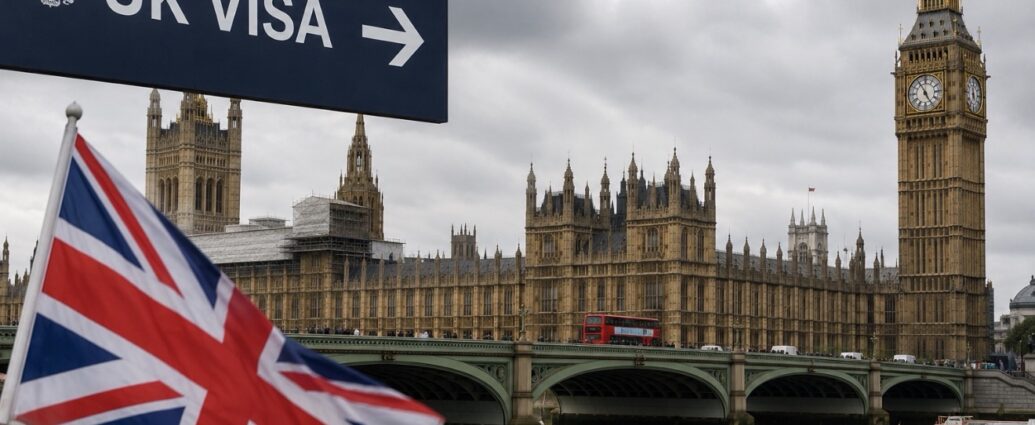
The British government is quietly exploring a new “invite-only” visa program aimed at attracting wealthy foreigners willing to invest at least £5 million — roughly $6.7 million — into the UK economy, as officials try to reverse a growing exodus of millionaires and global investors from London.
For everyday readers, the proposal highlights a growing reality facing governments worldwide: countries are increasingly competing for wealthy individuals, entrepreneurs and investment dollars as economic growth slows and public finances tighten.
Under the plan being discussed, wealthy foreigners who invest £5 million into approved British businesses or priority industries could receive residency rights and potentially qualify for permanent settlement after three years.
Unlike Britain’s old “golden visa” system, the new version would reportedly be far more selective.
Officials are considering an “invite-only” model where the government actively approaches approved investors through wealth advisers and family offices rather than opening applications broadly to anyone with enough money.
The proposal is still under discussion, but the shift marks a major reversal from Britain’s previous stance.
The UK shut down its earlier investor visa program in 2022 amid concerns that it allowed questionable foreign money — particularly from Russian oligarchs — to flow into British assets with limited oversight.
Now, however, British officials are increasingly worried about something else: wealthy people leaving the country.
The pressure intensified after the government abolished the UK’s long-standing “non-dom” tax system, which had allowed many wealthy foreign residents to shield overseas income from British taxes for years.
Since those tax changes took effect, advisers say many affluent individuals and business owners have relocated assets and residences to places like Dubai, Switzerland, Italy, Singapore and Portugal.
That outflow has raised concerns inside government about losing investment, spending, tax revenue and global talent.
The proposed investor visa appears designed to slow that trend while avoiding some of the political backlash tied to the earlier program.
Property purchases would reportedly not qualify under the new system, meaning investors would need to place money into businesses, infrastructure or other targeted sectors instead of simply buying luxury London real estate.
That distinction is important because soaring housing prices became one of the biggest criticisms of “golden visa” programs across Europe.
Several countries — including Spain, Portugal and Ireland — have recently scaled back or eliminated similar residency-by-investment programs after public anger over housing affordability and concerns about wealthy foreigners buying access to residency.
Britain’s proposed £5 million threshold would also rank among the highest in the world.
For comparison:
- The U.S. EB-5 investor visa requires roughly $1 million.
- Portugal’s program starts around €500,000.
- Greece ranges from roughly €250,000 to €800,000.
At £5 million, Britain would clearly target ultra-high-net-worth individuals rather than a broader investor market.
Supporters argue the UK still holds major advantages for wealthy global investors, including London’s financial system, elite schools, strong legal protections and extensive international business connections.
Critics, however, say offering special residency paths to the ultra-wealthy while tightening immigration rules for everyone else could become politically explosive.
The UK has simultaneously moved toward stricter immigration requirements for many workers and migrants, including tougher language rules and longer timelines for permanent residency.
That contrast could make the proposed investor visa highly controversial if formally introduced.
Still, economic pressures may be pushing policymakers toward compromise.
Britain’s economy has struggled with slower growth, rising debt pressures and weaker business investment in recent years. Officials increasingly fear that losing wealthy residents and entrepreneurs to competing countries could worsen those problems.
For now, the investor visa remains under review, and no final legislation has been introduced.
But the discussions themselves signal how aggressively governments are now competing for global wealth — especially as mobile millionaires gain increasing leverage over where they choose to live, invest and pay taxes.
— JBizNews Desk
© JBizNews.com. All rights reserved. This article is original reporting by JBizNews Desk. Unauthorized reproduction or redistribution is strictly prohibited.