By Duvi Honig
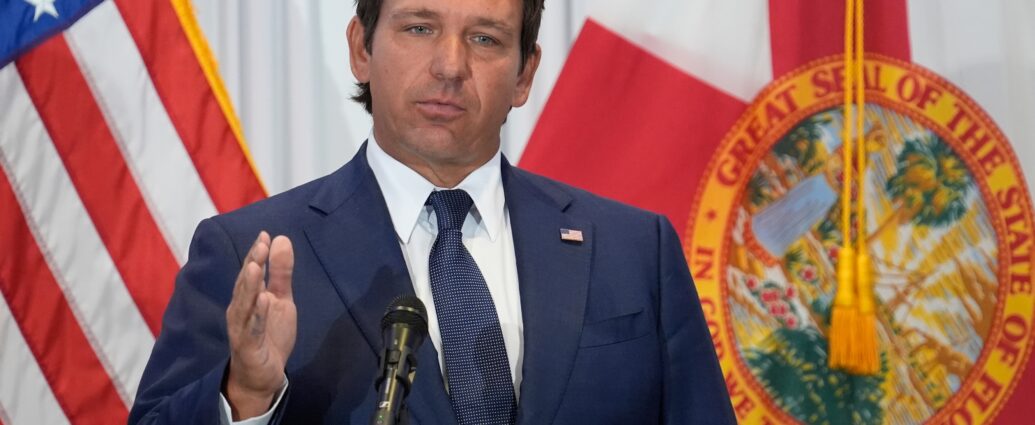
At a time when Americans are being squeezed from every direction — higher interest rates, rising insurance costs, expensive groceries, elevated energy prices, and mounting housing costs — policymakers nationally should pay close attention to what happened in the Sunshine State under Gov. Ron DeSantis, R-Fla.
America’s 27th state (admitted March 3, 1845) is setting new modern standards for economic growth.
For years, conventional political thinking insisted that governments needed to continuously raise taxes and expand revenue collection to fund growth.
Florida challenged that model in its entirety.
Rather than focus on how much more government could take from residents and businesses, the state focused on how attractive it could become for entrepreneurs, families, retirees, developers, and investors.
The results speak for themselves.
Before Ron DeSantis took office as governor, Florida’s economy stood around the $1 trillion mark annually.
Today, it’s approaching $2 trillion. Florida maintained no state income tax, became one of the fastest-growing economic hubs in America, and is now even discussing ways to further reduce the burden on residents through potential property-tax reforms.
Rather than looking at citizens as a source of endless new revenue, the broader philosophy has been to create an environment where people feel confident investing, relocating, building businesses, and expanding economically.
Meanwhile, in places like New York City, the conversation increasingly revolves around raising taxes further — including proposals targeting second homes and additional wealth-based taxation approaches championed by progressive leaders such as Gotham Mayor Zohran Mamdani.
The contrast between the two models could not be clearer.
One model is rooted in the belief that growth comes from attracting investment and easing burdens on consumers and businesses.
The other increasingly believes growth comes from taking more from productive sectors of the economy.
Florida’s population growth exploded under DeSantis.
Businesses relocated in waves.
Real estate development accelerated.
Tourism expanded.
Capital flowed in from around the country.
The state transformed itself into one of America’s dominant economic engines while maintaining one of the country’s most business-friendly tax environments.
That’s not an accident.
That’s leadership with foresight.
One would think that eliminating or avoiding certain taxes would weaken a state financially.
Instead, Florida demonstrated that when governments stop overburdening people, economic activity itself can expand enough to strengthen the broader economy organically.
That’s the lesson America urgently needs to understand right now.
Through years of work in economic development and public-private partnerships, this writer has witnessed firsthand how business confidence and consumer optimism often determine whether regions grow or stagnate.
Many of the initiatives I have worked on with government leaders and agencies were built around one core principle: when you create an environment where businesses and families feel supported rather than squeezed, economic activity expands naturally.
The economy is not only about spreadsheets and formulas.
It’s about psychology, confidence, and whether consumers and businesses feel optimistic enough to spend, invest, expand, hire, and build for the future.
When governments continuously increase costs on residents and businesses, eventually they choke the very growth they are trying to protect.
Consumers pull back.
Businesses freeze expansion.
Developers delay projects.
Employers stop hiring.
Investors look elsewhere.
At some point, excessive pressure on the productive side of the economy backfires.
That is why simply raising rates or increasing taxes cannot always be the default answer to every economic challenge.
Yes, balance matters.
Inflation must be controlled responsibly.
Fiscal discipline matters.
However, there is also a breaking point where higher borrowing costs combined with rising taxes, insurance, fuel prices, labor costs, and regulatory pressure begin suffocating economic momentum altogether.
The Federal Reserve now faces exactly that challenge.
As Kevin Warsh takes over as chairman of the Federal Reserve, policymakers are confronting an economy already under enormous strain from elevated interest rates and the inflationary pressures tied to global instability and energy markets.
On paper, continuing aggressive tightening may appear prudent.
But in the real economy, small businesses, commercial real estate owners, homebuyers, developers, and working families are already feeling squeezed from every angle.
The danger is that policymakers become so focused on fighting inflation mathematically that they unintentionally weaken the broader economic engine itself.
There comes a point where consumers can’t absorb more pressure.
There comes a point where businesses stop taking risks.
There comes a point where the housing market freezes because financing becomes unaffordable.
That’s why America needs fresh thinking and out-of-the-box leadership.
Florida’s success under DeSantis proves that long-term prosperity is not built by constantly taking more from people.
It’s built by creating an environment where people are confident enough to grow.
Instead of continuously raising burdens, policymakers should be discussing how to cap pressures on working families and businesses, how to create more certainty, how to lower barriers to investment, and how to encourage expansion rather than discourage it.
When people keep more of what they earn, they spend more. They open businesses. They hire workers. They invest in communities. They purchase homes. They stimulate the economy naturally.
That is sustainable growth.
And importantly, Florida’s transformation did not just reshape its economy — it reshaped its political landscape as well.
Gov. DeSantis went against enormous skepticism and established himself as one of the most influential economic leaders in America precisely because he challenged conventional thinking.
One can’t argue with results.
Florida’s rise offers a powerful reminder that when government empowers people instead of overburdening them, growth follows.
That is the lesson policymakers — and the Federal Reserve — should be learning as America enters its next economic chapter.
Initially posted on Newsmax here