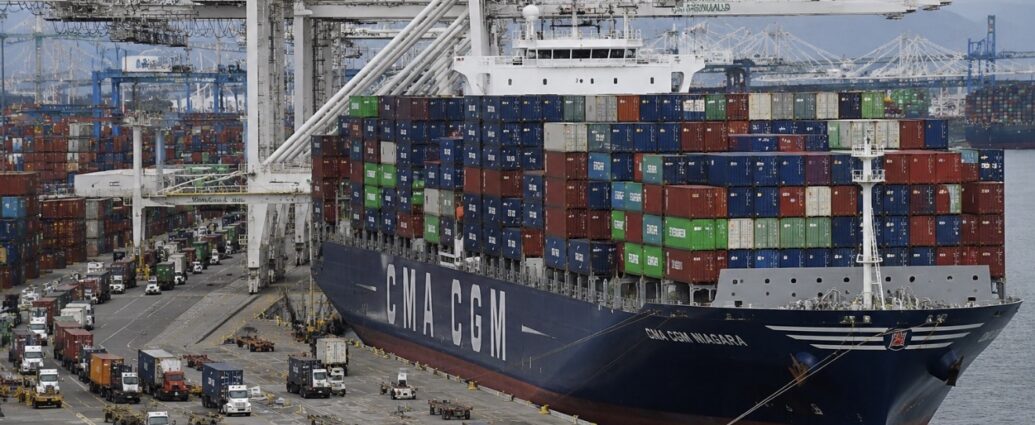
U.S. seaports handled 2.5 million twenty-foot-equivalent units of containerized imports in July, the fourth-highest July total on record, as retailers and manufacturers rushed goods into the country ahead of a new round of tariffs.
The surge reflects a familiar strategy: bring merchandise in before import costs rise.
China remained the biggest source of U.S. containerized goods, with imports from China climbing to 873,129 TEUs, the highest monthly volume in a year. That matters because Chinese-made goods remain deeply embedded in U.S. retail inventories, from electronics and furniture to clothing and household products.
The July rush came as the U.S. tariff structure shifted again. A 10% global tariff expired in late July and was replaced by tariffs of as much as 12.5% on imports from 60 countries, increasing the incentive for companies to move merchandise before the higher duties took effect.
Walmart, Amazon, Home Depot and other major retailers account for a significant portion of the goods entering U.S. ports, meaning much of July’s cargo is destined for American stores, warehouses and consumers.
For shoppers, the important question is what happens after the warehouses are full.
Front-loading merchandise can temporarily shield consumers from tariff increases because retailers have inventory purchased under the earlier cost structure. It does not eliminate the higher cost once companies need to reorder.
That means the impact may arrive gradually. Retailers can absorb part of a tariff through lower margins, pressure suppliers for concessions, change sourcing or raise prices. Most large companies use some combination of all four.
The timing is particularly important because much of the merchandise arriving now will support back-to-school, fall and holiday sales.
Despite July’s huge volume, imports were still 4.3% below the near-record level reached in July 2025. Through the first seven months of 2026, container imports were down about 0.9% from a year earlier while remaining well above pre-pandemic levels.
Shipping analysts also expect the import rush to begin fading. Companies moved their traditional peak shipping season earlier to get ahead of tariffs and supply-chain disruptions, leaving fewer goods that still need to arrive later in the year.
The consumer takeaway is that packed ports today can mean well-stocked shelves tomorrow — but not necessarily lower prices.
Retailers have stocked up before the newest tariffs hit. Once those inventories turn over, shoppers could get a clearer picture of how much of the additional import cost companies intend to absorb and how much they intend to pass along.
JBizNews Desk | Los Angeles
© JBizNews.com All Rights Reserved. Reproduction or distribution without written permission is prohibited.