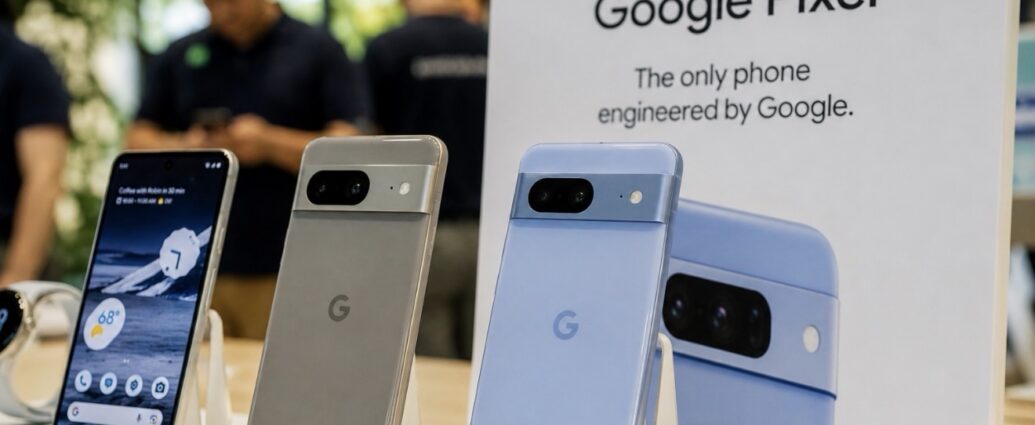
Google put four new phones on sale Wednesday morning at prices roughly $100 higher than last year’s, and it did so hours before it had even taken the stage to introduce them. Pre-orders for the Pixel 11 lineup opened at 10 a.m. Eastern, with the keynote in New York not scheduled until 6 p.m. That is a first for the company, and it says something about how confident Google is that buyers already know what they are getting.
The lineup consists of the Pixel 11 at $899, the Pixel 11 Pro at $1,099, the Pixel 11 Pro XL at $1,299, and the foldable Pixel 11 Pro Fold at $1,899. The three standard models ship Aug. 20, while the Fold is expected to reach buyers in October. A new Pixel Watch 5 and a Pixel Tag tracker were also introduced, though the Tag will not go on sale until November.
The price increase is the part that matters commercially. The Pixel 10 series started at $799; the Pixel 11 starts at $899. Google’s justification is storage: the 128GB entry models are gone, and every Pixel 11 now begins at 256GB. Buyers are paying more and getting twice the storage, which is less a generosity than a response to conditions across the industry. A worldwide shortage of memory chips has been driving handset costs higher all year, and every major manufacturer is absorbing or passing along the same pressure.
Under the hood is the reason Google scheduled the launch when it did. All four phones run the Tensor G6, the first major Android smartphone chip built on Taiwan Semiconductor’s 2-nanometer process and the first in commercial production to use gate-all-around transistor architecture. Google says the chip delivers up to 20% better power efficiency, 25% faster web browsing and 15% faster app loading than its predecessor, with artificial intelligence processing units 50% more powerful.
That extra processing goes almost entirely into the camera and into Gemini, Google’s AI system. The base model gets a 48-megapixel main camera with 56% more light sensitivity and a telephoto lens reaching 30x zoom. The Pro models push to 120x zoom and can capture low-light shots up to 4.5 times faster. The Pro camera bar also gains a feature Google calls HiLight, a ring of ambient lights around the flash that replaces the temperature sensor carried on the last three generations.
The software pitch is an AI assistant that acts rather than answers: ordering groceries, booking rides and placing calls to businesses, with a live transcript the user can step into at any point. That agent is limited to the United States at launch. Buyers of the Pro and Fold models receive six months of Google’s paid AI subscription at no charge, and early pre-orders carry discounts of up to $250 — two levers that soften the sticker increase without cutting the list price.
The calendar is the strategy. By moving its hardware event to August, Google now lands between its two largest rivals rather than trailing both. Samsung introduced its latest foldables in late July, and Apple is expected in September with the iPhone 18 Pro, the Pro Max and its first foldable iPhone. Apple is holding the standard iPhone 18 until spring 2027, which leaves a gap in the mainstream price tier that Google is aiming at directly. At $899, the Pixel 11 undercuts Samsung’s Galaxy S26 Ultra by $400.
At the top of the range the math runs the other way. The $1,899 Pro Fold costs $100 more than Samsung’s competing foldable, and Samsung has been building folding phones since 2019 against Google’s start in 2023. Google is asking customers to pay a premium for software integration in a category where its rival has the longer hardware track record.
Alphabet does not break out Pixel revenue, and the line has never been a meaningful share of the company’s earnings next to search and cloud. Its purpose is strategic: a first-party showcase for Gemini that reaches consumers without Apple or Samsung standing in between. That argument gets harder to make at $899 than it did at $799, and Wednesday evening’s keynote is where Google has to make it.
JBizNews Desk | New York
© JBizNews.com All Rights Reserved. Reproduction or distribution without written permission is prohibited.