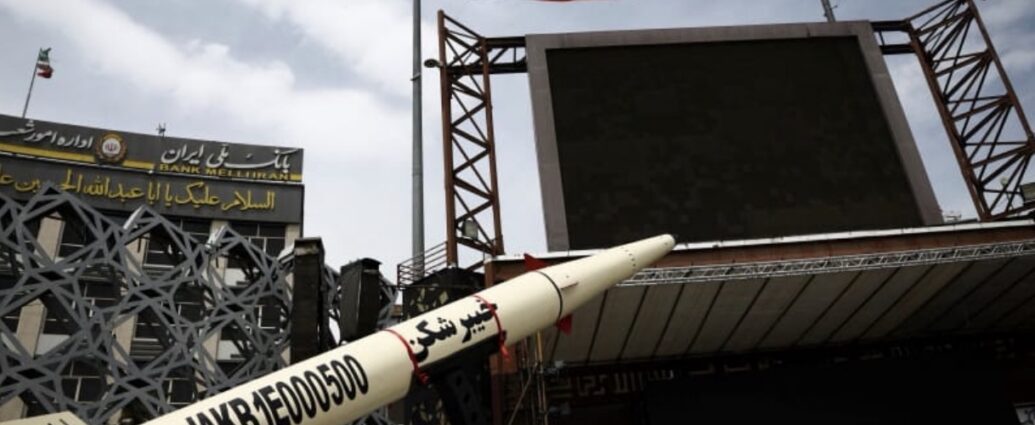
Israeli defense officials have been shocked by the speed of Iran’s recovery following the early 2026 war, The Jerusalem Post has learned.
This includes both IDF and Mossad officials, though the military was the lead evaluator of targeting and the harm from the targeting of the Islamic Republic’s defense sector.
Numerous foreign media reports have poked holes in specific aspects of Israel’s narrative of military success setting back Iran’s military industrial complex by years already dating back to March of this year, but for months, apolitical IDF expert officials held the line that the damage was so extensive that even if some specific claims were off, Israel’s general narrative of setting Iran back years held.
Four months after the main war ended in April, the Post understands that the IDF is now seeing a stunningly speedy turnaround that it did not expect and not in merely one or another specific area, but in many areas, including regarding the ballistic missile threat.
Iran’s history of recovery
Part of what is surprising in this story is that the IDF was already surprised by the Iranians in this area of rapid recovery twice: in October 2024 and January 2025.

After striking 20 critical ballistic missile and industrial military targets in Iran in October 2024, the IDF claimed that it had set back Iranian future missile production by a year or more.
By early 2025, the IDF had already seen the Iranians fully recover their high-speed ballistic missile production pace, so much so that the military moved up a possible fall 2025 attack to June 2025.
After attacking around 100 missile and industrial military targets in June 2025, the IDF said it had found the formula to truly set back Iran’s missile production by multiple years.
There was reason to believe this given that five times as many targets had been struck and that the IDF had dropped an exponentially larger volume of bombs.
Yet, once again, somehow, Iran figured out ways to recover high-speed missile production, again stunning the IDF.
What was estimated as around 1,300 missiles in June 2025 became 2,500 by February of this year.
Finally, the IDF and the US together said they achieved the goal during the around 40-day war in 2026.
Over 2,600 missile and industrial military targets were attacked, and both the US and Israel collectively attacked Iran around 30,000 times.
This was an increase of 26 times compared to 2025 and over 100 times compared to 2024.
IDF officials told the Post that every large and small part of the military industry had been shattered to pieces.
How could Iran restore its missile volume to 2,500 or to much higher threatening levels with $300 b. in damage to its military?
In other words, the lesson the IDF drew from each of the three rounds of attacks was not that Iran could find shortcuts which Israel might not anticipate to rapidly rebuild specific weapons threats, while leaving other parts of the country in squalor, but that a larger number of specific targets needed to be struck.

Israeli defense officials admit Iran finds innovative ways to rebuild missiles
Yet, the Post understands that top Israeli defense officials are now admitting that Iran has figured out creative ways to focus on rebuilding the missile and other defined threats, even if massive parts of the country still remain in ruin.
The New York Times previously reported that Iran was successful in using bulldozers to undo covered underground missile cities much faster than Israel expected.
But that is only restoring access to weapons which were never destroyed, only blocked.
The Post has now independently confirmed statements by senior Iranian officials that it is now producing new weapons again at a much faster pace than expected.
Until now, there was a debate about whether Tehran retained closer to 500 or 1,000 long-range missiles which could hit Israel after this year’s war.
This was an important debate as long as the assumption was that the Islamic Republic was stuck for a few years with whatever volume it had since its new production capabilities had been mostly destroyed.
But with this new information that Iran can now speedily rebuild ballistic missiles, the debate about how much it had left post-war becomes less important than the pace at which Iran is rebuilding.
If Iran can return to manufacturing 100-300 missiles per month, then it can restore its missile arsenal to June 2025 levels by early to mid-2027 and might become a prohibitive threat in 2028.
Even if its pace does not get back to that point, steady progress now means that in a period of a couple or a few years, the Iranian ballistic missile existential threat could be back in play.
All of this will also likely influence broader Israeli strategy about when and if another attack might be necessary regardless of the status of negotiations over the Strait of Hormuz and over the nuclear issue.
Alternatively, Israel may look the other way on the ballistic missile issue given that US President Donald Trump has made it clear he does not care about the issue, and to try to achieve a reduction of Tehran’s nuclear threat.
The IDF responded to the Post‘s report saying, “throughout the war, the IDF substantially harmed a diverse range of central components relating to Iran’s military capabilities, thereby harming both the capabilities of the regime to utilize portions of its capabilities and the ability to rehabilitate them at the same scope and pace which existed prior to the war.”
“Since then, the IDF has closely and continuously followed the Iranian efforts to rehabilitate and to newly rebuild their capabilities. The IDF’s evaluation and situation assessments are constantly updated and brought in line with actual developments,” continued the IDF.
Next, the military concluded, “From the nature of the issues at hand, it is not in our ability to specify concrete evaluations regarding the pace of the rehabilitation, because giving such specifics could expose IDF sources and methods. The IDF will continue to analyze developments and to be prepared accordingly.”