New Law Protects Taxpayer Dollars from Funding Politically Biased Media Blacklists
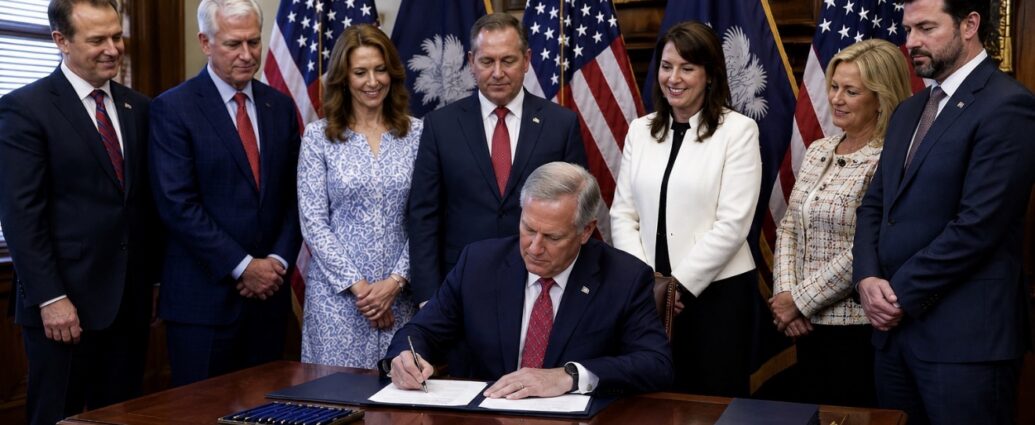
COLUMBIA, SC— The Independent Media Council (IMC) today applauded South Carolina Gov. Henry McMaster and state lawmakers for taking a strong stand against media censorship by including a provision in the 2026-27 budget that prohibits taxpayer-funded advertising from being filtered through politically biased media-monitoring systems. Gov. McMaster signed the budget into law on Monday.
As a result, state agencies cannot contract with firms that use media monitors such as NewsGuard, Ad Fontes Media, and the Global Disinformation Index (GDI) when placing state-funded advertising.
“South Carolina lawmakers deserve credit for recognizing the growing threat media blacklists pose to free speech and a free press,” said Christine Czernejewski, spokesperson for the IMC.
“Taxpayer-funded advertising should not be filtered through ideological gatekeepers masquerading as neutral watchdogs. South Carolina’s action sends a clear message that government should not subsidize private censorship schemes. We applaud Gov. McMaster for signing this provision into law. “
South Carolina joins a growing movement against media blacklists and censorship-by-proxy:
- Florida renewed similar protections through its state budget for a second consecutive year.
- West Virginia enacted comparable safeguards through its First Amendment Preservation Act earlier this year.
- Congress adopted related language in the National Defense Authorization Act (NDAA), restricting the Pentagon from using advertising agencies that employ misinformation-monitoring systems when placing military recruitment ads.
- The Federal Trade Commission’s consent order involving the Omnicom-IPG merger prohibits the combined company from coordinating with third parties to steer advertising away from publishers based on ideological viewpoints.
- The FTC has also secured consent decrees from major global advertising agencies, including WPP, Publicis, and Dentsu, addressing concerns that coordinated “brand safety” and exclusion-list practices may have been used to discriminate against media outlets based on their political or ideological content.
Recent reporting found that NewsGuard continues to assign higher credibility scores to certain Chinese state-controlled media outlets than to several prominent American conservative and independent news organizations.
“When state-sponsored media operating under the authority of the Chinese Communist Party can receive more favorable treatment than legitimate U.S. news organizations, it exposes the fundamental flaws in these blacklisting systems,” Czernejewski added.
South Carolina’s action reflects a growing national movement to ensure taxpayer resources are not used to support censorship of independent and conservative media. As policymakers continue examining the influence of media blacklists on advertising markets, public communications, and artificial intelligence tools, the IMC expects additional states to pursue similar protections.
***
The Independent Media Council (IMC) is a non-profit group of conservative and independent media outlets and aligned organizations that stand for free speech and a free press. Members regularly reach over 75 million Americans. The IMC believes the antidote to misinformation and disinformation is more speech, not censorship and works to protect the speech of all media outlets and content creators.