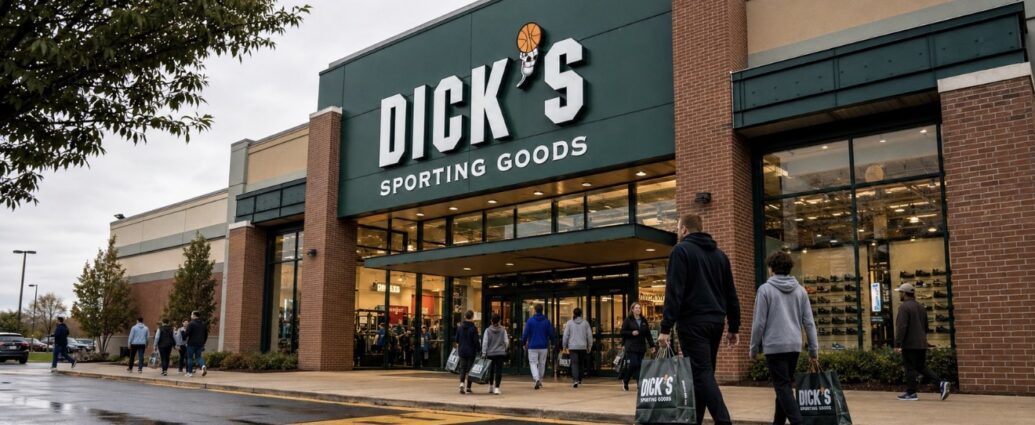
Dick’s Sporting Goods suffered the worst stock-market collapse in its history Tuesday as investors confronted a troubling reality: The company’s core sporting-goods stores are still performing well, but the Foot Locker business it recently acquired is already weighing heavily on sales, profits and the retailer’s future.
Shares plunged as much as 25%, wiping billions of dollars from the company’s market value and pushing the stock to its lowest level in more than a year.
The collapse followed a second-quarter earnings report that missed Wall Street’s expectations and forced Dick’s to sharply lower its full-year profit forecast.
Dick’s reported $5.59 billion in quarterly sales, below the approximately $5.64 billion analysts expected. Adjusted earnings reached $3.53 per share, compared with Wall Street’s estimate of roughly $3.76.
Net income fell more than 17% to approximately $315 million.
But the most important number was Foot Locker’s 3.6% decline in comparable sales.
Dick’s own stores performed considerably better, delivering comparable-sales growth of 4.9%. That means the company’s original business remains relatively healthy. The weakness is coming primarily from Foot Locker, which Dick’s acquired in 2025 to expand its international reach and strengthen its position in the global sneaker market.
The timing has become increasingly difficult.
Foot Locker entered the combined company with a heavy concentration of older sneaker styles just as consumers began demanding newer products and competitors increased discounts. Several new footwear launches also failed to generate the sales retailers expected.
That left Foot Locker carrying too much inventory in a market where shoppers can easily compare prices and wait for promotions.
Dick’s is now being forced to discount merchandise to remain competitive and protect its market share. Those promotions may help move sneakers off shelves, but they also reduce the amount of profit the company earns on each sale.
The consequences are already showing up in the company’s outlook.
Dick’s now expects adjusted earnings of $11 to $12 per share for the year, dramatically below its previous forecast of $13.50 to $14.50.
Annual sales are projected to reach between $21.9 billion and $22.2 billion, down from the earlier range of $22.1 billion to $22.4 billion.
The company also abandoned its expectation that Foot Locker’s comparable sales would grow between 1.5% and 3%. It now expects them to range from unchanged to a decline of as much as 2%.
That reversal is what alarmed investors.
This is not simply a weak quarter caused by temporary weather, shipping delays or a late holiday. Dick’s is warning that Foot Locker’s merchandise problems and the industry’s aggressive discounting could continue through the remainder of the year, including the critical holiday shopping season.
The pressure also extends beyond Dick’s.
Nike shares fell approximately 3% following the report as investors questioned whether weak product launches and excess sneaker inventory reflect a broader problem across the athletic-footwear industry.
For Dick’s, the central question is whether it can repair Foot Locker quickly enough to justify the acquisition without damaging the stronger business it already owned.
The company did not buy Foot Locker merely to add more stores. It bought access to new customers, international markets and deeper relationships with the world’s largest sneaker manufacturers.
Those advantages may still prove valuable over time. But for now, Wall Street sees Foot Locker less as a growth engine and more as an expensive turnaround—and Tuesday’s historic selloff represents the price investors are demanding for that risk.
JBizNews Desk | Pittsburgh
© JBizNews.com All Rights Reserved. Reproduction or distribution without written permission is prohibited.