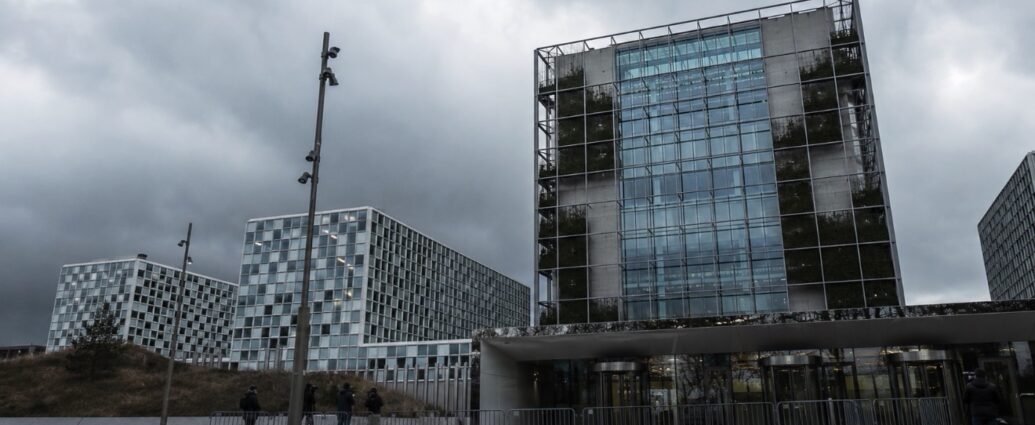
The court that issued arrest warrants for Vladimir Putin and Benjamin Netanyahu can no longer get its own officials into a bank.
On Aug. 18 the United States sanctioned the International Criminal Court’s president, Japanese judge Tomoko Akane, along with senior trial lawyer Abdoulaye Seye of Senegal. The measures freeze any assets they hold in U.S. jurisdictions or that touch the American financial system, and bar Americans from doing business with them. Secretary of State Marco Rubio said the two had worked to investigate or prosecute officials of governments that never accepted the court’s jurisdiction.
Nine of the court’s 18 judges are now under U.S. sanctions, along with both deputy prosecutors and the former chief prosecutor. The practical effect is closer to a commercial blacklisting than a diplomatic protest. One sanctioned Canadian judge lost the use of her credit cards. Fearing that Microsoft would cut ties, the court dropped Microsoft Office for a German open-source system that has slowed its daily work, officials told The Wall Street Journal.
The pressure campaign is doing what it was designed to do. Washington opened a diplomatic offensive in July urging partner countries to quit the court, and Chad and Venezuela have already announced they are leaving. That brings to five the number of countries pulling out within the past year, though each withdrawal takes a year to become final.
The institution was also gutted from the inside. On July 24, member states voted 82-to-13 with 15 abstentions to remove chief prosecutor Karim Khan for serious misconduct and a serious breach of duty — the first removal of a sitting chief prosecutor in the court’s 24-year history. Khan, who denies wrongdoing, is the prosecutor who sought the Netanyahu warrant.
Enforcement was thin even before the sanctions. The court has taken 23 people into custody under its warrants while 35 remain at large. Putin has since visited two member states, Mongolia and Tajikistan, and neither arrested him. European governments have signaled they may not act on the Netanyahu warrant either.
Built in The Hague in 1998 as the heir to Nuremberg, the court was always missing the biggest players. The United States, Russia, China and India never ratified the treaty, and neither did Israel.
The court says it is not folding. It called the latest sanctions an attack on judicial independence, Akane has said judges are replaceable and the work is not, and human rights groups have gone to U.S. courts to challenge the sanctions program. Member states must now elect a new chief prosecutor — the choice that will decide whether the court keeps pursuing great-power cases or retreats to the ones nobody contests.
JBizNews Desk | New York
© JBizNews.com All Rights Reserved. Reproduction or distribution without written permission is prohibited.